


한식에 대한 다채로운 이야기를 전하는 온라인 매거진
Links the world with the flavors of Korea
HANSIK Report from Overseas
Enjoying food with others is more than just a sensory pleasure. Even if we have different cultures and languages, when we gather for food, we share laughter and conversation with open hearts. The same holds true between nations. Food made with unique ingredients and cooking methods from a country not only convey the charms of that country and culture, but also enhance the level of understanding and serve as a foundation for building deeper connections. Korean cuisine, with its diverse flavors and healthy ingredients, is captivating the hearts of many more countries. Following are news reports from six nations with whom Korea continues to have cultural exchanges, share friendships, and strengthen bonds through Korean cuisine. Let's take a look at how Korean flavors are connecting the world and its people across the globe.
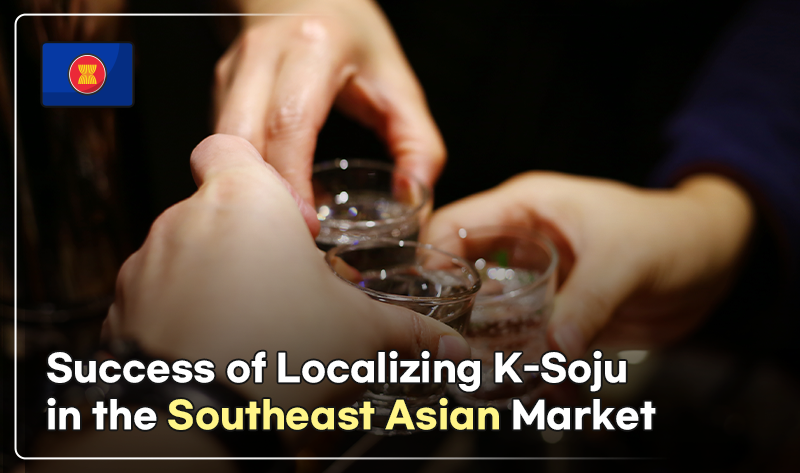
Success of Localizing K-Soju in the Southeast Asian Market
The green Soju bottle familiar to Koreans is making frequent appearances at gatherings among young people in Southeast Asia. The reason why Soju stands out as a particularly popular choice in other countries rather than Korean beer or Makgeoli is because it is a "new category" of alcohol. While each country has its representative beer, there's nothing equivalent to Soju. People who try Soju also tend to find its taste very pleasing. In fact, the Korean Food Promotion Institute's survey of 8,500 foreign consumers residing in 17 cities around the world last year revealed that 42% of respondents mentioned "taste" as the primary reason for consuming Korean alcohol. Particularly, Gwailsoju(fruit soju), also known as 'Flavored Soju,' is the star of the drinking scene with low alcohol content, fruity aroma, and sweet taste, captivating locals and adding vibrancy to their gatherings. When examining products in the local market, you can find many from Korean liquor companies, but a significant number also are produced by local companies. A notable example is the fruit Soju called "GEONBAE" by a Thai company. It is evident that the interest is not only in the Korean alcoholic beverage, but also in the culture surrounding it. With the current fervor of Hallyu(Korean Wave) driven by K-content, we hope that Korean alcohol will one day become another central element of Hallyu.
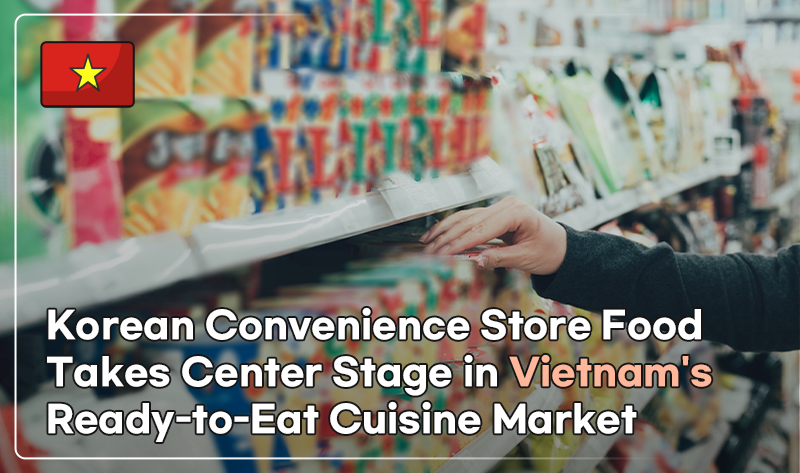
Korean Convenience Store Food Takes Center Stage in Vietnam's Ready-to-Eat Cuisine Market
Vietnam, a country experiencing rapid growth in almost every sector, is also witnessing significant expansion in the convenience food product market, making it one of the fastest-growing markets in Asia. According to global market research firm Euromonitor, the average growth rate of convenience food products in Vietnam from 2008 to 2022 was around 18%, more than four times the Asian average of approximately 3.9%. Factors contributing to this growth include a preference for simple meals in the local food culture and increased labor force participation rate among women who previously handled meal preparation. Additionally, the increase in home cooking during the pandemic has led to further demand for convenience food options. Convenience food encompasses a wide range of categories, including instant noodles, canned goods, ready-to-eat meals, and convenience store snacks that we commonly consume. Convenience stores in Vietnam serve as excellent platforms for a variety of convenience food products and are perceived as spaces where people can enjoy a quick and easy meal. Korean-owned convenience stores that have entered the Vietnamese market are operating Korean food preparation corners, offering dishes such as Tteokbokki (stir-fried rice cake) and Hotteok (syrup-filled pancake) on a regular basis. They have also established local recipe teams to develop Korean dishes tailored to Vietnamese tastes and ingredients. As a result, their localized Tteokbokki, adapted to local preferences, has already gained significant popularity. Considering the concurrent growth of the convenience food market and the popularity of Korean cuisine in Vietnam, convenience stores are expected to continue playing a crucial role in spreading Korean food culture in the country.
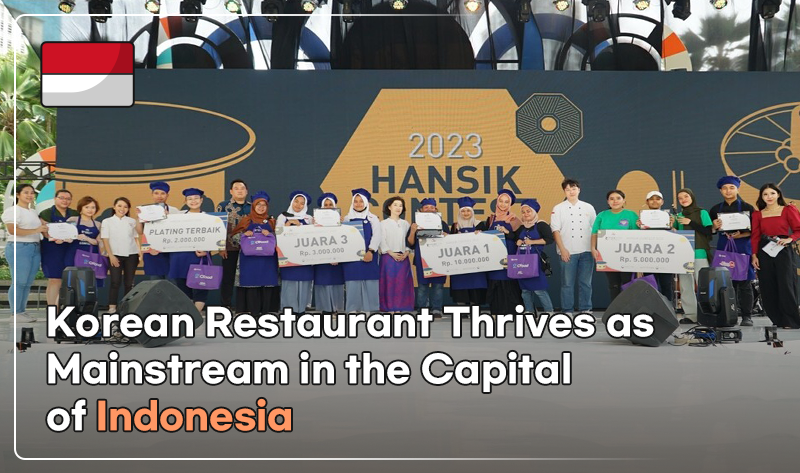
Korean Restaurant Thrives as Mainstream in the Capital of Indonesia
The first Korean restaurant that opened its doors in Jakarta in the early 1970s provided great comfort to local Korean residents who longed for Korean cuisine. At that time, the primary patrons were expatriates, diplomats, and business travelers. However, the customer base of Korean restaurants began to change in the 2010s with the Hallyu(Korean Wave) phenomenon. Indonesian locals started visiting these establishments, and as of 2023, Jakarta's Korean restaurants see more local customers than Koreans. Today, Korean restaurants in Indonesia have become the mainstream, serving as cultural exchange hubs and introducing Korean flavors and culture through food and beverages. The popularity of Korean cuisine has expanded beyond Kimchi and Ramen to include ingredients like Gochujang(red chili paste), while street food such as Tteokbokki(stir-fried rice cake) and Gimbap have become exceptionally popular. This year marks the 50th anniversary of diplomatic relations between South Korea and Indonesia. To commemorate this milestone, various events centered on Korean cuisine, which has become a symbol of Korean culture, are taking place. The Korean Food Promotion Institute held the 2023 Korean Cuisine Cooking Competition in June with the theme "Harmony of Korean and Indonesian Food with Traditional Liquor." From the moment the first Korean restaurant opened its doors in Jakarta in the 1970s to the present day, Korean cuisine has grown to become one of the most beloved cuisines in Indonesia. Over the past 50 years, Korean cuisine has steadily and impressively expanded its influence in Indonesia, and it appears that its impact will continue to grow in the future.

Active Movements to Boost K-Food’s Presence in Germany
Germany, the largest economy in Europe and South Korea's largest trading partner in the region, celebrated the 140th anniversary of diplomatic ties with South Korea this year. Just two decades ago, in the early 2000s, there were only around 10 Korean restaurants in Berlin. Most of these establishments offered basic dishes like Kimchijjigae(kimchi stew) to cater to the nostalgic tastes of Korean residents. However, in 2023, as Korean cuisine is at the peak of its popularity worldwide due to the rise of K-content, Germany is no exception, and the status of Korean cuisine has changed significantly. While Korean restaurants that served various Korean dishes under a single roof with a sign displaying a common Korean name such as "Arirang" dominated the Korean dining scene previously in Germany, recently in Berlin, you can find over 100 specialized Korean restaurants that focus on single dishes like Gimbap, Korean fried chicken, Kalguksu(noodle soup), Bibimbap, and Korean BBQ. These restaurants have gained popularity among locals, with people willing to stand in line despite the relatively high prices. This is a remarkable development compared to the early 2000s when there were only 10 Korean restaurants. Today in Germany, Korean cuisine enjoys a unique position as not simply Asian food, but while somewhat akin to Japanese cuisine, still more hip and trendy. It's exciting to see how Korean cuisine will continue to capture the hearts of more Germans in the future using its unique positioning in the German market.
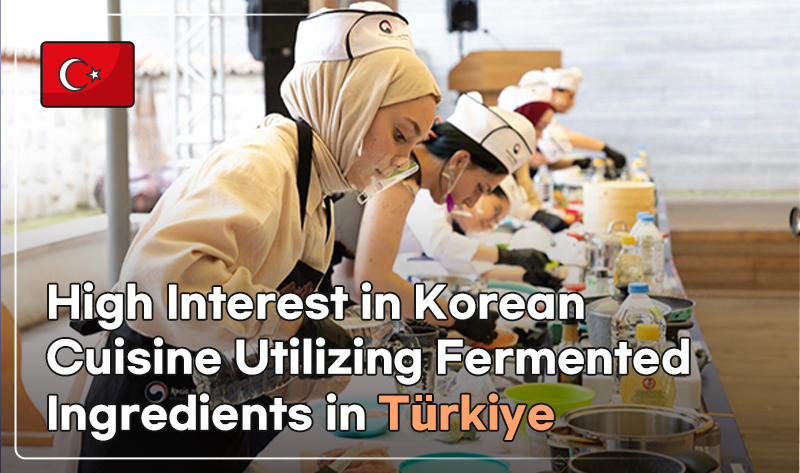
High Interest in Korean Cuisine Utilizing Fermented Ingredients in Türkiye
In Türkiye, often referred to as a brother nation to Korea, Korean cuisine is forging new frontiers on the gastronomic scene with the formation of fandom for Korean cuisine. In particular, Korean dishes utilizing various types of 'Jang'(fermented condiments) are gaining significant attention. Spicy and flavorful Gochujang(red chilli paste) and savory Doenjang(soybean paste) have garnered high interest, and dishes like Kimchi made with these sauces. Bibimbap, and Bulgogi are becoming highly popular. Reflecting this popularity, the 2023 Korean Cuisine Cooking Competition held by the Korean Food Promotion Institute in Türkiye was themed around 'Korean cuisine using Gochujang and Doenjang.' A wide variety of dishes such as Gochujang Bulgogi, Beoseotdoenjangjjigae(mushroom soybean paste stew), and Gochujang Dakbokkeum(spicy red chili paste braised chicken) were showcased, with 'Gochujang Bulgogi' taking the top spot. Meanwhile, the Ministry of Agriculture, Food and Rural Affairs is actively promoting the traditional food industry as part of the "4th (2023~2027) Basic Plan to Promote the Food Industry" to enhance the global competitiveness of K-Food. This includes the development of 33 varieties of traditional paste by 2027 and efforts to have the "Jang culture" designated as a UNESCO Intangible Cultural Heritage. It's exciting to anticipate how K-Sauces and Korean traditional sauces will continue to evolve in countries like Türkiye and around the world.
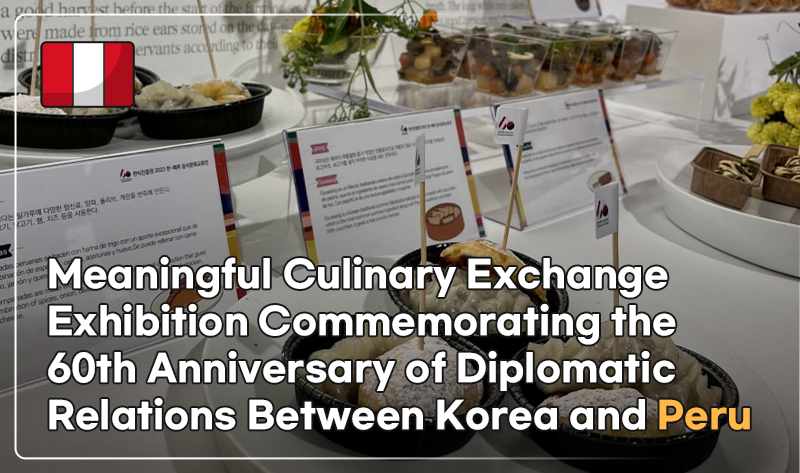
Meaningful Culinary Exchange Exhibition Between Korea and Peru
Peru boasts a unique culinary culture that harmoniously blends local cuisine with exotic international cuisine. In line with its culinary culture, Peru has embraced creative fusion menus that cater to local tastes. This year, in commemoration of the 60th anniversary of diplomatic relations between South Korea and Peru, a culinary exchange event is being held at Korean Food Promotion Institute Korean Food Culture Space "Ieum." The culinary exchange event, organized by the Korean Food Promotion Institute, is part of an ongoing initiative to promote Korean cuisine globally and facilitate cultural exchanges between countries through their traditional foods and cultures. As part of this event, the "Korea-Peru: A Thousand Flavors and Colors" exhibition, running until September 3rd, has been designed as a multifaceted cultural event to foster understanding of the histories and cultures of both nations with a focus on their cuisines. Furthermore, the Korea Agro-Fisheries & Food Trade Corporation and the Korean Food Association of Central and South America signed a memorandum of understanding this year to expand the export of K-food products and promote low-carbon dietary habits in the Central and South American regions. As various efforts are being made to enhance culinary and cultural exchanges with South America in 2023, we believe that these collective endeavors will further solidify the presence of K-food in South American markets, including Peru.
References
The Korean Food Promotion Institute Press Release, KOTRA Overseas Market News
Culture and Economy CNB Journal Article <Success of K-Fruit Soju in Southeast Asia>
Maeil Business News Korea Column <How Jakarta Became a Hub for Korean Cuisine>
Money Today Article <Korean Wave Exhibition in Europe in 10 Years... Exporting the 'K' Brand to Germany>
StartupN Article <[Opinion] Riding the Korean Wave in Europe: Preparing for More than Just a Passing Food>
Chungcheong News Article <Korea Agro-Fisheries & Food Trade Corporation Expands K-Food Exports in Central and South America>
Korea e-Government Portal Policy Briefing Article <The 'K-Food' Industry to Grow into a 1,100 Trillion Won Industry by 2027>