


한식에 대한 다채로운 이야기를 전하는 온라인 매거진
The World is Falling in Love with Korean Food
HANSIK Report from Overseas
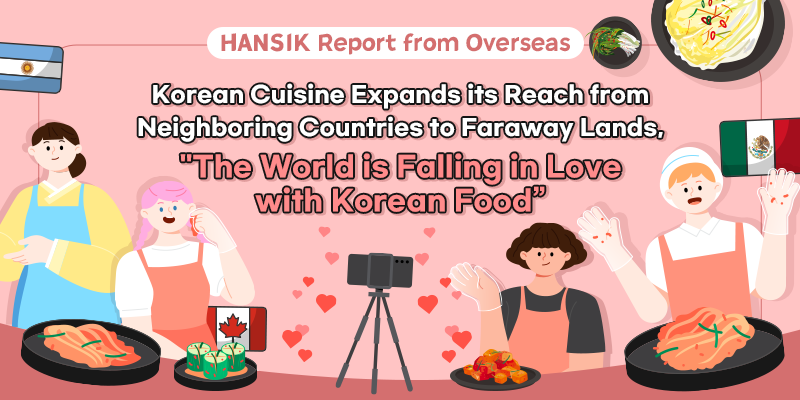
The beginning of the Korean Wave was in nearby Asian markets. The Korean Wave, which started with the popularity of K-pop and drama series in Asian markets, has rapidly expanded to include Korean food and culture, and now become not just a passing trend but a well-established culture that influences neighboring countries and even countries across continents such as Argentina, Mexico, and Kuwait. Let's take a look at the story of Korean cuisine, which is spreading its influence from neighboring to faraway countries to the extent of being called the '4th Korean Wave.’

Korean Wave and K-Food Expanding in Argentina
Argentina, historically a conservative country in South America, also has conservative tendencies in its food industry. Global food brands such as Pizza Hut, Wendy's, and Dunkin' Donuts have tried to enter the Argentine market but eventually withdrew. However, recently, the Argentine market is showing gradual signs of change. The increasingly globalized taste buds of Argentine people, as well as the popularity of K-content, are leading to growing interest in K-Food.
In restaurants frequented by young people, Korean-inspired fusion dishes that uses Korean-style chicken, tteokbokki (stir-fried rice cake), gochujang (red chili paste), and kimchi are gaining wider popularity, while Korean restaurants, which used to be primarily frequented by Koreans, are welcoming increased numbers of local customers – reflecting a common trend observed in other countries influenced by the Korean Wave. Additionally, the sales of traditional sauces, particularly gochujang, have seen substantial growth in the past three years with local's increased interest in Korean food and recipes. Considering that consumers seeking kimchi or traditional Korean sauces were mainly Koreans or Asians just ten years ago, it is truly remarkable how K-Food has captured the hearts of Argentine people on the opposite side of the globe.
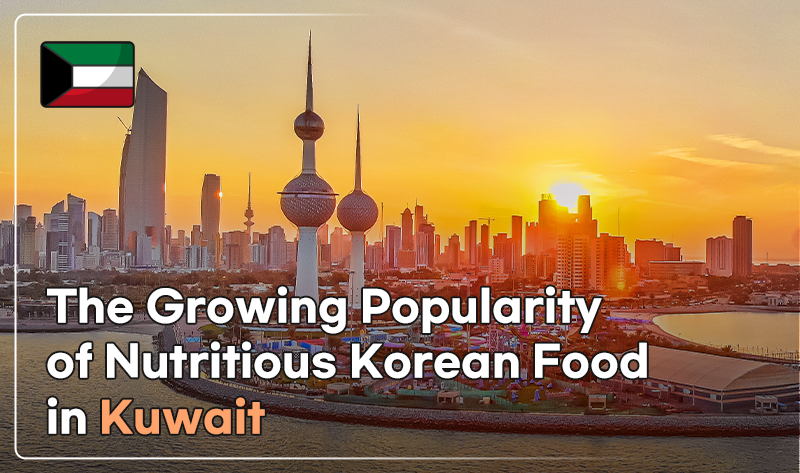
The Growing Popularity of Nutritious Korean Food in Kuwait
Kuwait, an Arab country located in the Middle East, is seeing increased demand for various Asian cuisines including Korean food, particularly among the younger generation influenced by global trends and the media. Thanks to this as well as the global popularity of K-entertainment, interest in Korean food has also been steadily growing in Kuwait. In particular, its reputation for being healthy for using fresh vegetables and fermented foods is leading the popularity of nutritious Korean dishes such as kimchi, bibimbap, and bulgogi.
In addition, Kuwait's love for spicy food is spiking the sale of various spicy Korean ramyeon products. In fact, Korean noodles, particularly ramyeon, are the largest category of Korean food imports in Kuwait, accounting for 50.2% in 2022. With the emergence of fusion dishes combining Korean and Kuwaiti cuisine, the consumer base for Korean food is expanding, and new Korean restaurants are opening throughout the country. With the increasing interest in international cuisines, especially among the younger generation, Kuwait is certainly a market for keen interest for K-food.
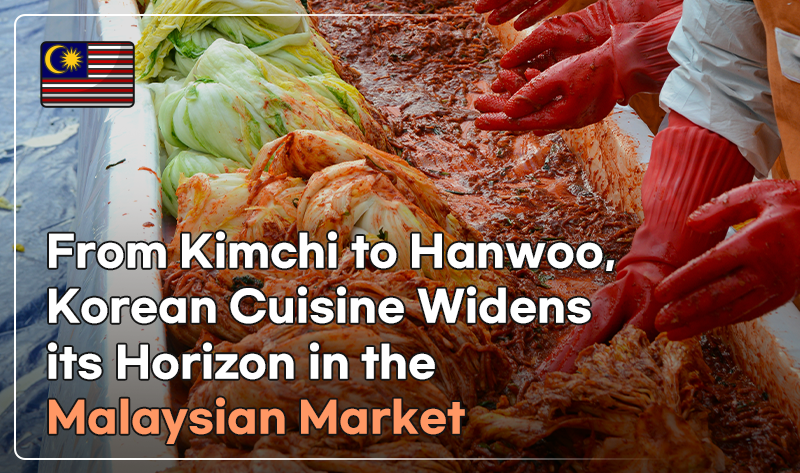
Korean Cuisine Widens its Horizon in the Malaysian Market
Halal-certified Korean beef was officially exported to Malaysia for the first time last June as the result of seven years of quarantine negotiations between the Korean and Malaysian government. The Ministry of Agriculture, Food and Rural Affairs, which has led the export, said that various menu tasting events using Korean beef will be held at local hotels and restaurants in Malaysia in an initiative to introduce Korean beef to its potential Malaysian consumers.
Also in May, the 'Korea Kimchi Festival' was held at 'The Curve', a shopping mall near Kuala Lumpur, Malaysia. Hosted by the Ministry of Agriculture, Food and Rural Affairs, the event showcased various types of Korean kimchi such as baechukimchi (cabbage kimchi), chonggakkimchi (whole radish kimchi), and gatkimchi (leaf mustard kimchi). A variety of programs such as kimchi-making with Malaysia's famous chef and TV personality 'Chef Wan' were available to visitors. The event concluded with great success receiving strong interest and attention from local consumers. From kimchi to Korean beef, the expectations are high for the performance of major Korean agricultural products in the halal market of Malaysia with a population of 1.9 billion.

Mexico, Fostering Future Experts of Korean Cuisine
At a university in Mexico, a Korean cooking class was held for culinary students as part of the 'Korean Cuisine Expert Overseas Dispatch Program' carried out by Korea's Ministry of Agriculture, Food and Rural Affairs and the Korean Food Promotion Institution. Instructor Hee-Yung Jang, an expert in Korean cuisine who was dispatched by the Korean Food Promotion Institute for the program, introduced the spicy flavors of Korea by presenting sessions on Korean paste, which is a basic ingredient of Korean food, tasting of gochujang (red chilli paste), and cooking jeyukbokkeum (stir-fried pork).
As a matter of fact, the general Mexican taste preference is known to be somewhat different from its Korean counterpart, and Korea's unique pungent fermented taste and rich seasoning are reportedly less popular in Mexico. In an effort to overcome the differences, instructor Jang and local students are trying to find ways to prepare Korean food using alternative Mexican ingredients, and they actually developed 'Jalapeño Soy Sauce Pickled Vegetables' together. The university also preparing to adopt Korean Cuisine subject in its formal curriculum for the first time among Mexican universities. We hope the inclusion of Korean Cuisine in the university's curriculum, will open up a new channel for bustling cultural and culinary exchanges between Mexico and Korea.

Canada’s Demand for Korean Food Products on the Rise
As in many parts of the world, Korean food is charming Canada where a diverse spectrum of food is enjoyed by its people of diverse demographics and culture. Canada, which celebrates the 60th anniversary of diplomatic ties with Korea this year, ranks as Korea's sixth largest trading partner. Among the many food products it imports from Korea, Korean noodles and snacks are quite popular. Korea ranked 7th among Canada's top 10 countries for noodle imports, and Canada's noodle imports from Korea last year increased by 14.3% compared to 2021. Korean snacks are also very popular in Canada as some Korean companies are more actively marketing their products to young Canadian consumers by introducing limited editions in collaboration with famous characters or celebrities.
Meanwhile, in celebration of the 60th anniversary of diplomatic ties between Korea and Canada, the Korean Embassy and the Korean Cultural Center in Canada organized a week-long cultural festival titled '2023 Korea Week' in June. During that week, the Korean embassy presented a variety of cultural programs including traditional K-food experience, Korean calligraphy, and a Korea-Canada photography exhibition. In particular, more than 15,000 people gathered for the opening ceremony of 'K-Fest' where K-Pop Cover Dance Festival decorated the main stage. Through this event which offered a special opportunity to reminisce on the 60 years of friendship between Canada and Korea, we look forward to a more vigorous dialogue and exchanges in the area of food and food culture between the two countries.
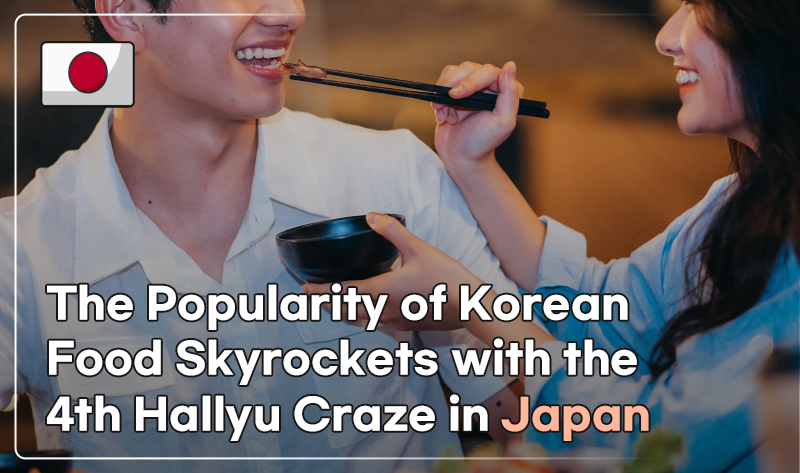
The Popularity of Korean Food in Japan Skyrockets
In Japan, the 'Fourth Hallyu,’ which is characterized by the fusion of Korean culture into one’s overall lifestyle, is trending strongly among Generation Z. Since the COVID-19 pandemic, Korean culture penetrated deeply into the lives of those in their 20s and 30s in Japan, which subsequently contributed to solidifying the latest Hallyu trends in the country. You can now easily find Japanese youngsters whose favorite TV programs are Korean dramas or entertainment shows, and whose favorite music is K-pop. Moreover, there is even a saying that “If written in Korean, it will be sold.” Interest in Korean food also has seen such a strong increase that in Shin-Okubo, which is considered the center of Hallyu in Japan and the largest Koreatown in Tokyo, you are can see hundreds of Korean restaurants. Also in popular tourist spots, Korean restaurants like ‘Hongdae Jujeom’, which remind of the trendy streets of Hongdae in Seoul, are constantly attracting the tastebuds of Japan's younger generation.
In reflection of the popularity of Korean food in Japan, Japan's largest convenience store franchise, 7-Eleven Japan launched a 'Korean Food Fair' together with the Korea Tourism Organization last May, showcasing various Korean food including popular convenience store items. This promotional campaign turned out to be a great success with some of the products such as samgak gimbap (triangle gimbap) being completely sold out. The result suggested the possibility of Korean food's greater presence in Hallyu, for Japan’s Generation Z to enjoy. We look forward to seeing Hallyu and Korean food enjoyed more universally in the lifestyle of our closest neighbor, Japan.
Reference KOTRA Overseas Market News, MoneyS article <Japan is now in the throes of the '4th Hallyu' craze...Writing Korean and Eating K-food [Z Sise]>, Yonhap News article <[Report] "Korea’s Unique Spicy Flavor"...Mexican Future Chefs Learn About Korean Food at University>, Seoul Shinmun article <"60 Years of Diplomatic Relations...An Opportunity to Promote K Culture>, Yonhap Infomax article <Korean Culture Festival in Canada's Capital Ottawa...Celebrating 60 Years of Diplomatic Relations>, Ministry of Agriculture, Food and Rural Affairs and Korean Food Promotion Agency press release, etc.