


한식에 대한 다채로운 이야기를 전하는 온라인 매거진
HANSIK Pervades Lifestyles Around the World
HANSIK Report from Overseas
Food reflects a country's conditions as well as its people's way of life. Some foods have rapidly gained popularity in a specific country not only for culinary reasons but also for lifestyle changes. Our June issue covers stories of gim (laver), Kimchi, ramyun (Korean instant noodles) and Korean sauces that are consumed in countries for various reasons, as well as countries where Korean beverages are highly popular these days.
References KOTRA News, KIEP ASEAN-INDIA FORUM AIF
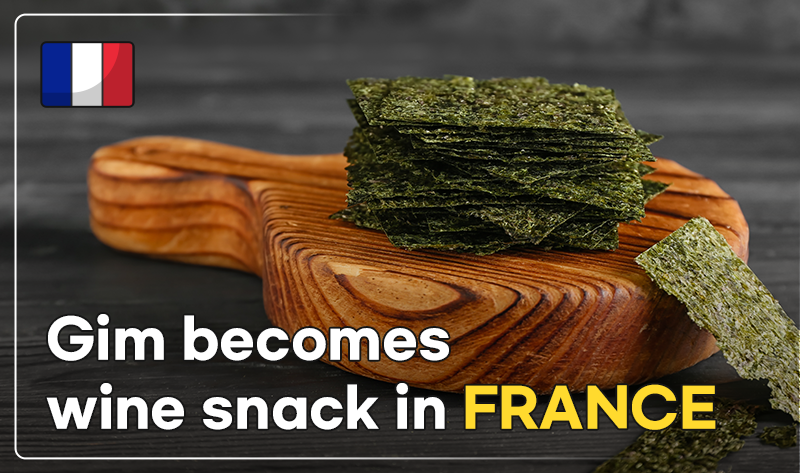
"Gim snacks" growing in popularity
as aperitif pairing in France
Aperitif is a universal culture in France. Going deeper into its history, "aperitif" refers to an alcoholic drink enjoyed while waiting for a meal in many European countries. A mild aperitif whets our appetite before a meal, encouraging pleasant conversation with fellow diners. Typically, an aperitif is served with finger foods, such as fruits, olives, biscuits and saucisson. Recently, Korean gim is gaining popularity as a finger food for aperitifs in France.
Seasoned gim and gim snacks were not mainstream foods in France. The recent popularity of gim is attributable to increasingly popular Korean content over the past few years, mostly among the young generation, and an interest in healthy foods. Compared to others, like potato chips, gim snacks have relatively fewer calories and come straight from nature. Currently, Korean products account for the largest share of the French gim snack market. Indeed, a search for gim snack products on Amazon France returns Korean brands the most. Considering that gim is consumed not as banchan (side dish) but as an aperitif pairing before a meal in France, it is worth considering localization of gim through a twist in its flavor and texture.
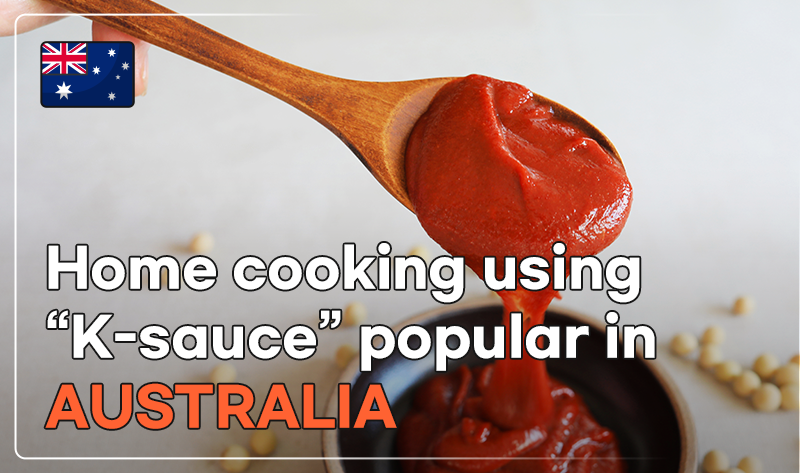
"Hot" gochujang and buldak sauce
replace sriracha in Australian home cooking
Sauces add flavor to foods and enhance the natural taste of ingredients. Sometimes, sauces add attractive colors to bland dishes. An eclectic use of sauces from all over the world enables you to cook exotic dishes at home. Recently, there has been growing interest in a variety of sauces that provide experience with new flavors even at home. In Australia, home cooking became increasingly popular during the peak of the COVID-19 pandemic, when restrictions were imposed on eating-out activities.
The Consumer Price Index increased 7.8% in Australia in the fourth quarter of 2022 compared to a year earlier, meaning prices soared, resulting in a decline in dining out. A leading sriracha brand also faced a product quality issue in the Australian market. In the meantime, as an alternative to sriracha, Korea's gochujang (red chili paste) and other spicy sauces, such as buldak (hot spicy chicken) and seasoned chicken sauces, have increased in popularity. Australia's sauce imports totaled USD378 million in 2022, showing a steady increase over the past three years. In particular, the country imported USD9.33 million worth of sauce products from Korea in 2022, making Korea the 11th largest importer. Korean restaurants, Korean-style BBQ buffet restaurants and Korean franchises are increasing in major cities of Australia, leading to greater awareness of Korean foods and sauces. In addition, more locals are buying Korean BBQ sauces, gochujang, seasoned chicken sauces and Korean hot sauces at grocery stores.

Korean beverage tops list on
Mongolian imported beverage market
Mongolia is a country where all of the people drink one or more beverages a day. This means that numerous foreign brands are represented there, and competition in the market is intense. Under such circumstances, a Korean beverage brand has maintained the top position in the Mongolian imported beverage market since 2015. Last year alone, Korean beverage imports increased 92%, demonstrating the growing popularity of Korean products. This was influenced by changed responses to COVID-19, as well as by the rising popularity of, and import demand for, diverse products encompassing low-sugar, diet, sports and energy drinks due to increased awareness of health.
Now, Korean beverages are available at almost all convenience stores and marts in Mongolia. Not only major Korean brands but also domestic-demand companies and start-ups have entered the market. Recently, distinctive drink products, such as jelly and bubble tea, are gaining popularity, while healthy drinks containing vitamins are going increasingly mainstream in line with health-conscious consumption trends. There is also increasing demand not only for low-sugar and sugar-free beverages but also for collagen, vitamin C, vegetable and fresh fruit drinks. Korean beverages have successfully satisfied Mongolian tastes for a long time, so now is time to captivate Mongol further with healthy beverages, new flavors and aromas.

Korean non-alcoholic soft drinks
expanding footprint in Poland
Non-alcoholic drinks refer to soft drinks except bottled water, fruit/vegetable juices, milk and beer. These drinks are fairly varied, including sodas, energy, sports, aloe, coconut, almond, oatmeal and rice drinks, tea, lemonade, and soybean milk. Recently, non-alcoholic soft drinks are rapidly gaining popularity in Poland, as shown by the fact that the sales volume and amount of these drinks increased 6.6% and 21.4% respectively in 2022 year over year. The main reasons behind the recent popularity were growing interest in health and the introduction of a sugar tax.
In particular, the sugar tax is one of the hot topics in Poland. It is a sort of "sugar fee" intended to reduce excessive sugar consumption among consumers to protect their health. A certain amount of tax is imposed on drinks with less than 20% fruit/vegetable juice content or with sugar content above five grams per 100ml. Accordingly, Polish beverage makers are reducing sugar in their products while launching beverages containing fruit juice in low-sugar offerings. Consumers are also choosing low- or no-sugar drinks – both reasonable in terms of health and price. Against this backdrop, the Polish non-alcoholic drink market has grown steadily every year, and consequently, beverage imports from Korea have increased significantly. Korea is among Poland's top ten non-alcoholic beverage importers. Poland's imports of Korean non-alcoholic beverages increased 74% in 2022 compared to a year earlier.
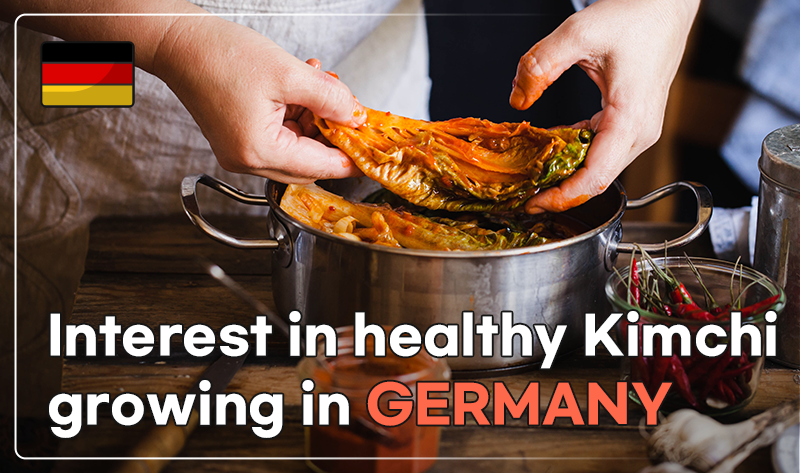
Popularity of Kimchi in full swing in Germany
amid avid interest in health
The popularity of Kimchi, Korea's representative fermented health food, is amazing in Germany. One reason is that Kimchi was in the spotlight during the COVID-19 pandemic after German media introduced it as a healthy food to strengthen the immune system. Growing interest in Korean food as a whole, driven by the craze for Korean content, has fueled the popularity of Kimchi. Korean food, including Kimchi, is perceived as a healthy and trendy diet in Germany. But, most importantly, Kimchi holds its own deep flavor. The prevailing opinion is that no country can emulate the traditional taste of Korean Kimchi, steeped in history and tradition.
For German fermented vegetable food manufacturers, Kimchi has definitely become a hot-selling item to attract customers, so they are conducting active marketing efforts to satisfy consumer interest in Kimchi. They are scrambling to introduce food pairings with Kimchi and Kimchi recipes on their websites. Germany's Kimchi imports from Korea slightly fell in 2022 compared to 2021, when the figure hit an all-time high, due to European import regulations on composite food products applicable to Kimchi containing Jeotgal (salted seafood). But, the popularity of Kimchi in Germany helps support Korean Kimchi exports.
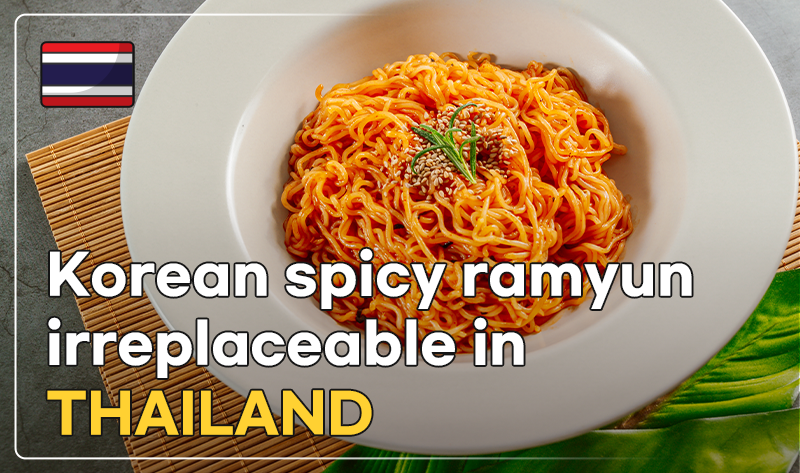
Thailand serious about spicy flavor, choosing
seven times more expensive Korean ramyun
Thailand is a big consumer of instant noodles with 52 servings on average per person a year, ranking fourth globally, following only Vietnam (87), Korea (73) and Nepal (54). Popular instant noodles in Thailand are flavored with local foods, like Tom Yum, a hot and sour traditional Thai soup, and Suki, the Thai version of a communal hot pot dish, as well as minced pork. In addition, Thai people prefer something spicy.
Thailand is the largest Korean ramyun importer on the back of high demand for noodles. Since 2017, Korean ramyun has maintained over 70% share of the Thai imported ramyun market. As of 2022, Thailand's ramyun imports from Korea reached USD34 million (about KRW44.3 billion), accounting for 80% of the market. Major Korean ramyun products are sold for 43-55 baht (KRW1,600-KRW2,100) per pack at the country's major retailers, about six to seven times more expensive than Thai ramyun. Thai people are willing to loosen their purse strings for far more expensive Korean ramyun. In particular, ramyun with distinctive flavors, such as spicy chicken, Kimchi jjigae (stew) and jjajangmyun (a noodle dish in a black bean sauce), are highly popular. This reflects the preference of Thai people who like spicy and salty flavors.