


한식에 대한 다채로운 이야기를 전하는 온라인 매거진
Vol 28. Bokbunja & Subak - Jeolla-do
Summer sweetness, Bokbunja and Subak
Gourmet travel for regional food ingredients
Hansik glossary
Subak-Watermelon
Bokbunja-Korean black raspberry
Summer sweetness, Bokbunja and Subak
Edited by Kim Jinyoung - Published by Korean Food Promotion Institute
Gochang facing low mountains and plains,
and embracing the West Sea
I have often been to and fro Gochang, Jeollabuk-do. Going to Mokpo or Haenam, Jeollanam-do to find seasonal ingredients, the West Coast Expressway is the right choice. It was Gochang when the red clay caught my eyes in the scenery while driving from Seoul. The first line of the song came out by itself as soon as I knew that I arrived in Gochang driving along the voice from the navigation without thinking. Singer Song Chang-sik's song <Sunun Temple> starts with "Have you ever been to Sunun Temple?" The song released in 1990 has been re-released many times and is still beloved. I used to answer myself to the question in the song, “Have you ever been to Sunun Temple?” “Next time, or if camellia blooms, I’ll go,” I answered and was hurried to go.
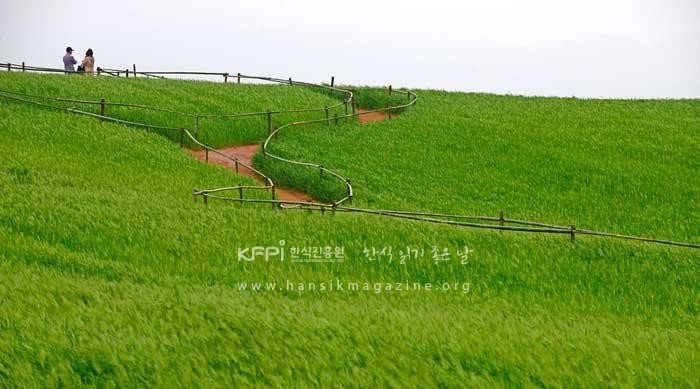
ⓒ Green Barley Field, Korea Tourism Organization
Gochang, Jeollabuk-do, embraces the West Sea facing the low mountains and plains. When the river running to the sea was blocked in the name of development, they did not block the Incheon River across Gochang. Thanks to this, in summer, juvenile eels from distant seas go up the river and settle down. When a juvenile eel becomes an adult one, add 'Pungcheon' in front of the name, eel. Because it has an environment where freshwater and the sea naturally meet, Gochang Pungcheon Eel should be delicious. When juvenile eels come in the river, the summer-greeting crops begin to show up in the mountains and fields. Barley is good, but bokbunja(korean black raspberry) and subak(watermelon) are the representative eateries as famous as the freshwater eel.
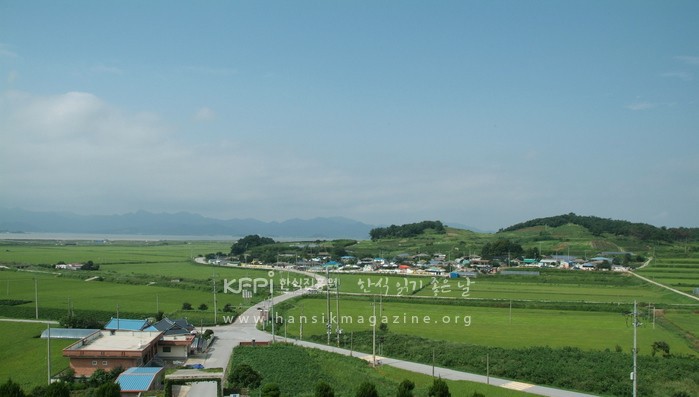
ⓒ Gochang Dolmen Jilmajaegil Course 2, Bokbunja, Pungcheon Eel Road, Korea Tourism Organization.
Originator cultivating bokbunja, Gochang
Bokbunja, the best matching with eel. Gochang is the originator of its cultivation. Bokbunja is a kind of strawberries. Strawberries are mainly divided into vine and tree strawberry. Red strawberry, familiar with us, became the popular fruit since they were cultivated from the 18th century. In the past when spring came and summer started, the season for strawberry ended. It is the story focusing on the cultivated strawberry. Wild strawberry varies in the season depending on kinds and seasons. Some of the foreign wild strawberries are in season in midwinter. Blueberry imported overseas has pretended as the native products, when raspberry was first cultivated. Recently, farmers are cultivating the improved native raspberry(bokbunja) rather than blackberry.
In May, when the barley turns yellow in color, bokbunja blooms with white flowers. One month after the flowers fall, bokbunja begins to ripen. The one which was blue in color quickly changes red and then turns black soon. The flesh of the riped bokbunja is black but dark red juice comes out to your fingertips even by your soft touch on it. Many people seek the berry species, such as Aronia, raspberry, and blueberry as well as bokbunja as they are rich of anthocyanin - the substance of antioxidants.
Bokbunja is a healthy food rich of anthocyanin, but it is not a super-powerful tonic that makes your pee pot turned-over. "Bun" of bokbunja means in Chines character "Pot". Creating storytelling of bokbunja, pot (bowl) slightly changed to the pee pot. It was called "bun" borrowed from the shape of the turned-over pot, however, when it was slightly changed to the pee pot, bokbunja became the amortentia which was able to turn the pee pot over. It is said that such storytelling became the truth - not a story as it was matching with bokbunja wine and eel. In fact, when the bokbunja is used for medicinal herbs in oriental medicine, it is said that the blue ones with red color on them - the less riped ones - are used for medicine instead of the riped ones, because the less riped ones are better than the riped ones in terms of the medical efficacy. The processed foods of bokbunja that people used to eat are too far from the pee pot story as they are made of the riped ones. The pee pot storytelling helped to promote the bokbunja's sale, however, it also intervened to promote its various uses. Bokbunja should have been a food that needs to be eaten comfortably but became for special use.
How to eat bokbunja
Everyone knows what bokbunja is but a few remember the taste of raw one. It is because most of the flavors of bokbunja are complemented by sweetness with liquor or sugar, or with processed products concentrated in fresh juice. The flesh of the riped bokbunja is tender. Its sweet taste is also long-lasting and less sweet like pulp. Its sweet taste comes from glucose, but it also contains fructose and sucrose abundant, resulting in a cool sweet taste. At the end of the sweet taste, the herbal taste comes very slightly and then disappears. It's not bad to eat raw one as it is, but it has a bit of a sweet taste slightly lacking the taste of familiar fruits. In addition, chewing the pulp has a little chewy texture at the end, so if you make it as juice or smoothie, it will be even more delicious.
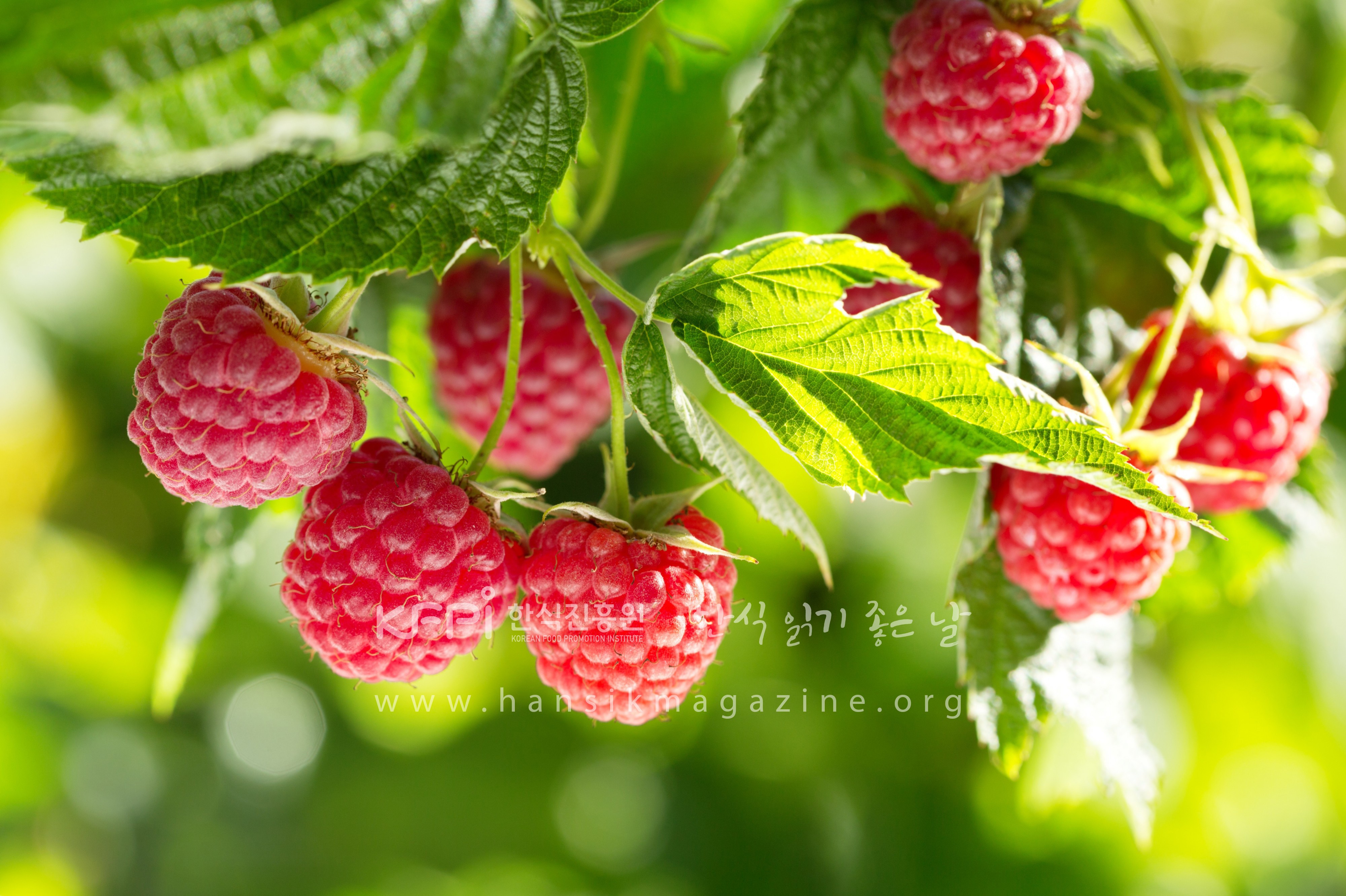
You can easily make juice by blending bokbunja with honey or oligosaccharide in a blender or mixer. Adding a couple of ingredients in the process making a simple juice, you can make a tastier smoothie. When making juice, add a banana or plain yogurt to grind into a bokbunja smoothie. When the heat is unyielding, adding ice and grinding it will make a cool slush. As the pretty purple drink made from dark red bokbunja is cool and sweet, there is no reason to be hated by men and women of all ages. In summer, it is sort of the drink that replenishes the depletion of heat, and usually, it is a drink that wakes you up the morning. As a food easy to make and take for a long time, its ingredients will benefit your body. If it is uncomfortable to take or you don’t take it often, this food has little effect.
Bokbunja's raw fruit comes to the market in mid-June. If you buy bulk of raw bokbunja and store it in the refrigerator by splitting it into small dose enough to eat each, you can enjoy it at a cheap price. When it is not in season, you can buy frozen or freeze-dried products, but it is more expensive than in season.
Representative summer fruit, subak
70% of the human body is composed of moisture. Plants of gourd family such as oriental melon, pumpkin, and melon have about 89% of water content, but fruits with more than 90% of water content are called gourd with a lot of water - subak(watermelon). The water content of subak with more than 91% becomes the representative summer fruit. Subak is being cultivated all over the country. Among them, Gochang is one of the representative farming regions. Unlike other places such as Jeongeup, Jangsu, and Jinan, Gochang has not high but low mountains only. In the 1970s, it was said that Gochang was pursuing soybean farming by reclaiming mountainous regions, and then converted to subak farming due to economic problems. Beginning as the replacement of soybean farming, the natural environment of Gochang was suitable for subak farming. The winds - blowing to and from the mountains and the sea every the morning and evening - made a difference in temperature. Thanks to the wind, Gochang produced subak with good sugar content. Because of its juiciness with high sugar content, they were sold to the whole country.
The big subak was expensive. A piece of subak weighed more than 10kg was treated as a good subak by the market. The subak with a stalk was considered fresh and good one. The perception of subak has been changed as time goes by. The big subak began to be poorly treated. As the number of family members became smaller, smaller subak became more popular. Even a half-cut or a quarter-cut ones began to be sold. Recently, farmers started to grow small ones rather than selling a big one to be splitted. There are subak not only small in size, but also even the ones changed its flesh color from red to yellow.
It is a good thing that subak have a variety. Since its flavor, color, and taste are different from each other, the pleasure of gourmet becomes more enjoyable. Gourmet is not just eating a good dish with wine in a good restaurant, which is only a part of the various gourmet world. It is also gourmet to taste various flavors that vary according to kinds, regions, and seasons. This is a gourmet activity as it can be enjoyed without the help of a chef.
Gochang's Subak being changed
Gochang's subak is also changing. While subak farming proceeds as usual, on the other hand, various mini subak are also cultivated. In June, in the beginning of summer, the Gochang Bokbunja and Subak Festival has been held every year. A variety of subak and drinks can be enjoyed at the festival held at the Sunun Mountain Provincial Park, however, this year it was canceled due to COVID-19. It was very unfortunate, but like 'chicken instead of pheasant', on the days of the 3rd and 8th day in the calendar, if you go to Gochang's 5 Days Opening Market, you can enjoy various subak. Instead of the large striped subak you've always eaten, you can find a variety of subak, such as an apple subak that you need to peel off its skin to eat like an apple, a mango subak that shows its yellow flesh after cutting a small subak, and a black subak that makes the stripes on the skin of a subak disappear.
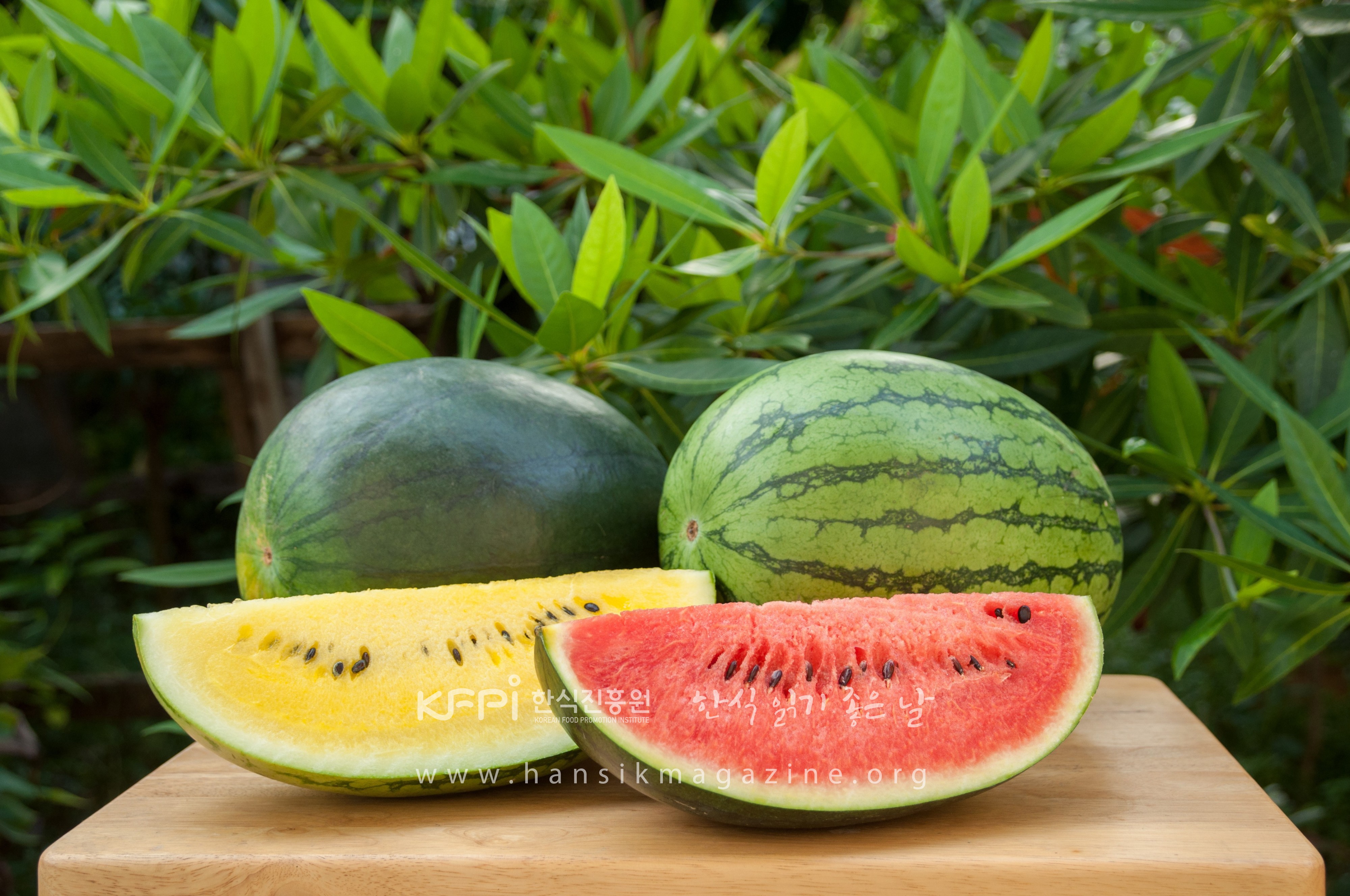
Apple subak began to be popular a few years ago. It became a subak for a juice by cutting the back of the subak with a knife, digging and grinding the inside flesh with a blender. It looks like the inside flesh to be a juice and the skin to be a tumbler. In the streets such as Jeonju’s Korean Traditional House Village where many young people are visiting, you can see not a few people who carry the apple subak with straws in their hands. When you cut a subak of which stripes disappear to dark green skin, yellow flesh comes out. That is a black mango subak. The yellow flesh is unfamiliar, but biting it makes you surprised. Only the color is yellow, but the taste and flavor are subak itself, with crispy taste and even excellent sweetness. You may be surprised at it. Apple subak, mango subak, etc. have no big differences in taste and flavor from striped subak. Their small size makes it easy to store, and it may be a perfect size for a family of three to take as a dessert. Moreover, the skin is so thin and small that even the stress of disposal of skin waste may be as smaller for a regular subak.
How to eat subak more delicious
Because the subak is to be bargained without looking inside, the proverb “subak bargaining” came into existence. It means buying and selling subak is not easy. When a juicy subak meets rain, the moisture content increases and the sweetness becomes less. The subak picked up during the rainy season is ‘hit and miss’. If you encounter a subak without sweetness in the long rainy season, fruit punch may be the right choice. Adding bokbunja in the fruit punch can add color and health.
There is another way to eat subak more deliciously. So called, "Take three minutes." as raw or juice. Rather than eating a subak preserved in the refrigerator a long time to eat it cool, if you leave it out of the fridge for a while, its sweetness rises naturally. The sweetness does not rise like magic in a moment. This is because when the subak temperature rises slightly, your sweetness sensitivity increases simultaneously. Our tongue becomes less sensitive when it is hot or cold. If you taste the saltiness of the food that is boiling, sometimes you may keep adding the salt in the pot because the tongue sensibility to taste the saltiness has decreased.
Cut the subak flesh easy to eat and grind it in the mixer. The shortage of sweetness after the test can be supplemented with honey or oligosaccharide. If sweetness is not enough, add a little salt and grind it again to get the satisfactory sweetness. One of the roles salt plays is to firmly support sweetness. While grinding the subak by, adding a little ice makes the taste more than the subak juice made by a specialty shop. Concerning the tip to select the subak, it is good to choose one with the stalk dried a little bit. It is a better sweet subak that the stalk part connecting with the subak body may be fresh but the tip of the stalk should be dried. Subak of which moisture evaporated to some extent is sweeter than freshly harvested one. Being fresh doesn't mean everything delicious.