


한식에 대한 다채로운 이야기를 전하는 온라인 매거진
Vol 62. YANGNYEOM
What is Necessary for the Globalization of Korean Sauce?
Captivated by HANSIK
As K-contents and Korean culture spread around the world, Korean sauces are also making their name widely known around the world. Gochujang (red chili paste) and ssamjang (red chili and soybean paste) are already receiving good responses, and the popularity of tteokbokki (stir-fried rice cake) sauce using traditional jang sauces is also growing rapidly. In this article, we will examine the export and globalization potential of Korean sauces.
Article Noh Yunyeong (The Editorial Team) Sources <Right Time for the Globalization of Sauces Using Traditional Korean Jang Sauces> (Food & Beverage Newspaper), <Globalization Measures of Korean Cuisines Through Korean Sauces< (Lee Eunjung, Moon Gicheol)
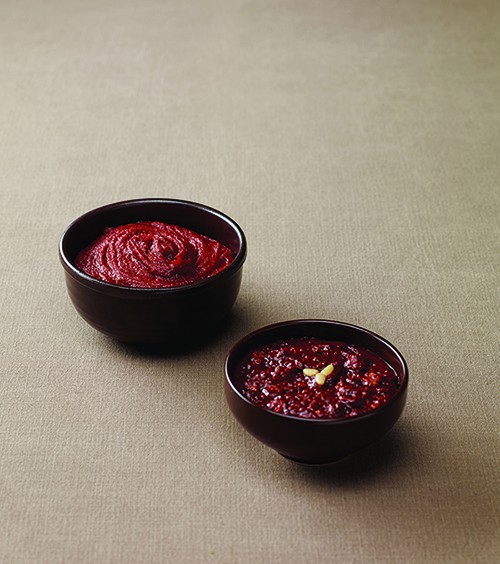
Growth of Korean sauces based on traditional jang sauces
We used to envy foreign sauces that were commonly found in Korea and around the world. They include globalized sauces, such as Tabasco from the US, XO from Hong Kong, sweet chili sauce and fish sauce from Thailand, and Kikkoman soy sauce from Japan that could be found in any restaurant in the world. However, Korean sauces are gradually expanding into the world market, and making their names widely known. The Korean cultural contents, such as music, movies, and dramas, that have spread around the world since the 2000s have played a significant role. Through these contents, people around the world began to pay attention to Korea, and everything about Koreans. And it is the same for Korean food and its ingredients.
As the home-cooking trend spread in the aftermath of COVID-19, the interest in K-sauce, which is mainly used in Korean cuisine, also grew. Since 2009, the globalization policy of Korean food has been launched at the national level, and perhaps because of that, foreigners are now enjoying Korean food that they were reluctant to eat in the past, such as kimchi and tteokbokki. And Korean yangnyeom, including sauces and jang, played a large role. The typical Korean sauces, such as gochujang, ganjang, doenjang, and ssamjang, as well as various sauces and tteokbokki sauce, are now being exported.
Among our sauces, ssamjang and gochujang are currently very popular, and experts predict that there is a high possibility of globalization. For example, in 2013, Danji, a Korean restaurant in New York, was awarded a Michelin star rating, and it presents Korean cuisines based on Korean traditional jang, such as doenjang, gochujang, and ganjang. David Chang, the owner chef of Momofuku, a 2-star Michelin restaurant in New York, collaborated with a global food company, Kraft Heinz, and developed Ssam Sauce (ssamjang) that utilized our doenjang, which was received well.
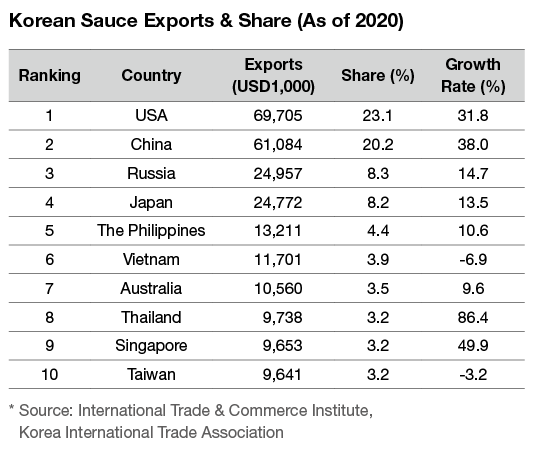
Korean sauces based on our traditional jang are being received well in overseas markets. According to the announcement of the International Trade & Commerce Institute of the Korea International Trade Association, the exports of sauces in 2020 reached an all-time high, exceeding USD300 million, up 25.8% from the previous year. Considering that the growth rate of exports in 2017 was 12.7%, 10% in 2018, and 11.9% in 2019, it is increasing over time. The portion of other sauces, including tteokbokki sauce and chicken seasoning and gochujang, accounted for 55.5% and 16.9%, respectively.
As can be seen from statistics, the largest export market is the US, followed by China, Russia, and Japan. Recently, the market expansion in Southeast Asia, such as Thailand and Singapore, has increased noticeably.
Necessities for the globalization of Korean sauce
Of course, our sauces still have a long way to go before they stand shoulder to shoulder with world-class sauces, like ketchup and Tabasco. Experts point out that we need to develop a sauce that emphasizes the flavor first while maintaining the original uniqueness of our traditional jang, and a product that can approach people around the world easily. Some argue that functional foods should be developed, maximizing the characteristics of traditional fermented foods, such as those preventing obesity and improving gut function. Experts point out that collaboration with world-class star chefs or famous cooking schools is also necessary. If a world-renowned culinary school like the CIA in the US holds cooking classes that use Korean pastes and other sauces, the chefs who take the class could spread it to the world. It is also necessary to develop recipes that can be applied to world food culture and cuisine to promote existing Korean sauces. The taste of Korean food should be maintained, but foreigners should feel more familiar with it.
Experts are saying that now is the right time to globalize Korean sauces such as gochujang, ganjang, and doenjang, as Korea has been in spotlight around the world. The recent world food trend led by fermented food is a good environment for our sauce based on traditional fermented jang, which is a representative fermented food, to attract attention. In fact, it is encouraging that exports of our sauces, including gochujang and ssamjang, are increasing. The fact that the trend has changed to a health-seeking one after COVID-19 is also a perfect environment for introducing our sauce. Can our Korean sauces, such as gochujang, doenjang, and ssamjang, take the spotlight in the world stage? We look forward to the day when the use of Korean sauces becomes common in households as well as in world-famous restaurants.
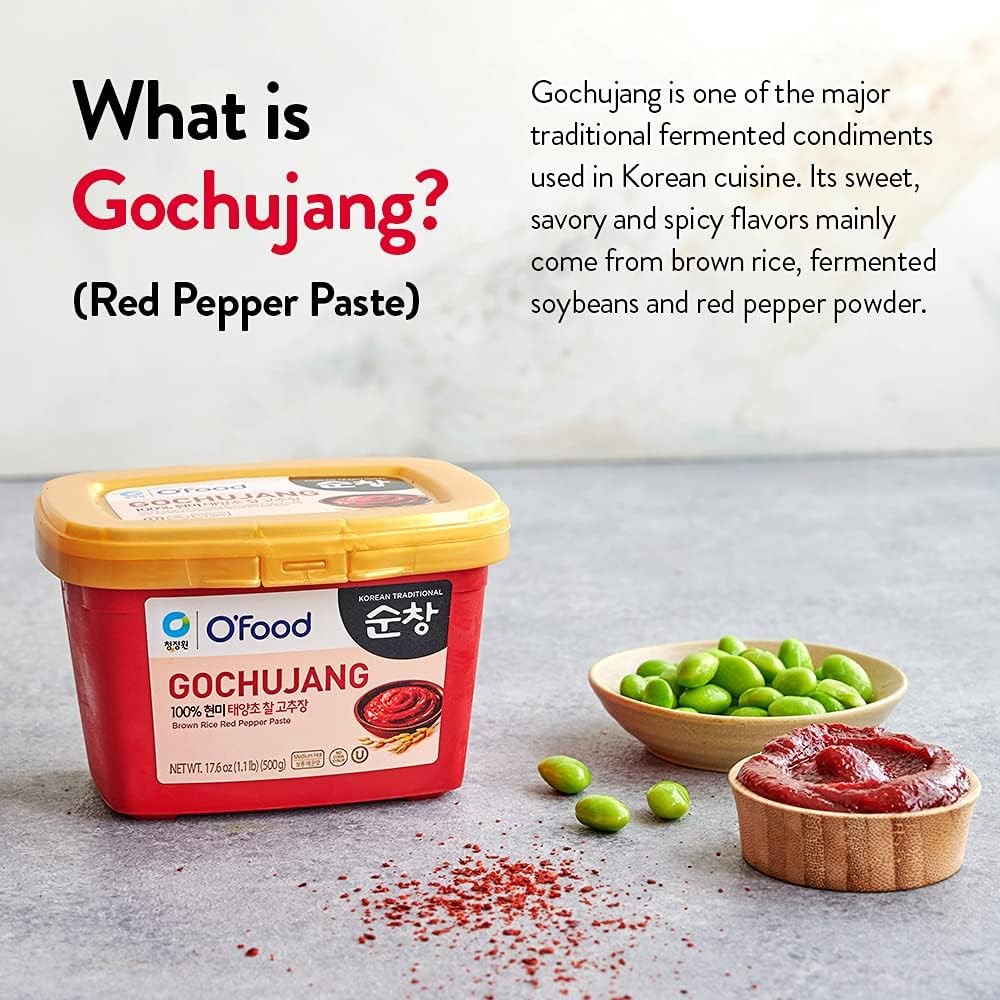
Korean gochujang being sold on the American Amazon website (C) Amazon