

한식에 대한 다채로운 이야기를 전하는 온라인 매거진
Vol 61. Mountains and Nature
The Mountain Gifts Us with a New Life
Mountain and HANSIK
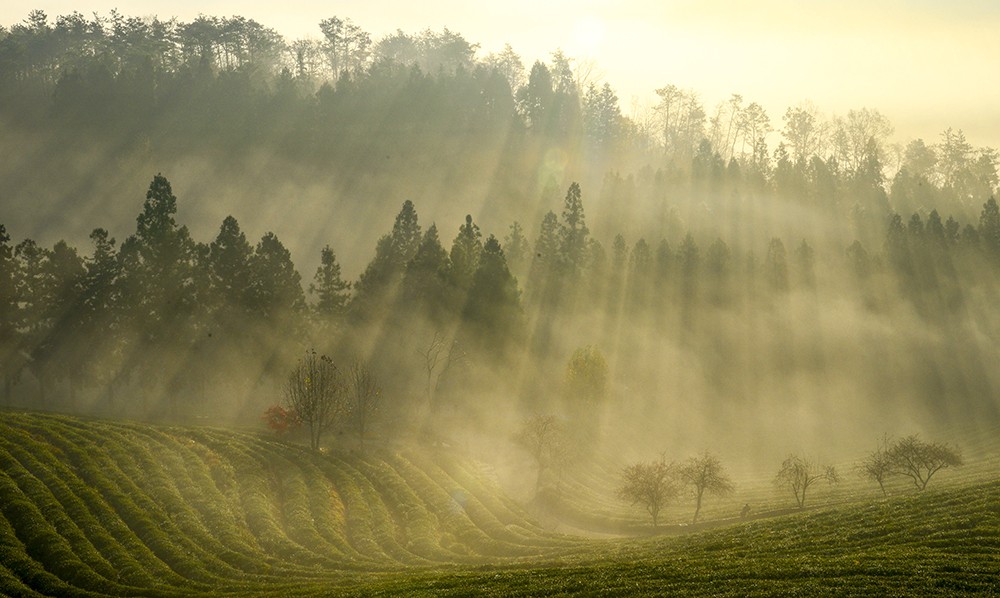
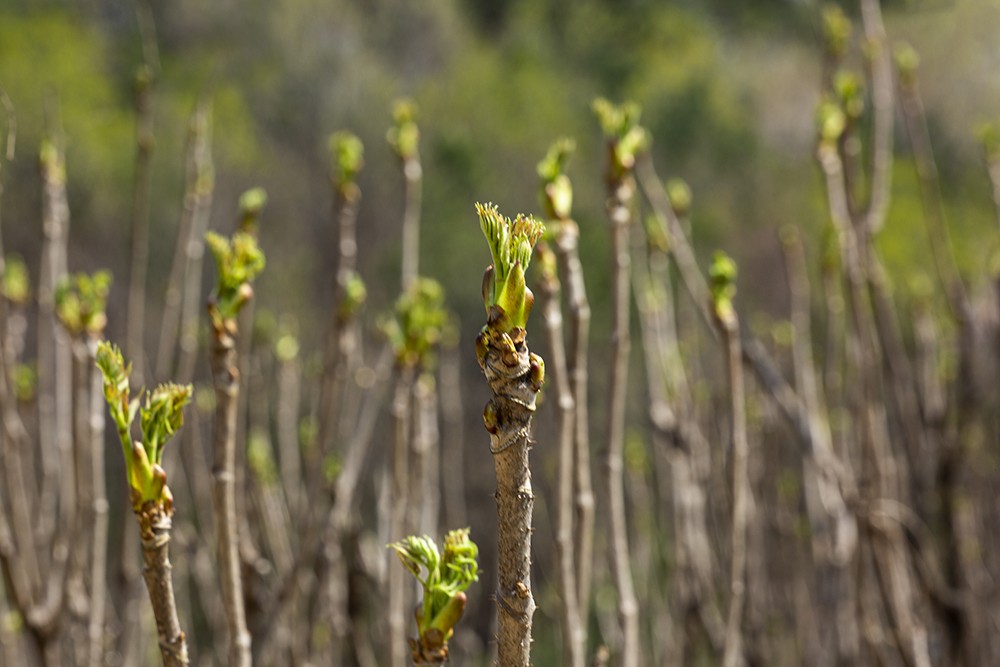
Mountains always stay in the same spot. However, that’s not all. In the spring, mountains overflow with edible greens. Aromatic wild greens, various hidden vegetables, and mushrooms start to appear, and capture the hearts of the people in the mountains. The Korean food ingredients that are graciously provided by the mountains with the scent of the spring fill up our body and mind. And that is how we get a new life.
Article Noh Yunyeong (Editorial Team) Source <K Food: The Secrets of Korean Food - 4. Dig, Pick, Pluck> (Design House)
People who prepared food from the ingredients given by the mountains
Mountains cover over 70% of Korea. According to the national geographic information status data of the Korean Statistical Information Service (KOSIS), more than 4,600 mountains are distributed around South Korea alone in the Korean Peninsula. Even in Seoul and in other cities, it is common to live in a place or live close to the area where you can see mountains. The Standard Korean Dictionary by the National Institute of Korean Language defines a mountain as “the part of the land that rises higher than the plain.” The elements and criteria for identifying mountains and mountainous areas vary from country to country. In England and in Ireland, mountains are referred to as the ones at an altitude of about 610 meters or more, and the US Department of Agriculture (USDA) Natural Resources Conservation Service refers to many mountains and valleys with the highest peak exceeding 300 meters in mountainous regions. In Korea, according to the standards of the Ministry of Land, Infrastructure and Transport, if the amount of relative relief (the height difference between the highest point and the lowest point within a given area) is more than 100 meters, it is called a “mountain.” Thus, a height of 100 m or less is not a mountain, but a “hill.” Based on this standard, it is no exaggeration to say that we always breathe and live with mountains.
Since the birth of humankind, mountains have provided inexhaustible resources necessary for our daily lives. Mountains produce lumber used for houses and furniture, raw materials for plywood, and raw materials for pulp used for making paper. Though they are rarely used nowadays due to the use of coal fuel and gas, forest materials (firewood), such as wood, pine branches, brush stems, fallen leaves, straw, and hay were once responsible for heating our surroundings. Water is one of the most important resources that mountains provide to humans. Without mountains, water vapor in the air cannot be captured and pour down as rain to form rivers. Mountains do not hesitate to inhale carbon dioxide in the air, emit oxygen that gives freshness, and act as an air purifier that filters out pollutants.
Another important contribution of mountains is providing invaluable food ingredients to us, who were an agricultural people. In rice fields and other fields, our people had to grow our own food to obtain food ingredients, but, in the mountains, there were an infinite number of plants that could be harvested and consumed without farming. Of course, it could not have been easy to turn the countless plants of the mountains into food that humans could eat. Cultural anthropologist Han Gyeonggu said that the Korean diet has been perfected through the history of pioneering coarse food. “Coarse food” means tasteless, rough, wild food that is not processed. It is highly likely that many of the edible plants grown on the Korean Peninsula also started out as coarse food.
However, humans had an iron will and would not easily give up. Above all, humans were “animals that cooked.” Through trial and error, humans selected food ingredients among plants and fruits from the mountains, and used fire and tools to cook them. In the end, humans created food that we enjoy today through various cooking processes, and by mixing different seasonings. We were able to eat things that we could not eat before, and made it easier to eat things that were difficult to eat. Not only did we make it more palatable and easier to digest, but also brought out more calories and nutrients.
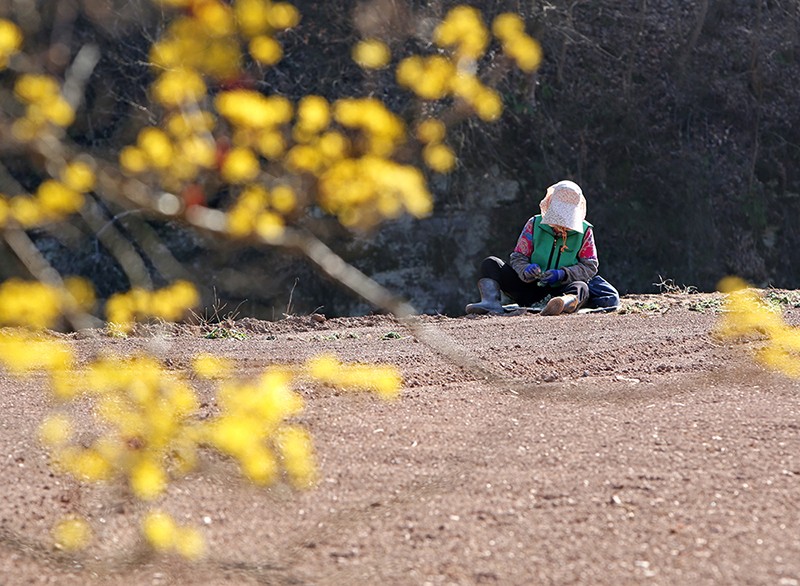
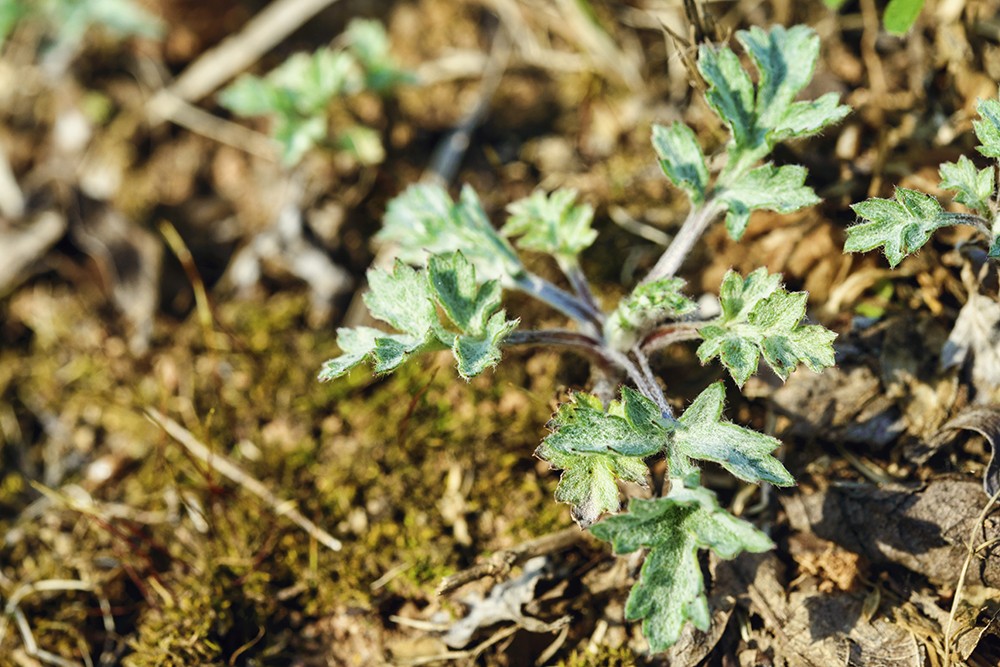
Mountains tightly packed with Korean food ingredients
The climate and soil of the Korean peninsula, which have distinct seasonal changes with winters being cold and dry and summers being hot and humid, determine the types and characteristics of trees, which also affect food ingredients. The long north and south topography create a climate difference between regions, and various plants, such as warm-temperate forests, temperate forests, and boreal forests, are distributed, depending on the latitude. If you feel that Korean food is diverse and delicious, it is because of the mountains of the Korean Peninsula.
The Korean food table, which has rice and other grains as staple, has long been composed of bap and banchan, that is, a staple food and side dishes. Among them, wild greens, vegetables, and fruits grown in the mountains were one of the most important side dishes for Koreans. It is said that Koreans eat more than 1,000 kinds of plants, but this is because there are many mountains around us. Today, as cultivation becomes more active, a variety of mountain greens and vegetables are cultivated in the fields, but, in the past, food ingredients from the mountains were firmly placed on Korean tables.
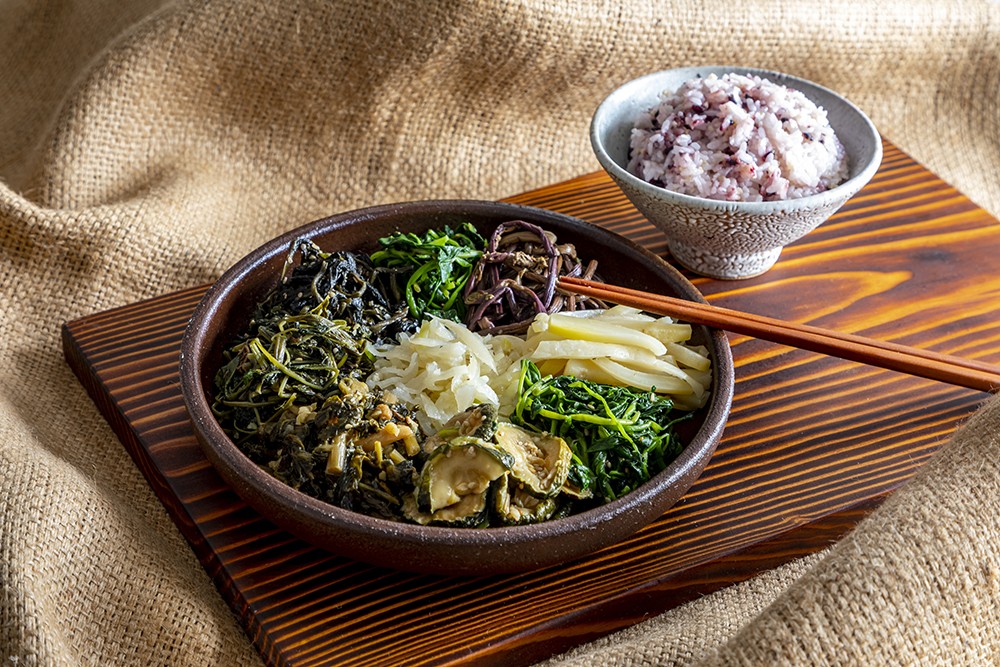
As mentioned earlier, Korea has a high proportion of mountainous areas, so Korean food ingredients that we can enjoy are also densely produced. Mountain greens such as chwinamul (aster leaf), dureup (fatsia shoots), bangpungnamul (wild parsnip), gomchwi (ragwort), wonchuri (day lily), chamnamul (short-fruit Pimpinella), and dangguiyip (Korean angelica leaf) have been loved by Koreans from the ancient times to the present. The same goes for root vegetables that grow in the mountains, such as deodeok and ueong (burdock root). Mushrooms are also treasured ingredients that can be easily found in mountainous areas, and fruits such as dates, chestnuts, pine nuts, acorns, and walnuts also grow in mountain forests.
Efficacy of the giving mountain plants
Mountain plants grown under the influence of the climate and soil of the Korean Peninsula have excellent efficacy. Spring greens that have survived the long cold weather are particularly rich in nutrients, such as vitamins and minerals, compared to other seasonal foods, so they have a good effect on fatigue, fine dust, anemia, and diet.
Chwinamul is rich in various vitamins and minerals, and the content of vitamin A is particularly high. It discharges wastes from the body, lowers cholesterol levels, and is effective in preventing cancer and skin aging through antioxidant action. Dureup, which is called “the king of spring greens,” is high in vitamin A, vitamin B group, and vitamin C, so it has an excellent effect on restoring energy and helps strengthen the body’s immune system. Bangpungnamul, named because it prevents stroke, was mainly used as a medicine in the past. Now, it is used in various ways as a food ingredient. It is very rich in potassium, and contains a large amount of minerals, such as calcium, phosphorus, and iron. It is also rich in vitamin B group and beta-carotene, so it is effective for treating symptoms such as colds, headache, sweating, and as an apophlegmatic.
Chamnamul, which has excellent flavor and aroma, is also a representative alkaline food rich in beta-carotene, which helps discharge wastes from the body and lower cholesterol levels. Gomchwi, which is said to have been derived from the meaning of “an herb that bears like,” has anti-cancer effects that inhibit the activity of benzopyrene, a carcinogen produced when meat is burned, by 60 to 80%. Moreover, deodeok, which is good for bronchial diseases and arteriosclerosis, and ueong, which is rich in inulin that helps increase kidney function and promote bowel movement, are also essential.
Mountains always stand tall in the same place, and silently look down at us. As Yang Heeeun's song <Hangye-ryeong> says, mountains urge people to go forward by saying “do not cry and forget about it.” That's how mountains enlightened and comforted us. And mountains provided food that would fill our body and mind whenever we wanted. Thus, it would not be an exaggeration to say that mountains give us a new life.