

한식에 대한 다채로운 이야기를 전하는 온라인 매거진
Vol 61. Mountains and Nature
Visit Yongmun Millennium Market’s 5-day Market, If You Want to Welcome Spring Early
Foodie Travels
You realize that the gentle breeze is warm for some reason, and that there are soft buds forming on the ends of the bare tree branches. Even the water stream that was frozen to the core, and the paddy fields, which were so rugged that the word “desolate” fit just right, began to come alive. Spring is here. It is the spring that you have been waiting for so long. Spring is fast approaching without one knowing. Let's dust off our seats, and get up. It's time to start stretching our muscles.
Article/Photo Kim Jungheum (Travel Writer)
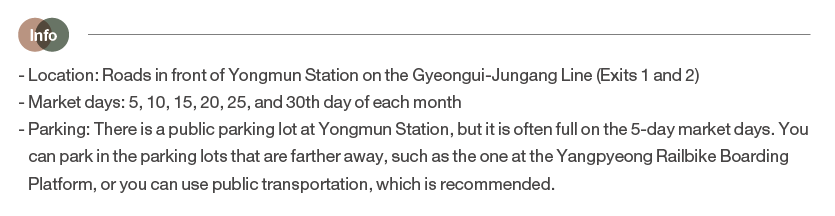
It seems like just yesterday when we welcomed the new year, but spring is already at the door. If we could be more relaxed, we would have been able to feel the exciting and welcome change of the season a little faster and more clearly. However, it's too early to have regrets. Let’s not worry because the spring flowers are yet to bloom. There is a place where you can feel the spring energy, like in a market. Among many types of markets, the 5-day market, where food from all over the country gathers, is THE place infused with spring energy, so why don’t we visit one? If we are going to one, Yangpyeong in Gyeonggi-do would be a good choice. The Yongmun Millennium Market, where a large 5-day market is still held, is located there. Yes. The destination this time is Yongmun Station.
You can find anything and everything
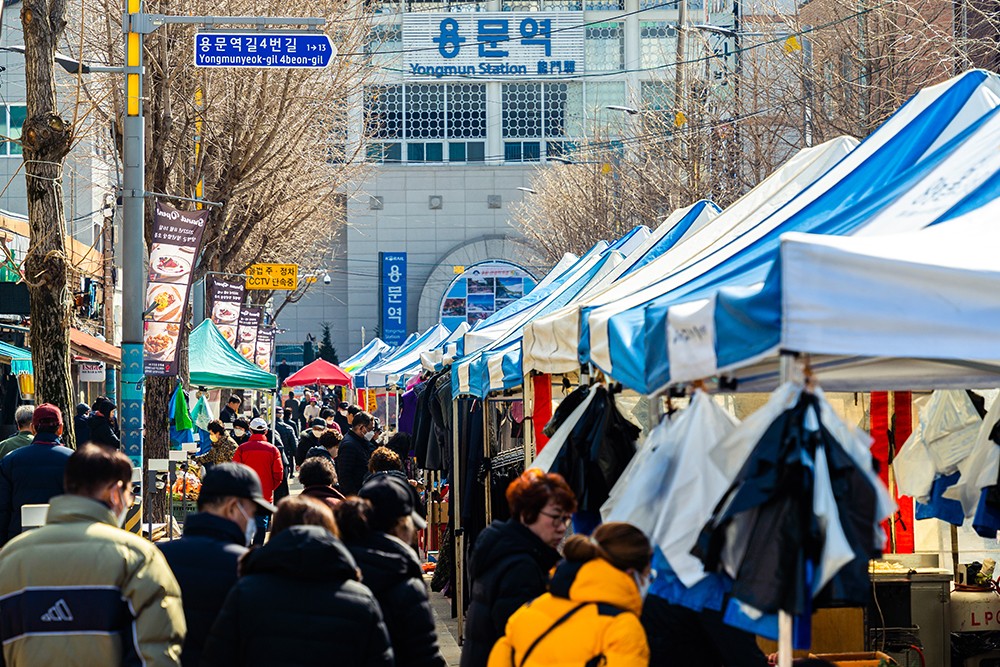
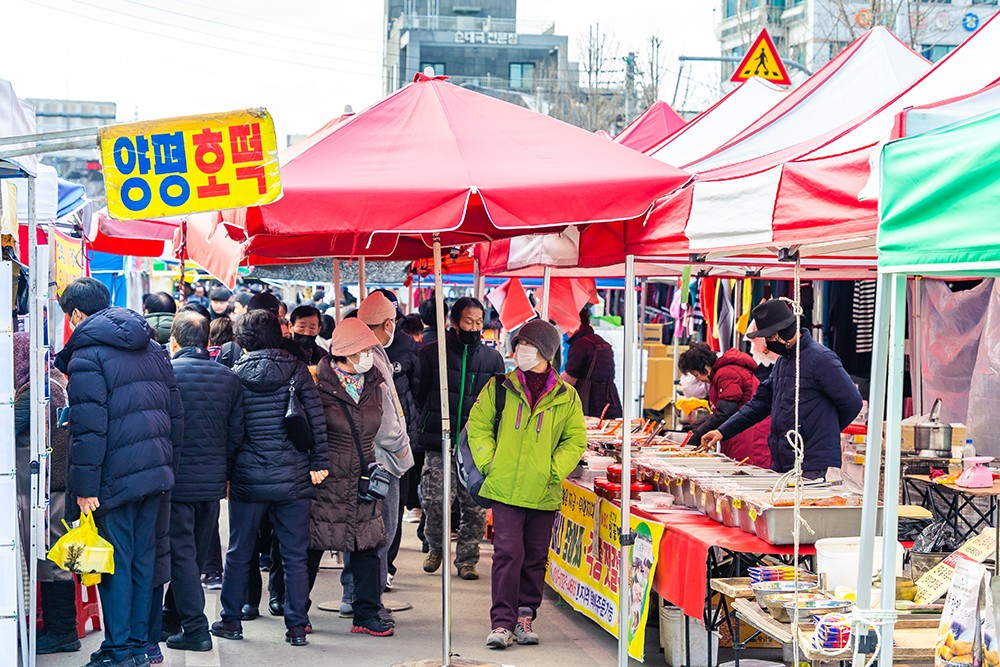
If the date ends with 0 or 5, the 5-day market opens around the plaza in front of Yongmun Station. Its history is so long that it is called the three major traditional markets of Yangpyeong, with the 5-day market held at Yangpyeong Mulmalgeun Market near Yangpyeong Station, the Yangsuri Traditional Market held in Yangsuri, and in the Yongmun Millennium Market. How is a 5-day market still held in the metropolitan area? You will change your mind when you come to Yangpyeong as a massive 5-day market is waiting for you.
Merchants from all over the country, as well as from every corner of Yangpyeong, greet visitors with their goods that are spread out in front of them. They stop visitors with their faces excited for the spring weather that has been a long time coming and with loud voices. It gives off a bustling mood that fills the plaza in front of Yongmun Station and surrounding roads. It is so crowded that you must squeeze through the crowds to see the items on sale. How long did we wait to see this scene again?
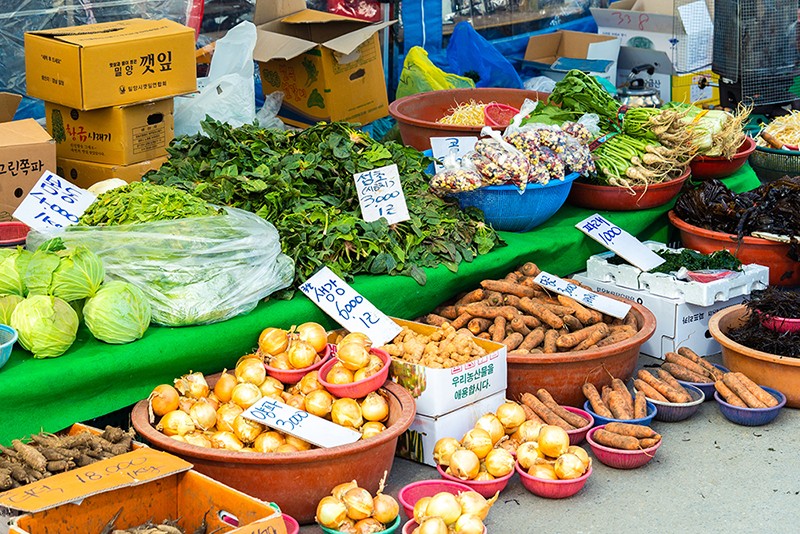
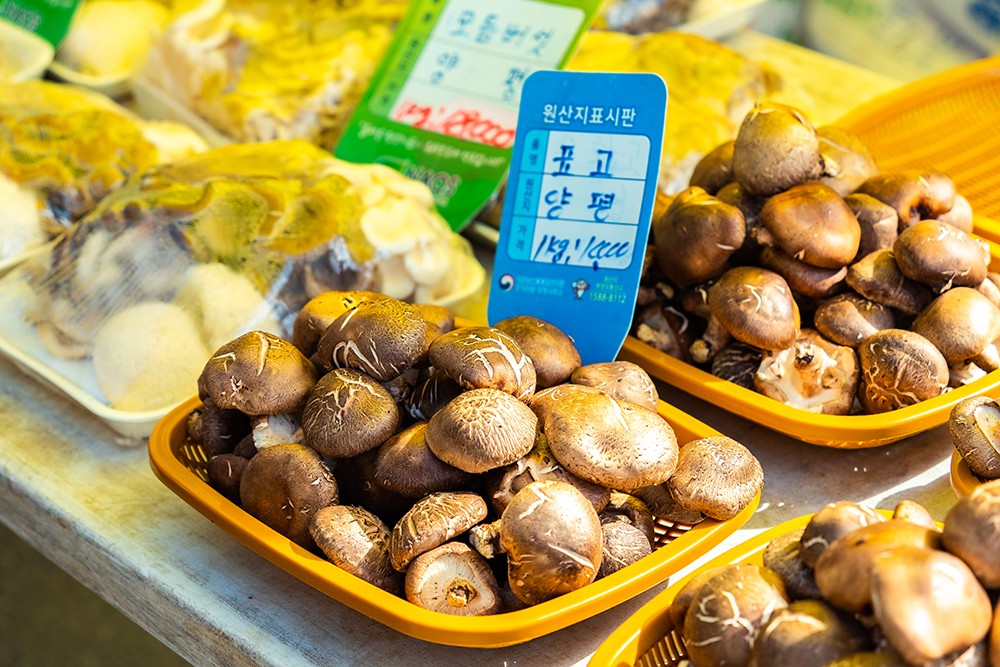
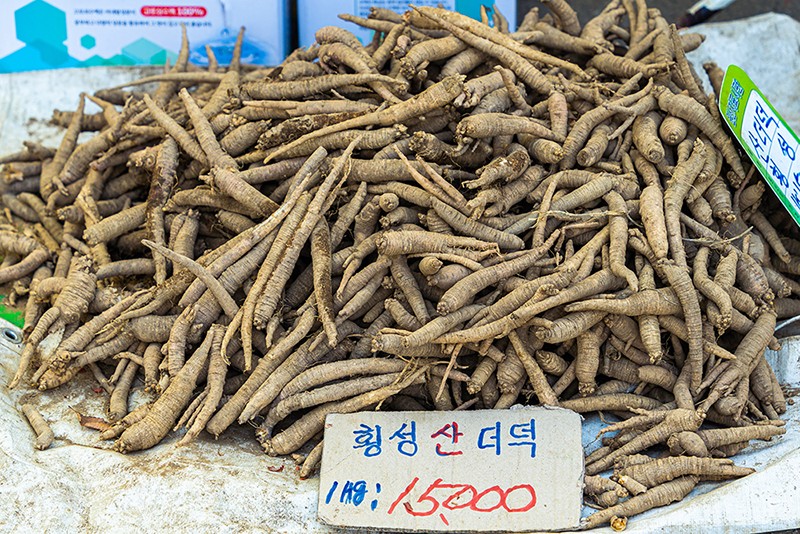
Mushrooms, a specialty of Yangpyeong, are displayed by type. But there are more items on display. Fresh foods from all over the country are also packed on the stalls. Starting with the seomcho, the spinach from the islands of the southern provinces, bangpungnamul (wild parsnip), and the vegetables that are just starting to be harvested, such as bomdong (winter cabbage), proudly serve as the spring’s messenger, with onions and carrots boasting their freshness in their own colors. Homemade meju (fermented soybean lump), sauce items, and oil items that must have been carefully produced with sincerity, also welcome the spring. Acer mono sap, which means the arrival of spring, is also displayed in multiple PET bottles.
Strawberries, which are harvested in full swing across the country, including Yangpyeong, tangerines and red hyang that are high in vitamin C from Jeju, and dried persimmons from Sangju, which must have been dried throughout the winter, are proudly featured in the lineup. Interestingly, they cost 5,000 won per basket. It is the same with green grapefruit, kiwi, and tomatoes. There should be minor differences, but the fruit merchant does not seem to have a complex calculation method. Perhaps the number of fruits or the size of the basket is slightly different.
Yes. Let's not forget that there is a slight difference in price by stall, merchant, or country of origin. After all, there is an odd war of nerves over pricing even within the market. It's fun to look around and compare prices, and also to bargain for a little discount after choosing a product you like. Isn't that the charm of the market? Why not say a word or two to the merchant? If you get a little bit of discount here and there, you'll be able to buy an extra bag of snacks.
Sightseeing can wait until after a meal
It's hard work just walking around the market once or twice in search of high-quality food ingredients. However, the aroma of warmth that flows out from somewhere makes you move toward it. You rationalize your decision without realizing it at the thought of taking a little rest. All of these are due to the street stalls that cannot be left out of the 5-day market. Grilled doraechang (special cuts of pork), which is difficult to enjoy except in Yangpyeong, and simple snacks and janchiguksu (banquet noodles) are attracting you across the market.
However, the most popular menu here is ugeojigukbap (kimchi cabbage and rice soup). As if to highlight the identity of the 5-day market to the fullest, it is cooked thoroughly with many ingredients in a large pot under strong firepower. This alone attracts plenty of visitors. With a fist-sized seonji (clotted pig blood) in the gukbap, it’s just too hard to let it pass. The dish has been verified because it is crowded with people queueing to taste it even if they have wait for so long. Compared to nearby restaurants, it boasts of affordable prices and generous portions. This is why it is loved by both market customers and merchants who work hard all day.
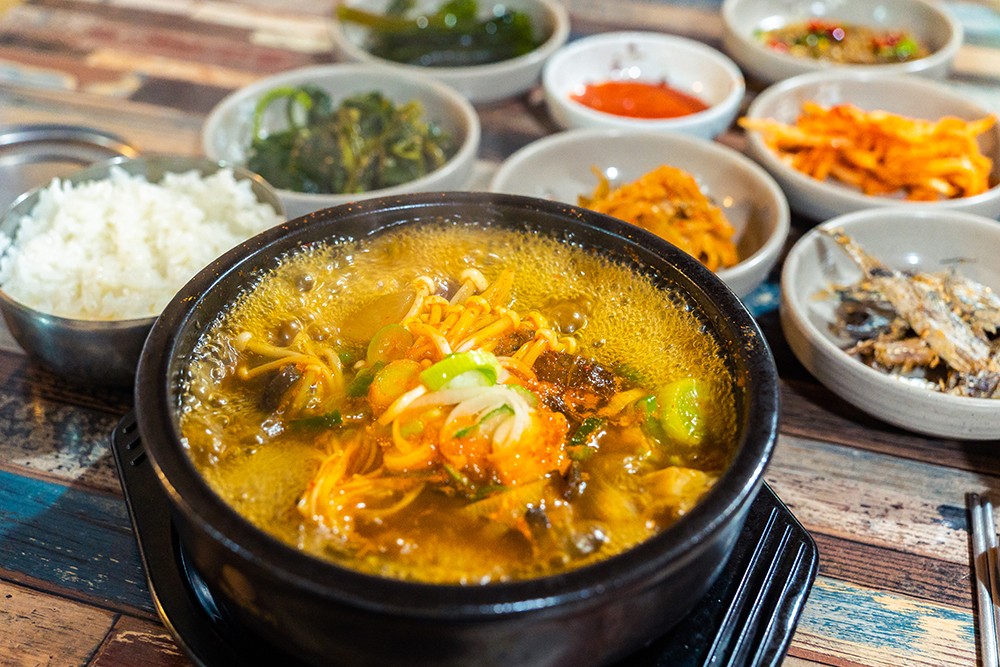
If you exit the 5-day market and walk toward the Yongmun Millennium Market Arcade, you can also have neungyibeoseot gukbap (neungyi mushroom rice soup) made with mushrooms, which is a specialty of the Yangpyeong region. Neungyibeoseot gukbap with various types of mushrooms, including neungi mushrooms, and boiled with spicy seasoning relieves fatigue that may have accumulated from browsing the market. It is recommended if you want to enjoy a hearty and healthy meal.
Of course, there are other people who attract the attention of visitors walking through the complex market. The rice puff vendor always leads the parade. In front of the vendor, who regularly shouts, “Pongyiyo (bang)!” there are bags of rice puffs in an appropriate size. Next comes the gakseolyi (singing beggar). He proudly dances and sings in the middle of the market, and sells yeot (taffy) from Ulleungdo Island. They are heavyweights who are similar in energy.
It is also not easy to resist the hand of the merchant who spreads various snacks on the stalls, and hands them out to passing visitors, tempting them for a taste. Think carefully because you won't be able to leave after eating a snack full of childhood memories. Customers who have already bought a bag full of snacks would be happily smiling. It is the same with chicken fried in a cauldron filled with oil as it is full of memories.
There’s more. You can see famous snacks from all over the country here, such as susubukkumi (pan-fried millet rice cake), a delicacy from Gangwon-do, and seed hotteok (syrup-filled pancake) from Busan. A variety of tteok (rice cake), which must have been steamed and made from dawn for the 5-day market, are also displayed in an appetizing manner. How can you stop your mouth from watering again even if you just had a bowl of neungyibeoseot gukbap?