


한식에 대한 다채로운 이야기를 전하는 온라인 매거진
Vol 58. Fermentation and Jeotgal
The Best Saeujeot in Korea: Dokbae Village, Home of "Cave Saeujeot"
Home of HANSIK
Not all kinds of saeujeot are made equal. The togul saeujeot of Gwangcheon, which boasts a deep, salty, and savory flavor, is at the top of the saeujeot pyramid for its perfection of flavor, fragrance, chewiness, and color. The secret to the saeujeot of Dokbae Village, a small rural village that bustles with visitors from all over Korea every kimjang (kimchi-making) season, is the village's caves.
Article Seo Dongchul (Editorial Team) Photos Hongseong-gun Office Sources Shin Jungil's New Geography of Korea V (Shin Jungil, 2012), Encyclopedia of Korean Culture, Naver Encyclopedia
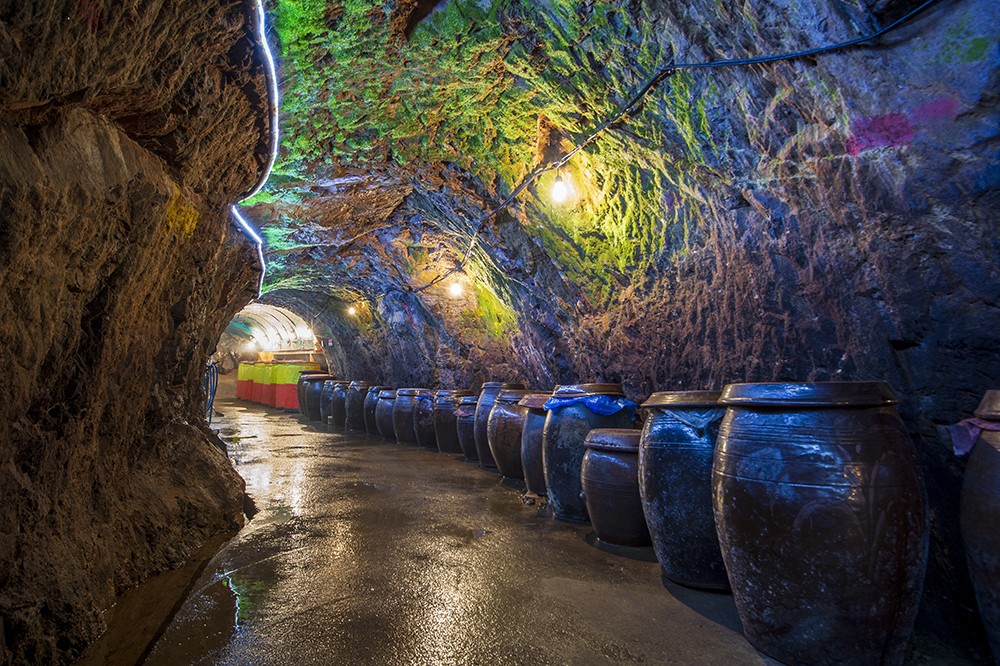
Port gives way to a cave
Gwangcheon-eup, a municipality of Hongseong-gun, was famous for its saeujeot from the time of the Goryeo dynasty. Fishermen from the islands of Korea’s western coast (e.g. Anmyeondo, Wonsando) would sail through Boryeong and Ocheon ports to bring their catches deep inland to Gwangcheon-eup’s Ongam Port, where there was a large fishery market. The fact that it had an inland port with a direct route to the sea made Gwangcheon-eup a major economic center (along with Nonsan and Ganggyeong) of Chungcheongnam-do during the Joseon dynasty.
Ongampo Port was the main port of Gwangcheon-eup, located at the tip of its southernmost district. Its name (甕岩) was derived from the Chinese character for “earthenware jar,” based on the presence of a jar-like rock on the mountain behind the port, which became “Dokbae Maeul (Dokbae Village)” when translated into pure Korean. Massive amounts of sea produce passed through this port throughout the Joseon dynasty. For example, Gwangcheon Market was open on days that include the digits 4 or 9 (4th, 9th, 14th, 19th, 24th, 29th of the month). On most of these day, it is said that approximately 150 boats came in and out of the market full of goods. The availability of diverse and fresh sea produce most likely resulted in lots of jeotgal being sold at the market. Eventually, the large number of shrimp boats made saeujeot a specialty of Gwangcheon-eup.
A look at a map of Korea today, however, may result in confusion. The name “Ongampo” remains, and Gwangcheon Stream still flows past it, but the stream is so narrow that it is not only difficult for boats to enter but also makes it seem unlikely that sea water would reach this point at all. The explanation for this situation is as follows: one day, a landslide caused soil to fall into what used to be a river, causing water levels to drop and blocking the port. Compounded with the laying of train tracks in the Chungcheong provinces, Ongampo Port lost its standing as both a port and seller of saeujeot.
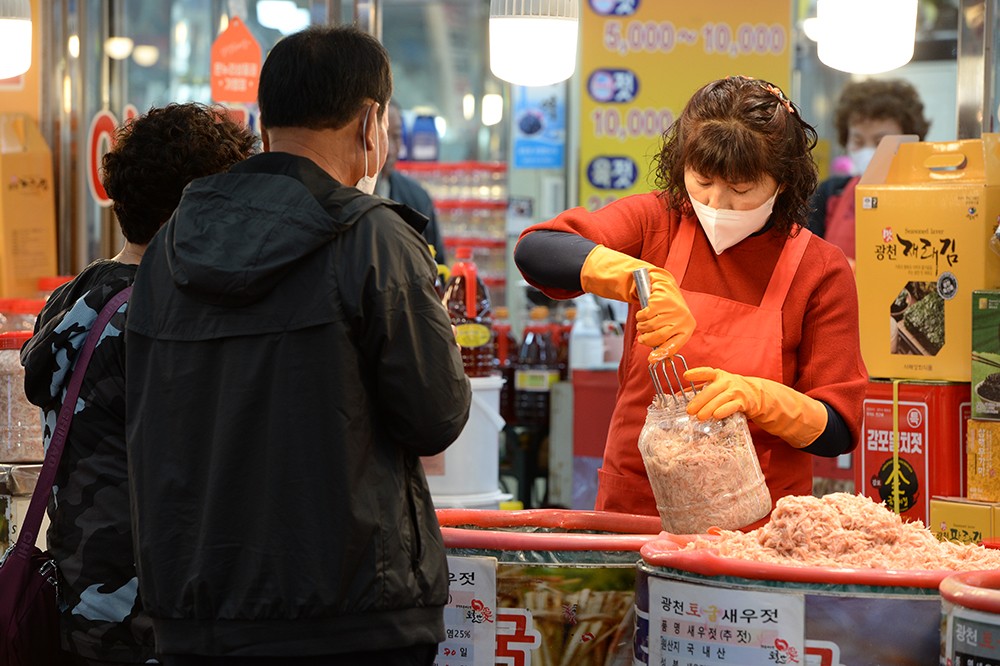
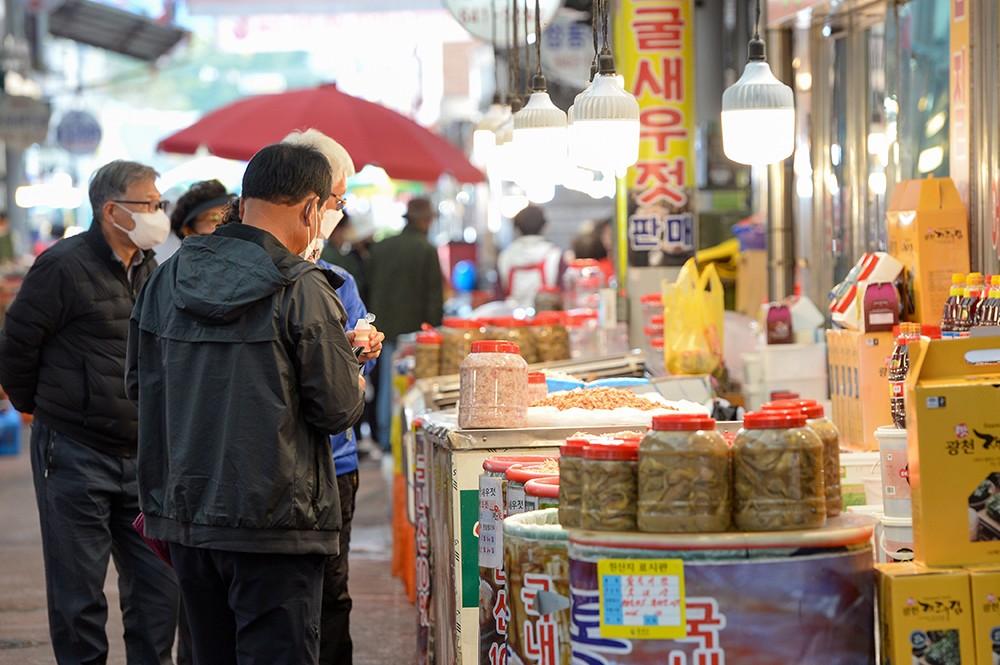
Natural refrigerator perfect for fermentation
Gwangcheon-eup’s saeujeot market, which seemed to be well on its way to disappearing, was revived in the 1990s. During the Japanese colonial period, a cave was dug into the mountain behind Dokbae Village to see if the mountain could be mined. Someone, purely by chance, started to leave saeujeot in this cave to ferment. People soon realized that, after being kept in the cave, saeujeot tasted better, was chewier, and maintained the milky-white color of shrimp flesh for a long time. This was the beginning of togul saeujeot’s journey to becoming a synonym for high-quality saeujeot.
Dokbae Village’s cave is the same temperature (14 to 15 degrees Celsius) and humidity (85%) year-round—prime conditions for fermenting jeotgal. Saeujeot stored in this cave ferments in three months and stays edible not only over the summer but for well over one year. The popularity of togul saeujeot quickly led to all of the local mining caves being filled with saeujeot, with new ones being made especially for this purpose. Today, there are 40 caves that store saeujeot: each ranges from dozens to 200 meters in length and, on average, stores 1,500 to 2,000 barrels. Approximately 90% of Dokbae Village’s residents make their livelihood by processing and storing saeujeot, and the village accounts for 60 to 70% of the nation’s entire saeujeot production—a befitting figure for a place that prides itself on being the “home of saeujeot.” Indeed, Gwangcheon Market became so well-known for its saeujeot that it changed its name to “Gwangcheon Togul Saeujeot Market.” One way to make a visit to Dokbae Village even more enjoyable is to try the Saeujeot Cave Experience.