

한식에 대한 다채로운 이야기를 전하는 온라인 매거진
Vol 58. Fermentation and Jeotgal
Exploring Ganggyeong-eup and the Flavors of Jeotgal
Foodie Travels
Pyeongyang, Daegu, and Ganggyeong share one trait in common: they were the venues for the three largest outdoor markets of the Joseon dynasty. It is easy to see how this was possible for large cities such as Pyeongyang and Daegu, but less so for a provincial area like Ganggyeong. I set out for Ganggyeong (today, Ganggyeong-eup) because I wanted to know how a center of agricultural distribution in the Chungcheong provinces became famous for jeotgal—as well as to try the local version of baekban (combination meal), the perfect complement for the savory flavors of jeotgal.
Article and photos Kim Jeongheum (travel writer)
A hub of agricultural distribution
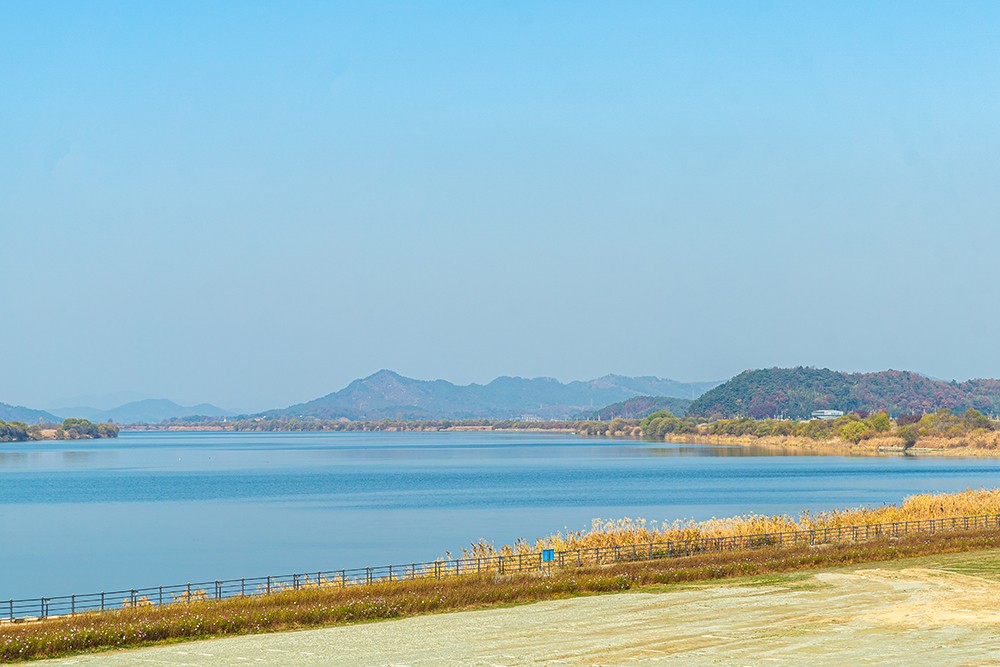
Ganggyeong-eup is a district of Nonsan, a city in Chungcheongnam-do. It is where the Geumgang River, winding through the Chungcheong provinces on its way to the western coast, meets the “plains of Honam.” There used to be a village further up the river that could be reached only by boat. In the Joseon dynasty, during which water transport-based commerce thrived, Ganggyeong was a gateway to the Chungcheong region.
Ganggyeong was a center of distribution for centuries. Seafood could easily be transported by taking advantage of the Geumgang River’s currents. It was also an outpost for shipping the rice grown in Nonsan’s vast paddies throughout the country—a local agricultural distribution hub. Farm produce can be stored in various ways. Because the same cannot, obviously, be said of seafood, locals needed a way to store the vast amounts of fish that were brought into the port. It is why people started salting seafood—a skill that, with practice, led to the ability to make and sell various types of jeotgal.
At the turn of the 20th century, this agricultural distribution center became even busier when the Japanese arrived by boat. In 1910, the Ganggyeong branch of the Hanil Bank opened its doors. Soon afterward, residents of neighboring regions flocked to Ganggyeong in search of employment. During this period, Ganggyeong was so prosperous that merchants from Cheongju, Gongju, Cheonan, and other nearby cities regularly visited to purchase foodstuffs. The city was so prosperous that people would say to one another “Don’t show off your wealth in Ganggyeong (translator’s note: The saying means that it is meaningless to put on a display of how wealthy you are because everyone in Ganggyeong is even more well-to-do).”
This golden age, however, lasted only until the Gyeongbu and Honam railways entered operation. Compared to the quick and efficient trains, water transport was a much less lucrative option, resulting in a dwindling number of visitors to Ganggyeong, one of Korea’s largest inland port cities. After the Korean War, Ganggyeong and other inland port villages began to decline quickly in the face of the government’s aggressive policy on developing the Port of Busan.
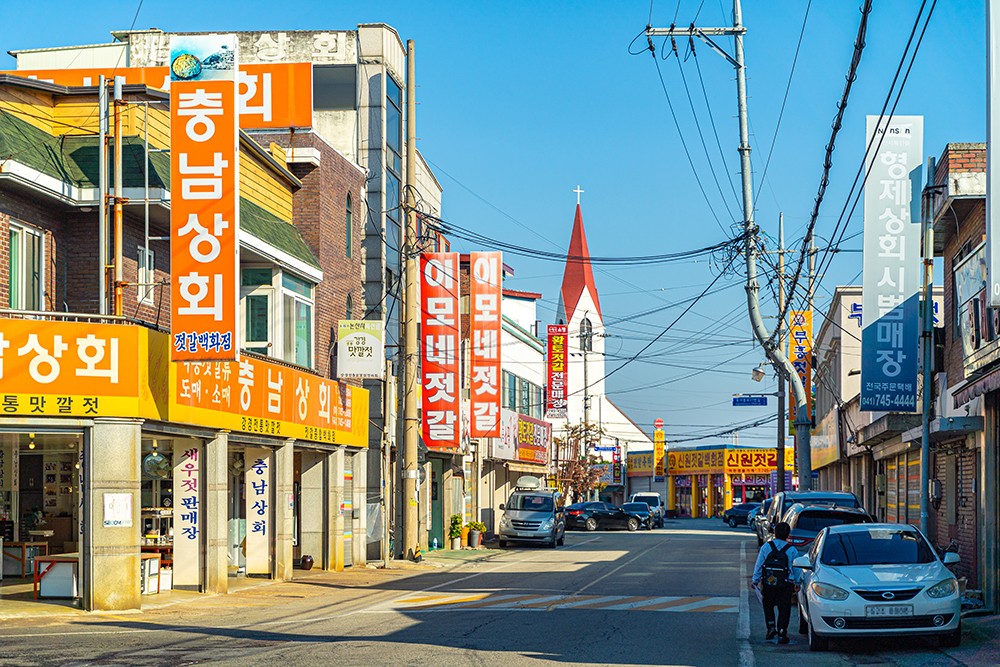
Nevertheless, Ganggyeong-eup has retained some of its former glory, having preserved several historic sites from the early 20th century. There are also quite a few residents who know how (and continue) to make jeotgal in the traditional way. Today, the area offers a view of the former sites of the Geumgang and Ganggyeong ports. If you get hungry while exploring, you can stop at a local restaurant for jeotgal baekban (meal comprised of white rice and various side dishes) and the Ganggyeong Traditional Salted Fish Market to purchase some jeotgal to take home.
In search of jeotgal
The first place to go for an experience of local jeotgal is the Ganggyeong Traditional Salted Fish Market, which is located in the heart of Ganggyeong-eup and famous for selling high-quality jeotgal at affordable prices. Contrary to expectations, the market is not a long row of roadside stands. It is housed in an exclusive building that awaits customers with jeotgal kept in large, clean storage containers and colloquially referred to as a “jeotgal department store.”
The market sells dozens of types of jeotgal. Ganggyeong-eup may be the only place in Korea that offers such a wide variety. Its biggest merit is the fact that each business is able to sell high-quality jeotgal year-round because they all have access to a large cave facility where the conditions for fermentation and storage and ideal.
Whichever shop you choose to enter, you will be able to purchase whatever jeotgal you are looking for. Prices are largely consistent, so it does not really matter where you make your purchase. There is jeotgal for kimjang (kimchi-making) as well as ones used as seasoning or for side dishes. If you are not sure what you want, the merchants will be more than happy to recommend (and offer a taste test of) several options.
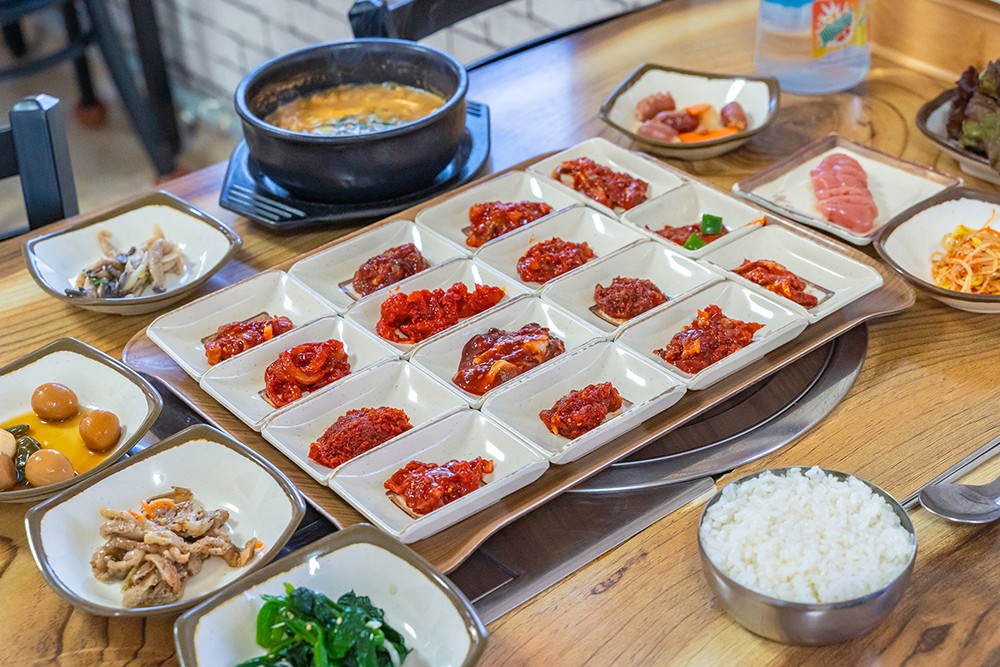
If you are interested in jeotgal but have not had many opportunities to try it, jeotgal baekban is a good way to start. There is a small restaurant near the market that specializes in baekban that include 16 types of jeotgal. In addition to the basic ojingeojeot (salted squid) and myeongranjeot (salted pollack roe), which are often called “rice thieves,” you can also try nakjijeot (salted octopus), eoriguljeot (spicy salted oysters), and other types that are popular among Koreans. To keep your meal from getting too salty, rice is served with a mildly-seasoned bean paste soup and a side of nurungji (scorched rice). You will need to order at least two bowls of rice to get a good sense of all the jeotgal!
More stories about jeotgal in Ganggyeong-eup
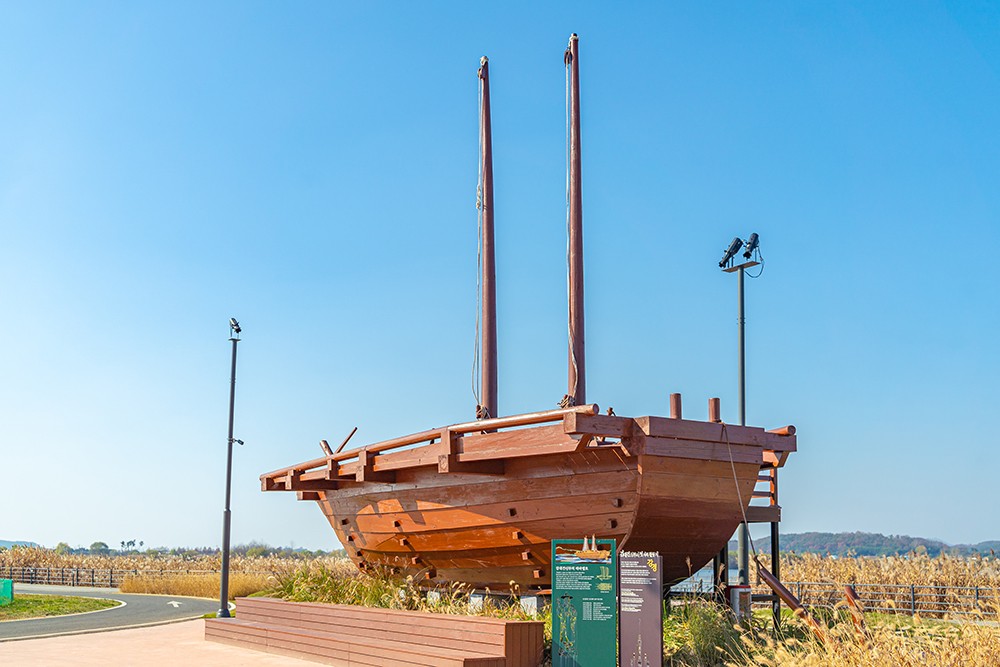
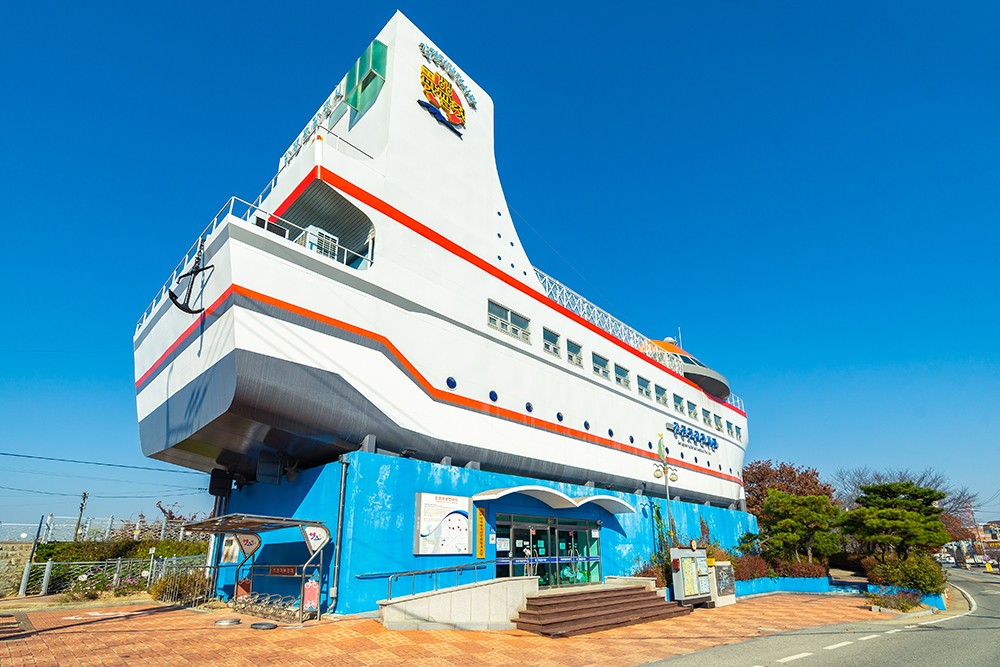
The former site of Ganggyeong Port is now occupied by the Ganggyeong Salted Seafood Pavilion. The boat-shaped building offers a great deal of information on local jeotgal, including its history, the “secret” behind its delicious flavors, types, production techniques, and replicas of what the jeotgal market looked like during the Joseon dynasty.
Jeotgal in Ganggyeong-eup has a long history that began from a very practical need: to keep sea produce, which spoils quickly at even moderately warm temperatures, fresh for prolonged periods of time. This need was initially addressed by salting, something that is mentioned in the Encyclopedia on Rural Living by Seo Yugu, a Silhak scholar of late Joseon. According to Seo, fishing boats caught large amounts of herring and yellow croaker, which was salted using salt from nearby salt fields and sold to neighboring regions as something called “eoyeom.” Salting methods in Ganggyeong soon became sophisticated enough to allow for fermentation, making local jeotgal famous throughout Joseon.
After 1900, Ganggyeong became more developed, which resulted in a sharp increase in the production and sale of jeotgal. By this point, half of the jeotgal consumed in Korea was made in Ganggyeong. The construction of the Gyeongbu railway made shipping-based commerce less and less competitive. This led to the decline of Ganggyeong as a region but, as any local will be quick to point out, had no effect on the flavor or quality of its jeotgal.
The final exhibition hall is devoted to what Ganggyeong-eup is like today, including photos and mock-ups of people making jeotgal and the vibrant energy of the Ganggyeong Traditional Salted Fish Market. Even if you were not that interested in jeotgal before, you will change your mind after seeing how it can be used to embellish various popular Korean foods.
Stories of Korean modernity in Ganggyeong-eup
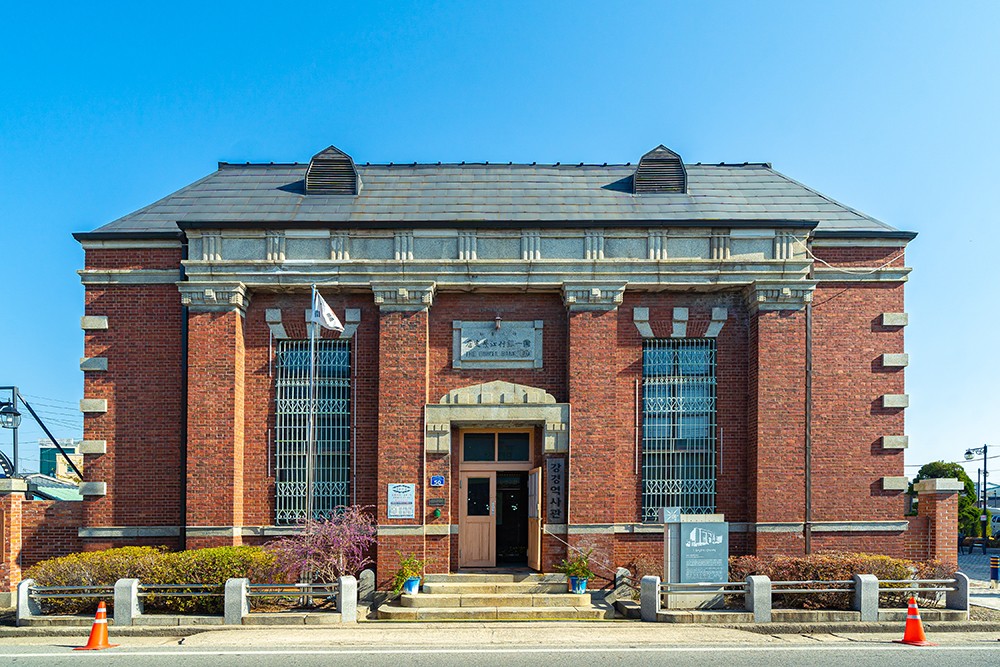
As mentioned earlier, Ganggyeong-eup had a thriving Japanese population between the turn of the 20th century and the beginning of the colonial period. The old Korea-Japan Bank, which opened branches only in commercial capitals, is still standing next to the Ganggyeong Traditional Salted Fish Market. You can also still see traces of Ganggyeong Port, where ocean-going vessels docked. Searching for Japanese- and Western-style buildings from this period throughout Nonsan is a great way to pass the time while taking in the history that is still very much alive in the city.
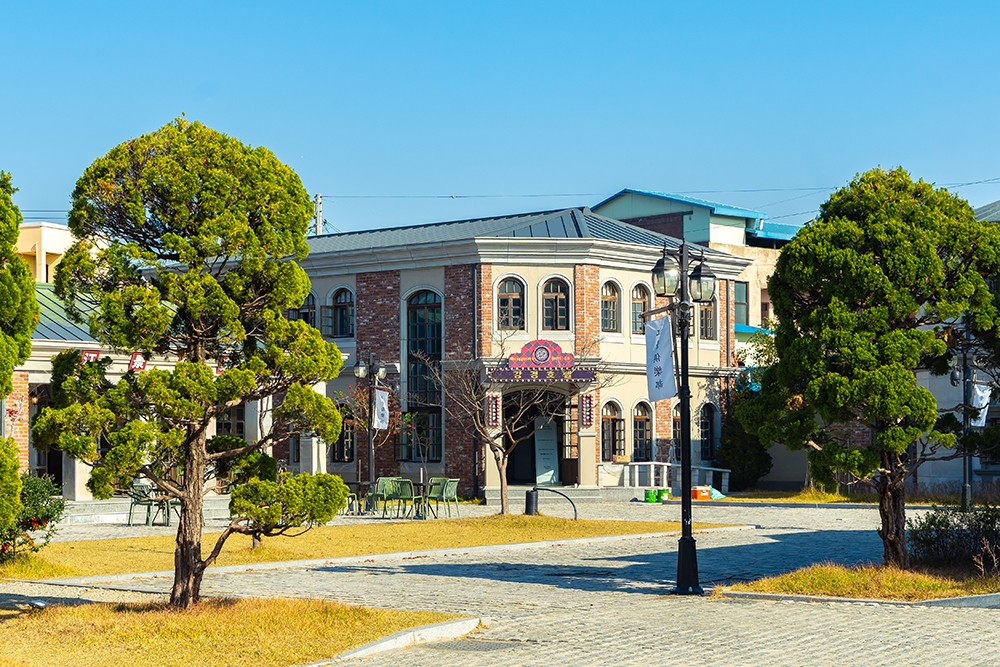
A stroll through the alleys of Ganggyeong-eup will bring you face-to-face with several old Japanese buildings. One good place to start is the Ganggyeong History Museum, which is housed in the aforementioned Korea-Japan Bank, and the authentic early 20th-century buildings surrounding it that have been kept in pristine condition by locals. This group of historic buildings, which is a sort of modern history theme park, is collectively called “Ganggyeong Gurakbu” and is now filled with cafés, bakeries, a hotel, and restaurants that recreate the heyday of Ganggyeong-eup. Try stopping at one of the cafés to feel like someone taking a leisurely mid-day break over a century ago.
Ganggyeong-eup is also a meaningful pilgrimage site for Catholics and Baptists. In 1896, the first Baptist worship service in Korea was held (by the Ganggyeong Baptist Church) on the summit of Ganggyeongsan Mountain at the home of Ji Byeongseok, a cloth merchant who sold his wares in Incheon and Ganggyeong. The service was officiated by Baptist missionary Edward C. Pauling and attended by his wife, Mabel; Ji and his wife; and Amanda Gardeline, a missionary. The replica of the original L-shaped, thatched-roof house, which was designated by the city of Nonsan as Local Cultural Heritage No. 38, is regarded as a church by Baptist believers.
For Catholics, Ganggyeong-eup is where Korea’s first priest, Kim Daegeon, landed upon returning to his home country after being ordained in Shanghai. It was in Ganggyeong-eup where Kim officiated his first mass in Korea—a historic event whose details are available at the Ganggyeong Catholic Church.