


한식에 대한 다채로운 이야기를 전하는 온라인 매거진
Vol 55. Flavors of HANSIK Enriched by the Wind
Korean Ingredients Turned into Masterpieces by the Wind
Wind and HANSIK
According to the Encyclopedia of Korean Culture, wind is “a weather phenomenon in which air moves due to differences in atmospheric temperature and pressure.” For a simple movement of air, the wind does quite a lot. It allows pollen and flower seeds to travel long distances, pushes a sailing yacht forward, and keeps massive wind power generators moving to produce electricity. One of the wind’s jobs that we often forget about, however, is food preparation. It allows us to store fruit, vegetables, fish, shellfish, and marine plants for longer periods of time by drying them while also infusing them with unique flavors and making them healthier. Korean cuisine, as a whole, is proof of the wind’s transformative culinary powers.
Article Seo Dongchul (Editorial Team) Sources Encyclopedia of Korean Culture, Doosan Encyclopedia
Winds of the Korean Peninsula
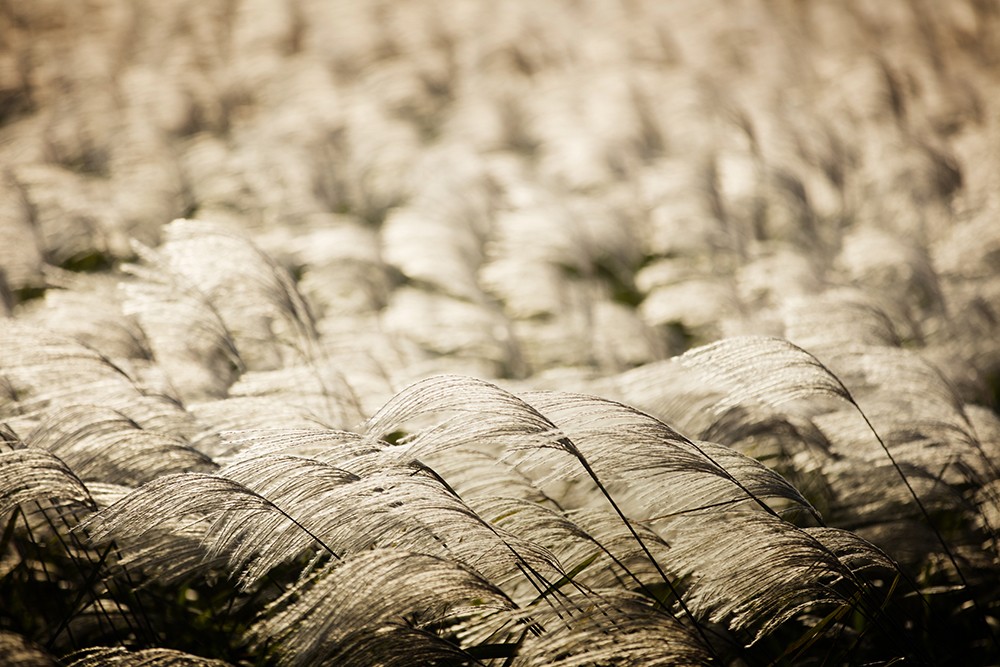
Most of Korea’s winds are seasonal. These seasonal winds are interspersed with land breezes, sea breezes, mountain winds, and valley breezes. There are two types of seasonal wind: the winter wind blows between November and March, comes from the northwest, and is strong, cold, and dry, while the summer wind blows between May and September, comes from the southeast, and is weak, warm, and humid. The transitional months, April and October, have minimal to no wind.
The coastal areas of Korea, a country surrounded by ocean on three sides, has both land and sea breezes. A phenomenon that occurs in this case, normally in the summer, is the creation of wind due to differences in the amount of heat absorbed by the land and the sea (based on differences in surface characteristics). During the day, breezes blow from the ocean toward the land, which heats up quickly due to the sun. At night, breezes blow from the land toward the ocean, which cools relatively slowly. The same principle applies to mountain and valley breezes, which occur frequently in the winter. During the day, the mountain’s summit heats up quickly, upon which wind blows upward from the valley to the top. At night, the mountain cools, resulting in wind blowing in the opposite direction (from the summit downward). Generally, mountain breezes are stronger than valley breezes because the former accelerate while coming down the mountain due to the pull of gravity.
All of these winds play many roles that are not immediately visible or apparent. The most tangible function is the generation of new and renewable energy in the form of electricity produced by wind power generators. Pollen and flower seeds can travel as far as 200 kilometers on the wind. Sailboats cross oceans by the wind’s strength: the same is true of the movement of birds and manmade flying objects. The windmill, which was invented well over a millennium ago, was used to bring water up from a low altitude and grind wheat. Today, people tend to favor dryers, but in many cases, clothes are still dried naturally in the wind.
The wind is also used to dry food ingredients so that they can be stored—one of humankind’s oldest food storage methods. Removing moisture prevents enzymatic reactions and the activity of microorganisms. This prevents food from spoiling, allows it to be stored for long periods of time, and reduces the food’s weight and volume, making it easier to transport.
The best of the ocean’s nutrients
Dried fish played a critical role in the days before modern food storage devices by allowing people to eat fish and shellfish out of season. Hwangtae and bugeo, or dried myeongtae (pollack), were always included in ancestral rites and are still widely enjoyed as the base ingredient of soups and side dishes. Fish such as bakdae (a type of flatfish), rockfish, and halibut are half-dried after being flavored with salt: the removal of moisture results in the production of amino acids, which in turn removes the fish’s unpleasant odor while making it savory and causing it to take on a sticky, chewy texture. Gulbi, or dried yellow croaker, is a delicacy that is as well-loved today as it was centuries ago.
Dried squid, octopus, and jwipo (dried sliced filefish) are age-old snacks that are often served in Korea alongside a drink. Dried shrimp, anchovies, and kelp are used to flavor broth, while mussels, oysters, baekhap (ocean quahog), and sora (top shell) are boiled and then dried for use in diverse dishes. Laver, which is rich in vitamins and minerals, is regarded as a mealtime staple. Seaweed, which is rich in calcium, is used to embellish dishes such as miyeokguk (seaweed soup) and miyeokchomuchim (sweet and sour seaweed salad) with the ocean’s flavors.
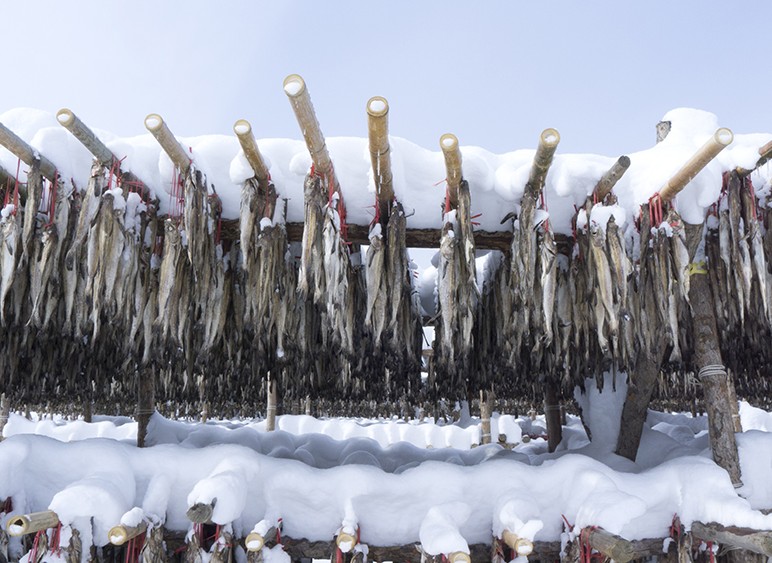
Gwamegi (half-dried saury), which is made by cycles of freezing and thawing (saury or herring) by exposure to cold ocean winds, is a famous wintertime delicacy. There is a story about the origin of gwamegi. A scholar who lived on Korea’s eastern coast was traveling to the capital city of Hanyang to take the civil service exam. It was the height of winter: cold and hungry, he saw a herring hanging from a branch near the shore. After eating it, he was unable to forget the taste. After returning home, every winter, the scholar hung herring up to dry through a freezing-and-thawing process. The process of making gwamegi increases the amounts of DHA and omega-3 fatty acids in the original ingredient (herring, saury). Nucleic acids, which prevent aging of the skin and deterioration of brain function, also occur in higher amounts.
Dried namul, fruit, and noodles
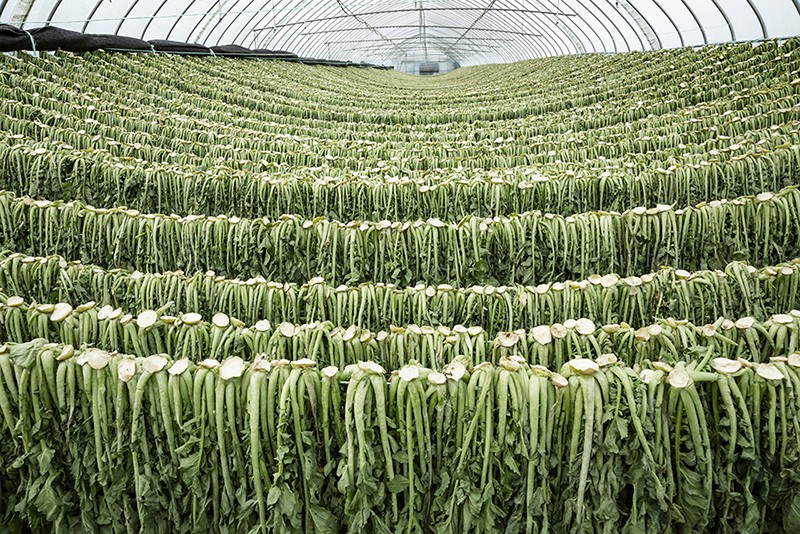
The practice of drying the namul (wild greens or herbs) that is picked each season, either as is or after parboiling, is an example of pre-modern Koreans’ desire to store food and the creative means they came up with to do so. In the spring, mugwort, bamboo shoots, baby bracken, and chwi (aster) were picked and dried. In autumn, pepper leaves, zucchini, cabbage leaves, radish, and Brassica rapa L. (wild turnip) are dried, after which they are eaten all winter. Dried namul has the benefits of being chewier, savorier, and richer in nutrients. Siraegi, the leaves of dried wild turnip, has recently gained a following as a superfood despite its humble appearance. In pre-modern times, siraegi was an important source of vitamins and fiber, which were often lacking in the winter months. The fiber content triples or quadruples during the drying process. Furthermore, siraegi is known to be an even more effective antioxidant (due to its polyphenolic acid) than radish. It is used for namul, soups, and stews for its flavor and soft texture. Golden oak and wood ear mushrooms are dried before use because this enhances their unique fragrances. Both are also quite chewy, making them popular additions to various dishes, and are often given as gifts for Chuseok or Lunar New Year.
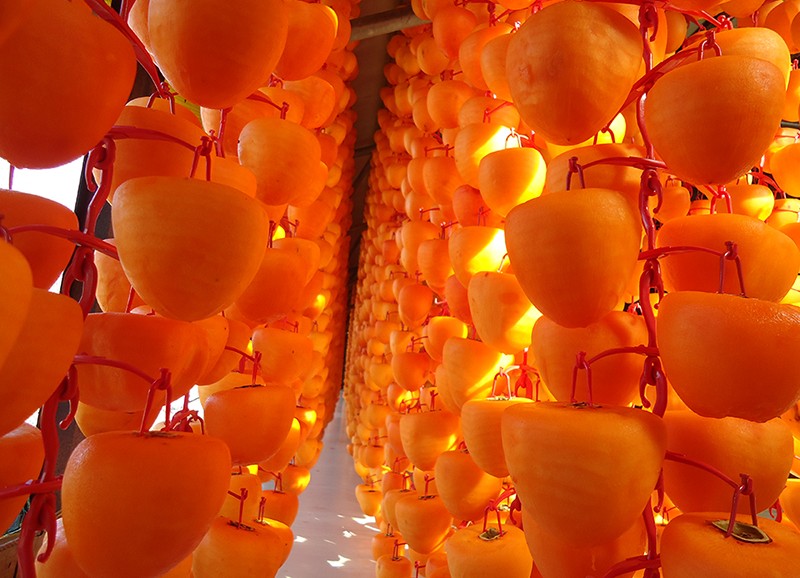
Fruits were dried not only for long-term storage but also as an everyday snack and for ancestral rites and weddings. The most frequently-dried fruits were persimmons and jujubes. Jujubes were cut into thin slices and dried in a spot with a lot of sunlight and wind. They were also sometimes dried whole and added to samgyetang (ginseng chicken soup) and various traditional beverages for a touch of extra flavor. Gotgam, or peeled and dried persimmon, was widely consumed from the Joseon dynasty. It was used for special occasions, such as Chuseok, Lunar New Year, and ancestral rites, and is still popular among all ages today for its sweetness, chewiness, and wealth of nutrients.
The wind makes noodles taste better as well. Until recently, most neighborhoods had a noodle factory. On windy days, one could easily see long, white noodles hanging to dry on bamboo racks and waving in the wind like one large skirt. When dried in the wind, the scent of the dough is blown away, and the noodles become very chewy, which eventually enhances their taste. Wind-dried noodles have very little starch residue, do not stick together much even after being boiled, and do not soften or swell. This makes a dish of wind-dried noodles a pleasant culinary experience until the last bite. Most of the noodles currently sold on the market are heat-dried indoors, which has the advantage of taking less time than wind-drying. The downside is the lack of firmness and a strong smell of flour—suggesting that whether noodles were dried in the wind is just as important as the proportions of flour, salt, and water used to make them. Noodles are very weather-sensitive. It is why noodle-making requires extensive experience: namely, knowing how to adjust the dough’s viscosity, concentration of salt water, and length of time between dryings depending on the humidity and outdoor temperature of the days on which the noodles are hung to dry.