

한식에 대한 다채로운 이야기를 전하는 온라인 매거진
Vol 55. Flavors of HANSIK Enriched by the Wind
If You Miss the Wind, Go to Hoengseong
Foodie Travels
We have only just begun enjoying the refreshing breeze that blows in the mornings and evenings, heralding the start of Korea’s fall season and prompting us to pull out our thicker clothing from the back of the closet, even though the temperature has not yet dropped low enough to warrant it. The cooler temperature, a welcome change from the humidity of summer, is adding a touch of energy to our daily routines that were restricted by July and August’s intense heat waves. Even though we all know that autumn will end as quickly as it arrived, that should not stop us from enjoying the season and its mild yet cool breeze. To fully enjoy this unique yet fleeting time of year, how about setting off on a trip to Hoengseong, in Gangwon-do Province?
Article and photos Kim Jeongheum (travel writer)
Where even the wind stops to rest
Starting from Korea’s western coast, you will drive through a relatively flat section of land. The spot where the flat land starts to take on a gentle slope is Hoengseong, a place that boasts a simple yet beautiful natural environment: it then suddenly rises into Taegisan Mountain. This was my first time seeing the Baekdudaegan Mountain Range. It is here that the wind and clouds come to enjoy their first “break” on their journey inland.
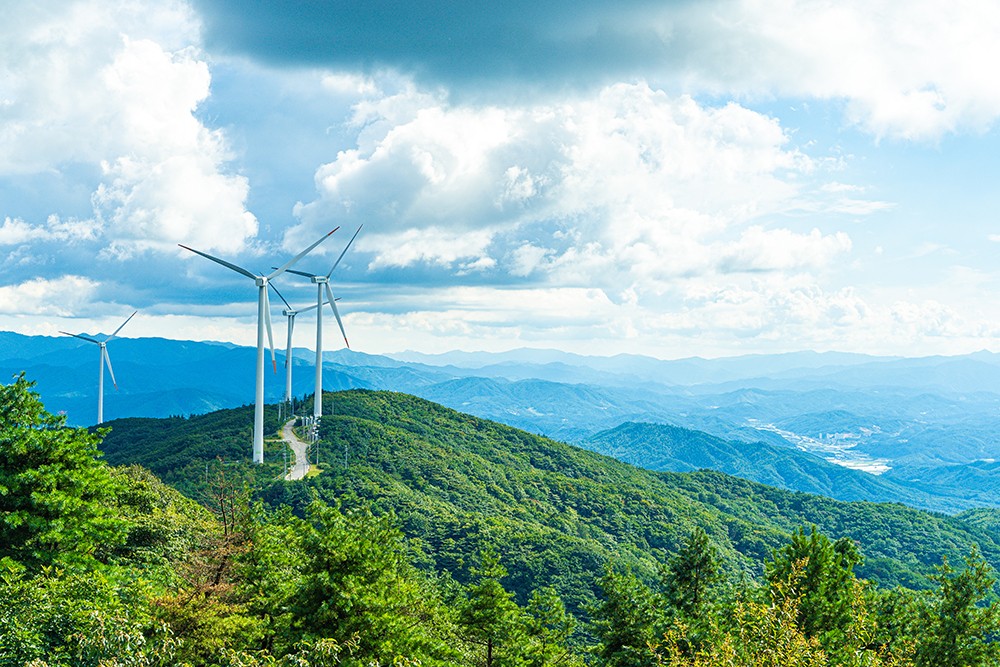
I wanted to greet the wind as it arrived. The starting point of my journey was Yanggudumijae, a mountain pass that links Dunnae-myeon (Hoeongseong-gun) and Bongpyeong-myeon (Pyeongchang-gun). The tip of Yanggudumijae has a secret passageway that heads toward Taegisan Mountain’s wind power plant. The hiking trail follows the ridgeline, meaning that I encountered wind blowing in many different directions. I was greeted by massive, slowly-turning turbines and fleecy clouds that had come all the way from the western coast.
The trail from Yangdugumijae was relatively easy to walk because it is paved—primarily to allow access by maintenance personnel for the turbines and transformers. I didn’t mind the intrusion of power generators into a place of nature: simply by turning my head slightly, I could see the majesty of the Baekdudaegan Mountain Range stretching toward Pyeongchang-gun, the small villages grouped around “downtown” Hoengseong-gun, and the tip of Chiaksan Mountain in far-off Wonju.
This is also the site of a story about King Taegi, the last king of Jinhan (confederacy of chiefdoms that existed from the first century BC to the fourth century AD). He is a relatively famous historical figure whose name can be found throughout Gangwon-do and who is best known for resisting Hyeokgeose of Silla until his death. Why, one may ask, is there a story about Jinhan, which was located in the far south (today’s Gyeongsangnam-do), here? Vowing to recover the land of Samhan that had been taken over by Silla forces, Jinhan’s remaining forces retreated to the Taebaek mountains. After arriving at Deokgosan Mountain following one month of travel without rest, they built a fortress on the mountain, vowing to fight to the end. Jinhan’s last forces eventually fell to Silla but were remembered by locals. This is why Deokgosan, the site of Jinhan’s last stand against Silla forces, is called “Taegisan” (after Jinhan’s last king).
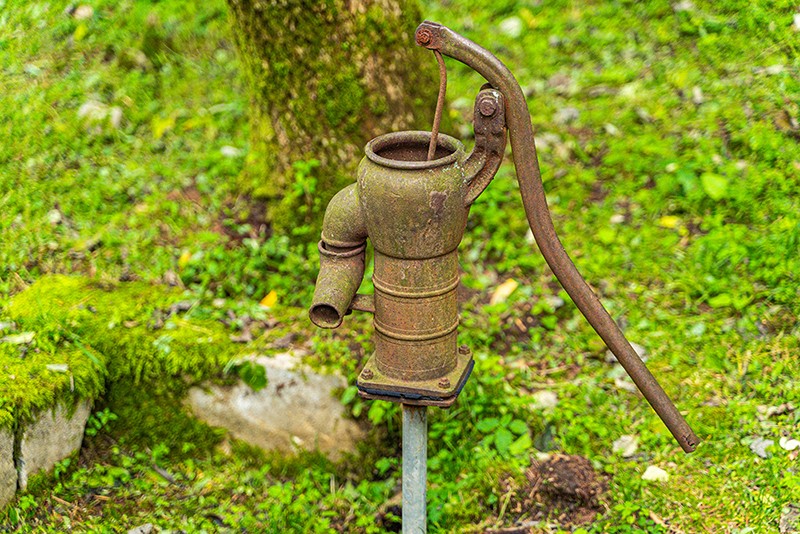
The summit of Taegisan was inhabited by people until relatively recently: during the Japanese colonial period, it was the home of slash-and-burn farmers. In the 1960s, a “mini” school was built there for the farmers’ children. Today, you can see the abandoned remains of the school, including a hand pump that brought up subterranean water. No one lives there now, but it is clear that Taegisan was the site of many people’s life stories, both ancient and modern.
Unfortunately, Taegisan’s summit is closed off, but there is a stele and observatory nearby that are open. It is only here that you can get a sense of Hoengseong-gun’s entire topography: the wide plains in the west, the gently-sloping east, and the solitary, austere spike that is Taegisan.
The wind that I experienced on the mountain was like a mischievous child who wanted to see how many directions my hair could blow. I also realized that, no matter how refreshing it may be, the breeze is only fleeting: it is gone as soon as you realize it has arrived.
The road to Gangwon-do: Foods from nature
Hoengseong-gun is the entryway to Gangwon-do. The first stop that you arrive at in the province when coming from Seoul on the Yeongdong Expressway is the city of Wonju: Hoengseong-gun, however, has an atmosphere that most agree is more distinctly “Gangwon-like.” A major reason for this is the county’s wealth of local foods, including baekban (meal of rice and side dishes) served with a generous portion of mountain greens; makguksu (buckwheat noodles), which is served with plenty of dongchimi (radish water kimchi) broth; and Anheung jjinppang (steamed roll, usually with a filling). There is also, of course, Korean beef—the first food that comes to Koreans’ mind when thinking about Hoengseong-gun—from grass-fed cattle.
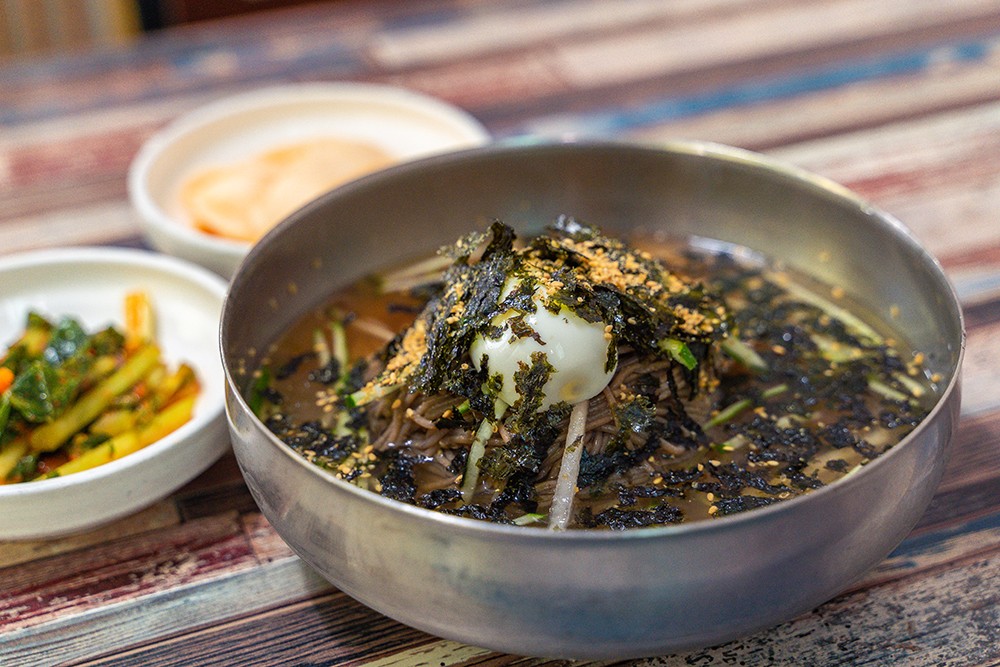
Makguksu is a symbolic food of Gangwon-do—a “soul food” of slash-and-burn farmers who cooked their meals with buckwheat, which was planted because of its ability to grow in virtually any type of soil. It is a dish that is relatively easy to prepare, a quality that is said to be the reason for its name (mak means “carelessly” in Korean). One of the best ways to enjoy makguksu is to visit several restaurants, as each one has its own unique recipe.
The identity of Hoengseong-gun as the entry point of Gangwon-do is a major element of the fame of Anheung steamed rolls. Anheung-myeon is where inter-city buses heading to Gangneung used to stop for a break. Locals sold snacks to bus passengers, of which the most popular was the cheap yet filling steamed rolls. With the rolls having been featured on television programs, there are now over 20 shops in Hoengseong-gun that specialize in steamed rolls.
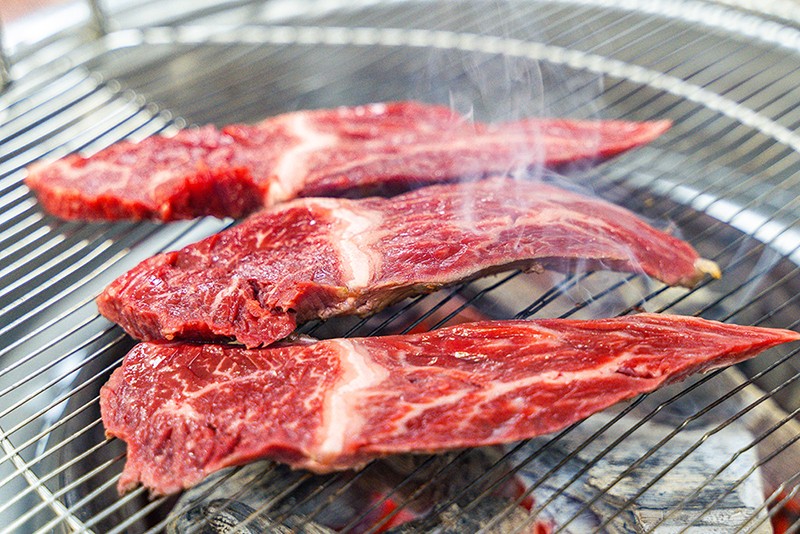
As for Korean beef, Hoengseong-gun is definitely not Korea’s only cattle-breeding region, but it is the one that is most closely associated with beef. According to Hoengseong-gun Office, the region is best-suited for raising cattle because of its optimum (high) altitude and large grassy plains. Some say it is also because Hoengseong-gun was a stop on the road that was used to transport cattle from Gangwon-do to Seoul. The region is also home to Hoengseong Korean Beef Village and, as you may expect, many Korean beef restaurants, some of which are operated by butcher’s shops and allow patrons to choose the desired grade and/or cut to be grilled on-the-spot.
Walking through Hoengseong-gun, wherever your feet take you
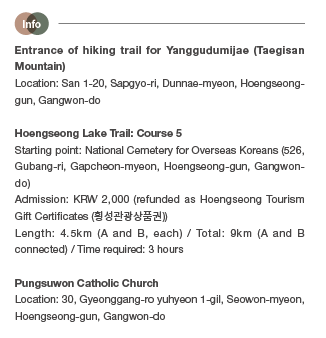
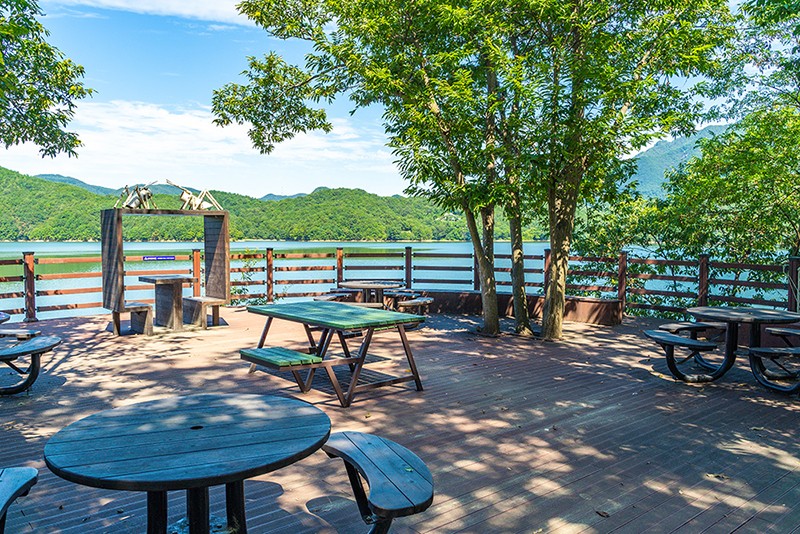
Today, the most popular Hoengseong-gun destination is Hoengseong Lake, which is lined with a neatly-designed walking path (Hoengseong Lake Trail). The most popular route is Course 5 because of its view of all of the lake’s natural features. This course, which consists of forest paths of varying sizes, is further divided into options A and B, each of which is about 4.5 kilometers long and easy to walk because of their lack of uphill slopes. It is a wonderful way to spend a few hours embraced by the silent beauty of Korea’s autumn.
Another site that should not be missed is Pungsuwon Catholic Church, the first such church housed in a Western-style building to be opened in Gangwon-do (when Catholicism was in the process of entering Korea). You do not need to be well-versed in Korean history, however: if you visit when mass is being held, you will hear the beautiful sounds of the church’s bell and hymns. Even if there is no mass, there is plenty to appreciate in the church’s natural surroundings and fresh air. Take a slow walk through the church grounds or sit under the zelkova tree, whose leaves are beginning to turn a golden color, to enjoy the height of autumn in Gangwon-do.