

한식에 대한 다채로운 이야기를 전하는 온라인 매거진
Vol 54. Ice, the Crown Jewel of Summer
Restoring the Glory of Korean Ginseng
Captivated by HANSIK
Korean ginseng, the common name of panax ginseng, was one of Korea’s top exports throughout its history, sent primarily to China and Japan. Contrary, however, to the ever-growing global ginseng market based on the rising interest in physical health, the market share of Korean ginseng is much more modest than it was in premodern times. When can Korea, which prides itself on being a centuries-old ginseng exporter, regain its former reputation? What does it need to do to make this possible?
Article Noh Yunyoung (Editorial Team) Sources World History of Ginseng: In Search of the “Global” Product Forgotten by the West (Seoul: Humanist, 2020), “The globalization of Korean ginseng” (Food Culture (Vol. 2, No. 4), 2009)

Ginseng, a major export
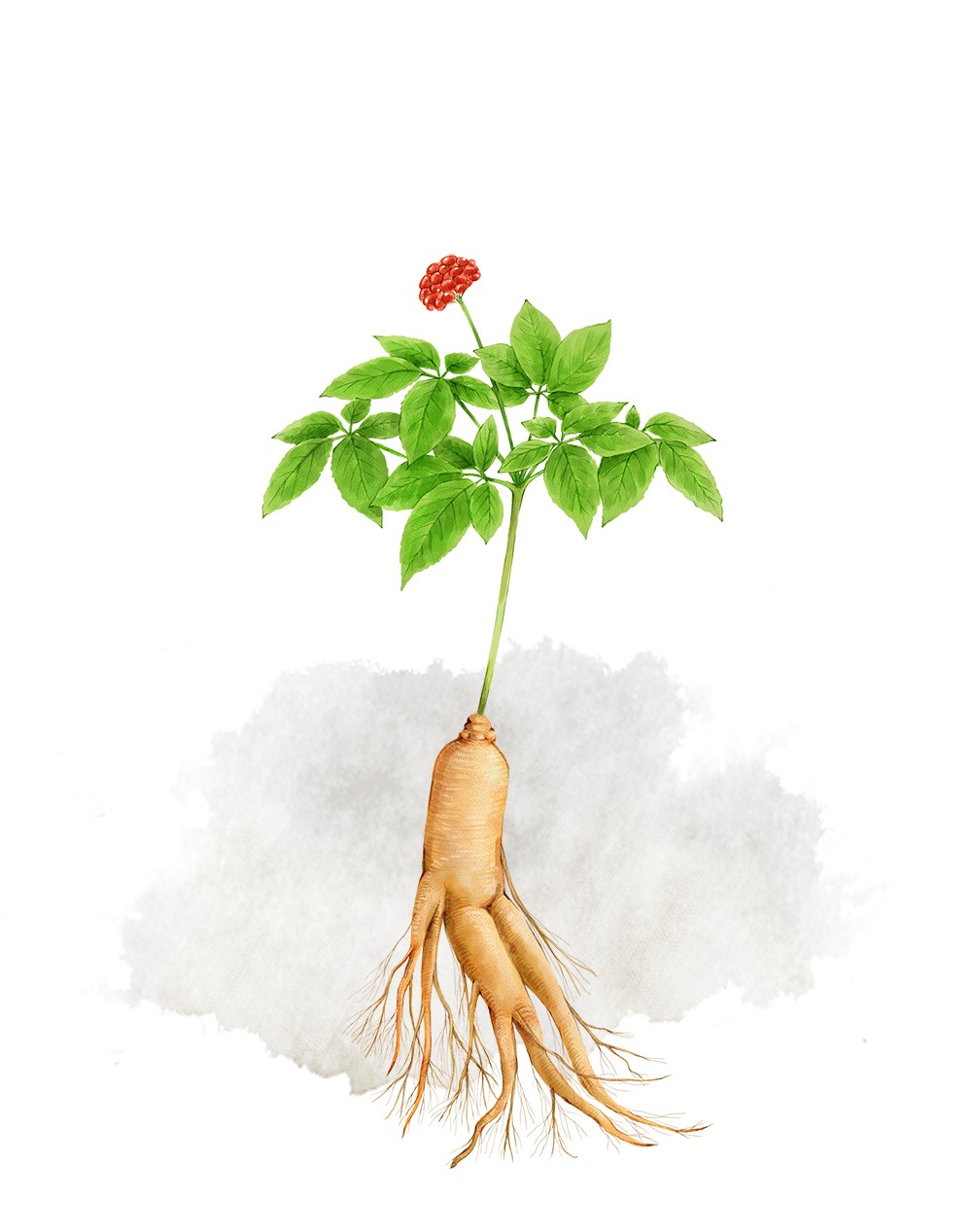
Ginseng is a medicinal plant of the Araliaceae family that is approximately 60 centimeters long and grows in mountainous areas. The Korean word for ginseng, insam, is based on the resemblance of the root—which is used for medicines—to the Chinese character for “person.” In Korea, ginseng is known by a wide range of names depending on how it is cultivated, its country of origin, and how it is processed. Insam is human-grown ginseng, while sansam is wild ginseng that grows in the mountains, the latter being characterized by its long, thin, fine roots. Jangnoesam grows from sansam seeds sprinkled in a field and is human-cultivated. Korean-grown ginseng is called “Goryeo insam” in Korean. There is also American ginseng (Panax quinquefolius), Chinese ginseng (Panax notoginseng), and Asian ginseng (Panax japonicas). Unprocessed ginseng that has just been dug up is called susam. Baeksam is four- to six-year-old susam that has been stripped of its bark and dried. Hongsam, commonly known as “red ginseng,” is four- to-six-year-old susam that has been steamed.
Throughout Korean history, ginseng was a major asset of the royal family and used as a gift to facilitate peaceful relations with neighboring countries. According to World History of Ginseng: In Search of the “Global” Product Forgotten by the West by Professor Sul Heasim of Yonsei University, Korean ginseng has existed since before the Common Era and, according to multiple historical records, was brought to China in the Three Kingdoms Period. As Korea’s name changed, from Parhae to Goryeo and then Joseon, Korean ginseng maintained its standing as a luxury commodity. In the early 17th century, it was introduced to Europe through the East India Company. Korean ginseng was advertised to European consumers as a panacea that restores one’s energy levels, with Korea referred to as “a newly-discovered country.” Ginseng soon became one of Korea’s top exports along with gold.
Befitting its long-held international reputation as a luxury commodity, Korean ginseng was traded at high prices. While there are minor variations depending on quality, in general, top-grade Korean ginseng is sold for as much as millions of Korean won per geun (300g). Today, its luxurious image is, however, a drawback, as Korean ginseng occupies a much smaller portion of the global market compared to its Chinese counterpart. Sul pointed out that China, which is flooding the ginseng market with large quantities of lower-grade products, is “sucking in the world’s ginseng supply” and is “a massive ginseng grave.”
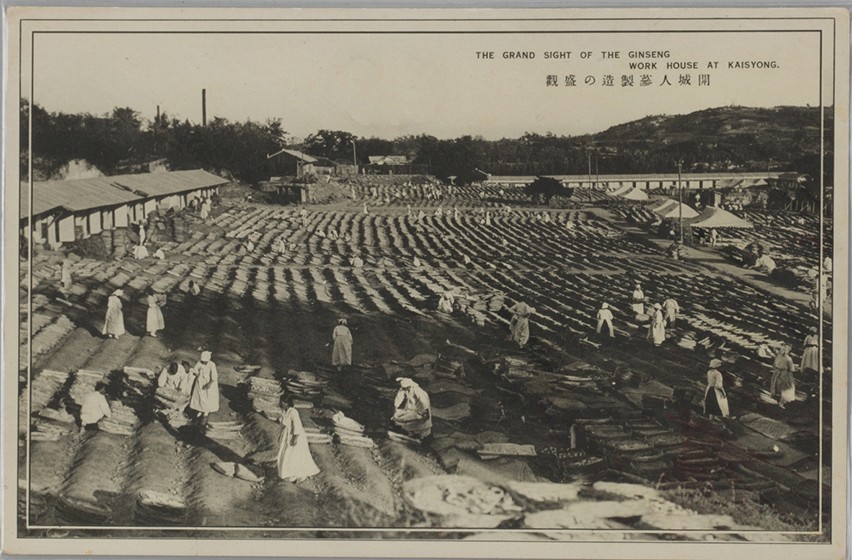
A postcard from the Japanese colonial period that includes a photo of ginseng being processed ⒸInsam Museum


Efforts to prove the value of Korean ginseng
Traditional foodstuffs are much more than simply something to eat: they are closely associated with a country’s culture. This is why Korea’s central and local governments are putting so much effort into promoting Korean ginseng worldwide: the objective is to not only export locally-grown food, but also enhance the global visibility of Korea and its culture. Currently, Korean ginseng, which is distributed under an exclusive brand by the Korea Ginseng Corporation (KGC), an affiliate of KT&G, is regaining the attention of domestic and international consumers due to the growing interest in overall physical health and immunity to disease prompted by the COVID-19 pandemic. Nevertheless, Chinese ginseng, which is mass-produced and therefore sold at lower prices, still has a larger market share.
What, then, should be done to ensure that Korean ginseng gets the recognition it deserves in the global market? The first task is to prove, through research, that Korean ginseng is superior to its foreign counterparts in terms of the quality of the substances of which it is composed. In 2009, the Korea Food Research Institute published in its magazine, Food Culture, an article by Ok Sunjong, then-head of public relations at KGC, titled “The globalization of Korean ginseng.” Ok pointed out that “today, exported Korean ginseng is presented only as ‘fine root ginseng’ or a health supplement. We must turn it into a high-added-value product by standardizing the notation of its substances. Western consumers in particular need concrete explanations of which substances are good for which reasons rather than a blanket statement that ginseng is good for one’s health.” Many believe that ginseng and hongsam are beneficial in multiple ways: for example, as a nutritional tonic and for improving immunity, restoring one’s energy levels, improving blood circulation, and combating cancer and diabetes. All of these benefits, however, had not been proven clinically until very recently.
Fortunately, the health benefits of Korean ginseng are increasingly being proven by extensive laboratory-based studies both in Korea and overseas. In 2006, the research team of Professor Kim Manho of Seoul National University Hospital (Department of Neurology) published a study proving that Korean ginseng is highly effective in improving the cognitive capacity of Alzheimer’s patients. The research team of Professor Rhee Dongkwon of Sungkyunkwan University (College of Medicine), through an article published in 2016 on the effectiveness of hongsam in preventing pneumococcal bacterium-caused blood poisoning, was the first to show that hongsam can increase one’s immunity levels to prevent pneumonia and blood poisoning (septicemia).
The misunderstanding that Korean ginseng causes the body to heat up, however, requires much more scientific proof to correct. For a time, China and parts of Southeast Asia accused Korean ginseng of having adverse health effects—namely, increasing the body’s internal temperature. This idea was accepted by many older Koreans as well. A Korea Policy Briefing dated September 13, 2012, announced that the claim was not based on any scientific evidence. At the time, the Rural Development Administration invited scientists from China and Canada to participate in a joint clinical study. After allocating a certain number of points to symptoms related to increases in body temperature, it was revealed that the total score for Korean ginseng was the same as that for the ginseng of other countries. It was also proven that Korean ginseng has no side effects.
A Taoist hermit holding a ginseng root ⒸInsam Museum
Ginseng as a companion for diverse foods
Over the years, Korean ginseng was, for Westerners, shrouded in mystery and primarily used as a health supplement or medicinal ingredient. It was used in a very limited number of foods as an auxiliary ingredient (e.g. samgyetang (ginseng chicken soup)) due to its slightly bitter taste and odor. The increased interest in immunity among the international community since the COVID-19 pandemic is now bringing renewed attention to ginseng-based dishes. How, then, can ginseng be used in foods made at home?
The first task is to find ingredients that are complementary in flavor and function. Ginseng has a low caloric content, an issue that can be solved by consuming it with honey. According to Donguibogam (Principles and Practices of Eastern Medicine), honey “puts the ‘five viscera and six entrails’ at ease, restores the body’s energy, strengthens the stomach, reduces pain, removes poisonous substances from the body, and reduces abscesses in the mouth, and improves eyesight and hearing by achieving harmony among various medicines.” Also, “if consumed regularly for a long time, it strengthens the kidneys and can make one not feel hungry.” Chicken, which is widely available in virtually every country, is another complementary option. Chicken is acidic, rich in protein, essential amino acids, and healthy fat, and low in calories.
Ginseng tea is a simple and easy way to enjoy Korean ginseng. All you have to do is preserve susam in honey and then cut it into small pieces and add to hot water. A ginseng shake or fried ginseng are both child-friendly options. Ginseng can also be enjoyed with bulgogi: the sweetness of the bulgogi sauce counteracts much of the ginseng’s bitterness.