


한식에 대한 다채로운 이야기를 전하는 온라인 매거진
Vol 54. Ice, the Crown Jewel of Summer
Welcome: First Time Eating Korean Food?
HANSIK in Media Content
Yo! Welcome to Korea! is a variety program in which first-time travelers to Korea experience the country’s tourist attractions and foods. The entertaining encounters and incidents bring to mind the larger question of how Korean cuisine should be introduced to those who have never tried it before. Let’s explore the dishes featured in this popular TV program, which range from ones that are familiar to Koreans but fascinating to foreigners to ones that reflect interesting snippets of Korea’s culinary culture.
Article Cha Yeji (Editorial Team) Photos MBC every1 YouTube channel

Korean barbeque
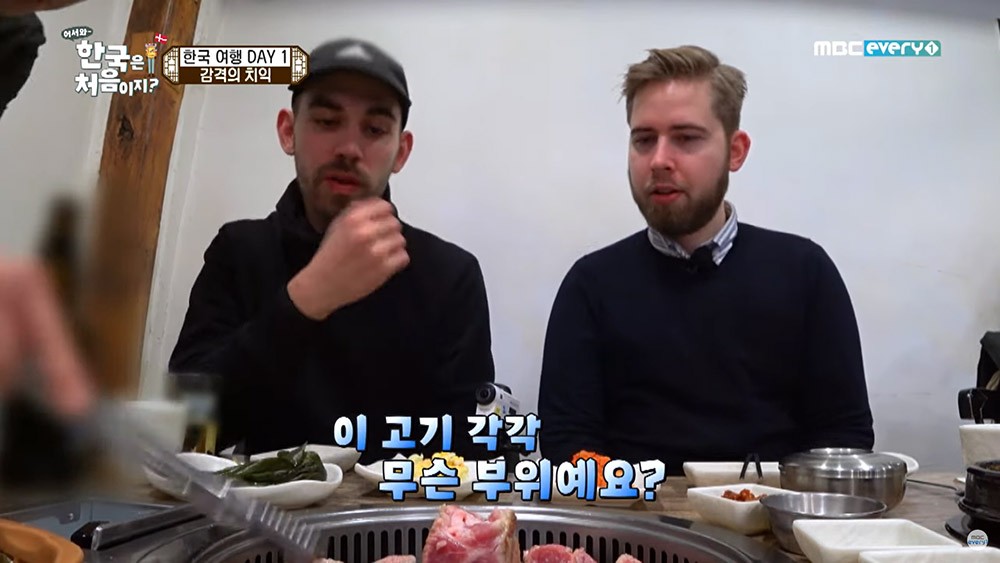
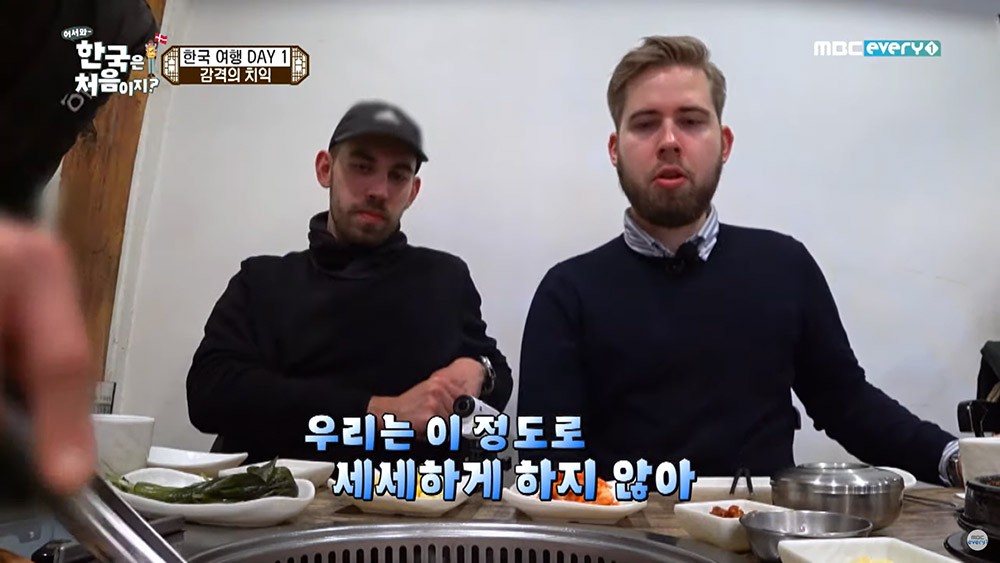
The food that foreign visitors to Korea seek out the most is, by far, what is now known globally as “Korean barbeque.” The point of greatest interest is the use of chopsticks to eat pieces of meat that were grilled at the table—a method of cooking that is quite different from those of other countries (e.g. cutting meat into thick single pieces for steak, use of a grill to barbeque). Korean viewers are amused by non-Koreans’ fascination with the grill, which is small enough to be built into the table, as well as Western tourists’ (who come from countries where beef is the primary meat) interest in the grilling and on-the-spot consumption of pork, as can be seen in multiple national teams poring over the menu at restaurants because they have little knowledge of pork cuts (e.g. samgyeopsal (grilled pork belly), neck, and skirt). For non-Koreans, the average Korean’s deep knowledge of the differences in taste among the varying thicknesses of samgyeopsal and how to grill raw samgyeopsal as opposed to frozen thin samgyeopsal is nothing short of awe-inspiring.
Samgyeopsal, the most widely-used cut for pork barbeque, is the part of the pig that runs from the ribs (after having removed the bones) to the hind leg—which, in most other countries, is used for bacon. Samgyeopsal is a versatile meat in Korean cooking, used for everything from grilling to suyuk, because of the savoriness of the fat. Another aspect of Korean barbeque that foreigners find interesting is the use of scissors (as opposed to knives) to cut the meat. In Korea, kitchen scissors are used to cut many types of ingredients, such as meat and noodles.
Vegetable ssam (wraps)
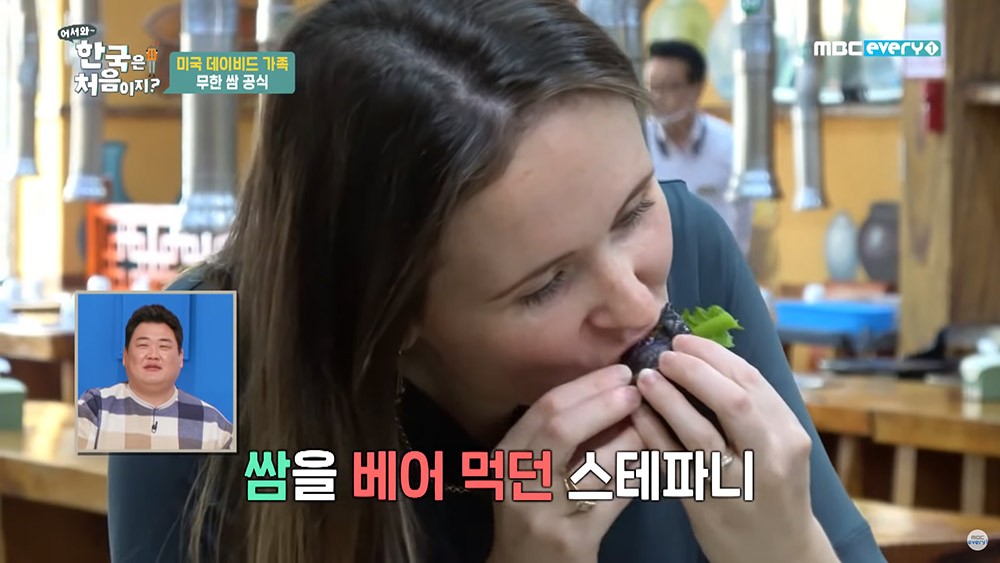
Another aspect of Korean culinary culture that foreigners are interested in is the use of vegetable wraps, or ssam. The practice of wrapping bite-sized portions of food (both meat and non-meat) in lettuce leaves, perilla leaves, and others has played, and continues to play, an important role in linking Korean food with a health motif. The flavors of the vegetable wraps and jang combined with the crunchiness of the vegetables create an experience that is widely loved among program participants, many of whom are trying Korean food for the first time. It also helps that the concept of wrapping multiple ingredients in one leaf, due to its similarity to the Mexican taco, is one that is easily understood.
Korean viewers, in turn, were surprised to see many national teams dividing one wrap into several bites. In one of the scenes, a restaurant employee who noticed how the featured tourists were eating recommended that they eat each wrap all at once. For most non-Koreans, who are accustomed to tacos and burritos, the idea of eating a wrap in one bite was a new concept. Korean viewers were also entertained by the tourists worrying about whether the packed-to-bursting wraps would be able to fit inside their mouth at all.
Pajeon and makgeolli
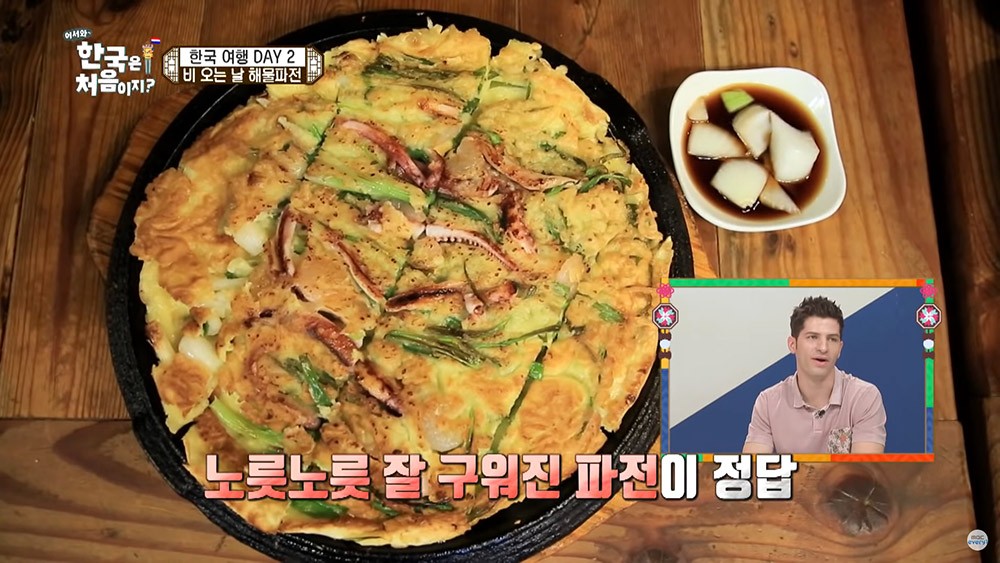
Anyone who has lived in Korea will know that the country’s culinary culture has strong connections between food and the liquors that best accompany them. The traditional notion of food considers not only the complementary nature of one dish with another but also non-culinary factors such as the weather and mood of the occasion. For example, pajeon (green onion pancake) and makgeolli (unrefined rice wine) are for rainy days, while samgyeopsal and soju are for when you have a sore throat is spring caused by yellow dust (from China/Inner Mongolia): in other words, there are cultural connections that link seasons and weather with a particular food. Eating jeon (grilled pancakes) on a rainy day is said to have started when someone noticed that the sound of grilling jeon is similar to that of rain falling. Jeon is enjoyed relatively universally, including among vegetarians (with the exception of ones that include seafood).
The perfect companion for any jeon is, of course, makgeolli. Many of the featured tourists are unfamiliar with makgeolli, as it is not as well-publicized outside of Korea compared to soju. It is often described as “Korean wine” or “rice wine” because of the difficulty in translating the brewing process into English. Another aspect of makgeolli that foreigners are interested in, other than the novelty of it, is the custom of keeping it in an (often, dented) golden nickel-silver kettle and drinking it from a receptacle that looks like a Korean soup bowl or even a hat! The fun involved in drinking makgeolli can potentially segue into an interest in the liquor’s association with Korea’s modern history.