


한식에 대한 다채로운 이야기를 전하는 온라인 매거진
Vol 53. Korean Food from the Oceans and Rivers
Gungmul, a Delicious Crystallization of Nutrients
The Wisdom of HANSIK
In Korean, the word used to signify boiling ramyeon (instant noodles) is the same as that used for boiling soup. Koreans love soup, or gungmul, as evidenced by the myriad of soup-based dishes in Korean cuisine as well as sayings involving gungmul (comparing a person to “jinguk” (rich, thick broth) is the highest possible compliment). This article explores Koreans’ fascination with and the culture of gungmul.
Article Lee Hyunju (Editorial Team) Sources Happy Design House editorial team, K FOOD: The Secret of Korean Food; Hwang Gwanghae, A Table Set with Korean Food Stories from the Classics (Hwang Gwanghae)
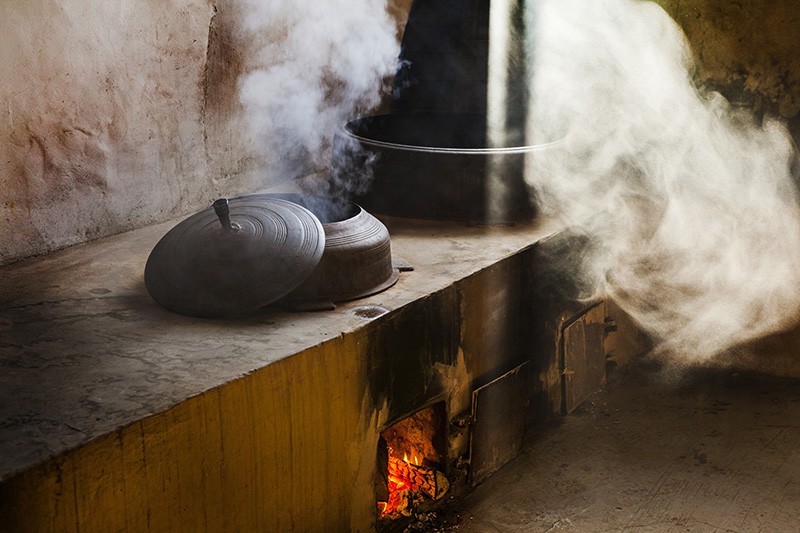
A lifetime with gungmul
To say that Koreans begin and end life with guk (soup) is only a slight exaggeration. A new mother is typically fed seaweed soup, the nutrients of which she shares with her baby through breastmilk. The first meal eaten on one’s birthday is seaweed soup, and no wedding is complete without janchiguksu (banquet noodles). Yukgyejang (hot spicy meat stew) is still served at funerals, and people enjoy tteokguk (rice cake soup) on Lunar New Year, taro soup on Chuseok, hangover soup after having too much to drink, and samgyetang (ginseng chicken soup) to revive their depleted energy levels in the summer. Any well-set table includes rice and a bowl of soup, and people often declare that they cannot eat without soup. Why are Koreans so devoted to gungmul?
The extent to which Korean cuisine depends on soup is, first and foremost, evident in the Korean word for food, eumsik, whose Chinese characters refer to both eating and drinking. Soups are not, in any sense, unique to Korea: what makes gungmul unique is that it is not a supplementary item but an equal companion of rice. In the West as well as in China and Japan, soups are an auxiliary food that are clearly separated from the main dishes. This is not the case in Korea, where traditional meals were defined by the number of side dishes featured (usually, three, five, or seven). Guk was not included in the side dish count because it was regarded as a staple and companion of rice.
The long history of gungmul
Boiling as a cooking technique began alongside the invention of the bowl. It is generally believed that, accordingly, the history of guk originated at around the same time. There is a record in History of Goryeo about a king presenting rice and guk as a gift, implying that guk had already been established as an important food in the Goryeo dynasty. In fact, many other official documents from the Goryeo and Joseon dynasties mention guk. In Writings of Seongho, Lee Ik, a scholar of the Joseon dynasty, writes, “It is impossible to be tired of bibimbap, but gukbap [literally, “rice and soup”] is the most filling option.” Encyclopedia Koreana on Rural Living, a collection of books on Joseon-era foods and recipes, mentions 58 types of soups.
Today, dishes made by boiling water with various ingredients is called one of two names: guk (pure Korean) or tang (Chinese character-based). In pre-modern times, however, multiple terms were used depending on the main ingredient (vegetable, meat, grain, grain submerged in water. This creation of various sub-categories for soup shows how important gungmul was.
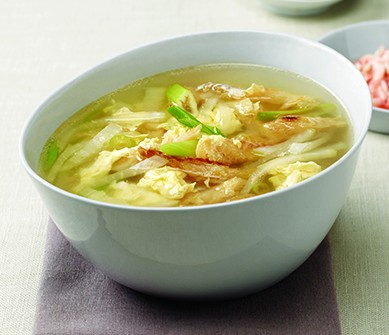
Bugeotguk, Dried Pollack Soup
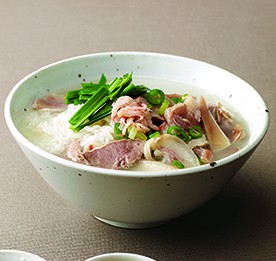
Dwaejigukbap, Pork and Rice Soup
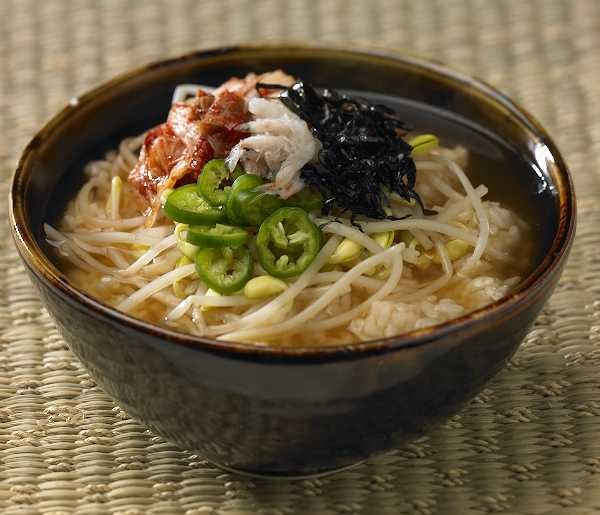
Kongnamulgukbap, Bean Sprout and Rice Soup
Making rice taste better
There are several hypotheses on why Koreans enjoy gungmul so much. One argues that the use of ondol (heated floor) meant that water was always being boiled in a cast-iron pot over the furnace, which led to the creation of soup-based food (in addition to a plentiful and constant supply of clean drinking water). An older theory suggests that soups were invented to stretch limited supplies of ingredients to feed many people. The latter is increasingly refuted, with the reason lying in rice.
Koreans have always loved eating rice—and lots of it. Photos taken by missionaries in the late 19th and early 20th centuries show tables set with heaping portions of rice. The reason for the large portions does not, however, seem to have been to supplement the lack of meat, as was previously believed. The theory that has the majority following today is that people ate lots of rice because they knew that it was rich in nutrients. The argument is that soups became necessary (and developed quickly) for one goal: to eat as much rice as efficiently as possible.
Another reason for the prolific consumption of gungmul was the climate. During Korea’s long, cold winters, gungmul warmed the body: in the summer, people enjoyed the “cool” feeling they got via the perspiration caused by eating hot soup. While we cannot know for sure which argument is correct, what is clear is that the many gungmul dishes that Koreans enjoy today were developed as a result of diverse cultural and environmental factors.
The science of gungmul
As any Korean could tell you, soups take time to make. A soup can only attain depth of flavor when the ingredients are boiled for a long time. It also requires dedication. Time and dedication are certainly important: less evident is the fact that both are grounded in science.
It is imperative that meat, a main ingredient of many gungmul dishes, is cooked properly: if it is not, you forgo taste as well as ease of digestion and absorption of nutrients. The elasticity of meat is determined by muscle volume and collagen: the large muscles, which are responsible for large/strong movements, are tough because of their strong collagen and thick muscle fibers. When heated at a high temperature for many hours, the collagen turns into a soft gelatin. The same is true of bones: if you heat beef bones for eight hours, 20 percent of the collagen will turn into gelatin. Meat has a wonderful flavor but is expensive, while bones and skin are less flavorful but are cheaper and a good source of gelatin. Ancient Koreans were well aware of this fact, which is why they boiled meat as well as beef bones and pork rind to make delicious and nutritious gungmul.
Other than meat, kelp and anchovies are often used to make gungmul. The merit of these ingredients is that they enhance savoriness—which is much more apparent with the use of multiple ingredients (rather than one). The glutamic acid of kelp and the inosinic acid of anchovies, when mixed together in a 50:50 ratio, enhance the level of savoriness seven-fold. Previous generations of Koreans may not have been aware of it, but were nevertheless using science to create gungmul.
Gungmul thus embodies a large body of meaning and practical wisdom. No matter how culinary habits may evolve in the future, Koreans’ love of rice and gungmul seem to be here to stay.