


한식에 대한 다채로운 이야기를 전하는 온라인 매거진
Vol 52. Soil, the Foundation of HANSIK
Korean Food Mentioned in K-pop
HANSIK in media content
Song lyrics illustrate our lives. The many emotions that are expressed in songs—joy, sorrow, pining, anticipation—are ones that are universal to the human experience. Similarly, the foods that are mentioned in songs are usually ones that are familiar. Let’s look at the Korean dishes that appear in K-pop songs that are known worldwide.
Article Cha Yeji (Editorial Team)
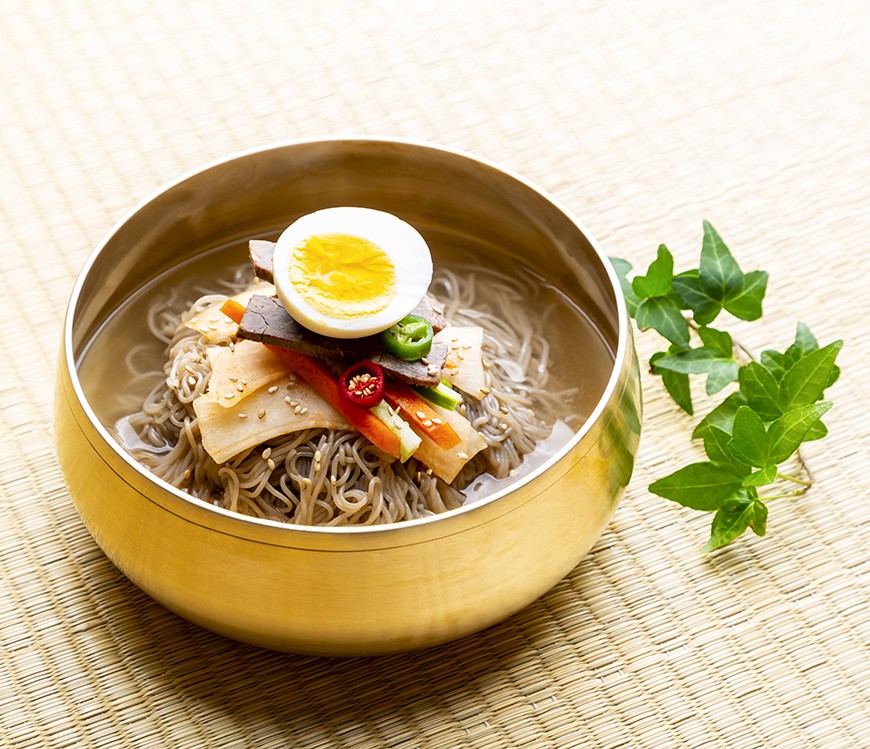
“Naengmyeon” (Myeong-ca Drive)
“Naengmyeon” was a song performed as part of the Olympicdae-ro Singing Contest, which was hosted by Infinite Challenge, a popular entertainment/variety TV program. The song compares the coldness of summertime naengmyeon to a person’s icy demeanor.
So cold
Freeze-my-insides cold
Teeth are cold
Naengmyeon naengmyeon naengmyeon naengmyeon
Naengmyeon is chilled buckwheat noodles served with a cold, mild beef broth (mulnaengmyeon) or mixed in a spicy seasoning (bibimnaengmyeon). Pyeongyang’s version of the former and Hamheung’s version of the latter—both cities in North Korea—are the most well-known. Naengmyeon, which has long been a summertime favorite in Korea and a special treat enjoyed on the hottest of days, remains popular today. A cultural performance held in North Korea in 2018 for peace on the Korean Peninsula resulted in a sudden increase in customers at Pyeongyang naengmyeon restaurants nationwide.
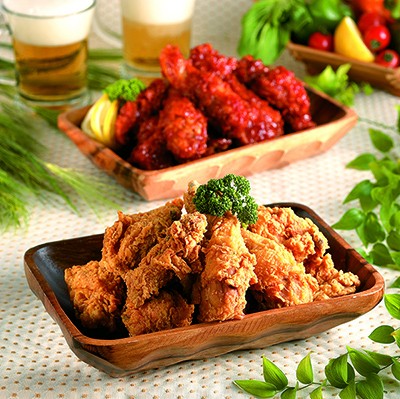
“Chicken” (Rimi and Potato)
Recent media portrayals of Korean-style fried chicken are almost always accompanied by Rimi and Potato’s “Chicken.” It has an especially catchy refrain (“order chicken!”) that highlights the fact that most Koreans order fried chicken for delivery.
I like chicken (order chicken!)
Everybody likes chicken (order chicken!)
Let's eat chicken (order chicken!)
Yangnyeom chicken, fried chicken, chicken chicken (order chicken!) (order chicken!) x2
Half yangnyeom chicken
Half-fried chicken
Fried chicken is not Korean in origin: while it began in the West, the Korean version, especially in combination with beer, has become so prevalent and widely-enjoyed that the word chimaek (literally, “chicken and beer”) is recognized by foodies worldwide. The featuring of chimaek and Korean-style fried chicken in dramas and on YouTube is leading to more people regarding fried chicken as part of the cannon of Korean cuisine.
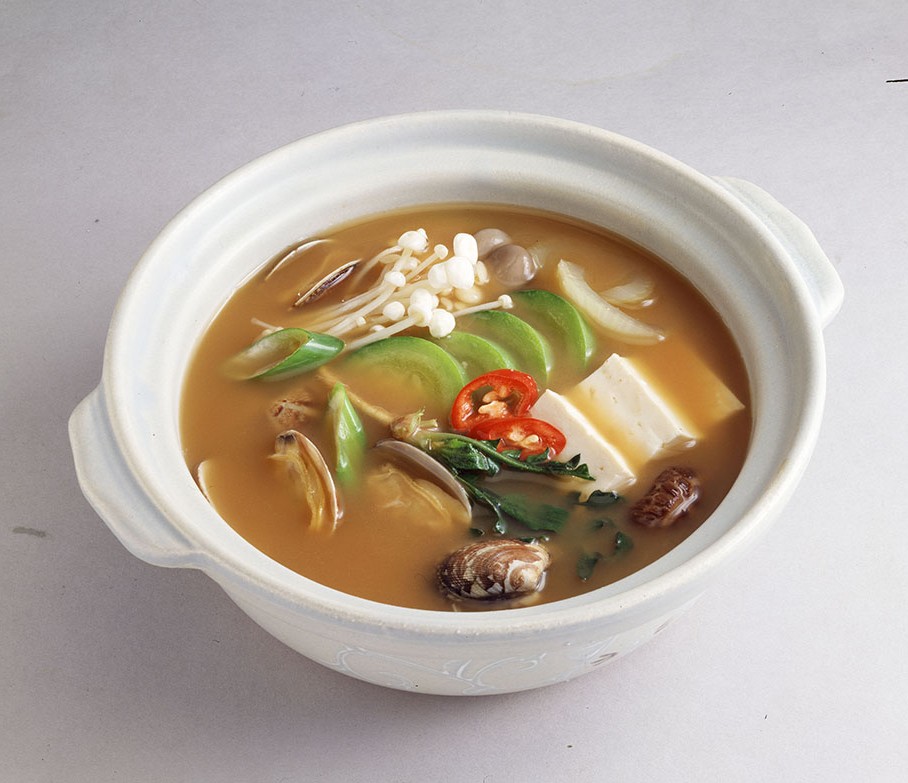
“Mother’s Soulfood” (Dynamic Duo)
The speaker of Dynamic Duo’s “Mother’s Soulfood” thinks of his mom’s doenjangguk (soybean paste soup) whenever he is exhausted by the trials of a long day at work. The contrast between instant food and restaurant dining with a home-cooked meal accentuates the love that is represented by the latter.
Too much overtime and skipped breakfasts
Endless days fueled by digestives
A little manic, a little claustrophobic—this big house, all alone
Artificial seasoning from instant food—the only thing in my fridge—stays on my tongue
I’m sick of it. What I want now is:
Mom’s doenjangguk
Of the many dishes that are associated with jipbap (“home food”), doenjangguk is the most representative. Korea’s vibrant jang culture has significantly influenced the country’s food: doenjang (soybean paste) is a common example that can be found in virtually any Korean home. It is also used as a symbol of the simple, all-encompassing love that can be provided only by a family.
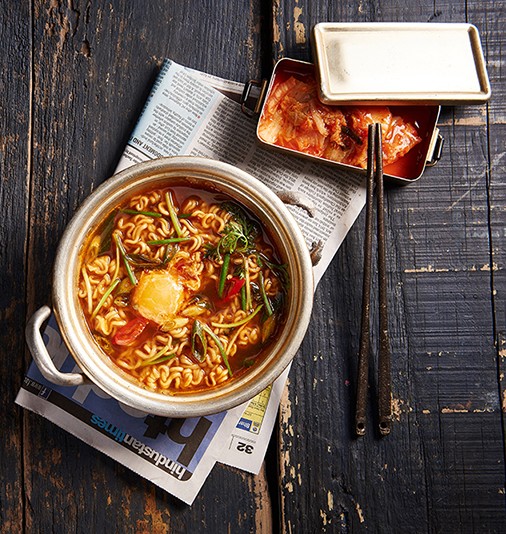
“Is it ramyeon?” (AKMU)
Ramyeon is a convenient meal that is affordable and sold virtually everywhere. In the song “Is it ramyeon?”, the speaker, having woken up close to lunch time, debates whether to have ramyeon because it requires such little effort to make.
A side of gyeranmari (Korean-style eggroll) with rice: what a nice surprise!
A pot of gold at the end of the rainbow
Every day, I open my cupboard to see what there is. All that’s left is half a bag of
Ramyeon, ramyeon, ramyeon
What’s for lunch today?
Ramyeon, ramyeon, ramyeon
Ramyeon is found in China, Japan, and Korea but developed quite differently in each country. In Korea, ramyeon typically involves cooking noodles in a spicy soup base that can be topped with any of a wide variety of ingredients, such as eggs or scallions. Cup ramyeon is a popular meal alternative. Bokkeum ramyeon (extra-spicy ramyeon) has already become familiar with foreigners through YouTube mukbang videos and “eating challenges” on social media.