

한식에 대한 다채로운 이야기를 전하는 온라인 매거진
Vol 51. Korean Food that comes from trees
Springtime walk through a bamboo forest: Maengjongjuk Theme Park
Foodie travels
The Korean saying “like bamboo shoots coming up out of the ground after rain” explains why, in Korea, bamboo shoots are harvested in the largest quantities in the spring. Now is the best time of year to not only taste the essence of Korea’s spring season in bamboo shoots but also take walks in bamboo forests, which are full of phytoncides. In other words, there is no better time of year to visit Maengjongjuk Theme Park, which is located in Geoje-do.
Article Seo Dongchul (Editorial Team) Photos KTO, Maengjongjuk Theme Park
ⒸMaengjongjuk Theme Park
The origin of maengjong bamboo and Geoje-do
Maengjongjuk Theme Park is tucked away deep inside Geoje-do Island. After crossing Singeoje Bridge in Tongyeong, Gyeongsangnam-do Province, and taking a road named “Geoje-daero,” you have to keep going until the road, which is far from the coast, gets closer to the sea once you arrive in Hacheong-myeon. Maengjongjuk (孟宗竹), or “maengjong bamboo,” is the thickest type of bamboo: fully grown, the stalk can reach 20 centimeters in diameter and 10 to 20 meters in height. The dimensions are easy to understand when compared to the diameter of a bamboo strain that is common in Damyang, Jeollanam-do Province (10 centimeters). Maengjong bamboo is also less elastic and therefore more breakable than other types of bamboo.
The story by which this bamboo strain became a symbol of filial piety is a moving one. During China’s Three Kingdoms Period, a man named Meng Zong (Chinese pronunciation of “maengjong”) was taking meticulous care of his elderly mother. One cold winter day, Meng Zong’s mother said that she wanted to eat bamboo shoots. So, he went to a bamboo forest, but there were no bamboo shoots to be found. Crestfallen, Meng Zong wept bitterly. The heavens, moved by the man’s filial piety, allowed bamboo shoots to grow from the places where Meng’s tears fell. When his mother ate the bamboo shoots, she was immediately cured of her chronic illness.
Hacheong-myeon, a municipality of Geoje-do, is known as the “king of maengjong bamboo.” Of the 2.9 million square meters of land throughout Korea where maengjong bamboo grows, 80 percent is in Geoje-do (which also accounts for 80 percent of Korean bamboo shoots, known for being sturdy and crunchy). The prevalence of maengjong bamboo, which originates in China, in Hacheong-myeon is due to Shin Yongwoo, a local resident who went on an industrial tour of Japan in 1926 and brought back three stalks of the bamboo. As it turned out, maengjong bamboo was very compatible with the mild climate and sea breezes of Geoje-do, where it expanded quickly into large swaths of forest.
Ⓒ BOKEH-Korea Tourism Organization
Ⓒ BOKEH-Korea Tourism Organization
A delectable harmony of the ocean and bamboo forest
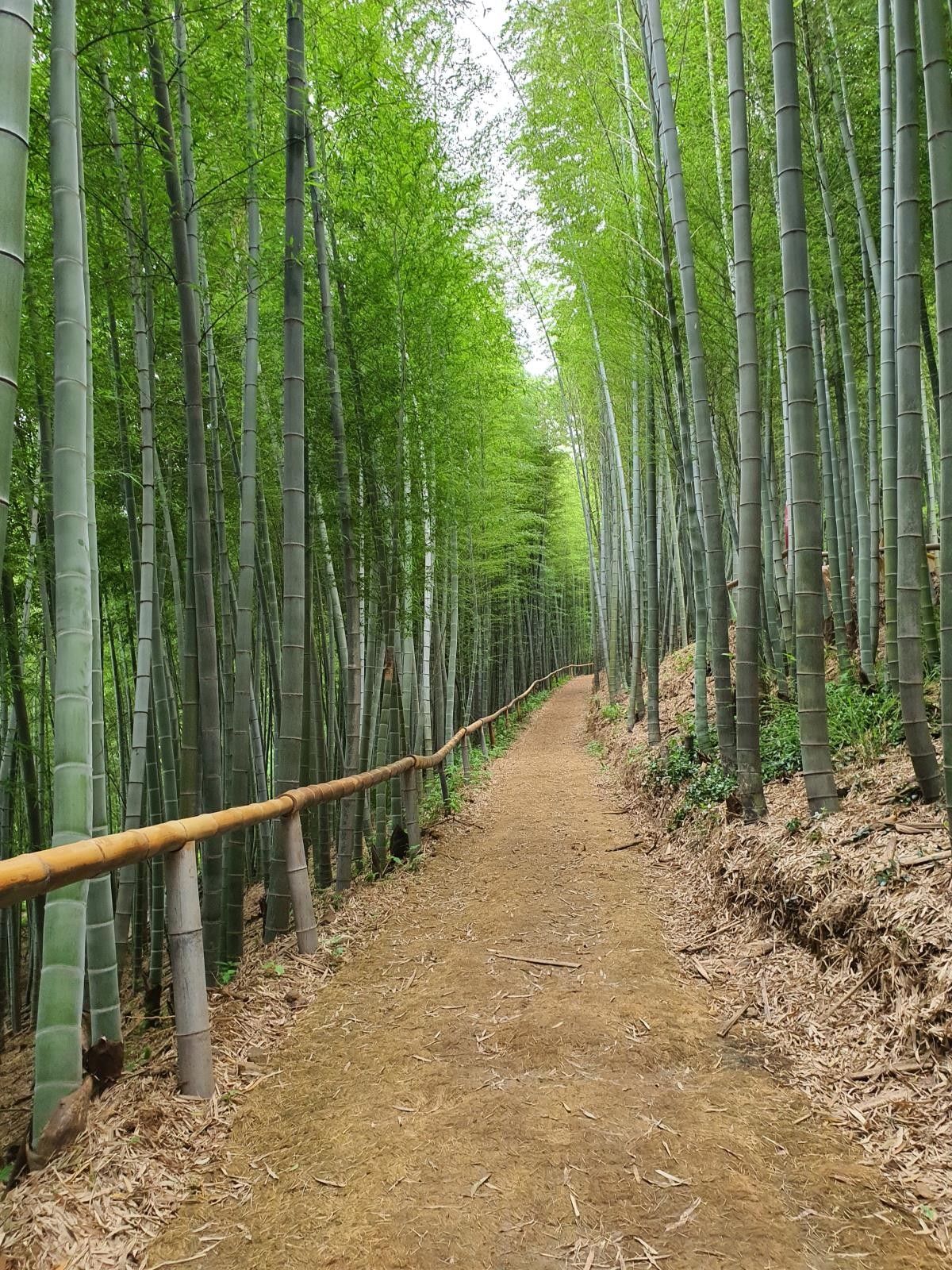
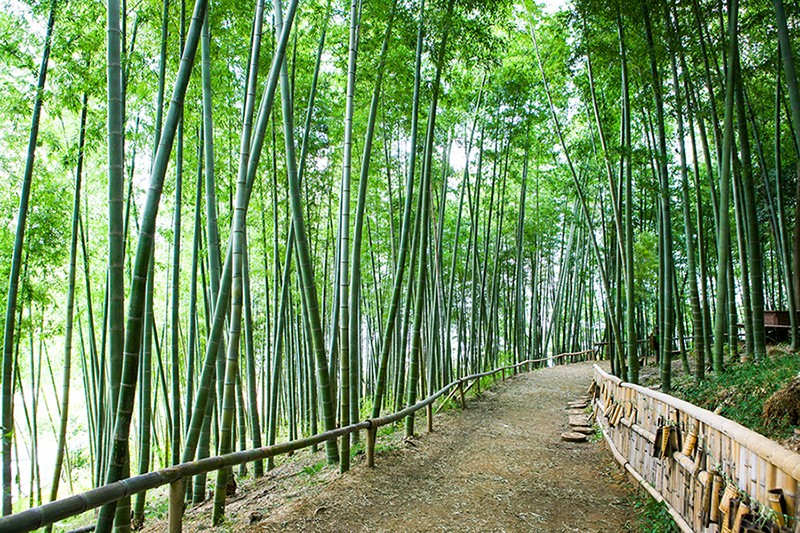
Maengjongjuk Theme Park is made up of 30,000 stalks of maengjong bamboo that are tightly packed together on a 100,000-square-meter lot. The thick bamboo forest begins just after you pass the ticket booth. The walking trail is covered with a layer of bamboo leaves, making walking even more enjoyable, while the bamboo stalks that line it offer welcome shade from the sun.
Other aspects of the theme park include the pleasant sound of leaves brushing against each other whenever the wind blows and the scent of the ocean floating on the breeze. While walking the 1.4-kilometer-long bamboo forest trail and cypress forest trail, you will feel the calming effect of the phytoncides that are emitted by the trees. The bamboo forest is especially popular in late spring because the temperature drops by approximately four to seven degrees Celsius, offering relief from the heat. There is also an “acupuncture trail” that is best walked without shoes. Walking barefoot in a bamboo forest is a very easy way to feel at one with nature.
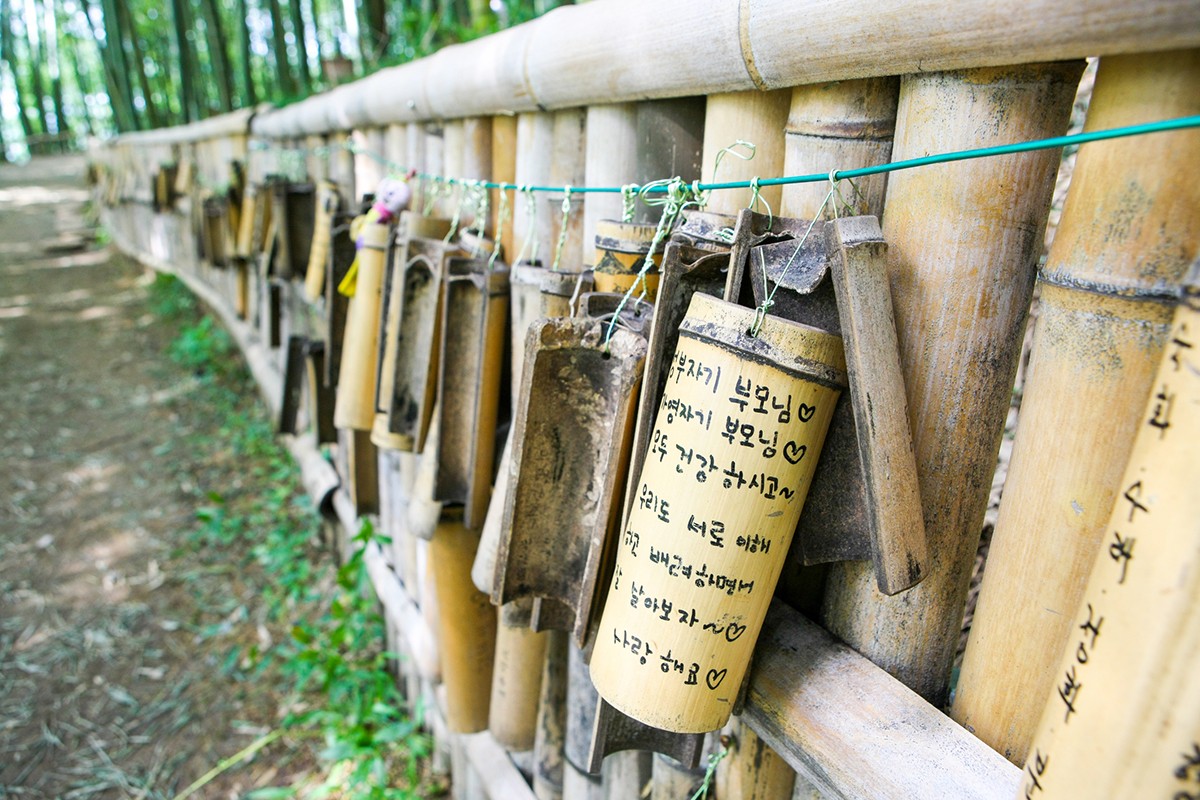
Another way to enjoy maengjong bamboo is the craft-making experience, which reminds visitors of the tree’s many gifts to humankind while they make items such as fans, necklaces, rice bowls, pencil holders, and clocks. Adventure Forest, a children’s play area for physical and intellectual stimulation, is actually made up of more pine trees than maengjong bamboo stalks. The trees are connected with nets and suspension bridges to encourage exercise and promote the development of eye-body coordination, while the zipline that crisscrosses Adventure Forest makes children feel like they are Tarzan or Spiderman. It is a moderately strenuous trip, but visitors are strongly recommended to go to the observatory at the mountain’s summit for a view of the ocean waters of Geoje-do.
Ⓒ Lee Beomsu-Korea Tourism Organization
Ⓒ Live Studio-Korea Tourism Organization
Other attractions of Geoje-do
Geoje-do has many other things to do other than visit Maengjongjuk Theme Park. One of them is taking a ferryboat ride at Haegumgang. Shaped like a kudzu root, the Haegeumgang Islets are so scenic that they are often called “the Geumgangsan Mountain of the seas.” The rocks, which were shaped by centuries of breaking waves, are named based on what they look like (Lion Rock, Maitreya Rock, Candlestick Rock, Mast Rock, etc.). Passing through Sipja Cave, which is formed by the cliffs, by boat is an especially unforgettable experience.
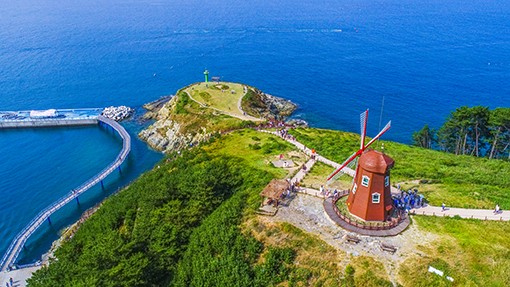
Oedo-Botania is a marine park whose rare tropical plants, such as sparityum and mahonia, beautifully complement the island’s environment. It also has an array of exotic sculptures and buildings on its premises that will keep visitors busy with taking photos alone. The most scenic area is Windy Hill (pictured). Located close to the dock for the Haegeumgang ferry, Windy Hill is famous for its red windmill, whose color perfectly complements the blue of the ocean, and the piece of land that juts out into the ocean. Behind Windy Hill is Sinseondae Cliff, which, as its name suggests, is so picturesque (combined with the nearby rocks, trees, and ocean) that it really does feel like it was once the home of the mountain gods.
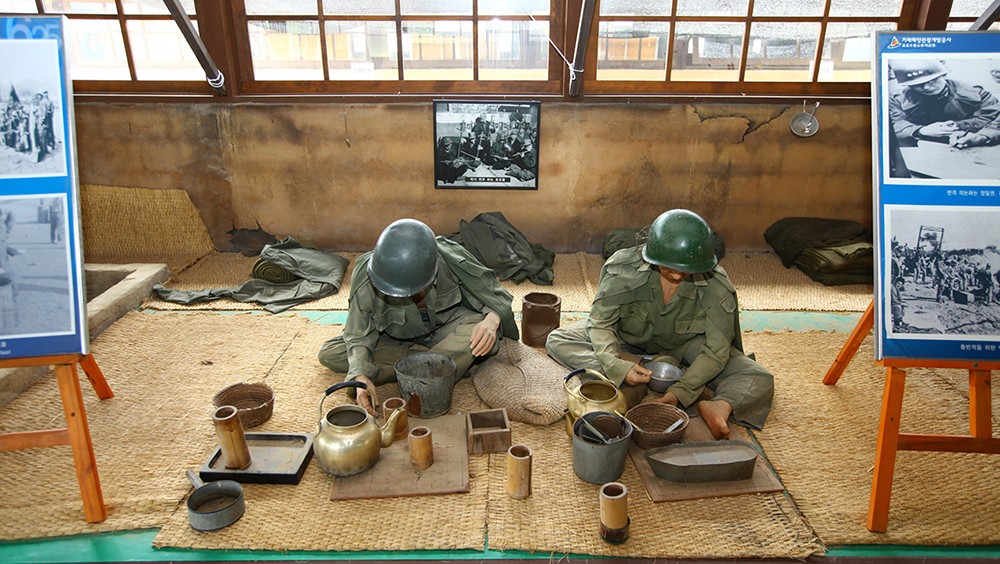
One place that visitors are recommended to visit is the Historic Park of Geoje POW Camp, an accurate re-creation of a POW camp that was operated during the Korean War and is now a testament to a part of the island’s history that is not pleasant but nevertheless important. The life-sized figurines in the diorama section show what life was actually like in the POW camp: no description is necessary to read the despair in their eyes and facial expressions. The park has several more life-sized, interactive mock-ups that offer vivid history lessons, including a tank display area, Arena of Persuasion, and Living of POW section.