


한식에 대한 다채로운 이야기를 전하는 온라인 매거진
Vol 46. Rediscovery of Pat
Pat in Our Literatures ─ Containing the Seasons and Longing
Food Ingredients in K-Contents
Pat was not always served like the staple grains, such as rice and barley, but it is true that pat was an important grain that had a significant impact on the lives of our people in relation to seasonal customs. As it was a grain that warmly comforted people’s earnest hope, pat appeared in different ways in our old stories.
Pat Saving People and Driving Away Evil Spirits
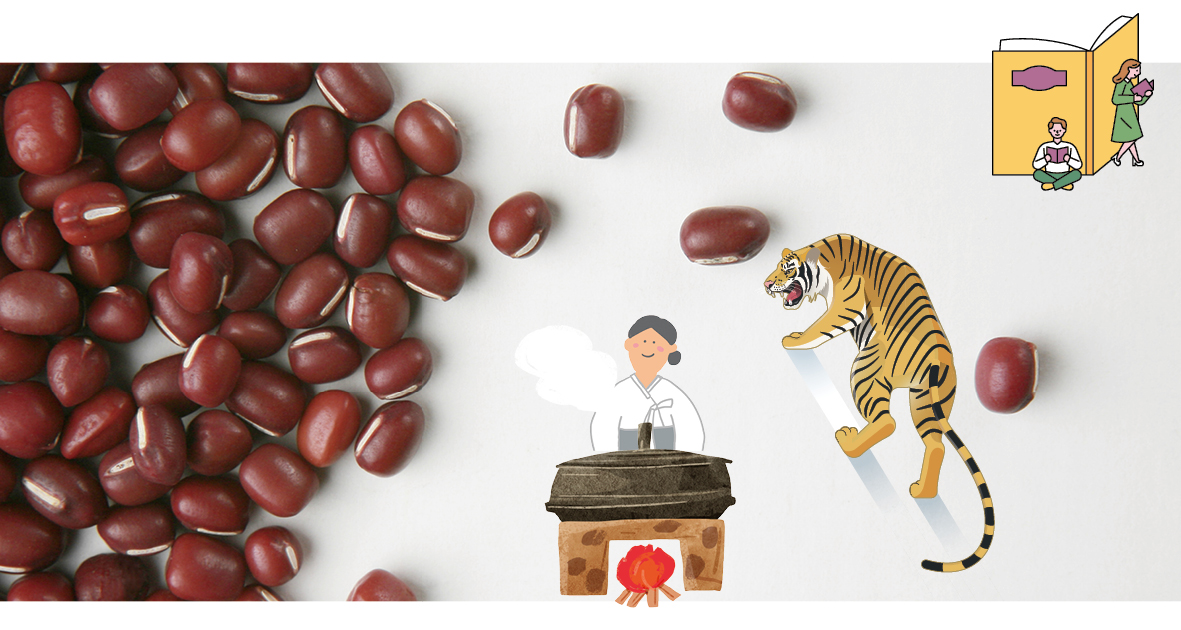
In the past, Dongji(winter solstice) was also called “the day when a tiger gets married.” As tigers were considered to be animals with a lot of heat, people assumed that tigers mated on winter solstice, when the weather is the coldest and the night is the longest. Tigers posed a threat to people because they would come down to the village if there was nothing to eat in the mountain. As they were menacing as diseases, they often appeared as a villain in folk tales. At this time, patjuk was an important medium when people worked together to defeat the tiger.

- Folk Tale
“I’m going to eat you.”
“I made patjuk in the cauldron. Why don’t you eat it first before you eat me?”
“That’s a good idea. Okay.”
The tiger grabbed the lid of the cauldron to open it, but instead, a dog poop fell into his paw.
“What is this?”
The tiger put his paw into a water kiln to wash it off, but instead, a terrapin bit his paw.
“Ouch!”
The tiger blew on his paw and put it on the stove. Immediately, an egg from inside the stove bounced up to the tiger and hit his eye. When the tiger jumped up in surprise and tried to enter the room, an awl dropped from the eaves and pierced the tiger’s remaining eye. The tiger, now blind, jumped up and down in pain, rolled around in the yard, and then a straw mat rolled up the tiger. Then, an A-frame carrier standing by the gate picked up the tiger inside the mat, carried him to the river, and dropped him into the river..
It is a folk tale that tells a cheerful story about our unique custom of eating patjuk with yang energy to ward off the negative energy on a winter solstice day, when the yin energy is the strongest.
The day when the old lady would be killed by a tiger approaches, but her warm heart of farming earnestly to reap what she sowed and sharing patjuk with everyone around her saved her life. This tale has a typical didactic morality of encouraging good and punishing evil. There is also a lesson that even the weak and feeble can overcome any threatening situation if they unite and gather their wisdom.
If the tiger symbolizes a powerful person who abuses his power, as well as threatens and exploits the weak, the dog poop, terrapin, egg, awl, straw mat, and A-frame carrier that helped the old lady in defeating the tiger symbolize the ordinary people living faithfully by keeping their place. Patjuk is the power to drive out bad things, and it is the warm affection of those who retain their humanity even when backed into a corner.

- Old Folk Song from the Silla Dynasty
On a bright moonlit night in Seorabeol, I come home after playing late into the night.
And I look at the bed and there are four legs.
The two are mine, but who owns the other two?
They belonged to me, but alas, they are now stolen.
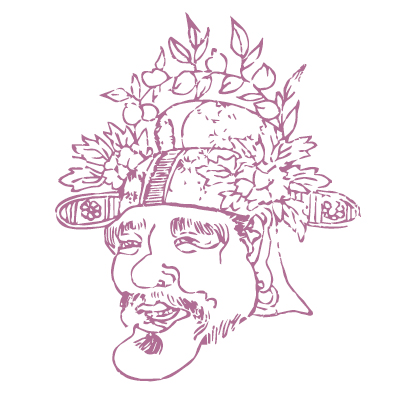
The Song of Cheoyong is about a man who forgives a man who had an affair with his wife, and becomes a god. When Cheoyong returned home after playing late into the night, he found his wife laying in bed with another man. Upon seeing this, Cheoyong did not become enraged, but rather danced and sang a song. The man was moved by Cheoyong’s action, so he kneeled in front of Cheoyong and asked for forgiveness, promising he would never return. Cheoyong’s face is reddish violet in color. Cheoyong is a character that embodies the red bean that defeats an evil spirit and the man is another form of evil spirit that spreads smallpox. There is also a theory that “Dongji patjuk(red bean porridge eaten on winter solstice)” is derived from the story of the evil spirit that promised not to go into a house with the face of Cheoyong or where the red bean porridge is sprinkled on.
Sentiment of Patjuk in a Song About the Annual Farming and Seasonal Customs
<Nongga Wolryeongga> is a song that tells the story of traditional farming, seasonal customs, plays, and events, as well as seasonal food and holiday food by month. It is the work of Jeong Hak-yu, a Silhak scholar and the second son of Dasan Jeong Yakyong, in an attempt to spread agricultural technology through Korean songs to farmers. Patjuk appears as a food that embodies the sentiment of sharing even in a work song with practical content.

- Jeong Hak-yu
November is the middle of winter, the season of Deaseol and Dongji.
The wind blows, the frost sits, the snow falls, and the ice freezes.
How much was the autumn’s harvest?
Some of them will be exchanged for grains, some will pay taxes,
Some will be used for rites, some will be used for seeds,
Some will be used for sharing crops, and some will be used for wages.
After paying back all the rice I had borrowed,
There was little left that seemed like a lot.
What can a person do? Let’s save some food at the very least.
A porridge made with soybean oil and outer leaves is great.
Women, you still have to make meju(fermented soybean lump).
Boil, pound, ferment, and leave it.
It is a good day when Dongji is full of yang energy.
Let’s make patjuk and share it with our neighbors.
Open the new calendar and let’s take a look at the next jeolgi(seasonal terms).
The sun is short and useless, and the night is long and full of tediousness.
(The rest has been omitted.)
November is the middle of winter when Daeseol and Dongji appear. The story shows a glimpse into the lives of ordinary people who had little left after paying their grains back and taxes from the crops harvested in the fall. Still, we can see the affection of our people, whose virtue was to be kind and share what they had, from the part where they made patjuk and shared it with their neighbors on Dongji amidst a poor circumstance when they were trying to find a way to live.

A Bowl of Patjuk That Nourishes the Souls of the Living and the Dead
Perhaps it was because patjuk was a dish that comforted the life of hunger that the affectionate scenery and the sentiment of sharing when you think of “patjuk” boast warmth that has been passed down from the past to the present. Seungbok and Sunhee, the two characters in “Recipes for Poongnyeon Restaurant,” used patjuk to heal their wounds from being abandoned. Seungbok, who had to remain hidden because of having a different face from ordinary people, finds Sunhee abandoned in front of her restaurant. Perhaps Seungbok took pity on Sunhee because she had the same face like hers, so she took Sunhee to her restaurant and raised her as her own daughter. Meanwhile, Seungbok makes patjuk that her dead grandmother taught her in her dream and serves it to her mother. With a warm bowl of patjuk, she comforts herself after staying in the shadows and forgives the world that hurt her.

- Seo Sungran
As the patjuk started to boil, Seungbok opened her recipe book and waited for customers. The time spent waiting for familiar customers who would come after catching a scent of patjuk was not monotonous. She saw the people who were eating her food as she turned the pages one at a time. The people who were old, young, ill, healthy, sad, hurt, in pain, desperately wishing for something, enveloped in guilt, regretting, longing, or full of worries were each given a bowl of food.
In the past, pat was something that protected the lives of the people from diseases and fears that could not be overcome. Now, it is represented as a bowl of soul food that satisfies the people’s desire to be happy and provides them with warmth in many stories.