


한식에 대한 다채로운 이야기를 전하는 온라인 매거진
Vol 45. Gukbap, the Epitome of
Literary Works Depicting the Memories of the Times and the Pieces of Life in a Bowl of Gukbap
Food Ingredients in K-Contents
Gukbap is a folksy food that is easily available to anyone. So, it was often used as a topic in our literary works.
In the works, gukbap sometimes meant comfort, and in other times, it aroused the sentiments of waiting and harmony. This article will look at the works that depicted the folksy warmth of gukbap and the narrative described in its bowl.
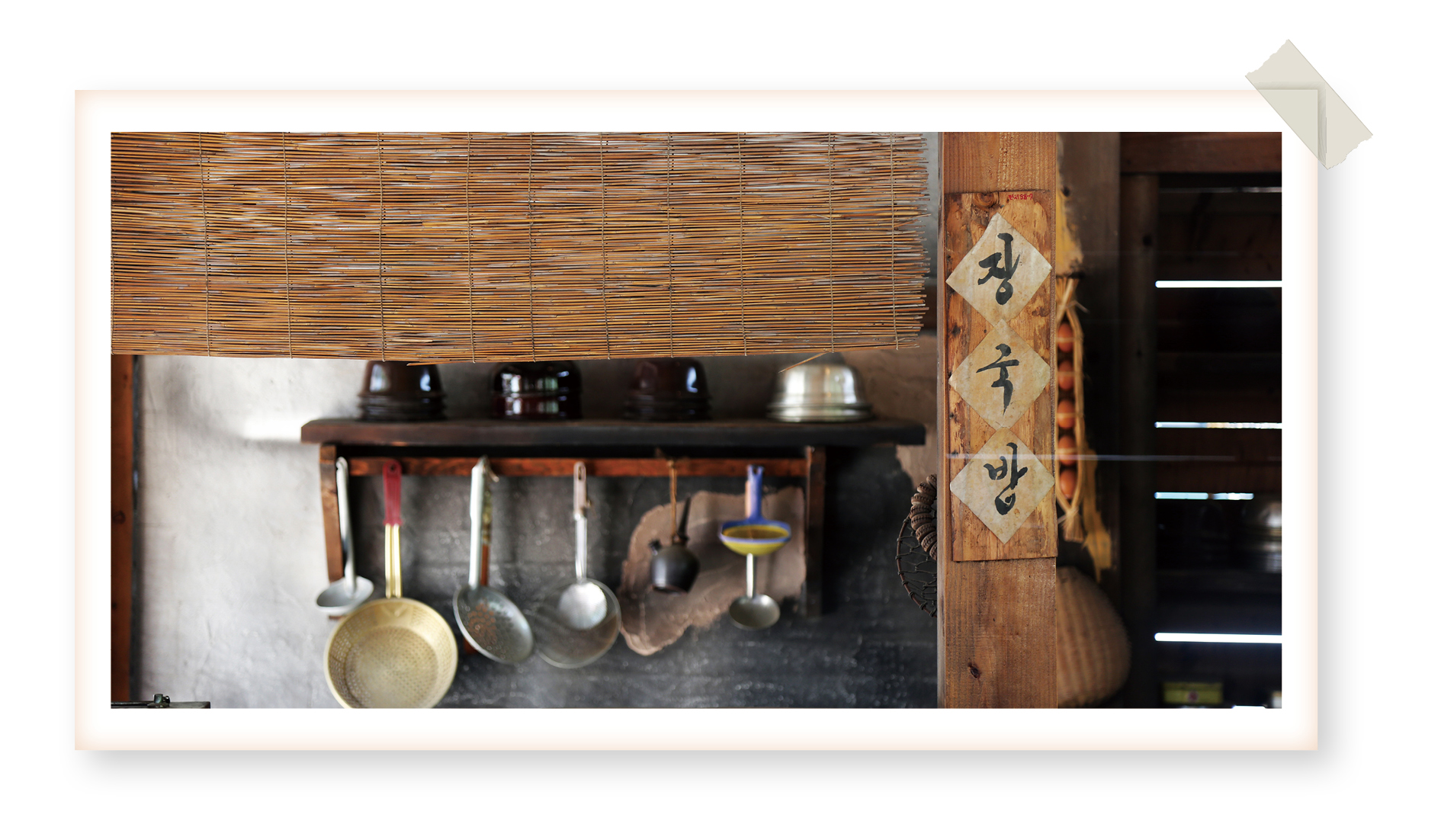
The Folksy Sentiments Expressed in Gukbap
The food that appears in literary works reconstructs and shows the aspects of the individual and society. In literature, food contains the structure of the story that the author intends to project through it. Food as the topic shows the author’s memories, tastes, and preferences. In other words, it becomes the evidence of the author’s experience in the process of reproducing memories. For example, the author attempts to show one’s internal emotion with the protagonist’s voice, discover one’s childhood memories, or mitigate the hardship of reality through gukbap.
Optimistic Meal
Ham Minbok
It seems thirty thousand won is too stingy for a poem,
But when I think that it is two mals(1 mal = 18L) of rice,
my heart immediately melts into a bowl of warm rice.
It seems three thousand won for a book of poetry is too cheap
compared to what I put into it
but I can have a bowl of gukbap for the price
and I think my book of poetry warms the hearts of people
as much as a bowl of gukbap,
and the answer is, I still have a long way to go.
If a book is sold, I get three hundred won.
I think it’s a meager profit
but when I think that it is the price of one doe(1 doe = 1.8L)
of sea salt,
there is no reason for me to be hurt as my heart is like the blue ocean.
The poet lives with great joy in being able to buy rice, gukbap, and salt with a poem. His words are that of a person who lives on a small profit, and one should leave behind love than scars, if possible.
Gukbap
Lee Jaemoo
It’s disrespectful and I feel guilty saying it
but the gukbap I eat at a funeral hall is the best.
When I steal a glance at the portrait of the deceased
while hurriedly gobbling down the rice mixed
with the red broth,
the deceased kindly and benevolently smiles at me.
Every time, the deceased winks at me,
saying I should have as much as I want
since this is the last gukbap he can buy me.
In a late night, when I step out of the hall
after finishing a bowl of gukbap,
the deceased has already become the starlight
that tenderly strokes the darkness of my night walk.
In this work, which depicts the scene at a funeral home in a sincere way without any coloring, the gukbap shows a stark contrast between life and death. “The deceased winks at me, saying I should have as much as I want,” is how the deceased consoles the living, and “the deceased has already become the starlight
that tenderly strokes the darkness of my night walk,” is also the deceased’s warm consideration for the living. The work described the best and the warmest way of saying farewell in a bowl of gukbap.
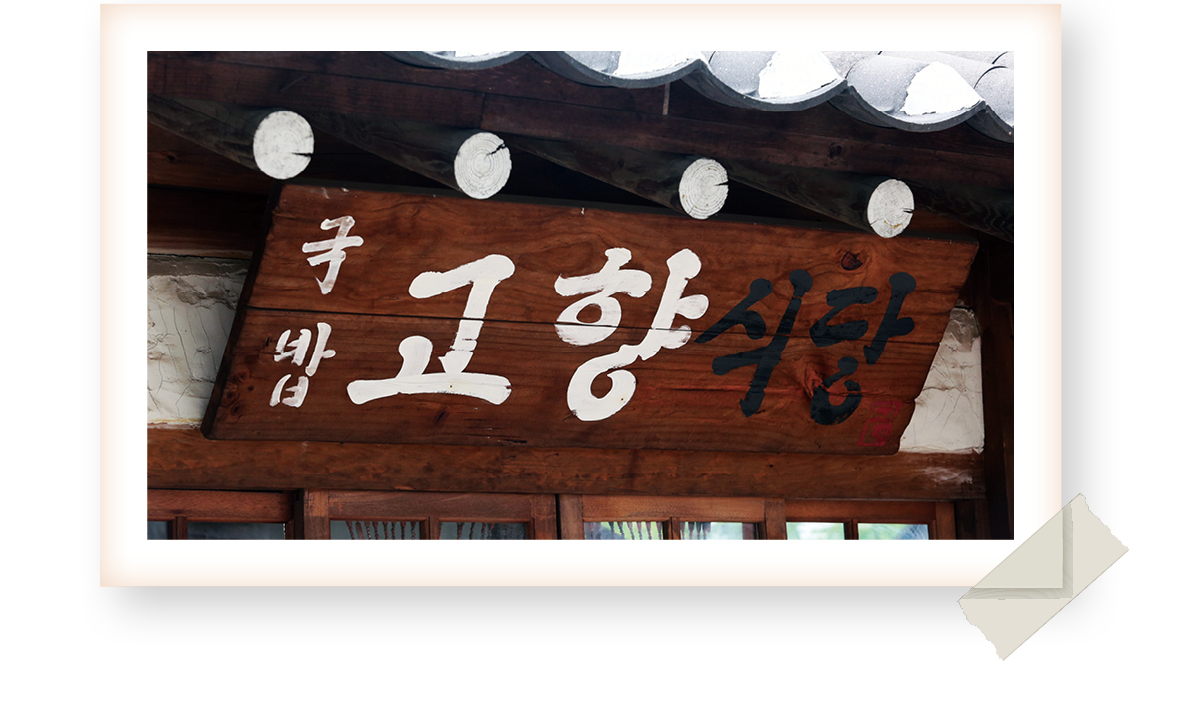
Bonding Emotion Evoked from Inner Confession and the Joys and Sorrows of Life
Hyun Jin-geon's novel <One Lucky Day> depicts the scenes of Seoul in the 1920s. Old man Kim’s wife has been ill and bedridden for a month, but Kim has not been making any money as a rickshaw porter. On one rainy day, Kim leaves behind his wife who pleads him not to go to make money and, luckily, he makes a lot of money because of many customers. However, as he nears home, he cannot help but feel ominous but shakes off the bad vibes by having drinks with his friend. Then, while drinking, he cries, “My wife is dead. I should die because I’m drinking when my wife is dead.” And despite being drunk, he goes home with a bowl of seolleongtang that his wife desperately wanted to eat.
A fetid stench including the smell of dust from a fallen reed mat, the odor of feces from unwashed diapers, the stink from filthy clothes and the sickly odor from the invalid pierced his dull nostrils.
Entering the room, he kicked the leg of the bedridden while shouting,
“Damn it, all you do is lying around day and night! Can’t you get up and greet your husband?”
However, what he hit felt like a dead tree trunk, not the flesh of humans.
Old man Kim, who felt uneasy before, finds about his wife’s death, and cries out while holding on to the corpse of his wife. The story ends with his cries in despair, “I brought seolleongtang for you. Why can’t you eat it? Why can’t you eat it? I was a strangely lucky today. I was so lucky…”
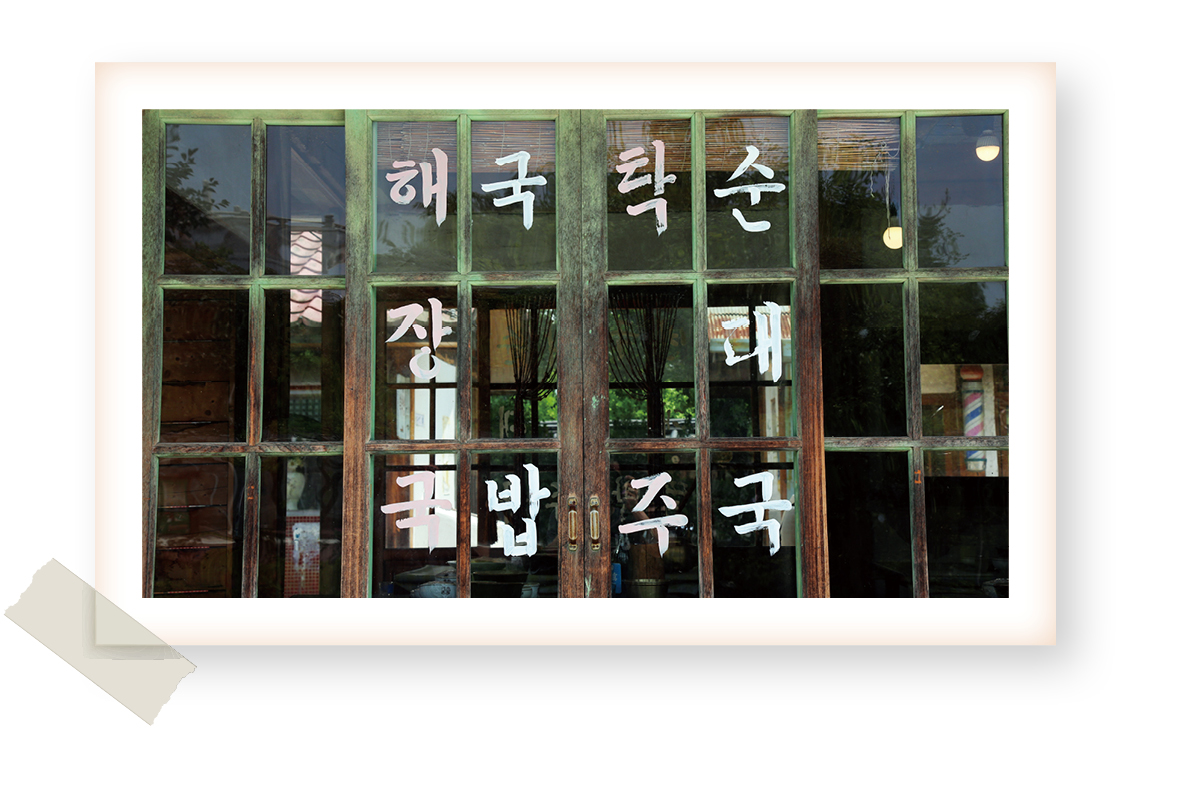
Haejangguk Place in Seochang
Jeon Seongho
Passing by a slated house on a damp day after the rain
I catch the scent of my father who had liver spots on his face.
(Omitted)
When the son returned with a salary,
the father went to the haejangguk place by dragging his spindly shin.
While emptying a bowl each with sunken eyes,
both the father and the son were silent in the afternoon
when the sound of cicadas reverberated through their chests
on top of the sacred tree at the end of the road.
In the world that became more distant from holding on to it desperately,
when they entered the haejangguk place in Seochang
while shaking off the rain from their hair,
a damp cloud quickly passed by outside the closed window,
and the father plodded alone on the back of his hand covered with liver spots.
The place where I visit when I become hungry in life –
a crow flies by in between the cries
that are sleek like a gold needle, shaking the leaves.
The haejangguk(hangover soup) place is where the son has painful memories of his father. When the son is hungry, he visits the haejangguk place in Seochang, and reconnects with the memories of his father. Through gukbap, the son feels the family bond of “the father and the son” that cannot be cut. Back when everyone was poor, the father, who ate haejangguk with the son’s salary, did not say anything, but the son knew that the father was saying thanks and sorry to him silently. In the place, the son thinks of what his father wanted to say and what he wanted to say to his father. When the son is hungry, he visits the haejangguk place in his hometown, and reunites with his father while eating gukbap.
Gukbap is a type of food that has the value of waiting for the soup to be simmered for a long time, the value of harmony from mixing the rice in the soup, and the value of a community where people eat together. Thus, if you look at the works with gukbap as the subject, you can see the phases and lifestyles of the time, the values, philosophy, and the emotional characteristics of the author. In the process of making any gukbap, there is a narrative that evokes memories. A bowl of gukbap that is consumed after a hard day to soothe one’s feeling has the power to keep one calm. The act of taking a spoonful of gukbap is trivial, but we unload the burden from life and find peace while eating. A bowl of warm gukbap that was made by simmering it for so long is full of deep comfort to soothe our hearts.