


한식에 대한 다채로운 이야기를 전하는 온라인 매거진
Vol 44. Harmony of Korean Food and Liquor
Refinements Contained in a Glass
Refinements Contained in a Glass / HANSIK & Recipe — Rediscovery of Korean Food
For our people, a liquor was more like “banju(飯酒: drinks accompanying food)” that was drank with food. It stimulates the eater’s appetite, replenishes one’s energy, and aids one’s digestion.
Even now, one of the most important habits in drinking is to drink liquor with side dishes.
If we enjoy good food and good liquors in moderation, we can also protect our health.
In this sense, this article will introduce the side dishes that are compatible with our body.
Source. Ministry of Agriculture, Food and Rural Affairs ·
Sookmyung Women's University · Korean Traditional Liquor Research Institute

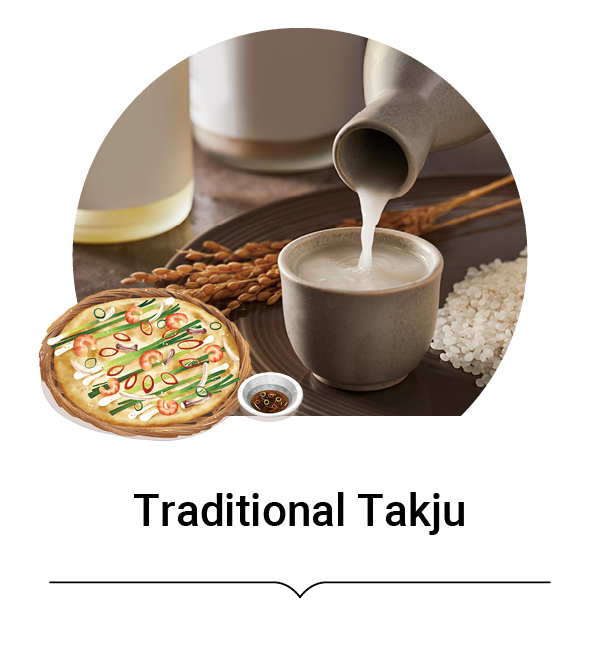
Takju contains various amino acids, organic acids, and vitamins. During their fermentation process, ester, aldehyde, and higher alcohol(fermentation by-product: fusel oil) are created, giving it a unique scent and flavor. Takju has a unique scent, savory taste, and refreshing feeling, but it loses its refreshing feeling and drinking quality over time due to large amounts of dregs, so it should not be stored for a long time. The side dishes that go well with takju are kimchi, pork, suyuk(sliced boiled beef/pork), jeon, etc. It is good to have the dishes that are low in moisture, not greasy, and not strong-tasting. If the dish has too much moisture, the drinker cannot feel the unique flavor of takju.
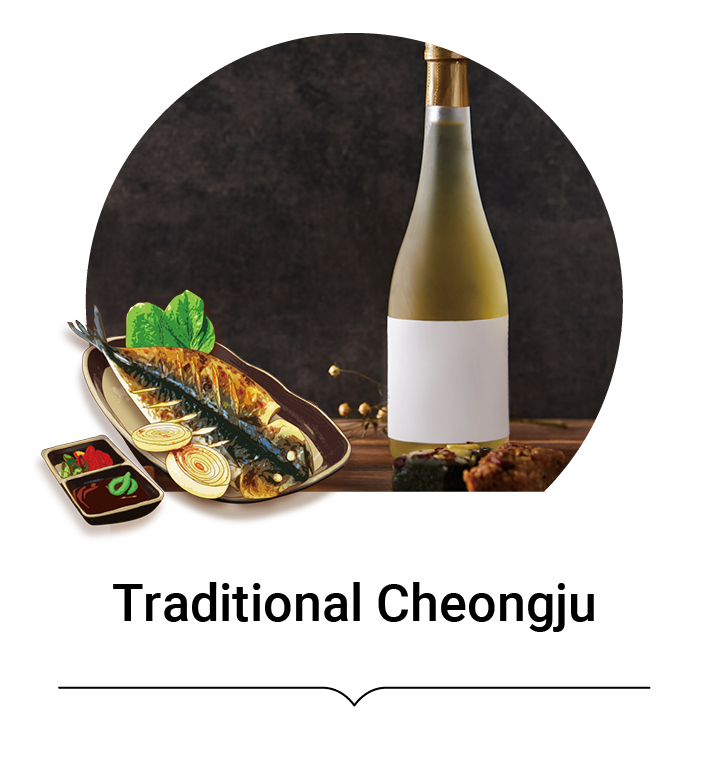
Traditional cheongju is a pure grain liquor made by fermenting rice, yeast, and water as the main ingredients. It is filtered with a unique filtering system, such as yongsoo, sieve, or juja, and again with hanji(Korean paper). Generally, it means a “clearer liquor than takju.” It has an alcohol content of 13 to 19°, and the taste and scent change after a certain period of time, so it should be kept in a cool place. Cheongju is considered a good liquor if its sweetness and acidity are in the right balance. It goes well with the dishes with light and clean aftertaste, including hoe(sliced raw fish), jochi(fish stew), and grilled fish or jeongol(hot pot) using tofu, dumpling, and mushrooms.
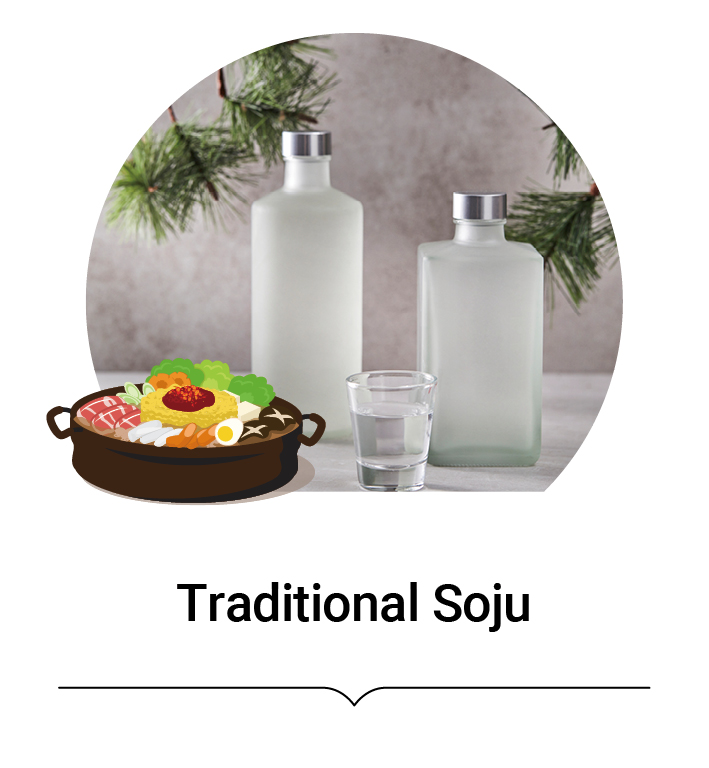
Soju is a type of distilled liquor after fermenting and aging rice, with yeast and water as the main ingredients. It has high alcohol content, so it is easy to get drunk quickly even if you drink a little. If you drink too much, it is harmful to your health, but it is preferred because of the advantage of having less hangover after drinking. As opposed to takju, high-moisture and fatty side dishes go well with soju. The recommended dishes are hot foods, like clear hot pot or stew, or the ones with high-protein contents, such as beef, pork, and chicken. The moisture in the food helps in diluting the alcohol in the body, preventing a hangover, and fatty food is less harmful to the stomach.

Perfect Marriage with Traditional Cheongju Bindaetteok(Mung Bean Pancake)
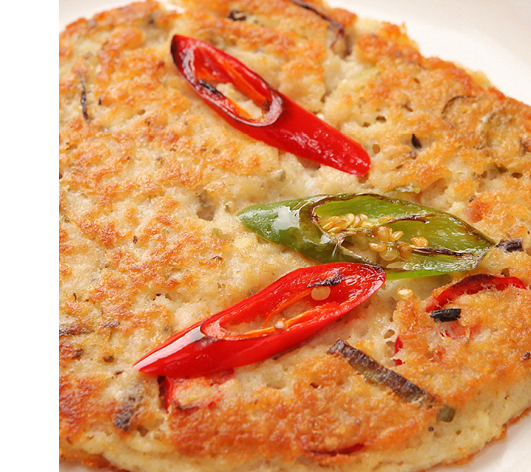 Ingredients : 100 g mung bean powder, 100 g flour(cake flour),100 g sticky rice powder, 250 g cabbage kimchi, 50 g mung bean sprout salad(cooked), 100 g pork(loin), 50 g oyster mushroom, 1 red chili, 1 green chili, 1 tsp sesame oil, salt, pepper, oil
How to make it
① Soak the mung beans in water, rub them to remove the skins, and grind them in
a mixer(or millstone) to a thick consistency.
② Mince the pork, add salt, pepper, and sesame oil, and mix them.
③ Blanch the washed bean sprouts in boiling water, rinse them in cold water,
squeeze the water out, and cut them into small pieces.
④ Shake out the stuffing from well-ripened kimchi, chop finely, and squeeze out the juice.
⑤ Blanch oyster mushrooms in boiling water, rinse in cold water, squeeze out the water, and tear into thin pieces.
⑥ Slice the green and red chilis diagonally, and remove the seeds.
⑦ Add flour and sticky rice flour to the ground mung beans in ①, add seasoned pork, kimchi, bean sprout salad, oyster mushrooms, and red and green chilis, and mix thoroughly.
⑧ When the oiled pan is heated, pour the batter into a circle, and pan-fry it.
Pungent but Moreish Hongeohoemuchim(Sliced Raw Skate Salad)
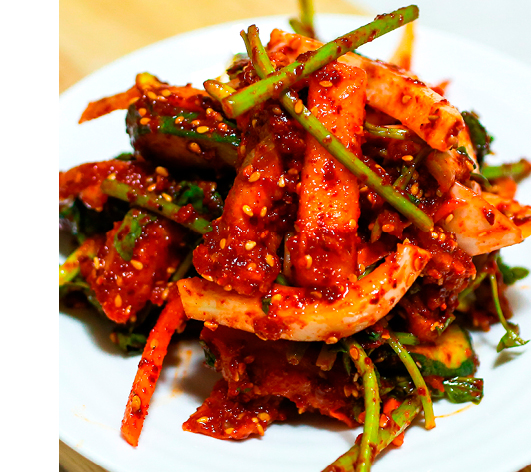 Ingredients : 1/2 skate(medium size), 1/2 c vinegar, 1 radish, 1 cucumber, salt, 100 g water parsley, 1/2 pear, 1 red chili, 1.5 tbsp red chili powder, 1 tbsp soy sauce, 2 tbsp red chili paste, 2 tbsp chopped green onion, 1 tbsp chopped garlic, 1/2 tsp chopped ginger, 3 tbsp sugar, 2 tbsp sesame oil, 2 tbsp sesame salt
How to make it
① Peel the skate, cut it into 5-cm long and 1-cm wide pieces, and marinate it in vinegar for about 30 minutes.
② Peel the radish and cut it into thick slices, and cut the cucumber in half, diagonally and slightly thick. Sprinkle them with salt, and when they become limp, rinse in cold water, and squeeze out the water.
③ Trim the water parsley and cut into 5-cm lengths, and cut the red chili diagonally.
④ Wrap the skate marinated in vinegar in a dishcloth, and squeeze out the water. Place the radish and cucumber in a bowl, and mix with red chili powder. When it is colored, add all the remaining seasonings and mix well, then mix water parsley and pear together.
Hot Yet Cooling Soup Eomuktang(Fish Cake Soup)
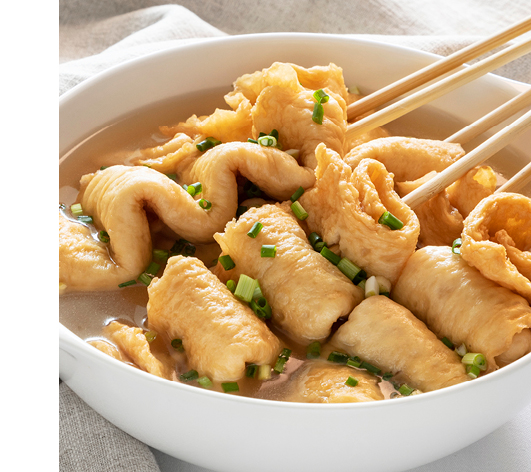 Ingredients : 400 g fish cake, 100 g radish, 50 g green onion, 1 tbsp chopped garlic, 20 g anchovy for stock, kelp, soy sauce, salt, pepper, crown daisy
How to make it
① Blanch the fish cakes in boiling water.
② Cut the radish into 1-cm thick pieces.
③ Add the radish to the broth boiled with anchovies, kelp, and green onion, and bring to a boil.
④ Add the fish cakes to the boiling broth and boil again, and season with soy sauce and salt.
Capturing the Hearts of Heavy Drinkers with Nutty and Savory FlavorGopchangbokkeum(Stir-fried Beef / Pork Small Intestine)
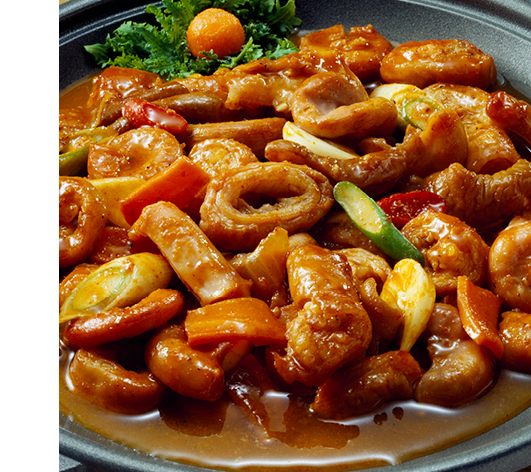 Ingredients : 100 g small intestine, 200 g cabbage, 1/2 onion, perilla leaves, 1 green onion, 1 green chili pepper, whole sesame seeds, 1 tsp oil, 1 tbsp red chili powder, 1 tbsp red chili paste, 1 tbsp soy sauce, sugar, 1 tbsp chopped garlic, cheongju
How to make it
① After washing the intestines, remove the fat attached to one side with scissors.
② After rubbing it with flour, rinse thoroughly with water.
③ Cut into an appropriate size, and boil in boiling water for 2-3 hours.
④ Cut the cabbage into an appropriate size, and cut the onion into 1-cm thickness. Slice the green onion and green chili diagonally, and set aside.
⑤ Mix the seasonings together, and set aside.
⑥ Heat the oil in a pan, and stir-fry the vegetables.
⑦ Take half of the seasoning, mix it with the stir-fried vegetables, stir-fry them again, then add the intestines, and stir-fry again.
⑧ Add all the remaining seasonings and stir-fry, then add the sesame leaves, and stir-fry again.