

한식에 대한 다채로운 이야기를 전하는 온라인 매거진
Vol 44. Harmony of Korean Food and Liquor
Boundless Ingredients of Traditional Liquors
That Add Flavor, Aroma, and Nutrients / HANSIK’s Taste — New World of Korean Food
Liquor has been created and developed based on local agriculture, just as wine-making developed in France and Italy, where grapes were produced abundantly, and beer was developed in Ireland and Germany, where barley was produced heavily. In Korea, where rice was the staple food, it was used as the main ingredient for liquor. However, in the development process, diverse ingredients were added to add flavor, aroma, and nutrients. Let's take a look at various ingredients that made traditional liquors more distinctive.
Source. National Institute of Agricultural Sciences, Rural Development Administration
Basic Ingredients of Traditional Liquor
As with all food, ingredients are most important when making delicious traditional liquor. The basic ingredients of Korean traditional liquors were rice, various grains, yeast, and water, and the methods of handling these ingredients were different, depending on brewing time and the type of liquor being made. At first, rice was made into porridge or baeksolgi(steamed white rice cake) before it was used to make liquor, but, over time, it was diversified into various forms, such as godubap(hard-boiled rice), goomungtteok(holed rice cake), mulsongpyeon, injeolmi, gaetteok, and beombeok. Our ancestors drank liquors created by fermenting rice with yeast and water as takju, yakju(herbal liquor), and soju, and, over time, other ingredients were gradually added as traditional liquors became more diversified.
Various Ingredients Introduced in Ancient Books
Before the legacy of our traditional liquors was cut off during the Japanese colonial era, every household in our country brewed its own liquor. Naturally, the tastes were diverse. Depending on the region or the time of liquor-making, the right amounts of ingredients were added, and the types of ingredients mixed into the liquors were boundless. Such record remains intact in the old books of the Joseon Dynasty.
Ingredients of Traditional Liquors in Sanga Yorok
Sanga Yorok introduces liquors made with various supplemental ingredients. They are Okjichun, Songhwachunroju, Yeonghwaju, Boouiju, and Sangsilju. Okjichun was made by grinding unpeeled pine nuts, and putting it in a small sack. In Songhwachunroju, songhwa, a pine flower, was used for boiling it down with water. Yeonhwaju used mugwort leaves or paper mulberry leaves for fermentation, and, for Boouiju, pine nuts were crushed to make liquor. In Sangsilju, acorns were used to make steamed rice.
Ingredients of Traditional Liquors in Eumsik Dimibang
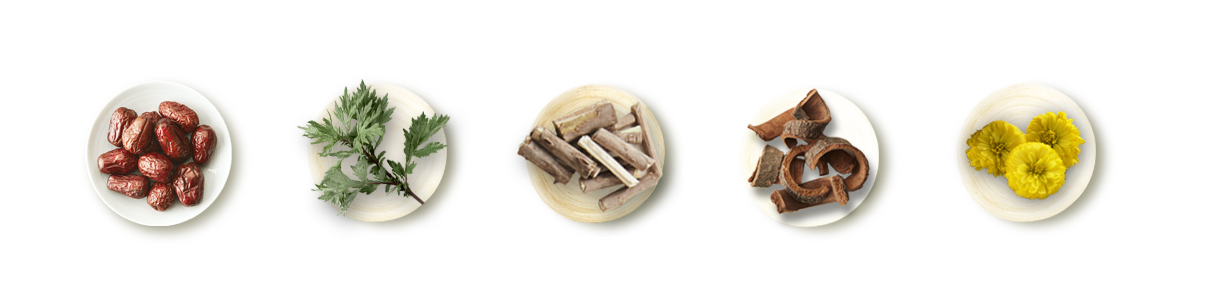
There is also a record of traditional liquor that used different ingredients in Eumsik Dimibang, the first cookbook written in Korean. When making Songhwaju, songhwa was boiled together, and, in Jeolju, paper mulberry leaves were used. In Ogapiju, the ogapi bark was used. Chaju, which was made by decocting jujube powder, white pine nut powder, pepper powder, honey, and cinnamon with liquor, is also recorded in the book.
Ingredients of Traditional Liquors in Jeungbo Sallim Gyeongje
Yu Jungrim’s <Jeungbo Sallim Gyeongje>, an agricultural book compiled by supplementing Hong Manseon’s <Sallim Gyeongje: Farm Management> also introduces traditional liquors with supplemental ingredients. Donhwaju was brewed by directly mixing peach blossom or peach branches. Podoju used grapes. Hayeopju used lotus leaves. Baekhwaju was made with various flowers, while Songsoonju used bamboo shoots.
Ingredients of Traditional Liquors in Gyuhap Chongseo
Gyuhap Chongseo, which was written in 1809, contains wisdom that is essential in daily life. It also states how to brew liquor, which mainly describes the method of adding dried or fresh flowers to add flavor to liquors, and also describes how to use medicinal ingredients to make liquors. It contains the record of Googijaju, which was made by using the roots, leaves, and fruits of wolfberries, Ogapiju using ogapi, Dohwaju using the flower and branch of a peach tree, Yunyeoup using lotus leaves, Doogyeonju containing azalea flowers, Songjeongju using pine tree knots, and Songsoonju using pine shoots.