


한식에 대한 다채로운 이야기를 전하는 온라인 매거진
Vol 44. Harmony of Korean Food and Liquor
Mariage of Traditional Liquor and Korean Jeon
Savoring Good Liquor and Food with Loved Ones / HANSIK’s Taste — Joy of Traditional Liquor
In the ancient times, it was considered courtesy for our people to serve valuable guests with alcoholic drinks. Gayangju(home-brewed liquor), which was brewed at each house, was created to serve guests with the utmost respect and to show respect to one’s ancestors. They also enjoyed side dishes with the liquor to avoid harming the body. Among them, jeon(Korean pancake) was an ideal, easy-to-make dish that could achieve the harmony of flavor by changing the ingredients to suit the type of liquor.
Article. Kim Seunghee(Traditional Culture Columnist)
The best feature of our liquor is its variety. Traditional liquor is largely divided into yangjo gokju(brewed cereal-win) and jeungryuju(spirits), which involves distilling brewed cereal-wine. The brewed cereal-wine is again divided into balhyoju(fermented wine), jeungryuju(spirits), honyangju(mixed wine), and iyangju according to the brewing method, and then into takju(milky rice wine), cheongju(clear rice wine), and soju(distilled liquor) according to the filtering method. Like our liquors, which branch out in various ways based on color, flavor, and aroma, jeon also has a variety of tastes and shapes, depending on the ingredients used, including meat, seafood, and vegetables, so it is easy to find a suitable mate with each other.
Rich Texture That Envelops a Savory Flavor Takju and Haemulpajeon
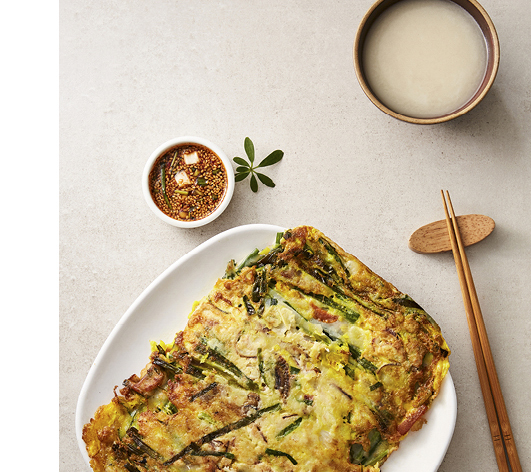 When we hear “takju,” which refers to milky or cloudy liquor, makgeolli(unrefined rice wine) is the first thing that comes to mind. As the name suggests, makgeolli is drank right after it is filtered, thus leaving an unpleasant aftertaste. At this time, haemulpajeon(seafood and green onion pancake), which offers a variety of textures and rich flavor, can cover such aftertaste. Its crispy and crunch outside results from pan-frying it in plenty of oil, while the soft and chewy inside is mixed together with many ingredients to offer diverse flavors that are sufficient enough to match the savory taste of takju. Makgeolli has relatively low alcohol content and poor storability because water is mixed during the filtering process, but the unique fragrant and nutty scent of fermented gokju(grain wine) stimulates one’s palate and it has high nutritional value, so it has been loved by all classes. On rainy days, we automatically think of “makgeolli and pajeon(green onion pancake),” and this seems to have continued the custom of resting at home while drinking makgeolli when it rained during the busy farming season. Since pajeon was an easy-to-make side dish with common ingredients, their union was as fateful as marriage.
Light Flavor Merging with a Clean Scent Cheongju and Saengseonjeon
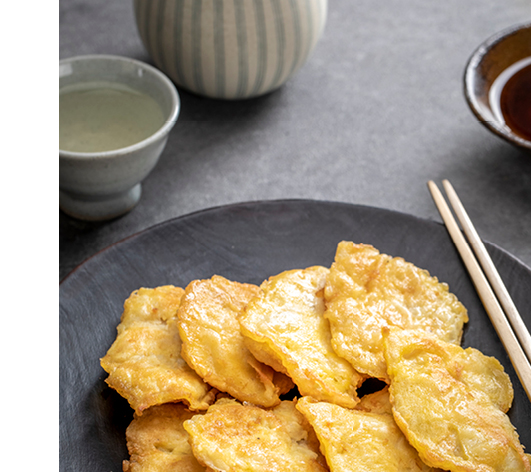 It was an important ritual for our people to serve clear liquor, brewed with care during holidays and family ceremonies. Cheongju(clear rice wine) is a type of liquor made from rice, the staple food of our ancestors, after filtering it clean through fermented yeast. Our traditional wine has a pleasant and unique fruit scent with a good balance of sour and sweet flavors, while cheongju has a unique scent and flavor so it pairs well with light side dishes without spoiling its taste. One of the representative side dishes is saengseonjeon(pan-fried, battered fish fillets). This dish, which has a clean and superior taste, is made by using white fish, such as pollack, cod, and sea bream, that are sliced thinly, coating it in flour, dipping it in beaten-up eggs, and pan-frying it in oil. White fish has relatively less fish smell, but the alcohol content of cheongju removes the faint fishy taste to achieve a harmonious flavor.
On the other hand, hwajeon(pan-fried flower rice cake), made by coating and frying non-toxic flowers in sticky rice powder batter, is also a good pair with cheongju. If you are unsatisfied with saengseonjeon only, it is good to have hwajeon that is also visually satisfying.
Joy of Chewing That Stimulates a Strong Taste of Liquor Soju and Yukjeon
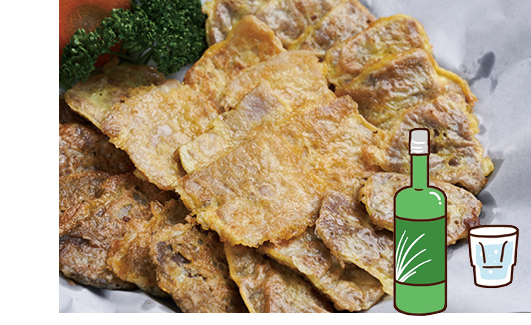 Though there is a very long history of humankind brewing liquor with fruits or grains, soju(distilled liquor), which is made by re-distilling liquor, is the product of a quite advanced generation. Soju, which is the representative Korean distilled liquor, means “strong, burned liquor.” There are two types of soju: distilled soju, which is made by fermenting grains and distilling it, and diluted soju, which is made by diluting spirits in water. Since soju has high alcohol content, it goes well with meat dishes. Yukjeon(pan-fried, battered beef), with a deep flavor of beef, is made by slicing the beef thinly, marinating it, coating it in flour and beaten-up eggs, and pan-frying it in oil. The meat juice and the right amount of oil can protect the stomach that can be irritated by strong liquor. Yukjeon is easy to make, but, in the past, when beef and oil were scarce, it was considered a luxury dish. Thus, it could only be eaten on special occasions, such as weddings and holidays. Yukjeon, served at traditional weddings, was made by mincing the meat, seasoning it with tofu and pan-frying it thinly, so its nutty flavor and soft texture were doubled. It was a dish that could be only eaten on a joyous day, so we naturally go for soju if we have yukjeon in front of us.