


한식에 대한 다채로운 이야기를 전하는 온라인 매거진
Vol 26. Namul - Gyeonggi Provi
Korean foods in history
Naengi and Ssuk coming along with spring
Hansik glossary
Naengi - Shepherd’s purse
Ssuk - Mugwort
The history of their use is so long as naengi(shepherd's purse) appeared in Chinese 'the Book of Odes' and in the national foundation myth did ssuk(mugwort). Even if it is planted in the ground in the cold winter, naengi grows well and is a treasure trove of vitamins in the winter. It has been used as a food ingredient and medicine since ancient times. Ssuk is not only a food ingredient but also used as a medicine and moxibustion in oriental medicine, and in the private sector, it was used to smoke out mosquitoes by burning it in summer.
Although it is a food ingredient commonly found in our mountains and fields, its taste and efficacy are never light, so it has been described in detail in the 'Donguibogam', which is a collection of Chinese and Korean medical books as much as its history is long.
Naengi can be found in the Chinese character 薺菜, implying 'vigorous and rich grass', whereas ssuk can be found '艾葉’ in the Chinese character which includes 乂, implying ‘Can cut the disease’.
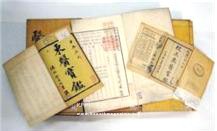
Donguibogam 東醫寶鑑, 1613
Chosun Dynasty, written by Heo, jun
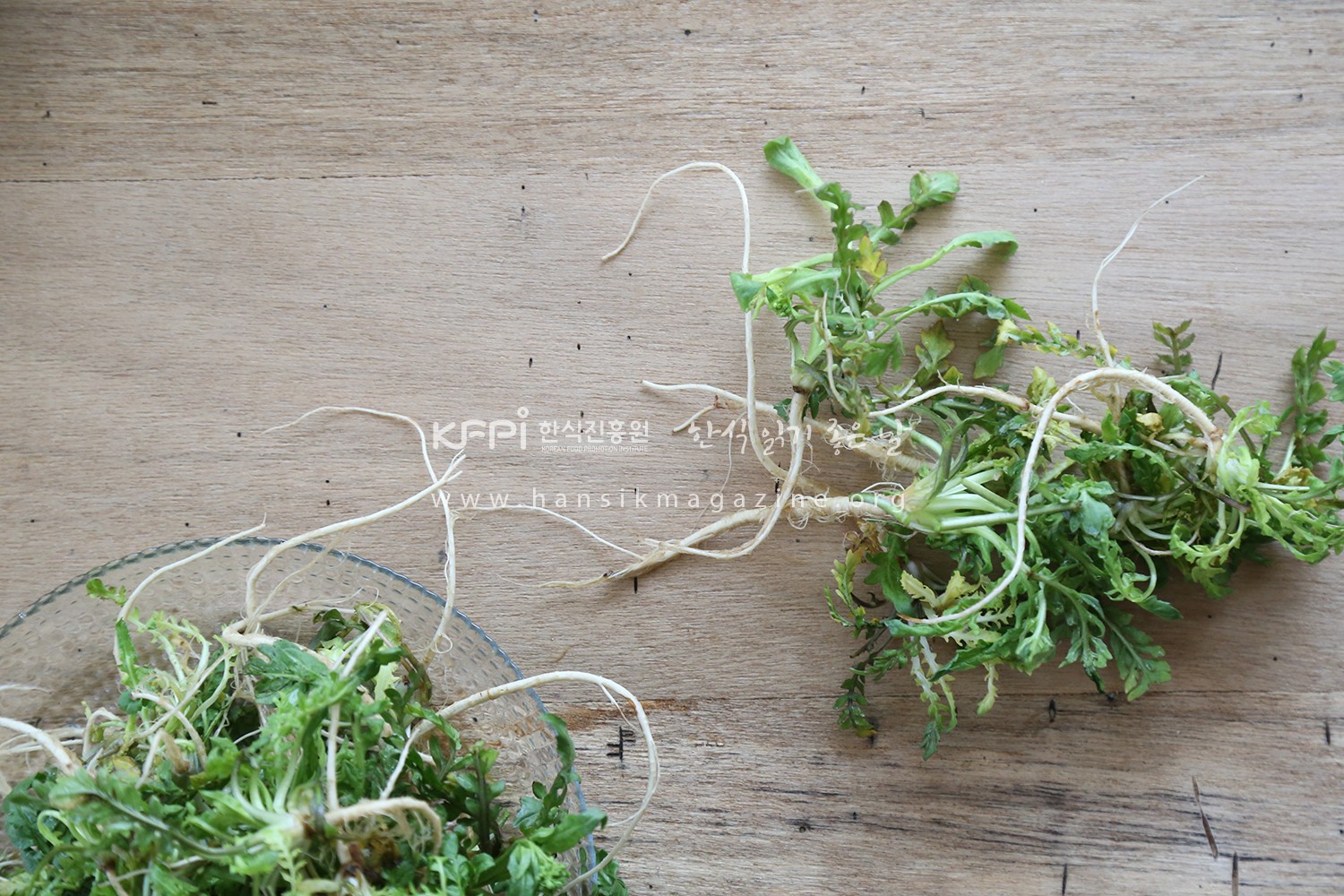
Jechae 薺菜, Naengi
It is warm in nature, sweet in taste, and not poisonous. It makes the liver intercourse 肝氣 well, eases the middle organs 中焦 and comforts internal organs. It grows in dry fields or wild fields but does not die in winter. When you take porridge with naengi, its aura leads blood to the liver, which brightens your eyes. Since August in the lunar calendar is the time when Yang is included in Yin, Yang aura is generated. So, naengi and barley are revived in the middle of fall.
Collection, recipe
- It is collected in March~May, washed and dried in the sun.
Efficacy, primary care
- Whole bundle
It cools the heat of the blood to stop the blood and lowers the heat to help smooth urination. It is used for urine bleeding due to new tuberculosis, Uterine bleeding after baby delivery, excessive menstruation, bleeding from pulmonary tuberculosis, hypertension, fever from a cold, swelling with nephritis, urinary system stones, urine, and enteritis.
- Seeds
It eliminates the seed wind and brightens the eyes. It is used for pain in the eyes, blindness, and clogging of the eyes.
- Flower
It is used for the flower dysentery or bungru.
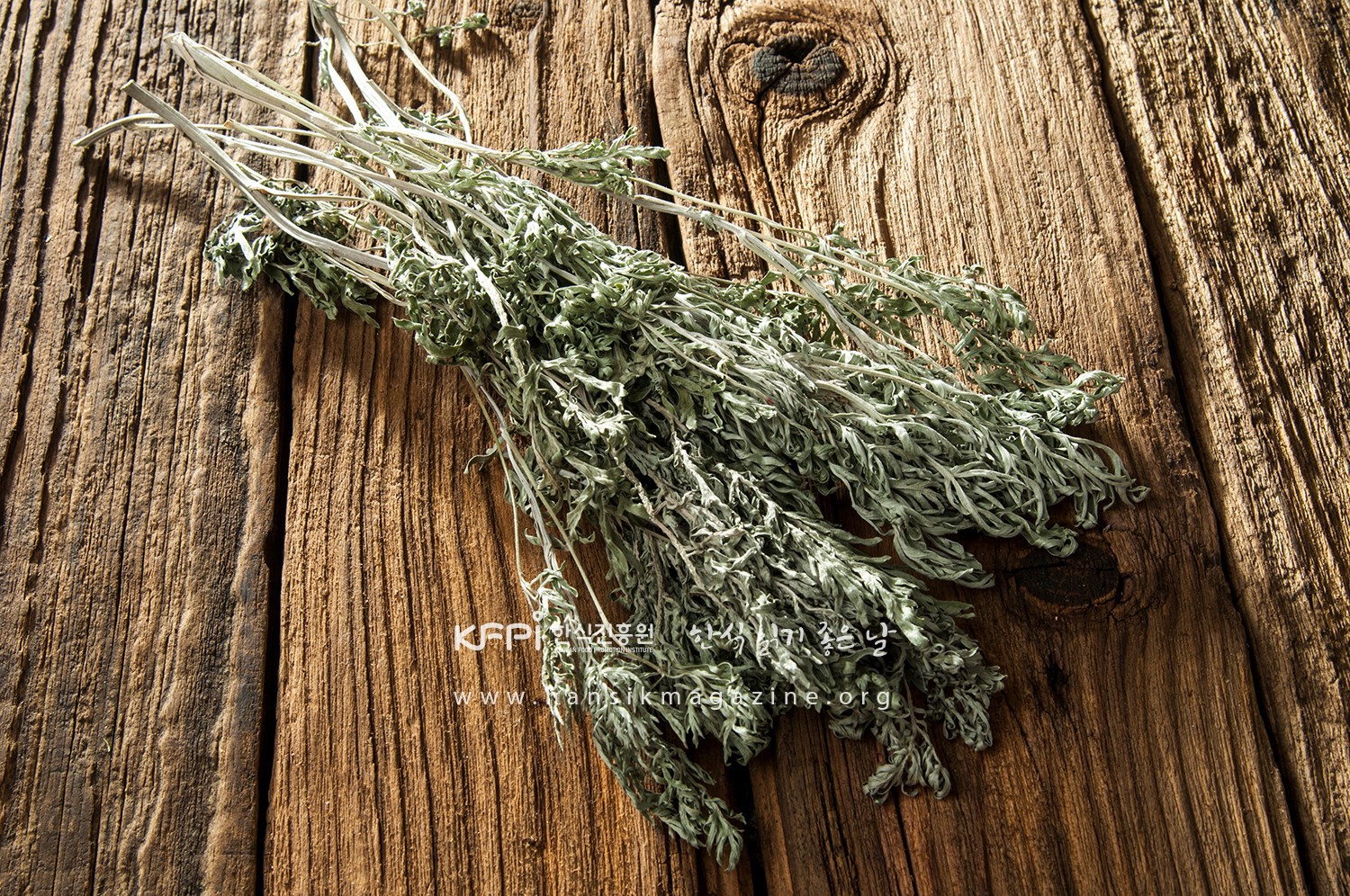
Aeyeop 艾葉, Yakssukip(Medicinal mugwort leaves)
Warm in nature, bitter in taste, but not poisonous. Curing all kinds of old diseases and ceaseless menstruation of women, restlessness, abdominal pain, dysentery, and it treats bleeding into the anus caused by bowel bleeding and lowers swelling, and it makes flesh to survive, flu, and become pregnant.
It is also known as an ice breaker or medicinal green. It grows everywhere, and the one covering the road is good with more medicinal effect. On March 3rd and May 5th in the lunar calendar, the leaves are plucked and dried in the sun, but only after long aging, it can be used as a medicine. The raw one is cold and the cooked one is hot in nature.
It is good to tear it up without talking before the sun rises on Dano day. Mashes it and remove the blue dregs using a strainer and takes the white one and add a little sulfur to make a moxibustion stick to apply moxa. Mashes it adding a little rice powder to make powder and mix it to medicine to take.
Collection, recipe
- Flowers do not bloom in spring and summer, but when the leaves are lush,
They are collected and dried in the sun or in the shade.
- Pick out impurities, remove hard stalks and petioles, and sift through to filter out debris.
Efficacy, primary care
- Leaf
There is some leaf poison. Scatter the chills to stop the pain and warm the meridians to stop the blood. It is used for the symptoms of that the belly is cold and sore, uneven menstruation due to cold meridians, cold uterus, and not becoming pregnant, and spitting blood, nose bleeding, bungru, excessive menstruation, and pregnancy bleeding. It is also used externally for skin pruritus.
- Choaetan:
It is used for warming the radial vein to stop bleeding. It is used for hemorrhagic bleeding.
- Aegwon:
Make moxa stick and use patronizing moxa.
- Mugwort fruit:
Brightens eyes, strengthens yang aura, helps kidney function, and softens waist and knees.
[References]
Translated by Sin-wan Donguibogam, 2015, written by Heo Jun, transferred by Dongui Literature Lab, Beopin Moonwhasa
Encyclopedia of Korean Folk Culture, The Academy of Korean Studies
Editorial Dept.