


한식에 대한 다채로운 이야기를 전하는 온라인 매거진
Vol 43. Harmony The Flavor and Beauty of Hansik
Eating Ritual Food without Performing Ancestral Rites Heotjesatbap
Heotjesatbap(bibimbap with soy sauce) is a dish that you can eat even when there are no ancestral rites. According to Kim Youngbok, a food researcher and the author of <Finding the Roots of Korean Food>, heotjesatbap is a type of food created by the Seowon culture of the Gyeongsang Sarim Group with Toegye Yi Hwang and Nammyung Jo Sik as the head. This is the reason why you can only find heotjesatbap in Jinju, Andong, and Daegu.
Source. <Finding the Roots of Korean Food>(Kim Youngbok, Baeksan Publishing Company)
Reference. Encyclopedia of Korean Culture Photo. Kim J
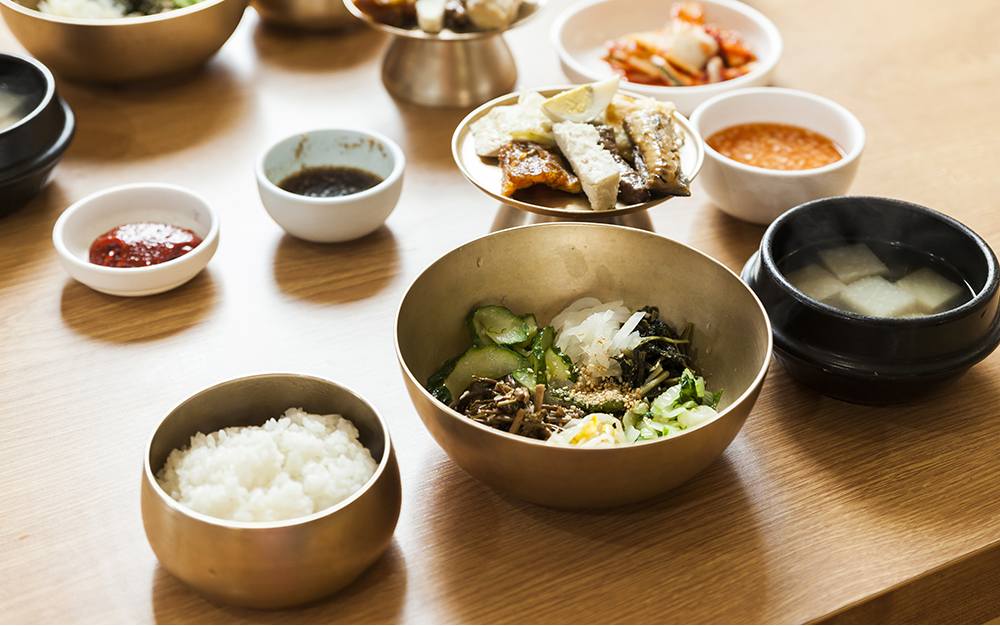

The food for ancestral rites was made with the best ingredients selected and made with utmost sincerity. Thus, there was no need to worry about the taste of the food. This was a sufficient reason to look forward to the day of the ancestral rite. This taste would have made people naturally find a way to eat food for ancestral rites even when there is no ancestral rite, and heotjesatbap was created for this reason. So, heotjesatbap refers to food eaten even on days when there are no rites.
This is also the reason why heotjesatbap was developed mainly in Gyeongsang-do, such as Jinju, Andong, and Daegu, as Gyeongsang-do, where Confucianism was strong, had many ancestral rites.
Kim Yongbok, a food researcher, paid attention to the part where “Taekriji,” a historical geography book of the Joseon Dynasty, stated, “the half of talents in the royal court were Yeongnam people.” Yi Hwang of Andong, on the left part of Gyeongsang Province, and Jo Sik of Hapcheon, the right part of the province, formed the two groups of Yoeongnam Sarim Group, and Sarim entered the central political world in earnest after the 16th century. Heotjesatbap is the type of food that was created in the process of leaving the government office, and building a seowon(lecture hall) after retiring to one’s hometown, and teaching younger students.
There are several theories about the origin of heotjesatbap. There is a theory that the yangbans(aristocrats) were sorry to eat rice publicly during the farm hardship period, so they prepared food for ancestral rites, performed fake rites, and then ate the food. Another theory is that it started when people of the lowest class, who could not hold ancestral rites, made and ate ancestral rites food without even performing ancestral rites, expressing deep resentment.
The most probable theory is that when Confucian students were studying at a seowon until late at night, they enjoyed themselves by preparing food for ancestral rites, writing prayers and odes, carelessly performing ancestral rites, and then eating food like heotjesatbap.

The food served during ancestral rites is also called jesu or jechan. The basic jesu consists of mae(ancestral rites service-rice, New Year’s sliced rice cake soup, Chuseok-songpyeon), samtang(beef, fish, meat), samjeok(beef, fish, meat), sookchae(tricolor seasoned spinach, bracken, bellflower root), chimchae(dongchimi), cheongjang(soy sauce), poe(dried pollack, dried cod, meat jerky, etc.), gaeng(soup), yugwa(yakgwa, white sanja, black sesame gangjeong), fruit(jujube, chestnut, persimmon, pear), jejoo(cheongju), gyeongsu(sungnyung), etc. In a family of high descent or a well-off family, the number of jesu varied depending on the region, school, and family, such as serving 6 tangs, 5 jeoks, and 5 chaes by adding 3 each.
Heotjesatbap is prepared simply with these jesu of 3 tangs(三湯: pollack, dried mussels, and octopus), 3 jeoks(三炙: with meat, fish or tofu), and 3 chaes(三菜: green bean sprouts, bracken, spinach). Furthermore, as dry side dishes, freshwater fish or croaker were slightly dried and steamed, and for soup, the leftover fish head was boiled together with fried fish. However, while the side dishes with red chili powder were not served on the ancestral rites table, a side dish containing cabbage kimchi or red chili powder was added to heotjesatbap. For dessert, rice cakes, fruits, and sikhye were served. Kim Yongbok, a food researcher, explains, “Heotjesatbap is eaten as it is set, but it has the meaning of siningongsik(神人共食), referring to ancestors and descendants coming together by mixing three seasoned vegetables, soup, and nutty sesame seed oil in a brass bowl.”
The most significant characteristic of heotjesatbap is being seasoned with sesame salt and soy sauce, not red chili paste. In some restaurants, it is served with red chili paste as per the preference of customers.


Jinju heotjesatbap is one of the four major local dishes of Jinju, along with Jinju Naengmyeon, Jinju Bibimbap, and Jinju Gyobang food. According to the Jinju City Hall, Jinju's heotjesatbap originated from the fact that during the Joseon Dynasty, Confucian scholars wanted to eat night snacks while studying late at night, but their poor neighbors were on their minds, so they pretended to hold a ritual and filled their hunger with food. Moreover, there is a story that a newly appointed governor of Gyeongsang Province ate the rites food of Jinju, and admired its taste so much that he asked for it frequently. So, his servants tried to trick him by making a similar table. However, since it was not scented with incense, the servants were caught.
Jinju heotjesatbap is a table setting based on the traditional ancestral rites of Jinju, and it is different from those in Andong and Daegu. In the Gyeongsangnam-do region with Jinju in the center, among the offerings prepared for regular ancestral rites were jeeum, jetang, sookchae, jeok and fresh fruits. It is customary to prepare them according to number. If there are 3 tangs, there are 3 sookchaes, which are seasoned vegetable dishes, and there should be 3 types of jeoks and 3 types of fruits. Seasonal vegetables were used to color the food, and seasonal vegetables were used to prepare sookchae(seasoned vegetables). The basic table setting of Jinju heotjesatbap consists of 3 tangs, 3 jeoks, and 3 chaes, and steamed croaker is added. Jinju heotjesatbap is served with Jinju yugwa(deep-fried sweet rice cake) and sikhye. The taste of Jinju yugwa and sweet wine has been recognized as the best in Joseon since the ancient times.

In the Andong region, heotjesatbap is also called “heotsinwibap” or “heosinjibap,” and in Chinese, it is called “heojeban(虛祭飯).” As for Andong heotjesatbap, it is said that the Confucian scholars from famous seowon, such as Dosan Seowon and Byeongsan Seowon in the Andong region, prepared food for ancestral rites when rice was scarce, wrote prayers and odes, enjoyed themselves by performing false ancestral rites, and ate food served for the rites. A provincial governor in Gyeongsang Province, knowing that the ancestral rites food was famous in Jinju, ordered his subordinates to get it every night. However, they couldn’t get to Jinju, so they made and gave the governor heotjesatbap, but the food didn’t smell of incense.
The Andong heotjesatbap table setting is the same as the ancestral rites table setting. It differs a little, depending on the season, but a plate of tricolored seasoned vegetables made with bracken, bellflower root, radish, spinach, bean sprout, eggplant or taro, and a plate of various jeons and jeoks are served. It is unusual for salted mackerel and shark meat to be included in sanjeok, but in the Daegu and Gyeongbuk areas, dombaegi(shark meat) was placed on the ancestral table. It is estimated that dombaegi was used in ceremonies in Daegu and in Gyeongsangbuk-do from the Three Kingdoms period.
It comes with soup, sesame salt, a small dish of soy sauce, and a bowl of rice. The tang is actually maktang, or the mixture of three soups: eotang(made with fish), yuktang(made with beef), and chaetang(made mainly with vegetables). Seasonings such as red chili paste and garlic are not included in the ritual food.
Andong heotjesatbap is always served with Andong sikhye. Andong sikhye is a unique umcheongryu(non-alcoholic beverage) that contains radish and red chili powder water, and is different from the commonly known sikhye(sweet rice punch). Andong sikhye, which is made by fermenting rice, thinly sliced radish, malt-soaked water, ginger, and red chili powder, has a mild and clean flavor with the spicy taste of red chili powder, ginger, and radish.

Heotjesatbap in Daegu is also regarded as a type of food enjoyed by Confucian scholars, like the ones in Jinju and Andong. <Haedongjukji>, written by Choi Youngnyun(崔永年) in 1925, described heotjesatbap as being famous in the Daegu region.
<Haedongjukji> notes, “If there is leftover food in our folk rites, goldongban(bibimbap) was made, and in the Daegu region, it was imitated, flavored, and sold at a market store. It is called heotjesatbap.” From this phrase, there is speculation that heotjesatbap was sold as a food service product in the early days in Daegu.
The menu of Daegu heotjesatbap is the same as the jesu food: 3 jeoks(meat, fish and tofu), 3 tangs(pollack, dried mussels and octopus), 3 chaes(green bean sprout, bracken and spinach), kimchi, beef jeon, dombaegi, rice, and soup are served in a table setting.