


한식에 대한 다채로운 이야기를 전하는 온라인 매거진
Vol 40. Nourishing Summer Food
Let’s Take a Look at the Nourishing Food That
Fights Summer Heat With Bapdol
During the midsummer heat, we lose our appetite and our strength. Everyone feels the heat during summer. The only thing that comes to mind at this time is a nourishing food. Let’s learn about nourishing food and stay healthy.
Source. Seoul National University College of Medicine National Health Knowledge Center·Ministry of Food and Drug Safety
Is nourishing food beneficial for everyone?
Eating nourishing foods can help you stay healthy in the summer. However, it is not beneficial for everyone. For instance, nourishing dishes like samgyetang (ginseng chicken soup) and grilled eel have high-protein and high-fat. If you have metabolic syndrome or chronic diseases, these high-protein and high-fat nourishing food could be toxic. It could be a burden for obese and inactive people, and if you sweat a lot, hot nourishing food may not help. After all, the important thing is to choose a nourishing food in consideration of your health condition, constitution, and amount of physical activity.
I’d like to know how I can safely store the ingredients for nourishing food, such as meat and fish.
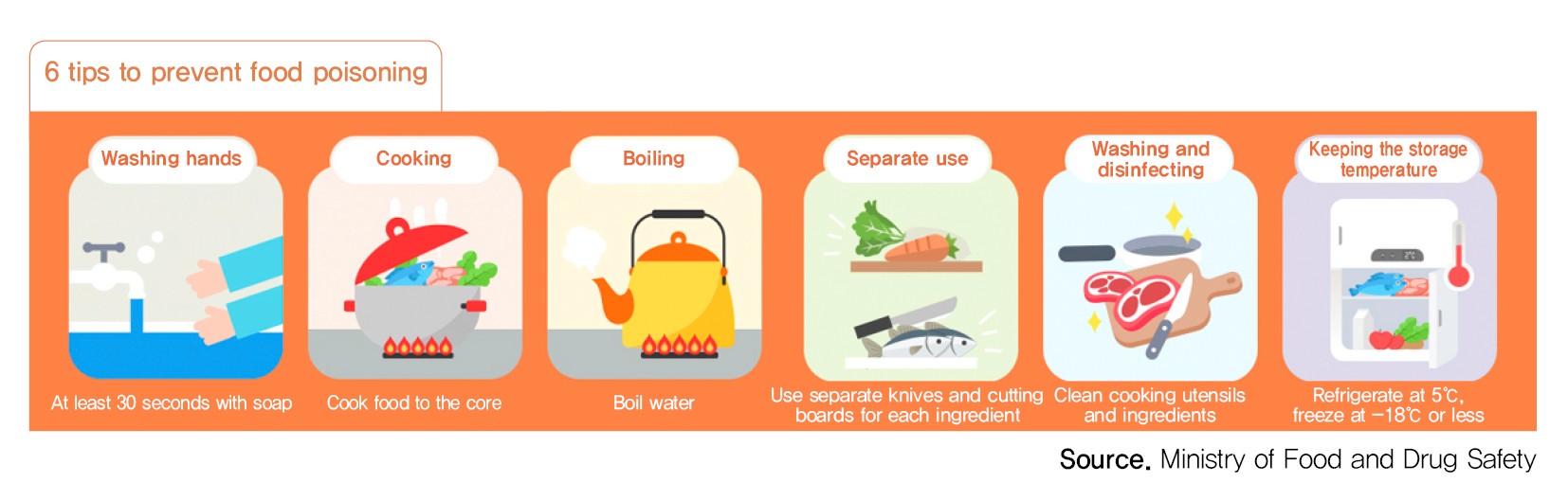
When purchasing fish, eggs, or meat, it is recommended to put them in the shopping cart at the last stage of shopping and transport them home in a cool condition by using an ice box or ice pack as much as possible. Be sure to store them in the refrigerator and avoid direct contact with ready-to-eat vegetables in order to prevent cross-contamination. The water splashed in the process of washing raw chicken, etc., may contaminate vegetables and cooking utensils, so pay careful attention to the washing process. You must be careful not to splash water on raw vegetables, fruits, or dishes around it.
Salmonella bacteria are very weak to heat, so when cooking eggs or meat, it should be sufficiently heated for at least 1 minute at a central temperature of 75℃. Be sure to use separate knives and cutting boards, and wash your hands thoroughly for at least 30 seconds under running water using soap or other detergent after touching the ingredients for nourishing food.
How should I store the leftover nourishing food?
Glutinous rice : Avoid direct sunlight and store in a cool, well-ventilated place (20℃ - 12℃). Store it with dry red pepper or garlic to prevent possible insect damage with its strong odor.
Dried jujubes : Put in a paper bag for natural ventilation, and refrigerate when the temperature is high. In this case, it is recommended to wrap them with a kitchen towel and store them in a plastic bag.
Fresh ginseng : Wrap in newspaper or kitchen towel, and store in the refrigerator. If you plan to keep it for a long time, cut it according to its intended use and store it in the refrigerator.
I’d like to know how I can store the leftover glutinous rice and ginseng after making samgyetang (ginseng chicken soup).
Divide the rest of the nourishing food into several containers as much as possible, and store warm food at 60℃ or higher and cold food at 5℃ or lower. If you put hot food directly into the refrigerator, the internal temperature of the refrigerator may rise and the other food stored in the refrigerator may spoil, so be sure to cool it before storing. When eating the stored food, it should be reheated to 75°C or higher to destroy toxins before eating.