


한식에 대한 다채로운 이야기를 전하는 온라인 매거진
Are you a ssam novice or connoisseur?
Ssam Expert Quiz
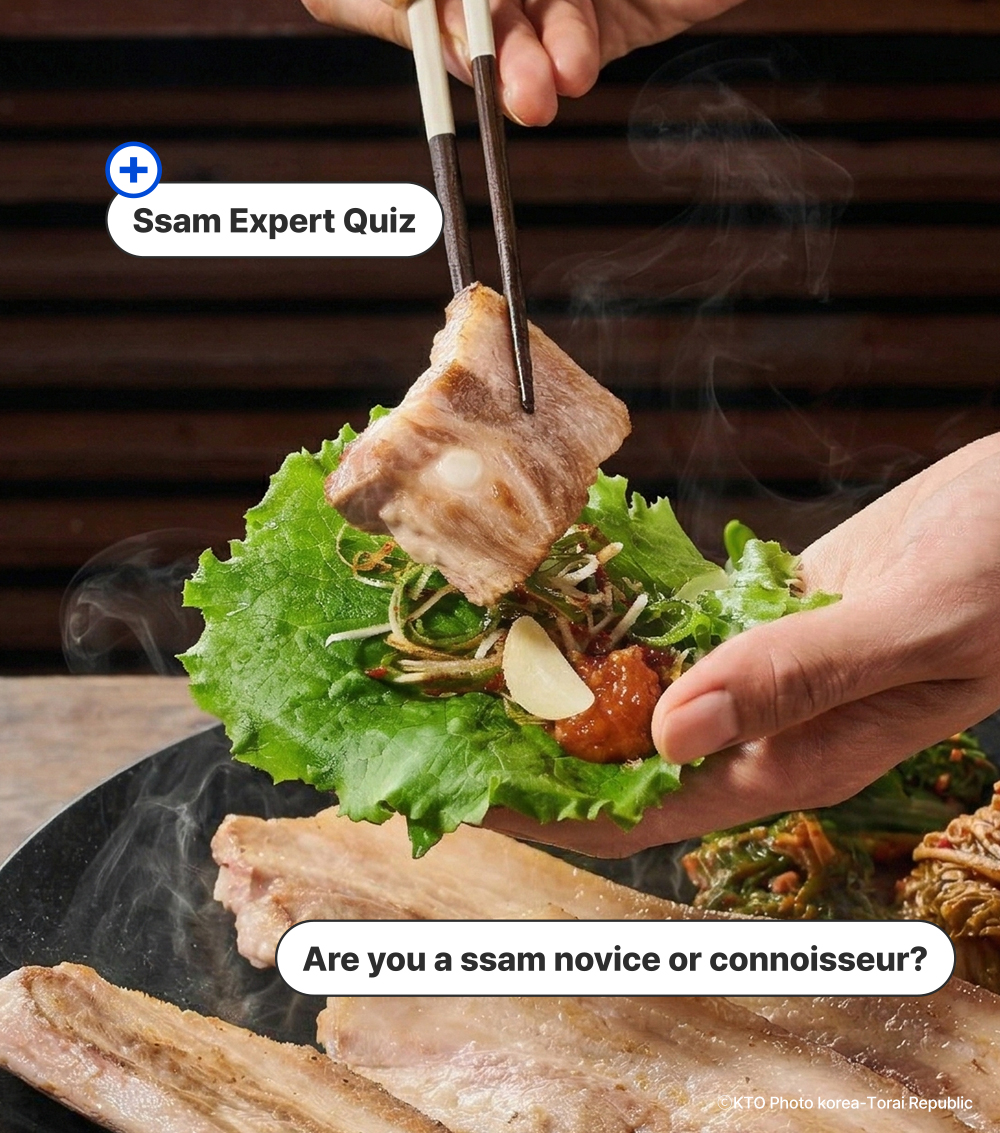
Every time you enjoy some ssam—a wrap generally made by placing a bite-sized piece of rice and/or meat with some jang (traditional Korean paste)—you are eating a familiar food with a fascinating history. The more you know about what types of wraps were eaten for which special occasions and the culture and etiquette embedded in each, the richer your experience will be. Try taking the Ssam Expert Quiz below to see how much you really know about wraps and get two recipes for soybean dishes (soybean being the main ingredient of ssamjang, a key element of any wrap!). Bring the freshness of spring to your table with Korean wraps!

Q1. What is the best description of Korea’s ssam culture? (1 point)
① Multiple ingredients physically brought together and consumed in one mouthful
② Simplified cooking and preparation process
③ Type of meal that emphasizes the flavor of a single ingredient
④ Eating done according to a pre-determined order
Q2. Which of the following is the best explanation for wraps being so diverse and highly developed in Korean culinary culture? (2 points)
① Absence of forks
② Development of a culinary tradition based on vegetables and fermented foods
③ Desire to eat vegetables more quickly
④ Custom of saving up small amounts of money to buy food
Q3. Which of the following is not an example of wrap etiquette? (2 points)
① If you have a close relationship with someone else at the table, you can make wraps for one another.
② Wraps should be made as large as possible.
③ Sharing and communal enjoyment of food is a major priority.
④ Wraps are best made and eaten with one’s hands.
Q4. Which of the following is not an accurate explanation of wraps eaten on Jeongwol Daeboreum (day of first full moon of the year)? (2 points)
① Wraps signify a desire for good fortune.
② Wraps are also referred to as “bokssam” or “bakjeom.”
③ Ogokbap (steamed five-grain rice) and namul (wild green salad) are wrapped in a piece of laver or a cabbage leaf.
④ A wrap must always include meat.
Q5. Based on the pictures and explanations below, choose the correct wrap vegetable for (A), (B), and (C). (3 points)
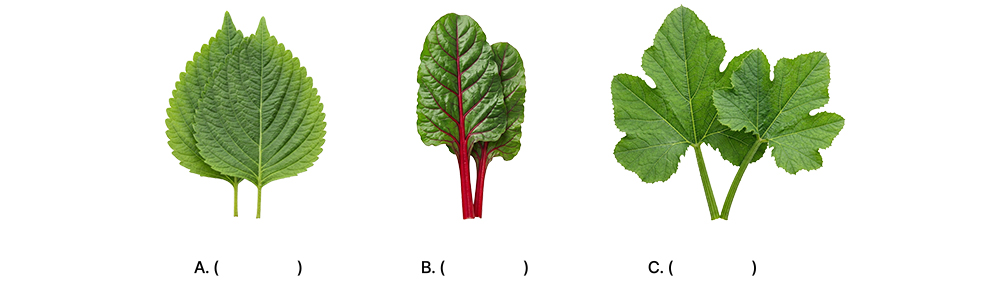
A. It has a characteristic scent and is best eaten with meat, as it amplifies the flavors and reduces oiliness.
B. It has a soft, chewy texture and is eaten raw or parboiled. It is known for its subtle sweetness and bold color.
C. Due to its coarse texture, it is usually steamed before eating. It pairs well with braised mackerel or gangdoenjang (seasoned soybean paste).
① Red beet ② Perilla leaves ③ Pumpkin leaves
Answers and explanations
Q1: ①
Korea’s ssam culture centers on combining various ingredients (e.g. rice, vegetables, meat, jang) into a wrap small enough to be eaten in a single mouthful. This is an extension of the way in which Korean meals are taken: namely, by sharing several different dishes.
Q2: ②
Korean cuisine is propped up by two pillars: vegetables and fermented foods (kimchi, doenjang (soybean paste), gochujang (red chili paste), etc.). The importance traditionally attached to these foods gave rise to wraps consisting of vegetables with rice, portions of side dishes, and jang.
Q3: ②
Generally, wraps are made just large enough to fit inside one’s mouth. The priority lies not so much in the size of the wraps as it does in whether they can be eaten comfortably or the sense of community that arises from eating them with others.
Q4: ④
Wraps eaten on Jeongwol Daeboreum, or bokssam, symbolize the family’s hopes for good fortune for the new year and are typically made with namul and ogokbap. According to known culinary custom, there is no rule that requires bokssam to include meat.
Q5: (A) ② (B) ① (C) ③
A. Perilla leaves: Characterized by heart-shaped leaves and a strong scent, they are often eaten with meat.
B. Red beet: Characterized by red leaf veins and soft leaves, it is generally eaten raw or parboiled.
C. Pumpkin leaves: The large, coarse leaves are usually steamed.
A hearty soybean-based meal
No wrap is complete without ssamjang (red chili and soybean paste), a flavor amplifier that begins with the humble soybean. Soybeans are used not only for various types of jang but also on their own—boiled, ground, or steamed to create a wide range of dishes all rich in flavor and with different levels of chewiness. For centuries, soybeans have proven that they are perfectly capable of being either the star of a dish, delicious and high in nutritional value in addition to being filling, or a supporting player at the Korean table. Here are two easy-to-make soybean recipes.
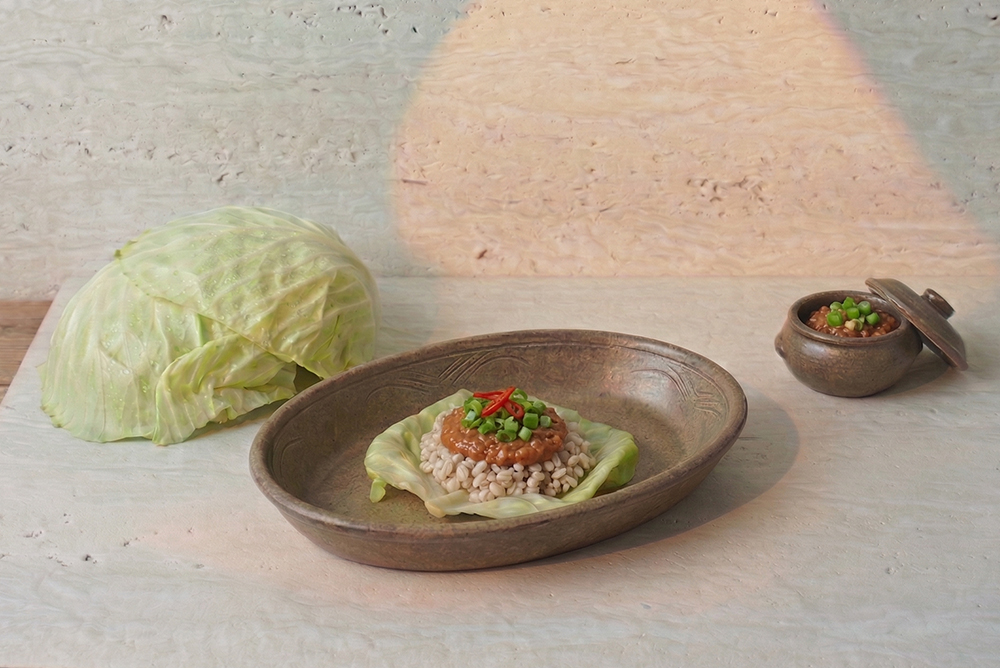
Savory to the max: Cabbage and Soybean Ssambap
Ingredients (serves one)
Rice (0.5 bowl), cabbage leaves (5-8), soybeans (0.5 cups), soybean paste (1T), red chili paste (0.5T), diced garlic (0.5t), perilla oil (1T), crushed nuts (1T; walnut, almond, pine nut, etc.)
How to make
① Wash the soybeans thoroughly. Soak them for at least eight hours.
② Fill a pot with water and add the soaked soybeans. After boiling for 20 to 30 minutes, strain the soybeans to remove moisture.
③ After the soybeans are sufficiently cooled, mash them with a spoon or pestle (see “Tip”).
④ Put the mashed soybeans, soybean paste, and red chili paste in a bowl. Mix well.
⑤ Add the diced garlic, perilla oil, and crushed nuts. Mix well. This is the ssamjang.
⑥ Steam the cabbage leaves in a steamer for five minutes.
⑦ Use the cabbage leaves as wraps for rice and ssamjang.
✔ Tip: When mashing the soybeans, make sure to leave lots of large “bits.” Breaking them down too finely will diminish their signature chewy texture.
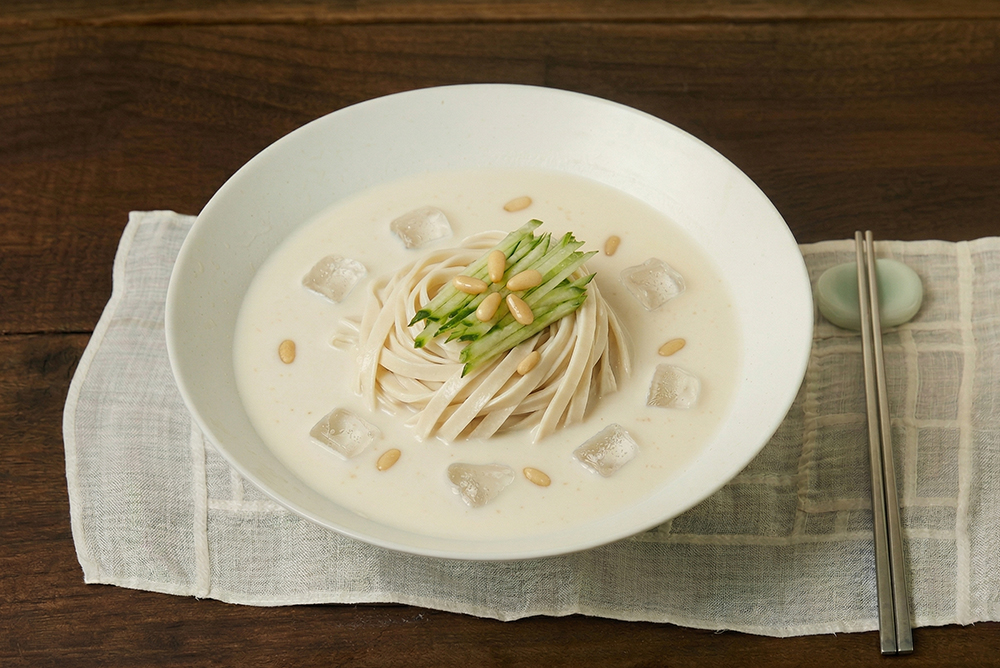
Cold soybean delicacy: Kongguksu with Tofu Noodles
Ingredients (serves one)
Tofu noodles (100g), Soybeans (2 cups), stir-fried peanuts (1 handful), pine nuts (0.5 handful), cucumber (0.5), salt (0.5t), water (10 cups)
How to make
① After soaking the soybeans in water for five hours, remove their skins.
② Put the soybeans, water, and salt into a pot. After boiling for 13 to 15 minutes, set the pot out to cool.
③ Make soybean broth by using a mixer to grind the boiled soybeans, water, pine nuts, and peanuts into a fine paste.
④ Put the soybean broth in the refrigerator to cool.
⑤ Arrange the tofu noodles into a wide bowl. Pour the soybean broth over it. Top the noodles off with julienned cucumbers.
✔ Tip: The soybean broth should be made as cold as possible to enhance its savory flavor.
References
Encyclopedia of Korean Folk Culture, Dongguk Sesigi (Record of Seasonal Customs in the Eastern Kingdom, K FOOD: Secrets of Korean Flavors, Gyuhap Chongseo (Women’s Encyclopedia), Yeolyang Sesigi (Record of Seasonal Customs of Hanyang), 10000 Recipe (Easy Recipe for Ssamjang, Making Ssamjang at Home), W Table (Kongguksu, Cabbage Ssambap)