

한식에 대한 다채로운 이야기를 전하는 온라인 매거진
Vol 38. Kimchi
Kimchi is the Most Mysterious Dish in the World
Grand Master Lee Hayeon
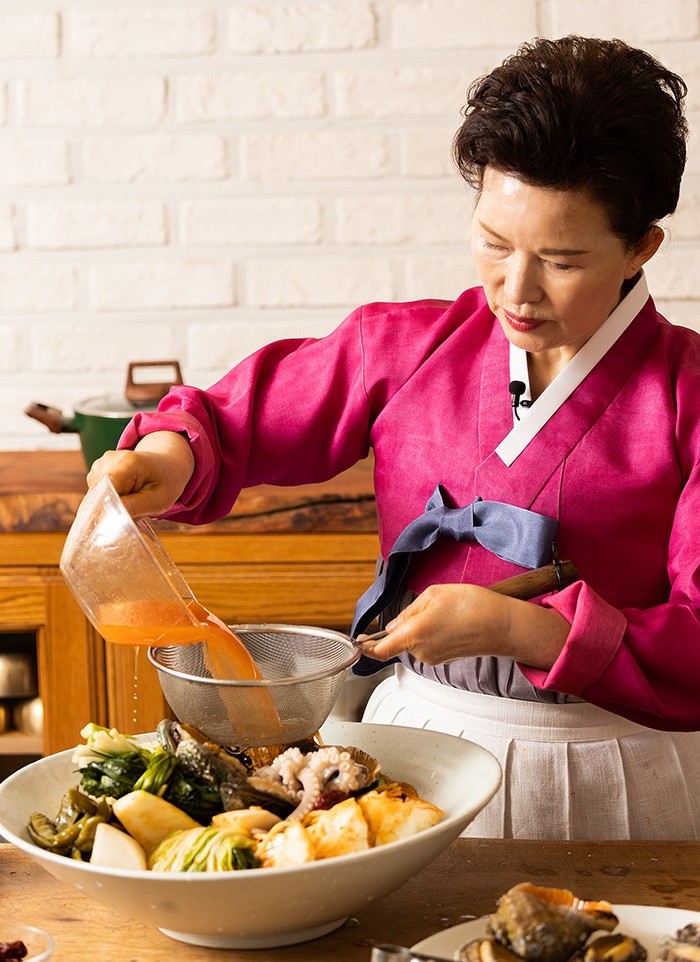
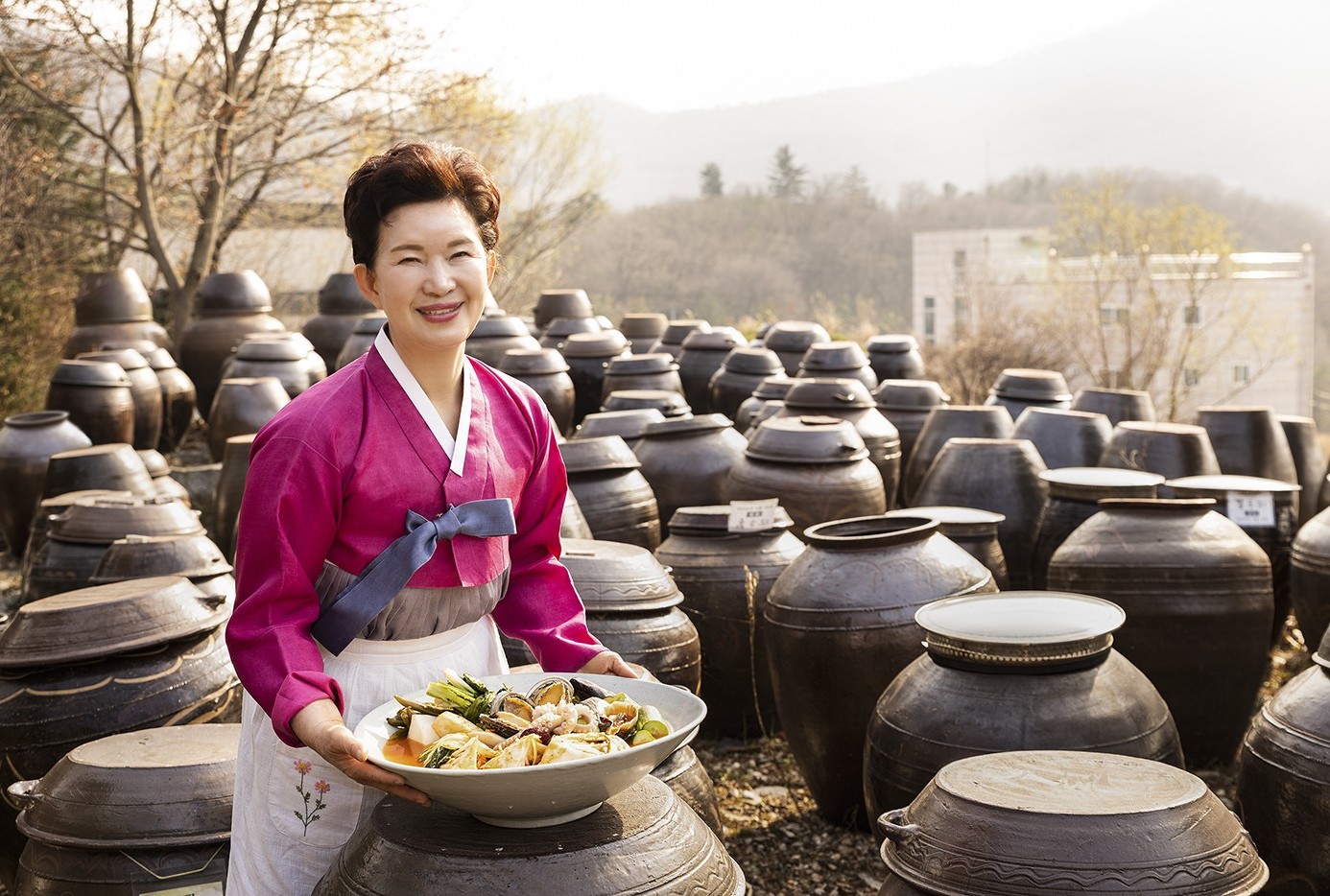
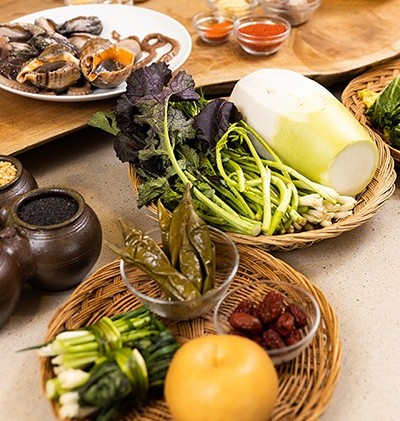
Kimchi is definitely the type of food that Koreans eat the most. It began as a dish called “chimchae” and developed into today’s “kimchi” through various changes over the years. Of course, kimchi is still “evolving.” Kimchi is created by adding time to nature in harmony. Grand Master Lee Hayeon, the president of the Kimchi Association of Korea, was designated as the Korean Food Grand Master. Her “Seafood Seokbakji” is prepared by mixing top shells, small octopus, abalone, etc. in kimchi.
In the midst of the recent controversy over Kimchi in China, we met with her to talk about Kimchi.
Article. Choi Gapsoo Photo. Kim J
Q. To make kimchi, it is necessary to select and prepare the ingredients, and have your own recipe. Thus, kimchi can be called a dish. If you have a cooking philosophy or a philosophy on kimchi, please share it with us.
A. Kimchi is a dish that is made with nature. All of its ingredients are obtained from nature. Kimchi is not made by people, but by time and temperature. It is the only dish that uses the expression, “cooked,” although it does not use fire. It means that the harmony of the flow of time and nature’s temperature both work together to create kimchi. So, I believe that kimchi must be the purest and cleanest dish. It must not have any additives or flavor enhancers.
Q. You were designated as a Grand Master after studying and making kimchi over the years.
A. I had a restaurant for a long time, and I didn’t want to serve customers kimchi that was made by someone I didn’t know. So, I decided to study all that there is to learn about kimchi. You see, kimchi is so strange. The more I made it, the more it became mysterious. Hundreds of combinations are created, depending on the ingredients and spices. Also, taste changes according to the degree of fermentation. I think this mystery is the reason I still make kimchi.
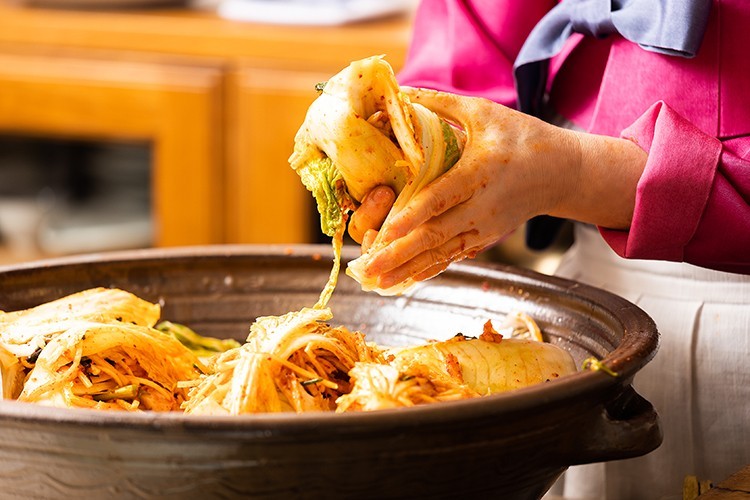
Hundreds of combinations are created,
depending on the ingredients and spices used.
Also, taste changes according to the
degree of fermentation.
I think this mystery is the reason I still make kimchi.
Q. Lately, the controversy over kimchi with China persists. A well-known Chinese YouTuber claimed that pao cai is the original form of kimchi. As the Grand Master of Kimchi, what is your opinion on this?
A. Quite simply, pao cai is a type of food that has no connection to kimchi. It is a completely different type of food. Pao cai is made by pickling kimchi cabbage or radish, boiling it at high temperature, cooling it and pickling it again after mixing it with Chinese pepper, star anise, spicy pepper, ginger, and sugar. Since it is only pickled for two to three days, it is eaten differently. It is very different from our kimchi because it contains no probiotics. While kimchi is a type of dish that promotes the production of lactobacillus, pao cai is a pickled food that suppresses fermentation as much as possible.
Q. Kimchi has been leading the globalization of Korean food as the representative fermented dish that is recognized by the world.
A. With the world’s increasing interest in Korean culture, the interest in kimchi also increased rapidly. In tune with this trend, I have done plenty of work to keep our country’s position as the birthplace of kimchi. Kimchi has now become a proper noun, and was selected as one of the top 5 health foods in the world. China will get nowhere with its claim. In 2013, UNESCO listed the kimchi culture as the UNESCO Intangible Culture Heritage of Humanity. Then, the Culture Heritage Administration listed kimchi-making as the national intangible cultural asset in 2017, and designated November 22 as Kimchi Day, a statutory Memorial Day, in 2020. When making kimchi, at least 11 ingredients are used, and 22 types of efficacies are produced. Kimchi in Korea, such as Gyeonggi-do kimchi, Jeolla-do kimchi, and Gyeongsang-do kimchi, have different preparations and efficacies. Thus, each manufacturer also has its distinct feature.
Q. It is important to improve children’s eating habits to increase kimchi consumption and to sustain the kimchi industry. In your opinion, what must children know about kimchi?
A. If children don’t eat kimchi, the reason for it is simple. It is because kimchi doesn’t taste good. This is an issue that we all have to work on. It is also necessary to educate children about the benefits of kimchi when they enter elementary school. Young Japanese students think Dokdo Island belongs to Japan because they learned it in school. We have to provide sufficient education on kimchi. I’d like to say something to BTS and Mr. Bang Si-hyuk. As among the most influential people in the world right now, if they are seen eating kimchi regularly in their daily lives, the globalization of kimchi will accelerate. If they can do this, I will make and supply kimchi to them for life.
Q. Lastly, please tell us about your future plans.
A. In cooperation with the World Institute of Kimchi, I plan to open a specialized kimchi education course at Sookmyung Women's University for the CEOs within the kimchi industry. I would like to teach them not only how to make temple kimchi and royal kimchi, but also teach them kimchi marketing and kimchi liberal arts. Likewise, I have been trying to secure a space where people can try kimchi. In line with this endeavor, I have been talking with the government, the National Assembly, and officials from the City of Seoul. There have been many obstacles due to the unexpected COVID-19 pandemic, but I have to contribute to the development of the kimchi industry. Amid the controversy on kimchi from China, I felt the need to enhance the reputation of kimchi manufacturers.
This way, I will be able to discuss kimchi to the public and keep them informed.