


한식에 대한 다채로운 이야기를 전하는 온라인 매거진
Vol 37. Dodari - Chungcheong
A trip to find Dodari filled with spring energy
Gourmet travel for regional food ingredients
Hansik glossary
Dodari - Flounder
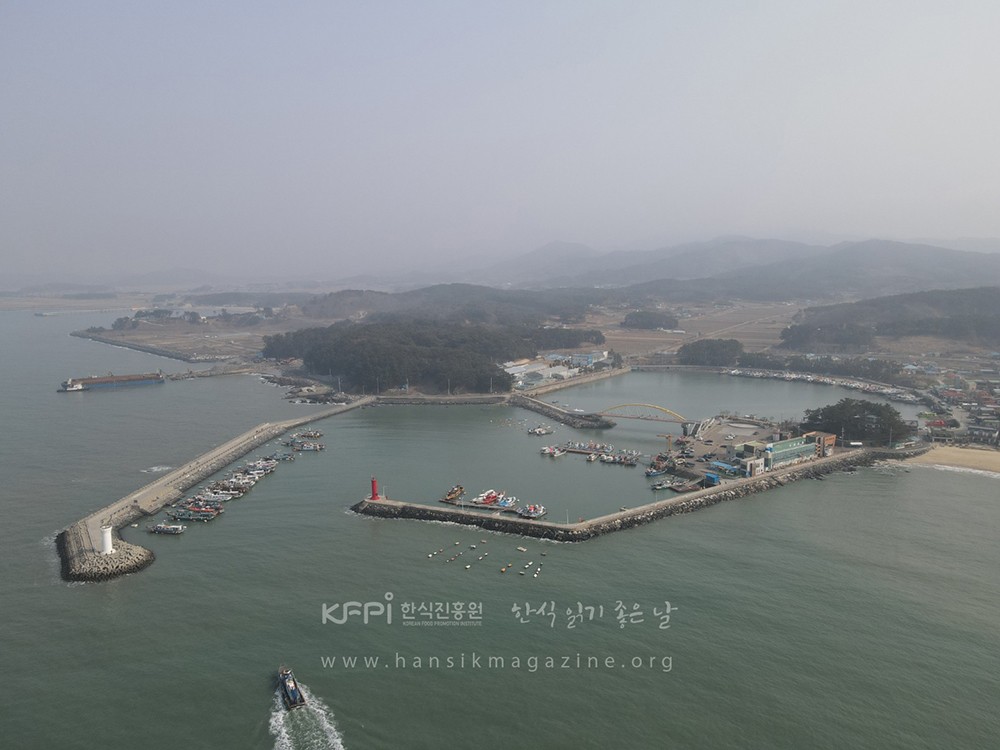
Spring has come in Muchangpo Port, Boryeong City, Chungnam
The winter with exceptionally cold weather which turned our heart also cold is passing. We can hear the news that apricot flowers in the warm south and pussy willows in Seoul are in bloom, and the spring weather makes our heart flutters. Although we are still cautious as we cannot fully return to our normal life like before the outbreak of Covid-19, let's go to Muchangpo in Boryeong City, Chungcheongnam-do to welcome the spring that is coming to us little by little.
White flesh fish dodari is a byword of spring fish
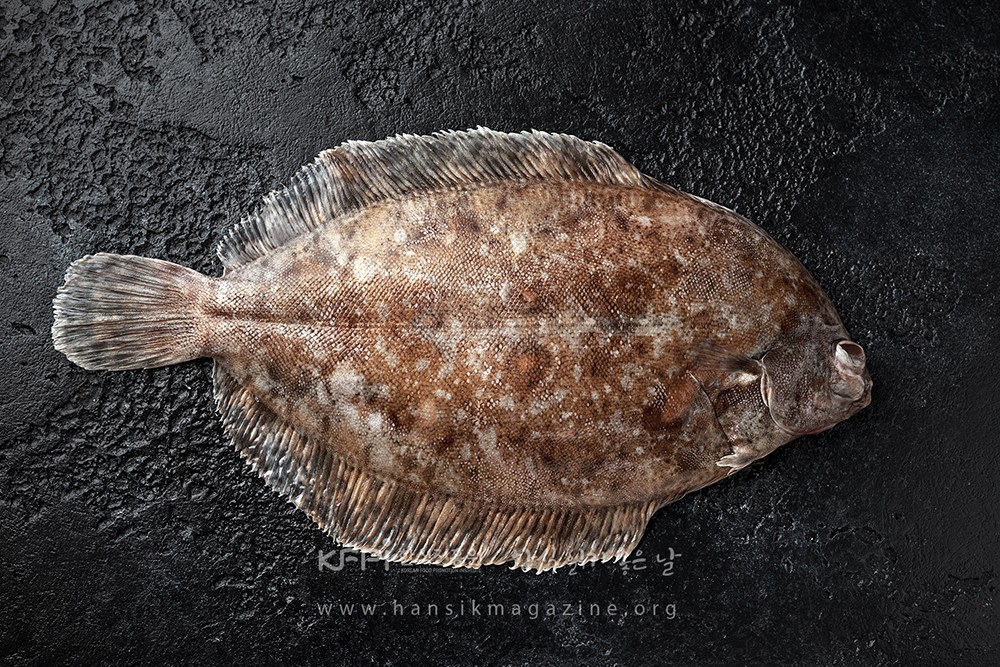
Dodari with spring energy
Seasonal food is delicious. Fish is in season before spawning just like fruits are ripe. However, shellfish are toxic during spawning, so we should avoid eating it during the period. One of the seasonal ingredients representing March, when all things wake up from hibernation and live, is dodari.
Dodari accumulate nutrients during the winter, and go to the 10-40m coast in spring for spawning. Thus, this fish is delicious with full of fat in this season. There’s a reason that people say “Spring dodari and autumn gizzard”. When March starts, we can taste dodarissukguk(flounder and mugwort soup) boiled with freshly digged mugwort from the field. This is an excellent dish to feel the rich atmosphere of spring.
The main production sites of dodari is Tongyeong and Geoje in Gyeongnam in the south coast, and Muchangpo Port and Daecheon Port in Chungnam in the west coast. To hear the story of dodari on the west coast, I visited the fishing market at Daecheon Port and met Captain Kim Jongguk of Haegwang boat, who also served as the president of the Daecheon Port Ship Owners Association.
According to Captain Kim, fishermen in Muchangpo go out to sea starting in late February, preparing to catch dodari. They catch dodari until April but March is the peak time. Dodari live in sandy and mud bottom of about 100m deep, inhabit within 12m in March and 20m depth of water in April, so they can be caught by going out to the sea 20 minutes away from the port. If you visit Daecheon Port in the early morning of March or April, you can see 50 to 60 fishing boats departing to the sea to lay nets for catching dodari.
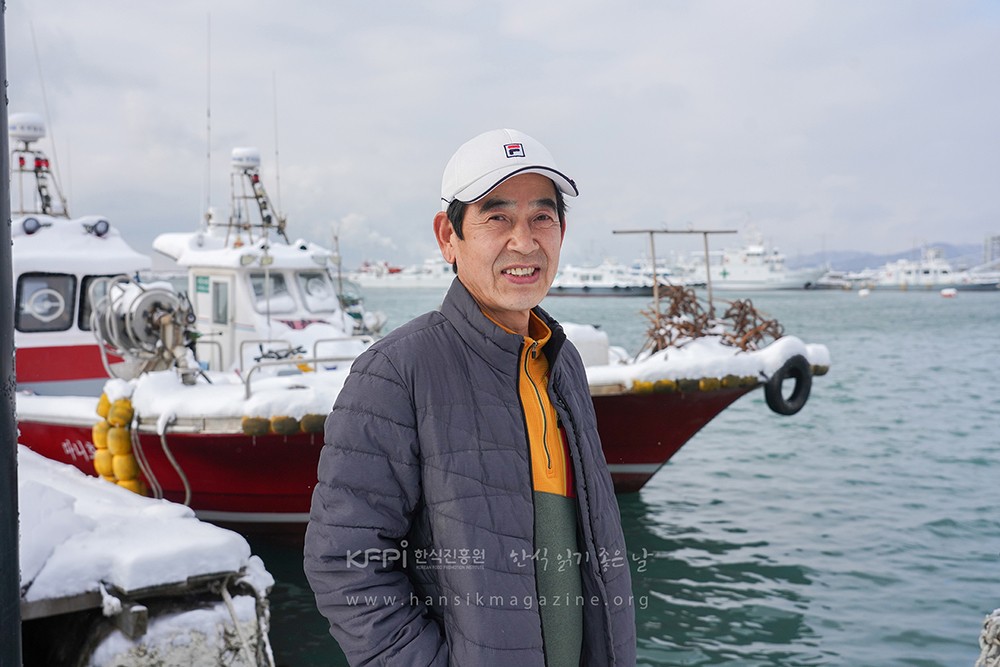
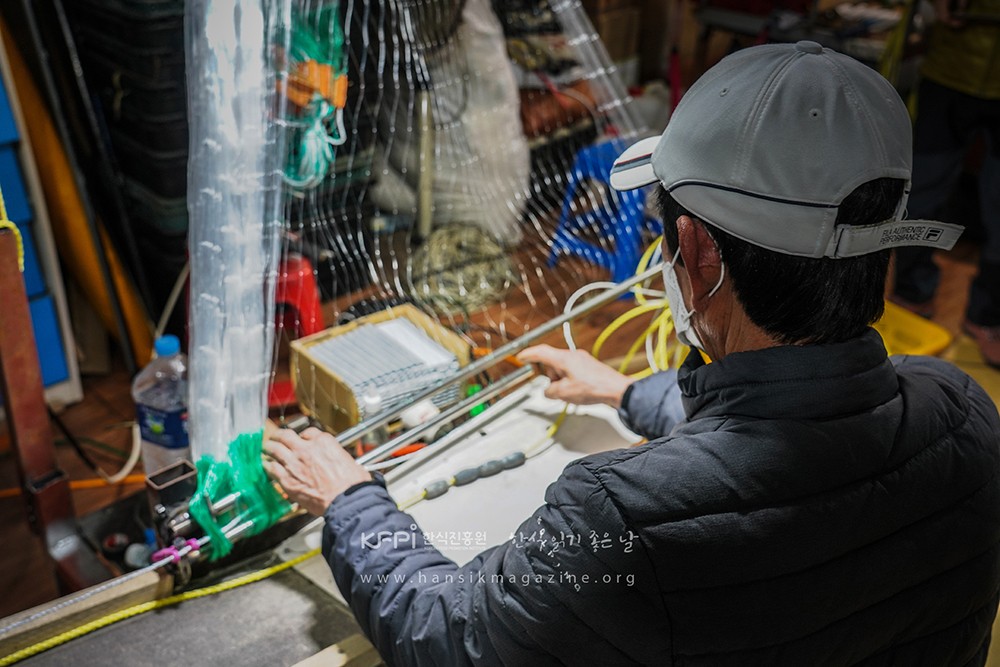
Captain Kim Jongguk's handwork also gets busy in March when a lot of dodari are caught.
(Left) Captain Kim Jong-guk of Haegwang boat (Right) Preparing a net to catch flounders
Distinguish flatfish from dodari “Left flatfish, right dodari”
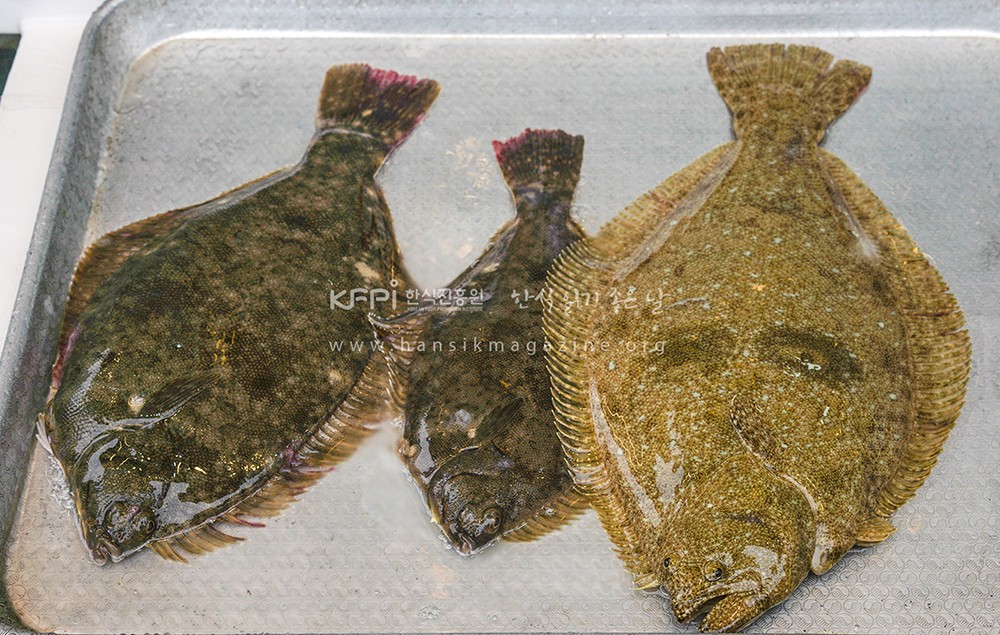
Left flatfish, right dodari. The darker dodari on the left has both eyes towards right, and flatfish on the right has both eyes towards left.
It is difficult to distinguish dodari because it is similar in shape to flatfish we commonly know. So Captain Kim tells us to remember the word “left flatfish, right dodari”. When the head of a fish is facing down and its eyes are towards left, it is the flatfish. However, if the eyes are on the right, it is dodari. In addition, it can be distinguished by the mouth and teeth of the fish. Dodari has small mouth and teeth, whereas the flatfish’s are both large.
I also got a tip from Captain Kim on how to pick a fresh and tasty dodari. First you need to check its eyes. The fresh dodari has clear and shiny eyes. Then you should also check the mouth, skin, and scales. Pick a dodari with vividly red mouth, dense scales and glossy skin.
Dodarissukguk, a perfect match with mugwort with the scent of spring
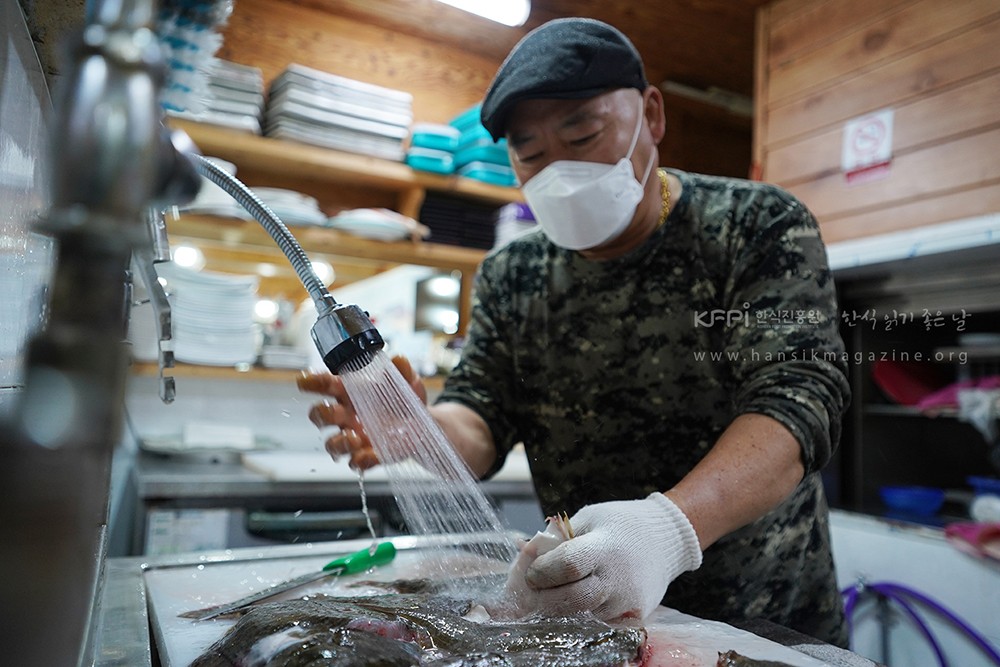
Dodari is cleaned at ‘Deungdaehoejip’ restaurant located on the beach in Muchangpo, Boryeong City, Chungcheongnam-do.
Dodari is a representative white flesh fish that contains a large amount of protein and is a healthy food in spring. It is known to be good for the liver because it contains less fat compared to rich protein. Furthermore, it contains a variety of nutrients that are good for health including vitamin A for increasing resistance to colds and other infectious diseases and also good for eyesight, and vitamin E for anti-aging. There are many nutritions with low calories, so it is a perfect diet food.
There is a reason to go to the local place to eat this dodari. It is because this fish is farmed but only the caught from the sea and most of them are consumed locally. The dodari dish sold in the local area is perfect for satisfying appetite that you have lost during the winter. Dodari can be cooked in a variety of dishes such as dodarigui(grilled flouder), dodarijjim(braised fluder), dodarihoe(sliced raw flouder), but dodarissukguk(flounder and mugwort soup) full of spring scent is the best.
In Muchangpo, where is the main production area for dodari on the west coast, wild seaweed is added to the dodarissukguk). There’s a saying that gizzard is so delicious that even bring back the runaway daughter-in-law, but this dodarissukguk tastes even better. Ms. Kwon Haeja, the owner of ‘Deungdaehoejip’ restaurant, has sold dodarissukguk at Muchangpo beach for 13 years, and said “Spring is the best season for dodari and it perfectly matches with the spring plant mugwort. That’s why people who visit Muchangpo always eat dodarissukguk in March.” The scent of mugwort spreads in mouth and the flesh of dodari melts gently as soon as you put it in your mouth. The taste of spring is in this delicious soup. Muchangpo is the hometown of spring taste, abundant with seasonal foods that tells spring has come.
How to cook Muchangpo-style dodarissukguk
You can easily cook Muchangpo-style dodarissukguk at home if you only have dodari caught off the coast of Muchangpo and mugwort. First, cut off the fins and tail, remove the intestines and scales, and wash it thoroughly under running water. Drain dodari and divide it into 3-4 parts to make it easier to eat. Wash the mugwort in running water and remove the moisture. Put chopped radish, kelp and doenjang(soybean paste) into the rice water and boil. It's better if you have homemade doenjang. In Muchangpo, wild seaweed is added for more flavory taste. Finally, add green onions and red peppers, boil a little more, then add enoki mushrooms with mugwort and boil.
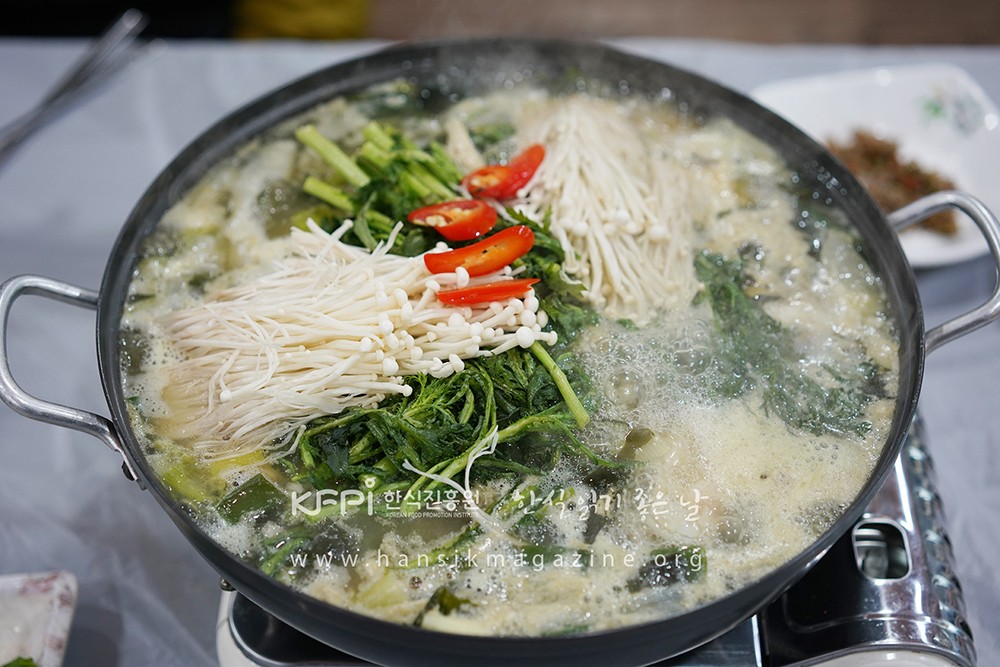
Delicious dodarissukguk is being boiled.
If you want to try a different dish of dodari, try dodarimaeuntang(spicy flounder stew) or dodarijjim(braised flounder). Captain Kim, whom I met earlier in Daecheon, said that he likes dodarijjim more than dodarissukguk. Cooking dodarijjim is easy. Prepare dodari that is full of eggs and cut it to fit the size of a pot. Then, put radish cut into 2cm thick at the bottom of the pot, add water and soy sauce, and boil for 10 minutes until the radish is cooked. Put dodari and cook over medium heat.
Boryeong's traditional liquor that goes well with dodari
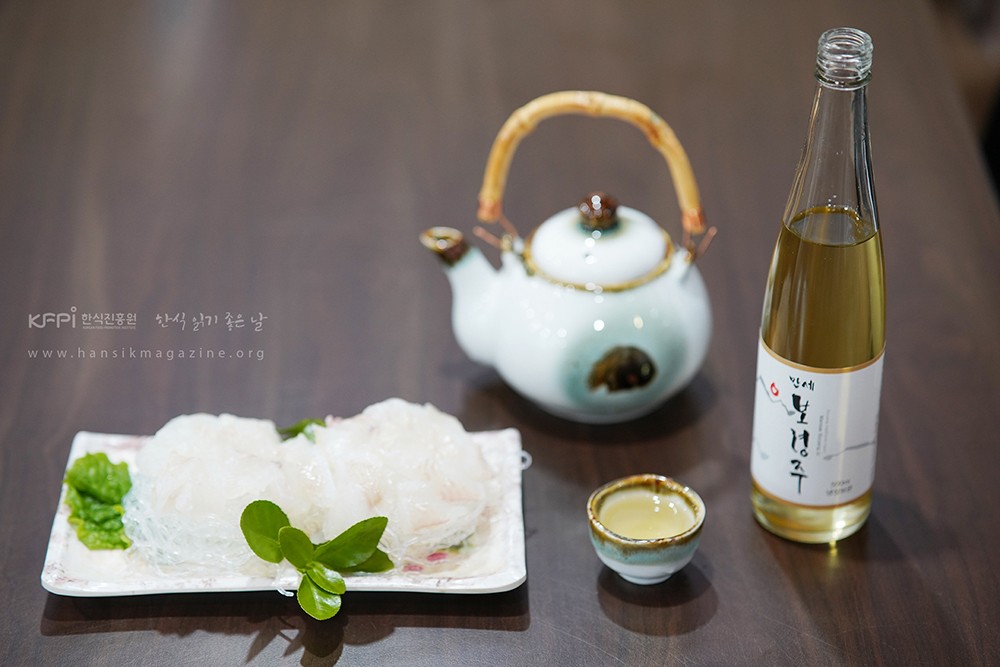
Dodarihoe(sliced raw dodari) with ‘Manse Boryeongju’ the traditional liquor won in the nationwide brew alcohol competition
The taste of dish cooked with local seasonal ingredients is better if eating it with the local traditional liquor. In Boryeong, Chungcheongnam-do, you can find “Manse Boryeongju”, which is fermented for 40 days with yeast in clear water of Mt. Seongju and then aged for 6 months at low temperature. This liquor also recently won the grand prize at the nationwide brew alcohol competition and was selected as the top 10 Chungnam liquor in 2019.
Manse Boryeongju is brewed by hand using 100% Boryeong glutinous rice and white rice. This liquor contains live yeast and has rich aroma and soft taste. The moment you take a sip, refreshing feeling spreads in your mouth. CEO Park Taehong of Farming Association Corporation Boryeong Traditional Liquor said, “Manse Boryeongju is a traditional liquor made with clear water from the foot of Mt. Seongju and high-quality rice produced in Boryeong, Chungcheongnam-do. It is a traditional medicinal wine made with only naturally fermented rice, yeast, and purified water, and does not use any other additives.”
Mysterious Muchangpo sea
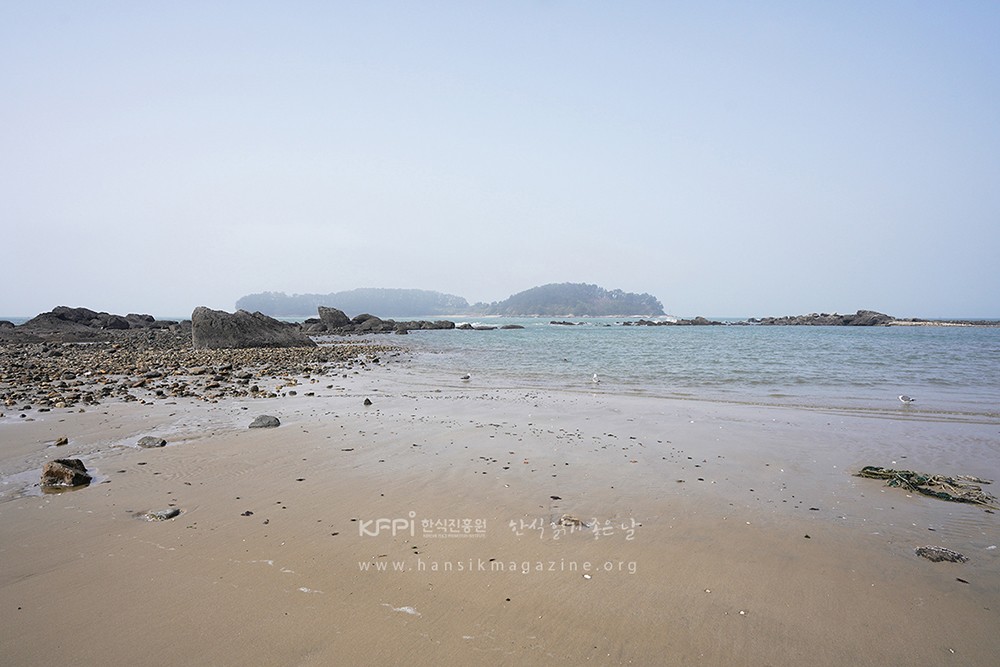
Muchangpo Beach
If you visit Muchangpo, you can enjoy seasonal foods along with natural scenery. Among them, Muchangpo Beach was the first beach that opened on the west coast in 1928. The 1.5km-long beach has natural magnificent landscape in harmony with the dense pine forest. You can also enjoy the mud flat at low tide. Muchangpo Beach is famous with the mysterious 1.5km sea road divided into S-shape. Check out the time and date of the sea road opening on the Boryeong city website.
There are also several places to watch the beautiful sunset. First, you can see the beautiful glowing of the setting sun at Dakbyeosul Island in the south of Muchangpo. Famous as one of the top five sunset spots in Boryeong, it is also a favorite sunset spot for photographers. Otherwise, go up to the Muchangpo observation deck and watch the beautiful sunset over the lighthouse of Muchangpo port.
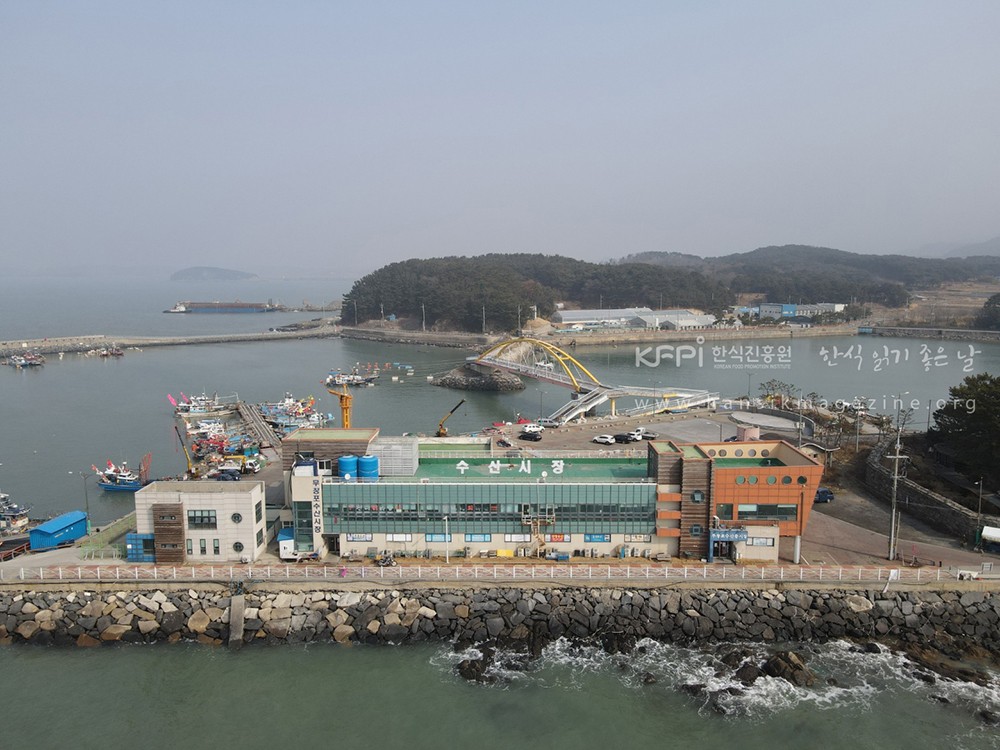
Muchangpo fish market
Lastly, don’t miss the Muchangpo fish market. It sells fresh seafood caught every day at a reasonable price. There is an abundance of fishery products such as wild dodari, webfoot octopus and so on caught in the West sea in front of Muchangpo. Choose fresh fish from the fish market on the first floor and eat it as raw fish on the second floor. Enjoy the fresh taste of Muchangpo.
Let's thoroughly follow the Covid-19 quarantine guidelines such as wearing a mask, sanitizing hands, and keeping social distance and enjoy a safe spring trip to Muchangpo.
Edited by Hong wonmun / Photographed by Han Heeseok
Former Reporter of Travel Sketch, Visiting Reporter of Kangwon Ilbo