


한식에 대한 다채로운 이야기를 전하는 온라인 매거진
Temple Cuisine Special Exhibition Joins Hansik Interactive Talk
An Insight into Korean Cuisine, Hansik
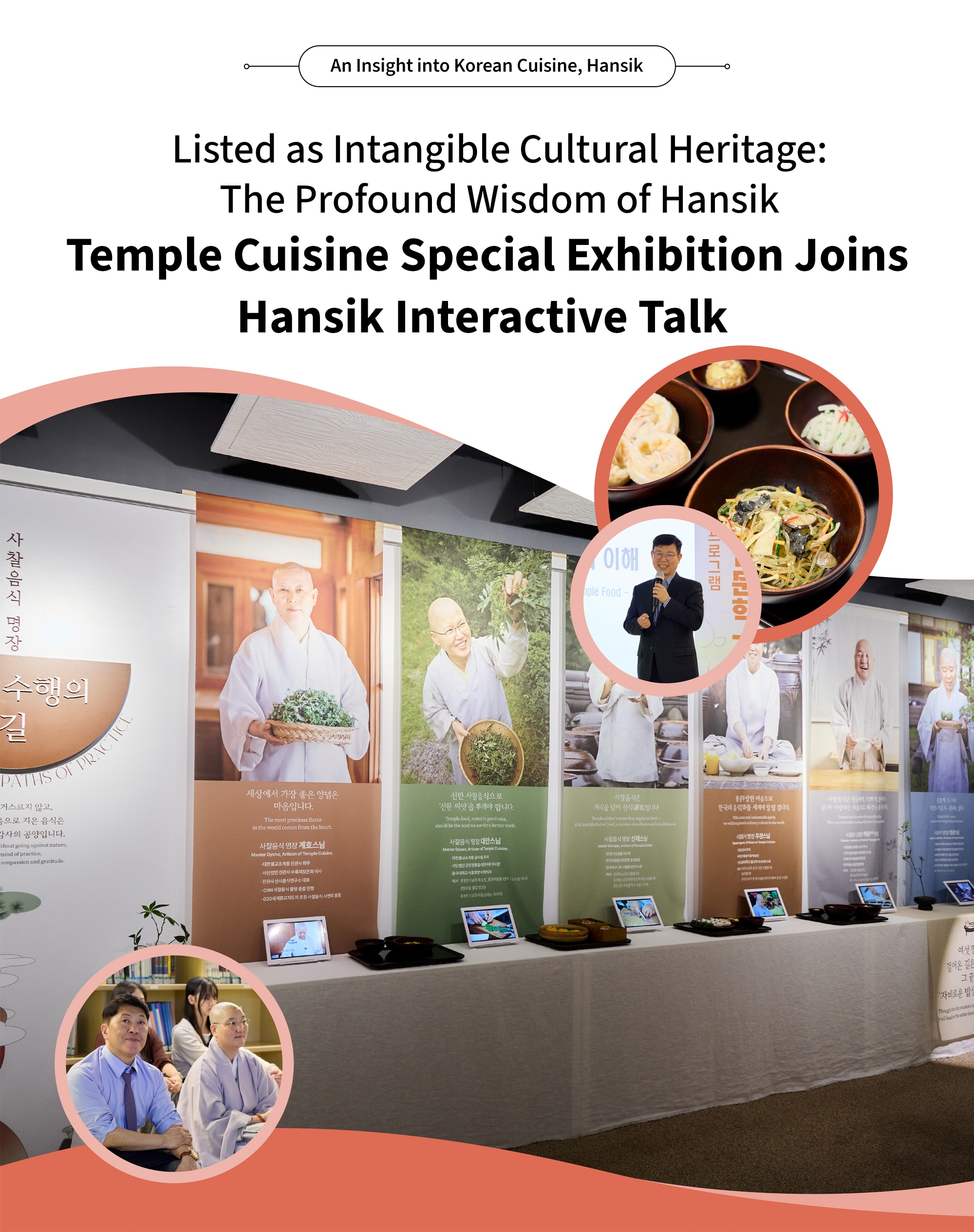
May of this year marked a pivotal moment when Korean temple cuisine ascended to the UNESCO’s National Intangible Cultural Heritage status. This recognition celebrates a culinary tradition steeped in the philosophy of natural harmony, respect for all living things, and mindful moderation—a tradition that illuminates the remarkable diversity and sophistication of Korean food culture. To commemorate this achievement and share the essence of Hansik and temple cuisine with audiences at home and abroad, a special gathering took place on September 24th at the Hansik Space E:eum. The event, which wove together a signing ceremony, an exhibition opening, and a Hansik interactive talk, represented a significant inaugural stride toward expanding Korean cuisine’s horizons through partnership and cultural exchange.
Forging a Fresh Path Through Partnership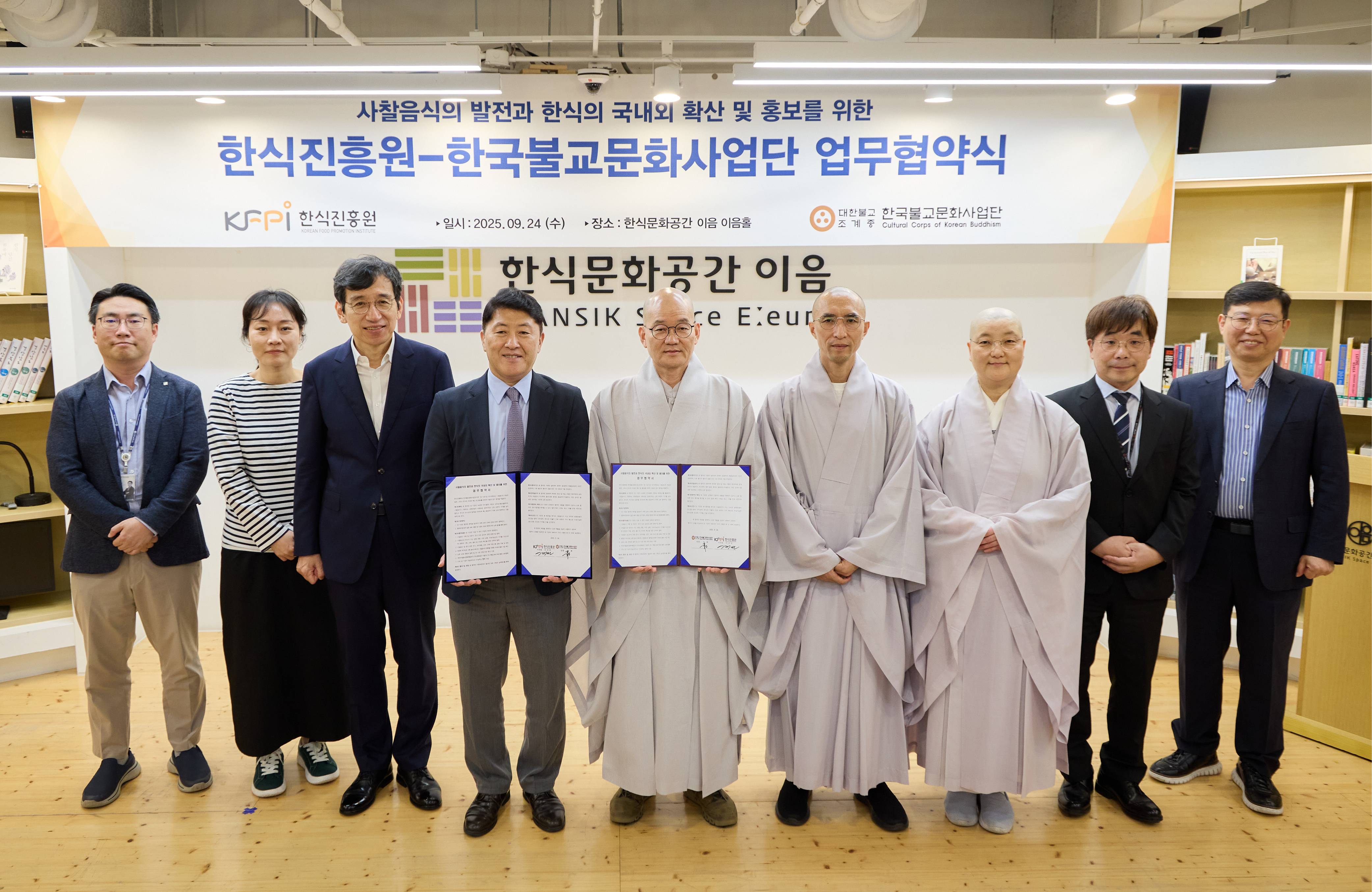
The proceedings began with a formal accord signed between the Korean Food Promotion Institute and the Cultural Corps of Korean Buddhism. The two institutions committed to a shared mission: preserving the heritage of temple cuisine while advancing Korean gastronomy’s international reach. Key areas of cooperation include co-curating exhibitions, experiential activities, and educational talks, developing content that reflects principles of respect for life and environmental sustainability, sharing educational resources, and fostering deeper linkages between their respective venues.
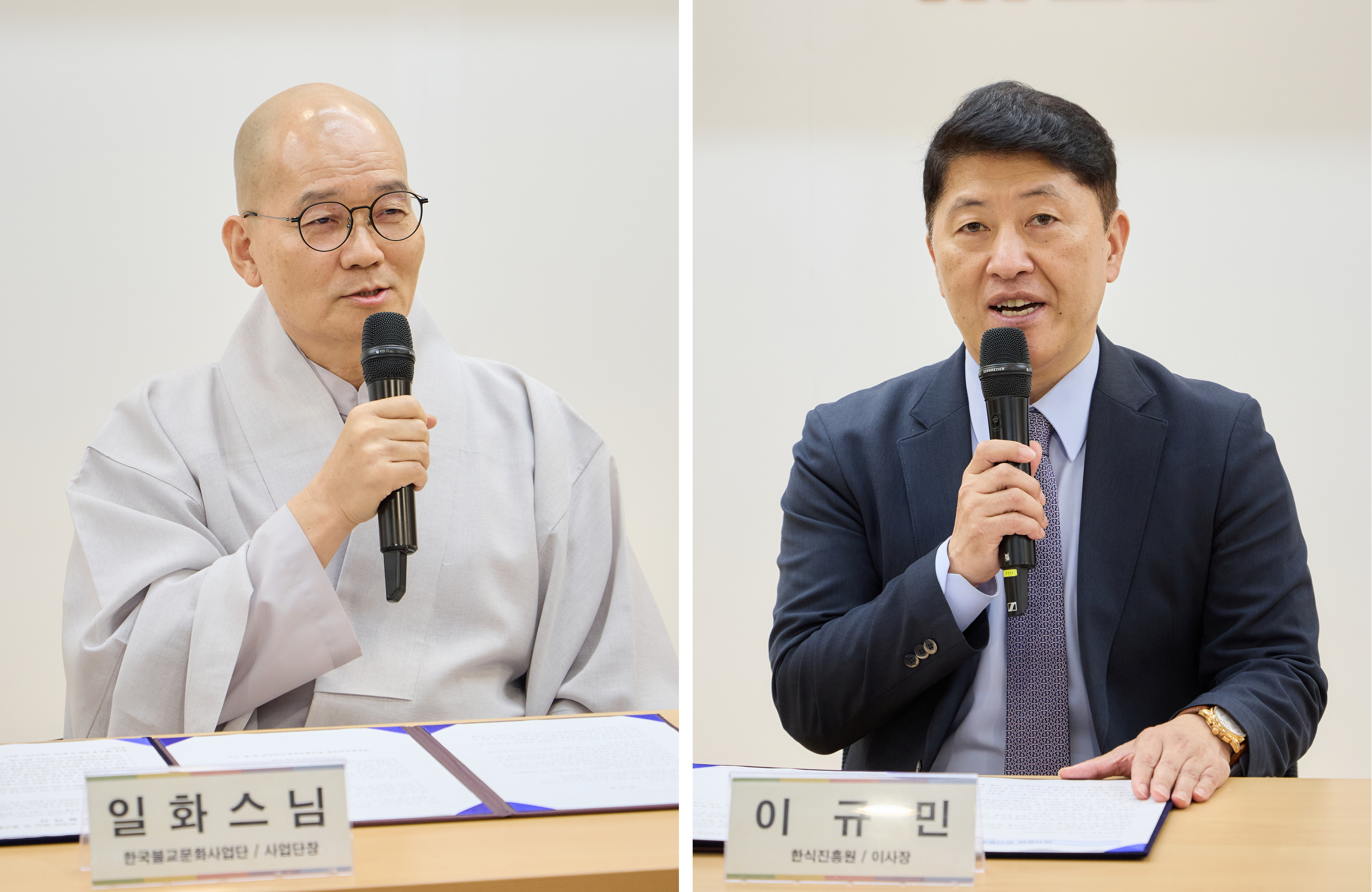
At the signing ceremony, Lee Gyumin, Chair of the Korean Food Promotion Institute, stated, "Temple cuisine’s philosophy of few desires and knowing sufficiency will carry even greater significance amid today’s food waste and climate crisis. Lee Gyumin, Chair of the Korean Food Promotion Institute, underscored that "the ethos of temple cuisine stands as a cornerstone value that must travel hand in hand with Korean gastronomy as it reaches global audiences." The ceremony proceeded with a blend of reverence and warmth, and as those gathered exchanged their visions and plans, the room filled with a spirit of shared purpose and eager expectation for the partnership ahead.
Temple Cuisine Up Close: A Special Exhibition
After the agreement was sealed, attention shifted to the opening of a special exhibition titled Dining in Harmony with Nature: Temple Cuisine. Hosted by the Ministry of Agriculture, Food and Rural Affairs together with the Korean Food Promotion Institute and the Cultural Corps of Korean Buddhism, the showcase unfolds at the Hansik Space E:eum from September 23rd to November 16th. Visitors are invited to explore the philosophy and aesthetics of Korean temple cuisine through an array of displays.
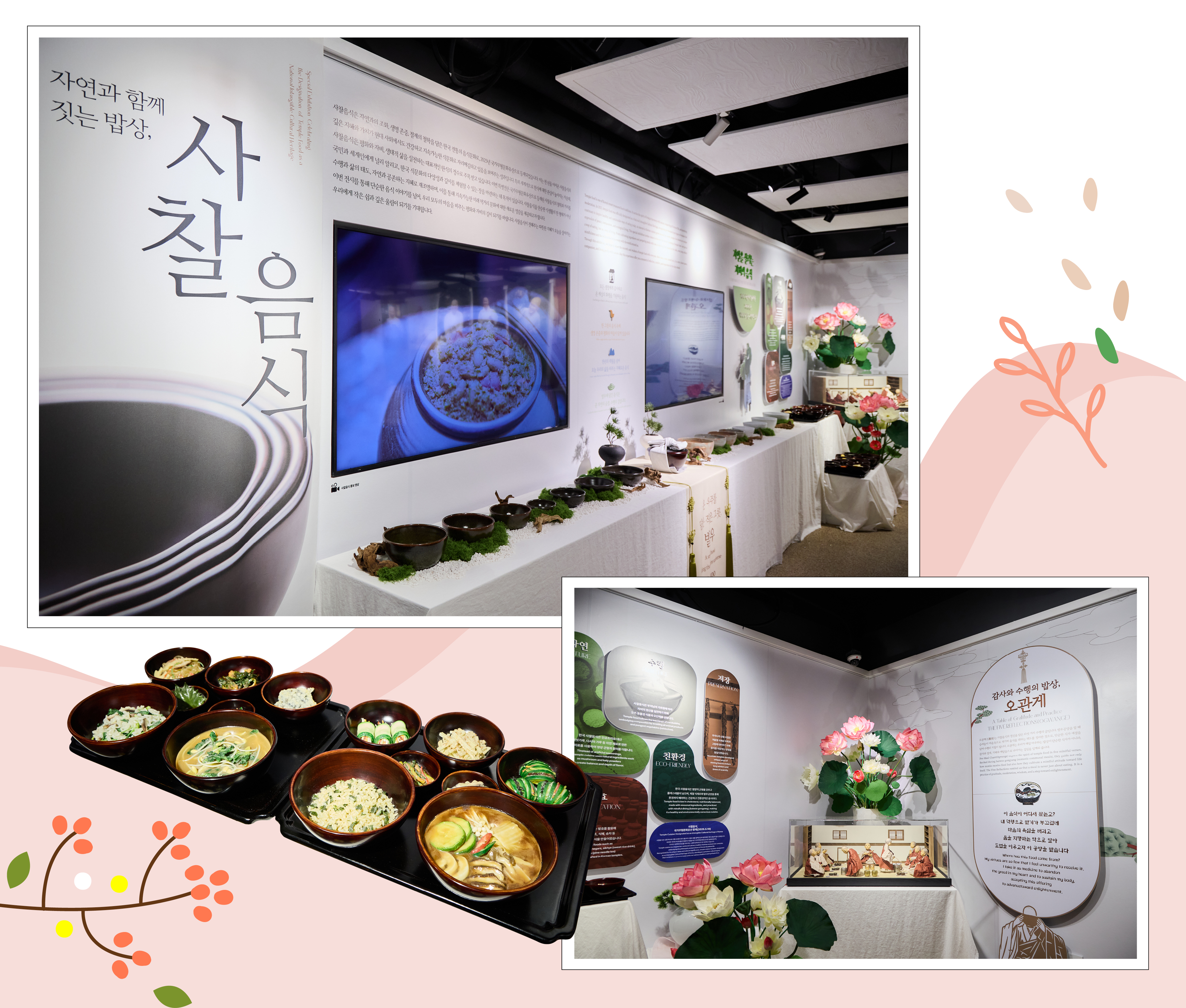
Stepping into the exhibition hall, one’s gaze is instantly captured by an expansive screen featuring temple dishes, beneath which sits an artistic interpretation of baru bowls—monk’s meal bowls. The phrase “Baru: A Humble Bowl Holding the Cosmos” proved so striking that many visitors paused to photograph it. The journey through the exhibition unfolds via five thematic pillars—spiritual practice, nature, storage, fermentation, and ecological harmony—each offering an approachable yet precise window into the essence of temple cuisine. Accompanied by delicate hanji-made figures and seasonal temple cuisine, the meaning of Ogwange—the Five Contemplations recited before eating—aroused visitors’ curiosity.
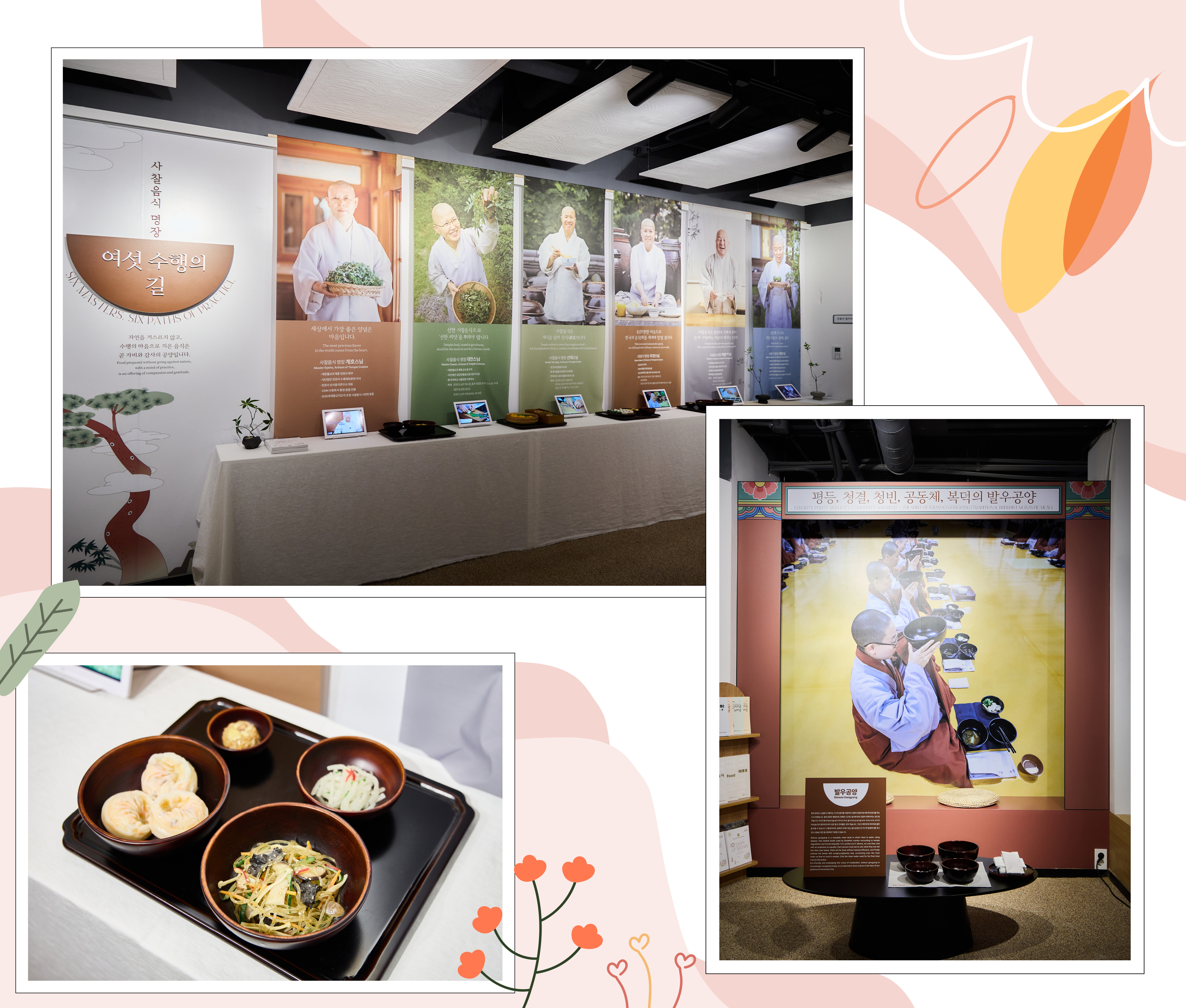
Yet the program that held them longest was Masters of Temple Cuisine: The Six Paths of Practice. The journeys of six celebrated monks—Venerable Sunjae, Gyeho, Jeokmun, Daean, Ugwan, and Jeonggwan—unfolded beside the crafted models of their autumn dishes. The serene atmosphere created a lasting impression, echoing the beauty of the cuisine. Interactive elements enriched the experience throughout. Photo zones designed around baru gonyang— Buddhist meal practice of eating mindfully without waste—and daejung gonyang—Buddhist practice of offering food and necessities to monks, allowed guests to document their immersive moments. Furthermore, a game station called “Save the Novice Monk” made learning about temple cuisine’s underlying principles and meanings.
Temple Cuisine's Wisdom: A Gift to the Community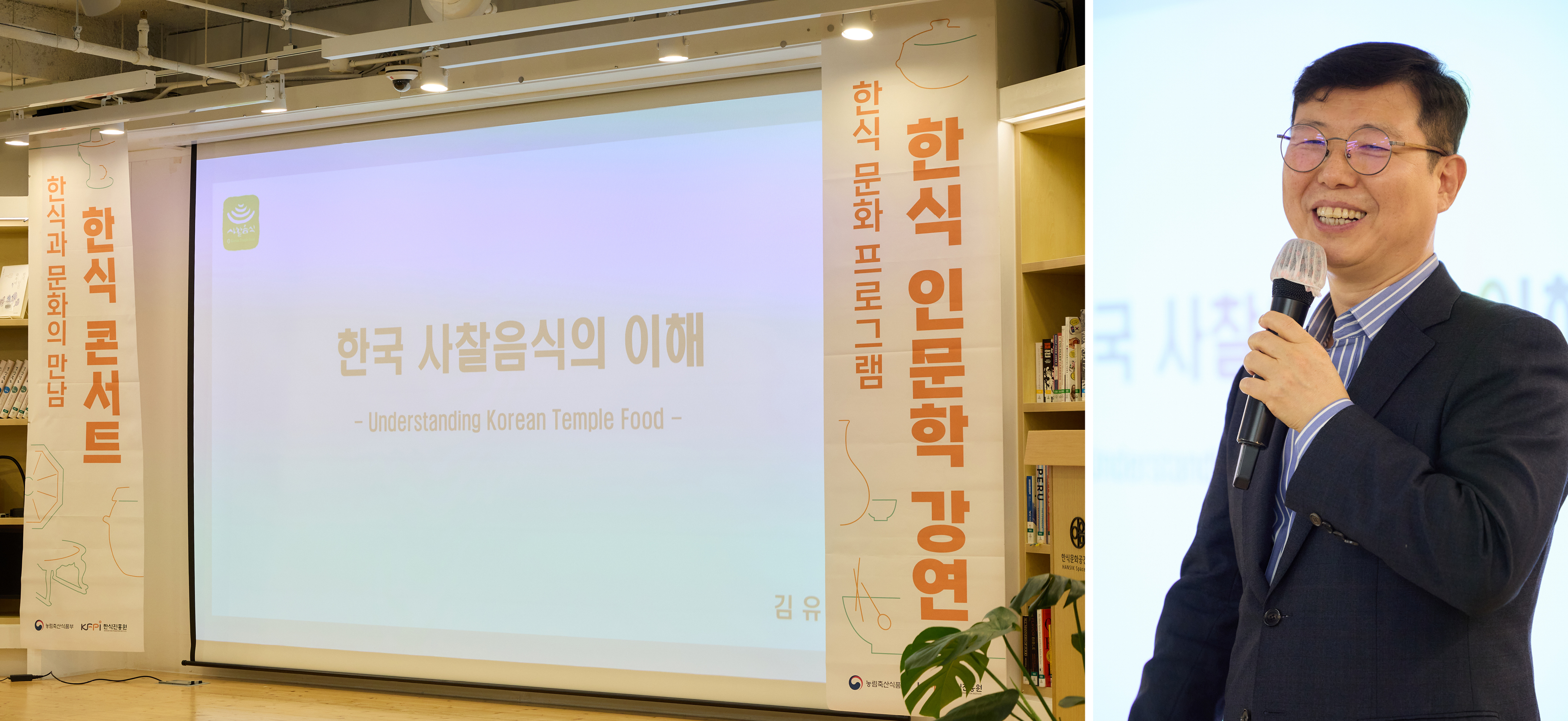
The final event of the day was the Hansik Interactive Talk, a monthly humanities program organized by the Korean Food Promotion Institute. Aligned with the special exhibition, this installment took “Understanding Korean Temple Cuisine” as its subject. Kim Yushin, Senior Researcher at the Cultural Corps of Korean Buddhism, began the lecture by introducing culinary perspectives from diverse global regions and faiths, alongside an examination of contemporary dining culture. Continuing with an exploration of temple cuisine’s historical roots and defining features, he emphasized that “the essence of temple cuisine lies not simply in eating vegetables, but in fundamentally shifting our perspective on food.” Listeners in the audience responded with nodding heads and deeply attentive engagement. The presentation was punctuated by spirited dialogue between the speaker and the audience, while a prize drawing added a festive dimension to the already convivial atmosphere. The speaker closed with a reflective note: “I hope this event has prompted us, as people navigating the twenty-first century, to reexamine the fundamental questions of what we consume and how we approach eating.”
A Diet Whose Wisdom the World Needs Now
This event, beginning with a signing ceremony and flowing through exhibition and interactive talk, casting light on the philosophy and values of temple cuisine from multiple perspectives. Transcending mere preservation of tradition, it forged vital connections between Hansik’s principles of environmental sustainability and respect for all living things with the realities of modern life. Through partnership and dialogue, temple cuisine demonstrated that it carries not only ancestral wisdom but also momentum propelling it forward into tomorrow.