


한식에 대한 다채로운 이야기를 전하는 온라인 매거진
Highlights from the “Asia’s 50 Best Restaurants” Celebration
An Insight into Korean Cuisine, Hansik
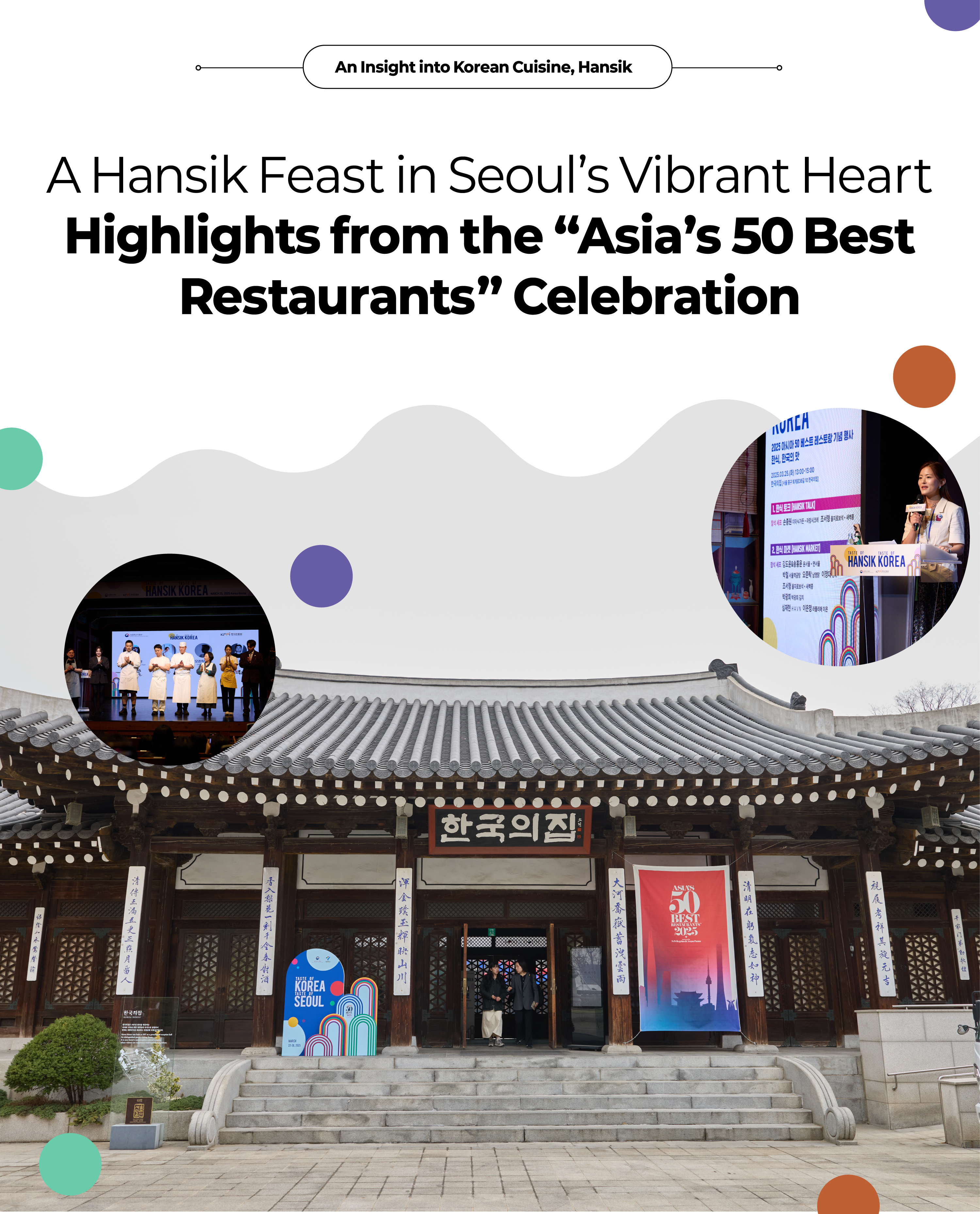
On March 25, the “Taste of Korea: Hansik” event took place at Korea House in Jung-gu, Seoul. Celebrating the “Asia’s 50 Best Restaurants” awards being hosted in Seoul for the second consecutive year, the event showcased Hansik’s rise as a global culinary trend and its growing potential. Highlights included talk sessions with renowned chefs and a lively Hansik market filled with unique flavors and creativity. Set against the backdrop of a beautiful Hanok, Hansik took center stage, capturing the public’s imagination.
Chefs’ Perspectives on the Future of Hansik
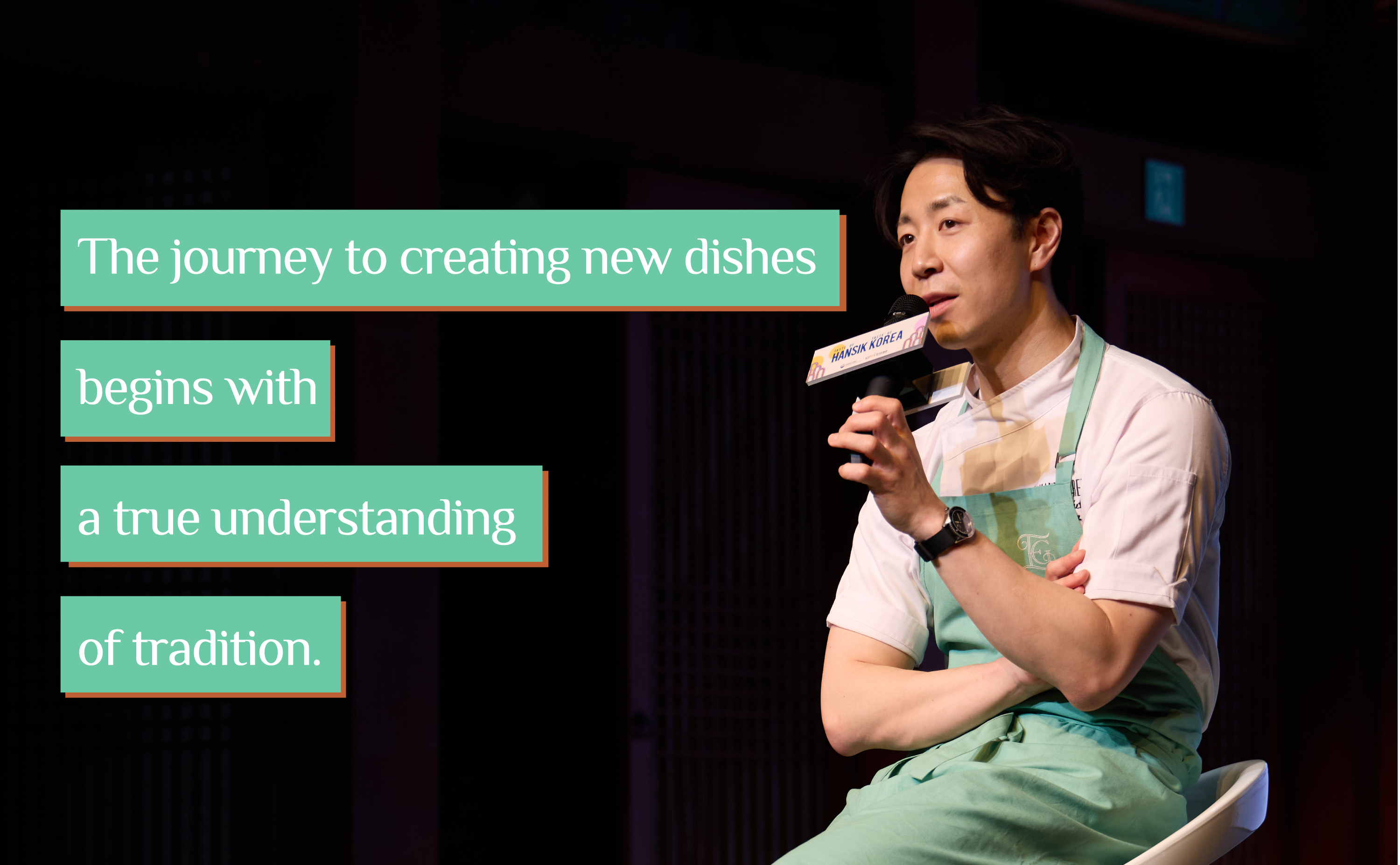
Son Jongwon, an acclaimed chef, kicked off the “Talks on Hansik” as the event’s first speaker. Known for his innovative dishes that blend traditional ingredients with modern techniques, he offered deep insights into the essence and future of Hansik.
"The journey to creating new dishes begins with a true understanding of tradition," he emphasized. He opened his talk by stressing the importance of tradition, underlining paste (jang), kimchi, and Korean vegetables (namul) as foundational elements of Hansik. In particular, he shed light on Korea’s distinctive namul culture, explaining how the practices of drying, parboiling, and seasoning ingredients to create salads set Hansik apart, offering the audience a fresh perspective.
The next topic focused on the potential of regional cuisine from Gaeseong, in line with current gastronomy trends. Today, the emphasis on preserving the natural flavors of ingredients is seen as the hallmark of gourmet cuisine. His remarks about his growing interest in Gaeseong’s regional dishes, known for their unique, mild, and natural tastes, captivated the audience.
The event provided a genuine platform to reflect on the true essence of Hansik and reaffirm its potential. The atmosphere of the Hansik talks was further enriched by the insightful chef’s perspective and the audience’s enthusiastic connection with Hansik.
Hansik that embodies the flavors of all four seasons and the distinct appeal of the region
In the second session of “Talks on Hansik,” Chef Jo Seohyung, who gained widespread attention from the cooking show Culinary Class Wars, took the stage with the theme “Making Everyday Life Delicious: A Fresh Approach to Hansik.”
She began by sharing her personal story, revealing that she introduces around 200 new dishes each year. "At my restaurant, I aim to share the joy of tasting seasonal ingredients that change daily with the seasons," she explained. Her talk was filled with excitement as she recommended a variety of seasonal ingredients for the audience to explore, such as fatsia shoots, stringy stonecrops, young summer radishes, and cabbages, all offering a taste of the current season.
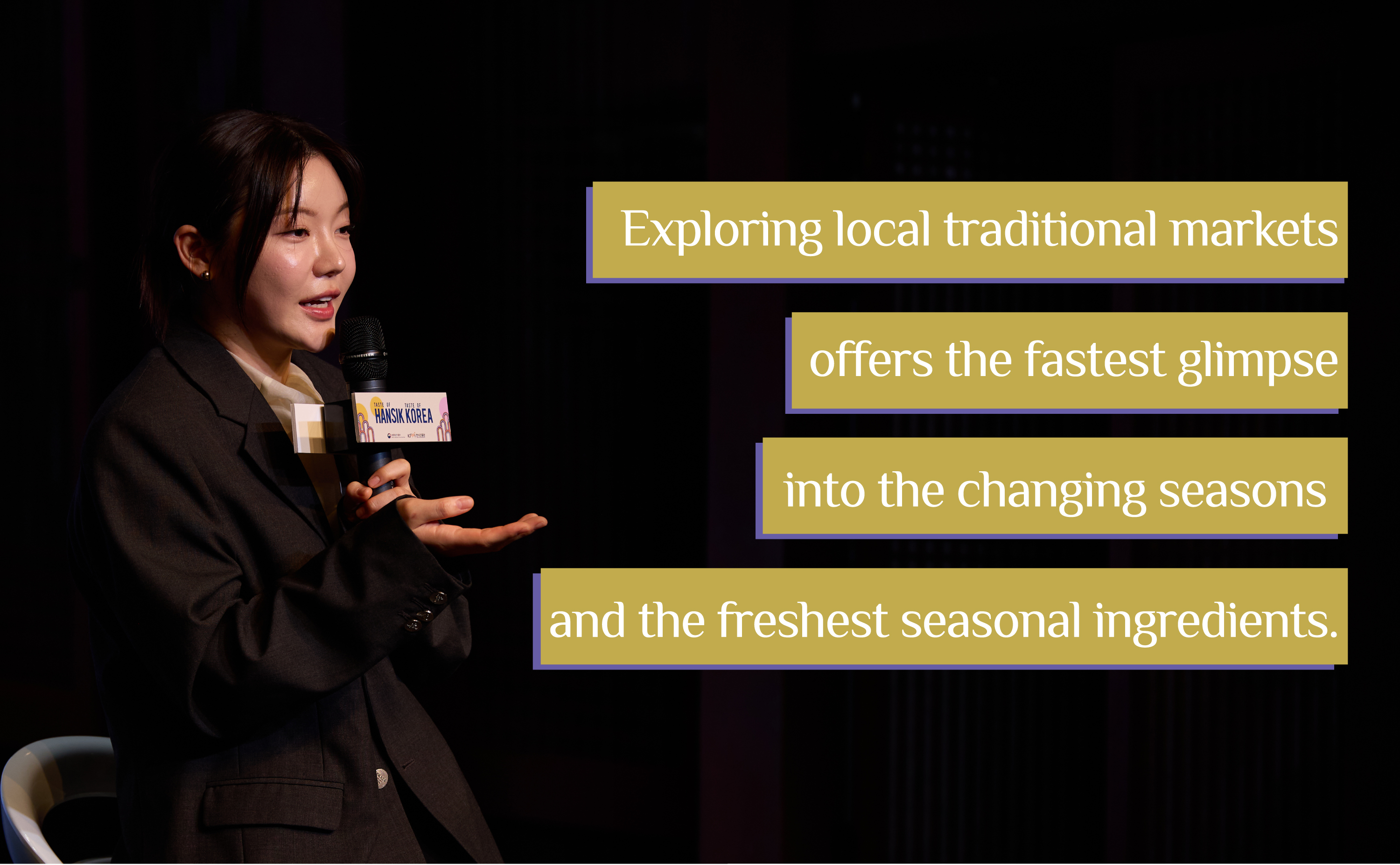
The next session moved into stories about local specialties and traditional markets. It explored distinctive regional ingredients and cooking techniques, while sharing interesting anecdotes from traditional markets that vividly captured the essence of local food culture. Through these stories, the unique charm of each region was brought to life. Following a Q&A session, the talks wrapped up, leaving behind a meaningful experience fueled by a shared passion for Hansik.
A Splendid Hansik Feast Held in a Traditional Korean Hanok
Even before the lively energy of the Talks on Hansik had settled, the second part of the event, the Hansik Market, kicked off. Top chefs from across the country showcased a range of Hansik-inspired dishes, each small plate filled with unique flavors and personal touches.
At the Hansik Market, “Chanmyeon” from Yun Seoul and Myeon Seoul offered refreshing noodle dishes made with mung beans and bean powder, served alongside radish water kimchi (dongchimi) and meat broth. Meanwhile, “Tongyeong-style Vegetable and Tofu Bibimjang” from Saebyeokjong drew attention with its unique take on bibimbap, packed with the fresh, savory flavors of seafood. Other highlights included “Hanguktak” from Namyoungtak, featuring chicken seasoned with bulgogi sauce and infused with the aroma of firewood; Spring Beef Bone Soup(Bom Gomtang) from Seoul Station Gomtang, made with seasonal spring vegetables like mugwort and daylilies; “Korean Spring Sea” from Jeongdae, showcasing stone sea squirt, fresh seaweed, and Alaskan pink shrimp; and “Korean Seasonal Kimchi” from Park Kwanghee Kimchi, made with distinctive ingredients like dandelions and fatsia shoots. Each dish presented a unique interpretation of authentic Korean flavors.
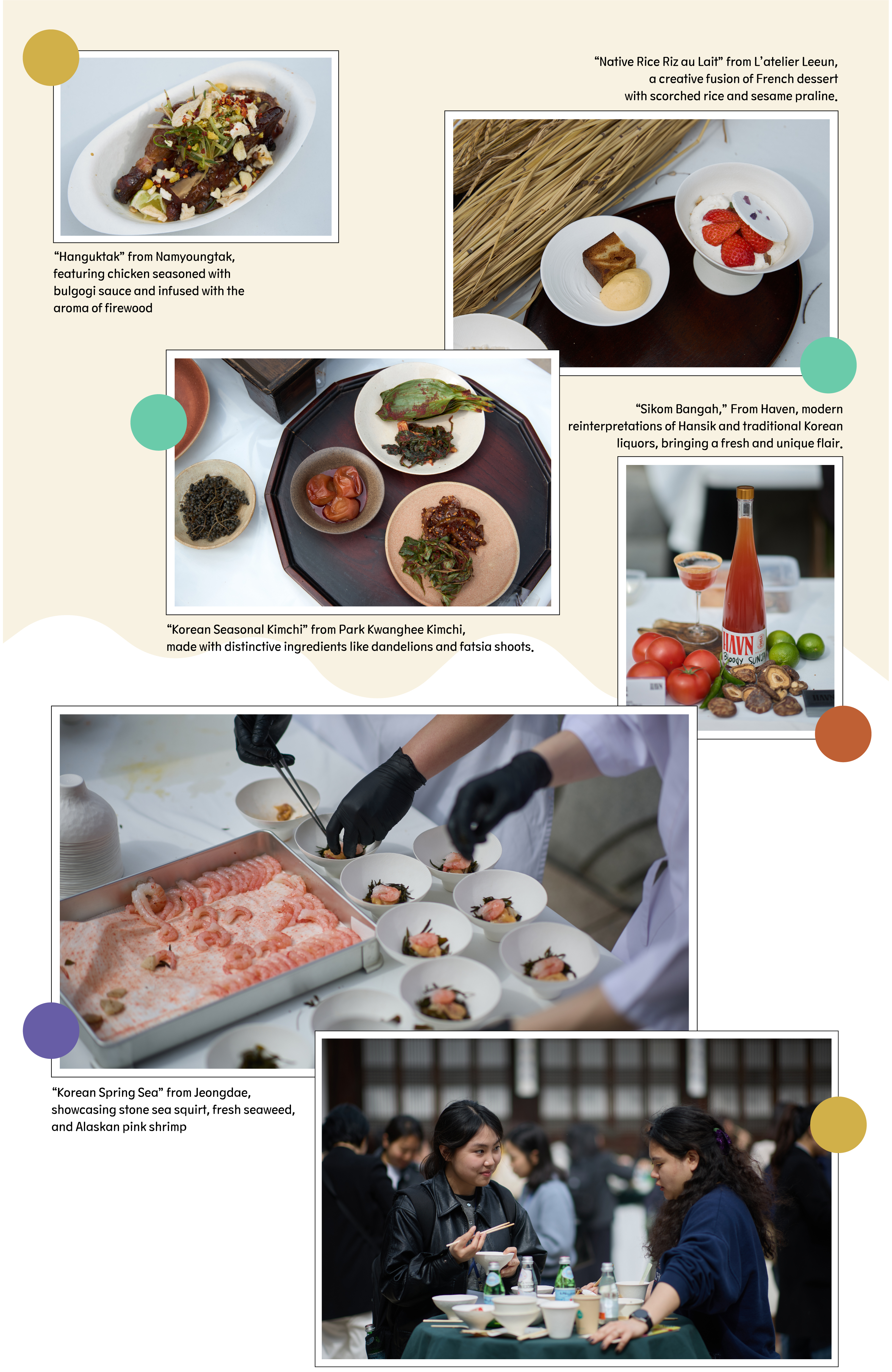
Korean-inspired desserts and beverages also took the spotlight at the event. L’atelier Leeun introduced “Native Rice Riz au Lait,” a creative fusion of French dessert with scorched rice and sesame praline. Meanwhile, Haven presented “Nerd Basil Sparkling” and “Sikom Bangah,” modern reinterpretations of Hansik and traditional Korean liquors, bringing a fresh and unique flair.
In the serene atmosphere of the traditional Hanok, visitors strolled from booth to booth, selecting dishes that matched their tastes. With each new flavor, delighted exclamations echoed through the space, and before long, the Hanok courtyard transformed into a lively banquet hall, brimming with joyful conversations about Hansik.
Hansik at the Center of Global Gastronomy
The event demonstrated that Hansik is no longer bound by a fixed form. It highlighted the potential for creative reinterpretations that remain true to its core, while also signaling Hansik’s strengthened ability to compete on the global culinary stage.
Visitors to the event were able to experience the true value of Hansik firsthand, witnessing the dynamic harmony between tradition and innovation. It offered a glimpse into how Hansik is evolving beyond the boundaries of traditional cuisine, creating new experiences and cultural expressions that resonate with the spirit of the times.