


한식에 대한 다채로운 이야기를 전하는 온라인 매거진
Vol 36. Songeo - Gyeonggi
First Jeolsik, Ipchunosinban
Hansik Archieve
Hansik glossary
Jeolsik - seasonal meal
Namul - greens
Written by Shin Wanseop(Director of K-Geofood Academy)
Birth of seasonal meal
The seasons created to distinguish the seasons according to the location of the Sun's ecliptic are divided into 4 seasons 24 solar terms, Spring(Ipchun, Wusu, Gyeongchip, Chunbun, Cheongmyeong, Gokwu), Summer(Ipha, Soman, Mangjong, Haji, Soseo, Daeseo), Fall(Ipchu, Cheoseo, Baekro, Chubun, Hanro, Sanggang), and Winter(Ipdong, Soseol, Daeseol, Dongji, Sohan, Daehan). Jeolsik refers to meal that is specially made and eaten during the season. Examples of typical dishes include New Year's Day Tteokguk(sliced rice cake soup), the Lunar New Year's first full moon day Ogokbap(steamed five-grain rice), the Lunar Budddha's birthday Jeungpyeon(raised rice cake), the neighborhood hair-washing day noodle, the midsummet day Yukgaejang(spicy beef soup), Korean thanksgiving day Songpyeon(half-moon rice cake), the 9th day of the 9th lunar month gughwajeon(pan-fried chrysanthemum rice cake), and the shortest day of the year Patjuk(red bean porridge). Based on this change in season, the custom of making and eating unique foods with food ingredients in the particular season has emerged.
First season, Ipchun
Ipchun, the first of the 24 solar terms, is the beginning of spring and the beginning of farming. It is usually around February 3-5 in the solar calendar, which is the first day of the first lunar month, which is around this time, symbolizing the new year. Therefore, the ancestors wrote a message on the pillars of the gate, beams, and ceilings, meaning "Spring begins, there are many long sunny days, so auspicious things will occur." <Dongguksesigi> which is published in 1849, saying, "In the palace, the Chunchupja was attached, to the houses of the high officials, commoners, and the market shops were atttached Chunryeon in honor of spring." It was a seasonal custom that was held regardless of the status.
Origins of Ipchunosinban
Osinban, also called as Osinchae and Ohunchae,’s "ban” is a generic term for soban(a small dining table), yeban(a dish in a wide circle), and jaengban(a tray), and refers to "five spicy-flavored namul(greens) with manners" by using "ban" instead of “chae” of vegetables. Osinchae refers to "Garlic, Mureut, Wild chive, green onion for kimchi-making, and small green onion" in Buddhism, while "Garlic, Mureut, Chives, and Jachong(a type of green onion, whose underground stems are much hotter than green onions), and pyeongji(A rape of the mustard family) in Taoism. Hot and spicy taste interferes with training, making it a taboo food in temples and shrines today. However, the Osinchae eaten during Ipchun was different from Buddhism or Taoism. With the end of the cold winter and the start of spring, the stimulating Osinchae was perfect for invigorating fresh vegetables that had not been eaten before.
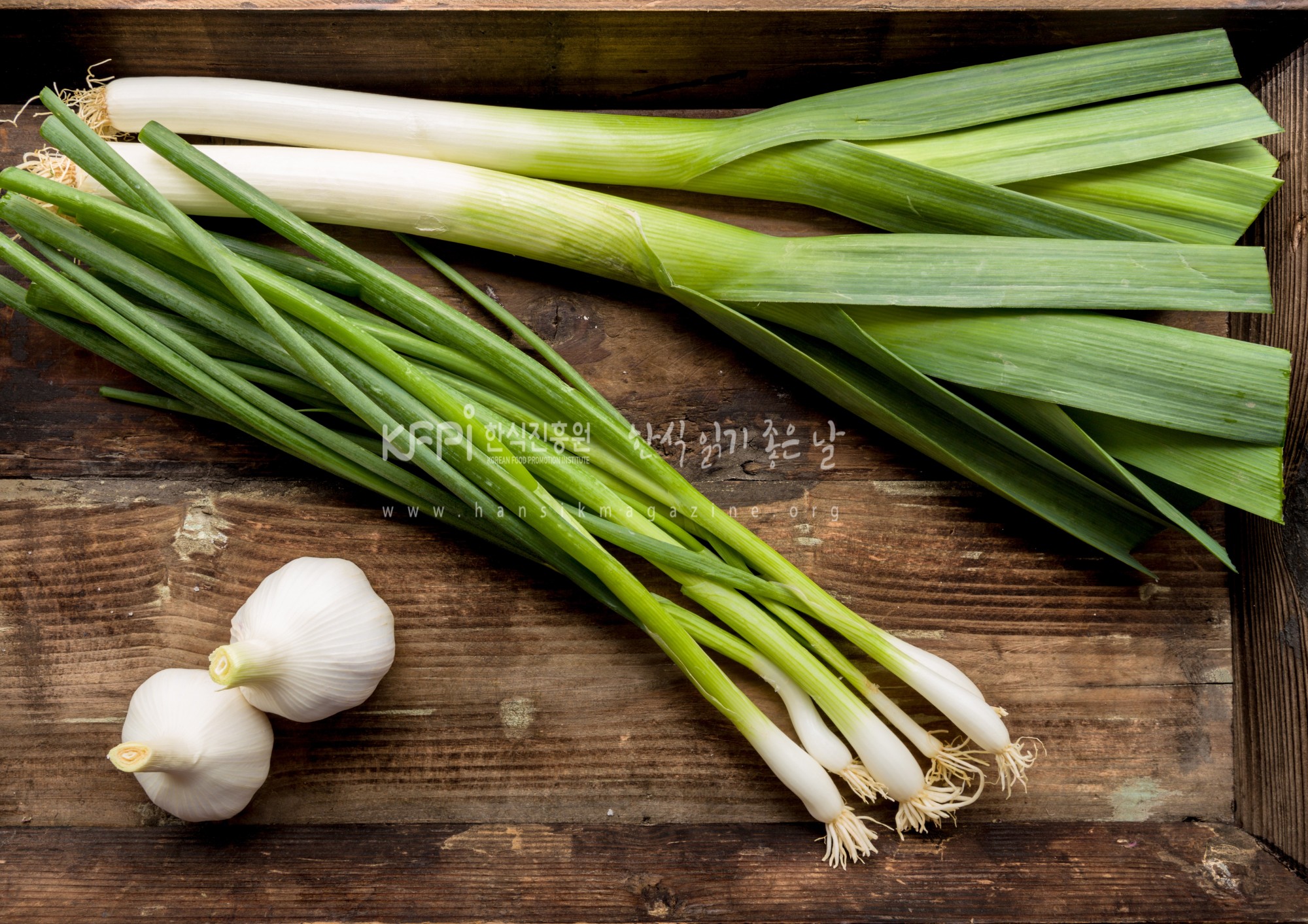
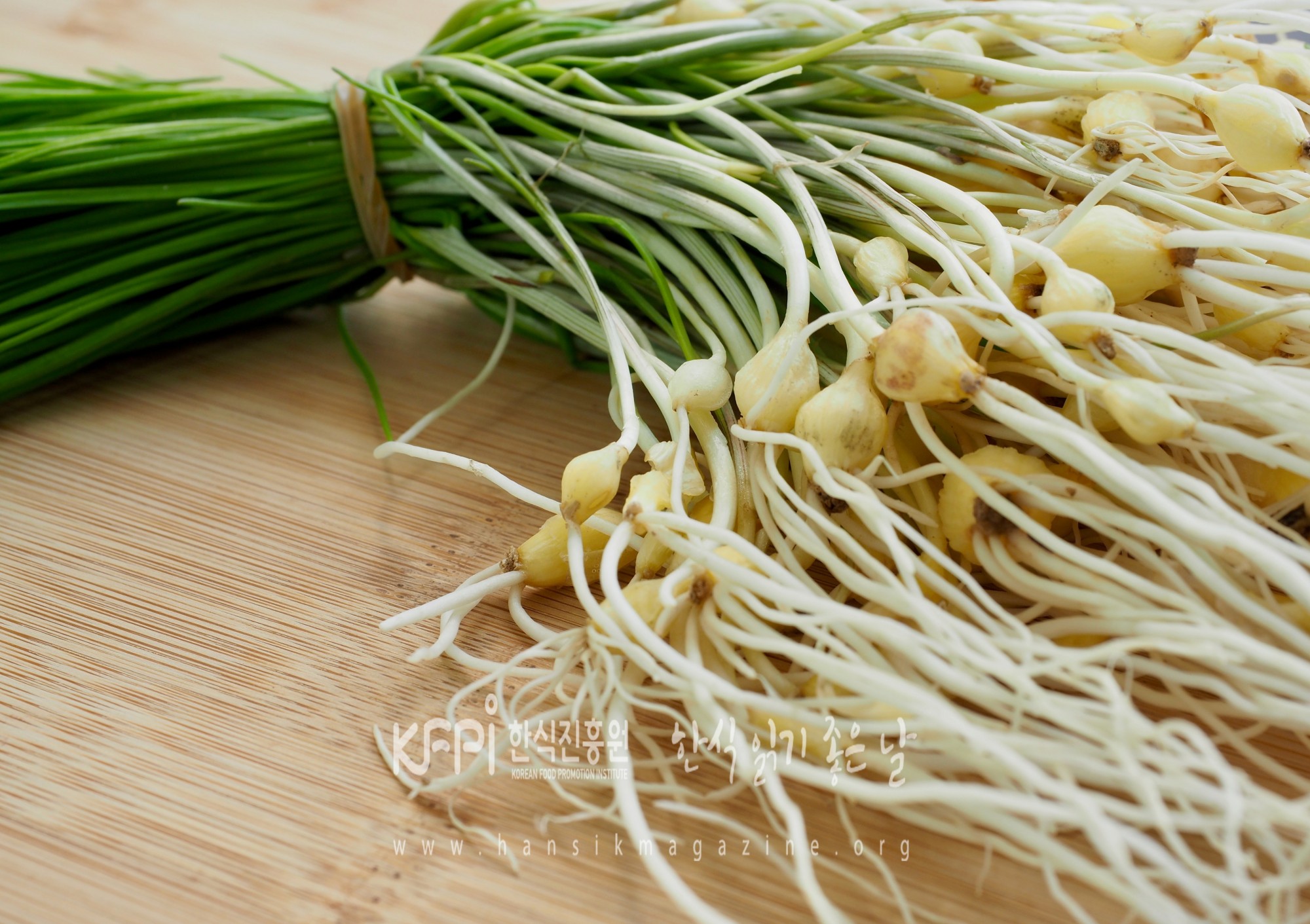
Green onions, green onions for kimchi-making, garlic, and wild chive
In <Bonchogangmok> published by Yi Shijin of the Ming Dynasty of China, five spicy and tender vegetables are eaten in the beginning of the first day of the first month, which means the New Year is celebrated. In 'Cheokyupyen' of <Dongguksesigi> published by Hong Seokmo of the late Joseon Dynasty, "Yi ak from Dongjin made vegetable dish with radish and water parsley on the day of Ipchun for present." And in 'Chukeonpyeon', "King AhnJunggun of Tang Dynasty made a osinban and brewed the liquor with a mandarin orange. So, it is believed that the custom of Ipchunosinban originated from China.
Ipchunosinban of Korea
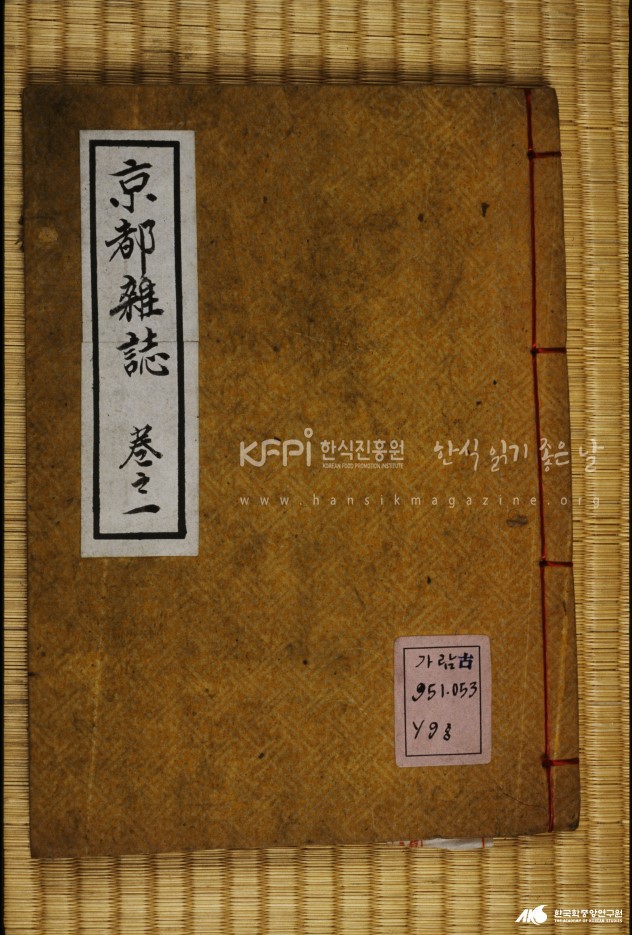
Gyeongdojabji ⓒKorean National Culture Encyclopedia
In the 'Sesipyeon' of <Gyeongdojabji> written by Yu Deukgong during the reign of King Yeongjo and King Jeongjo of the Joseon Dynasty, from the six towns in the valley of Gyeonggi-do(Yanggeun, Jipyeong, Pocheon, Gapyeong, Saknyeong, Yeoncheon), Umpa, Sangat, Seunggeomcho were ascend to the king. Umpa and Sangat are very spicy and good when blanched in boiling water and seasoned with red chili sauce, and Seunggeomcho is clean and it's good to eat dipped in honey. Here, the Umpa refers to the soft yellowish green onion grown underground, the Sangat refers to the mustard grown in the mountains when the early spring snow melts, and the Seunggeomcho also refers to the Angelica grown underground, but the royal court bought the osinban and put the fresh vegetables that were lacking in the winter. Following this, the folk also had a custom of ripping off the fresh namul that sprang up under the snow on the day of Ipchun and eating them as meal of Ipchun. There also was a custom of making Ipchunchae with young sprout of green onion, mustard, and angelica to share between neighbors.
Composition of the Ipchunosinban
Although the types of namul vary depending on the time and region, five kinds of namul were selected from the eight shoots of green onion, garlic, jachongi, wild chive, pyeongji, chives, mureut, and water parsley. Five were chosen based on color. As in the case of the five-colored ones, yellow namul were placed in the center and blue, red, black, and white namul were placed evenly around the area.
Ipchunosinban containing the meaning of harmony
The yellow namul in the center represent the king, while the rest of the blue, red, black, and white namul represent the servants, which contain the meaning of a political reconciliation to break down the thought party strife and unite as one. It is not known whether the Tangpyeong policy worked by mixing them together, but it is a well-known fact that the king shared the osinchae with his servants or delivered it with the message to his subjects. In folklore, people thought osinchae represented the five principles a person should have, namely, "in," "ui," "ui," "ye," "ji," and "sin," or the main organs of the human body, such as liver, heart, spleen, lung, and kidney. Therefore, eating the Ipchunosinban were considered balanced and harmonized health in the mind and body wishing health.
Seasonal meal is disappearing as time goes by. Seasonal meal for Ipchun, the first season of the 24th solar terms, is very meaningful, as the saying goes, "Well begun is half done." In this year's Ipchun, let's set up the Ipchunosinban to promote family health and harmony first. Let's pray for excellent luck and great astonishment in pursuit of the customs we've been enjoying.