


한식에 대한 다채로운 이야기를 전하는 온라인 매거진
The Glamorous Transformation of Hansik: Fine Dining Plating.zip
Hansik Plating
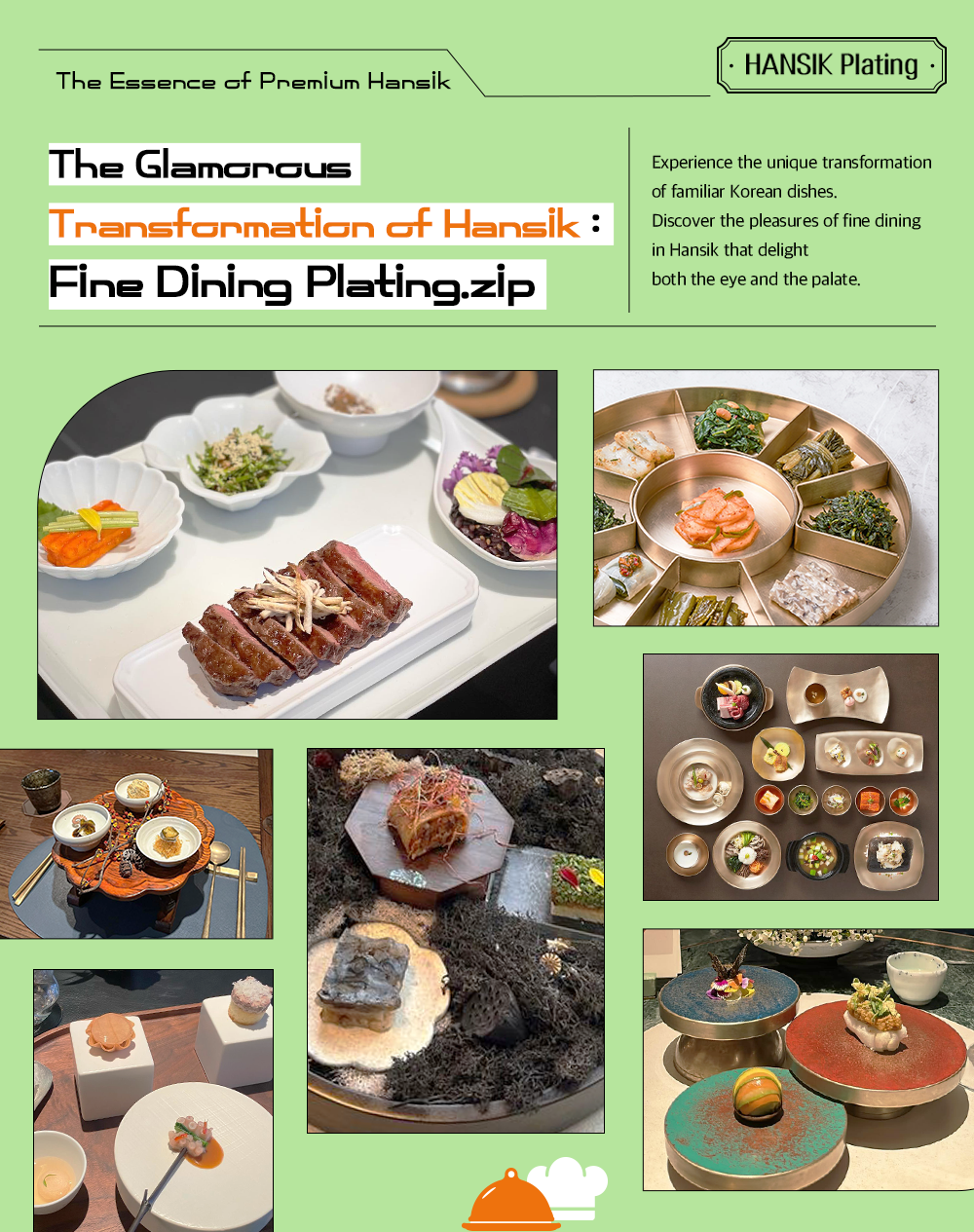
A unique transformation of familiar Hansik has begun. Hansik, reborn at the delicate fingertips of chefs, reveals an unexpected charm that we have never seen before. Fine dining Hansik, interpreted in a modern way, becomes a work of art on the plate, allowing us to discover the flavors and beauty of Hansik. Let’s explore the rich dimensions of Hansik through the exquisite plating at fine dining restaurants in Korea.

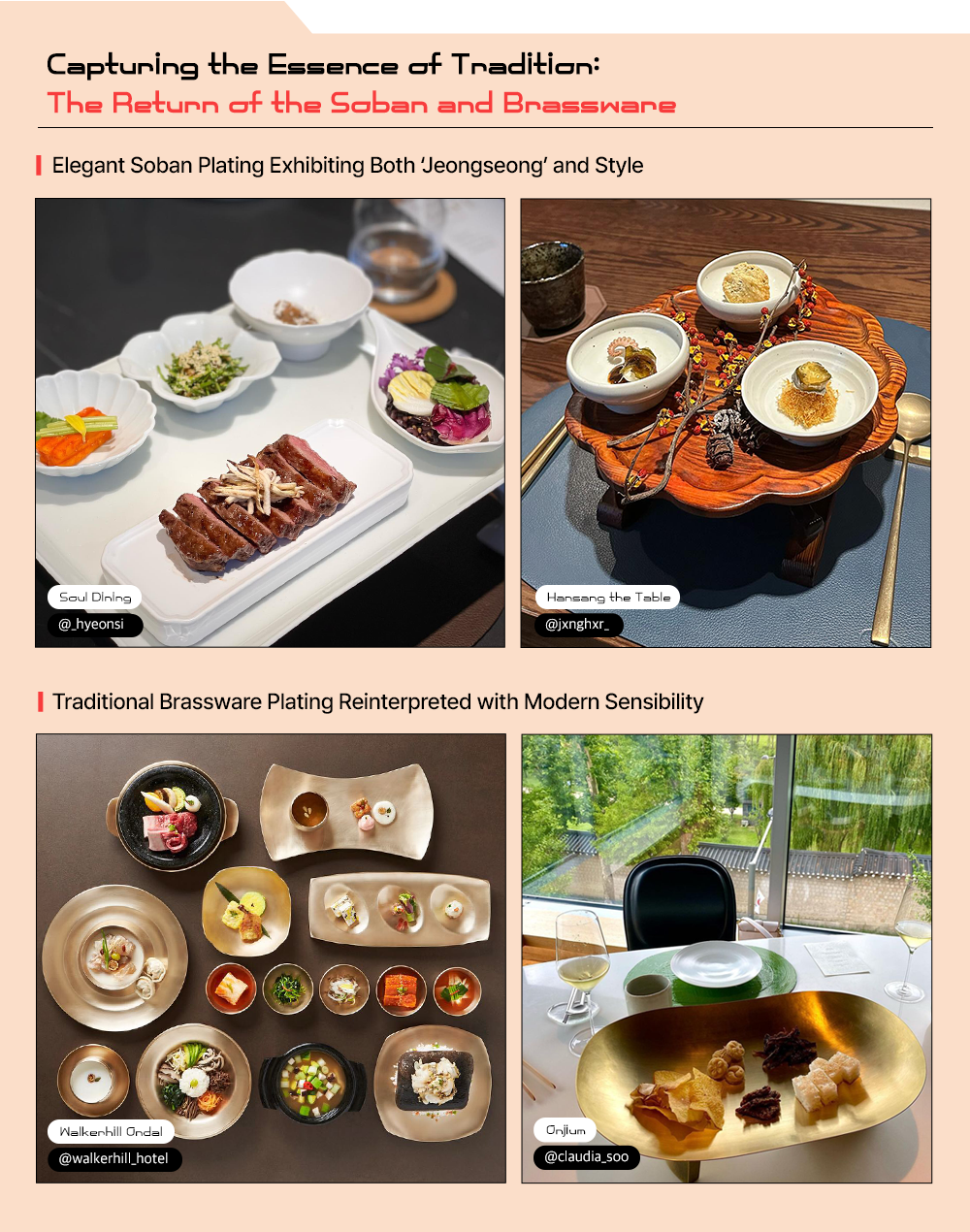
A traditional table setting for one is called soban (small portable dining table). The carefully arranged dishes on it reflect the ancient sensibility of hospitality and consideration, embodying a tidy and graceful beauty. The harmoniously arranged menu items on the small soban not only add visual pleasure to the plating but also evoke a sense of leisurely enjoyment, as if savoring the finer aspects of life.
On the other hand, fine dining plating with brassware embodies both the elegance of tradition and a modern sensibility, elevating the aesthetics of Hansik even further. Brassware, crafted with care over a long period, holds its own dignity, enhancing the dining experience. Its unique texture and radiant colors evoke the splendor of royal court bansang (table setting for a meal), visually expressing the rich culture of Hansik.

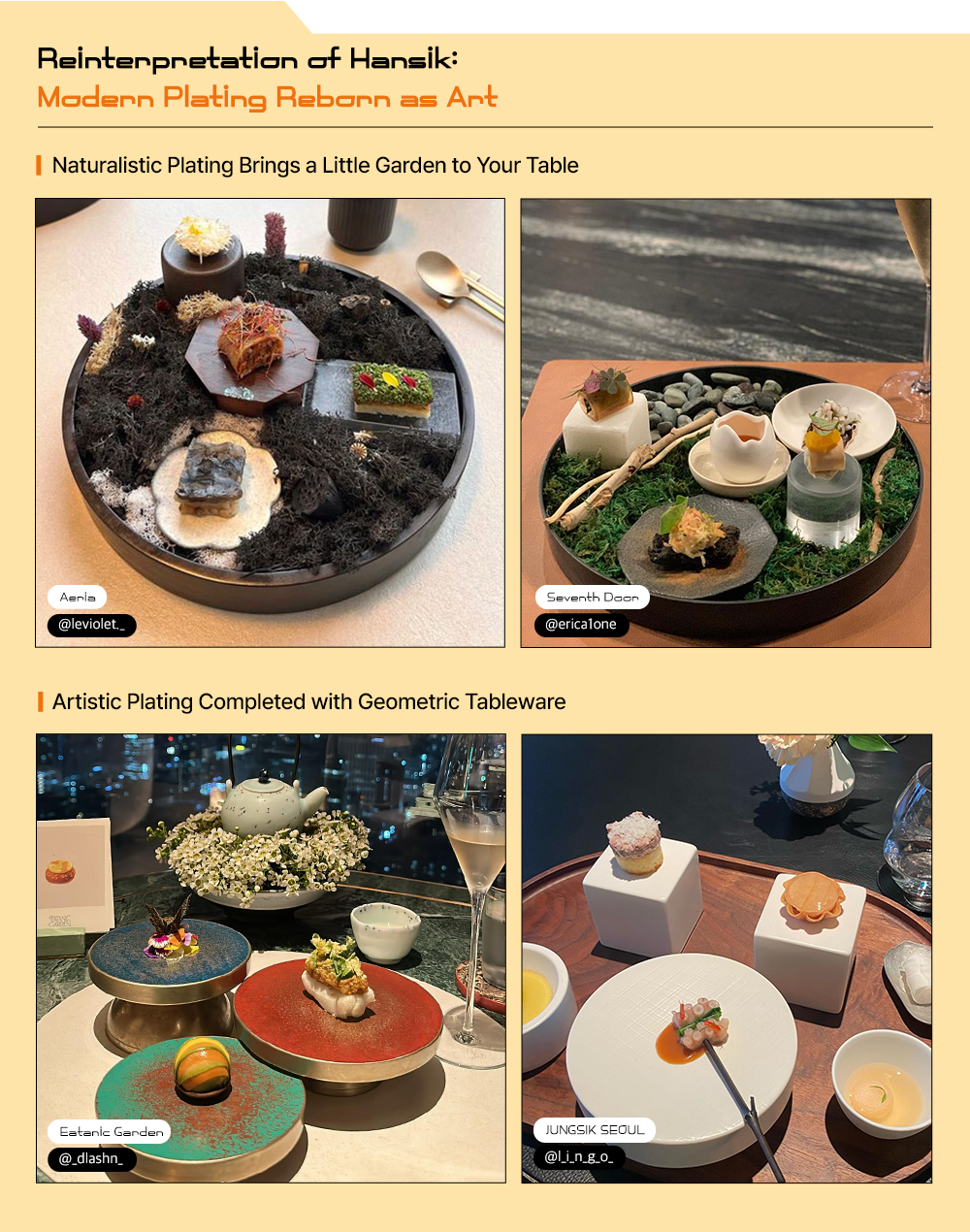
When discussing fine dining, one cannot leave out the creative and experimental plating aspect. Recently, modern plating techniques in Hansik fine dining have garnered attention for their artistic presentation, resembling complete works of art.
Plating that incorporates natural elements like grass, stone, and wood creates the impression of a small garden laid out on the table. This approach goes beyond the mere function of serving food, offering an artistic experience. The allure of modern Hansik fine dining lies in the enjoyment of both the visual presentation and the flavors that follow.
While there are plentiful ways to pack a single dish with vibrant elements, using multiple small vessels for plating offers a different method that adds dimensionality to the table. A presentation featuring geometric dish designs coming together creates the illusion of being in an art exhibition. The diverse dishes harmonize with one another, providing both visual delight and satisfaction, while further highlighting the refined beauty of Hansik.

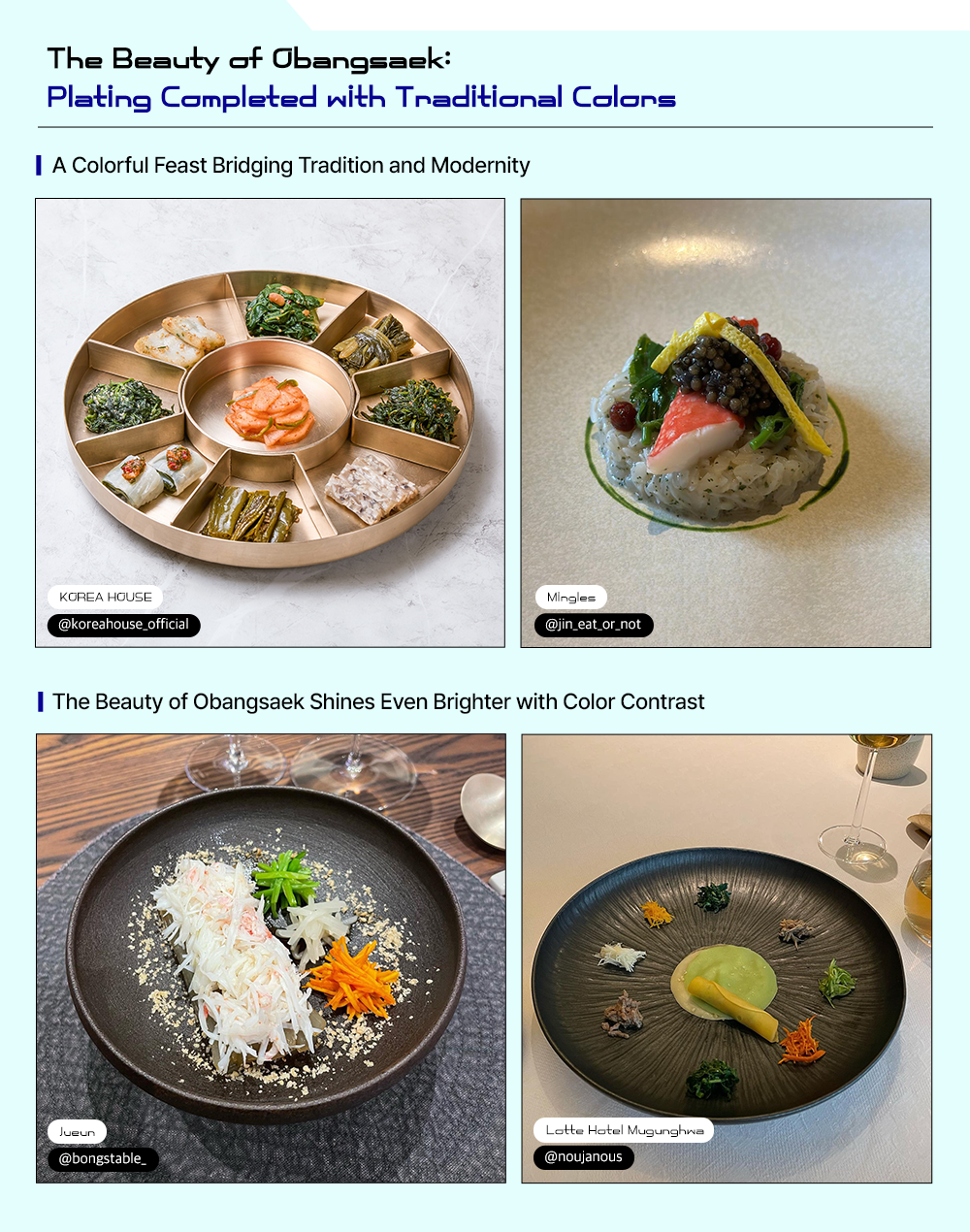
One of the charms of Hansik lies in the harmonious blend of the five colors: blue, red, white, black, and yellow. This visual beauty transcends mere color combinations, embodying the principles of direction, energy, and the seasons, reflecting nature's wisdom and philosophy. It forms the foundation of traditional Hansik presentations.
Plating that utilizes the obangsaek (five colors) is being applied in various ways within Hansik fine dining, bridging tradition and modernity. The gujeolpan (platter of nine delicacies), which is a platter of nine delicacies, serves as a prime example of traditional dining, symbolizing unity and harmony through the integration of the five colors. Dishes that layer ingredients of different colors reinterpret the obangsaek in a contemporary way, offering both visual beauty and a refined elegance.
On the other hand, the true charm of obangsaek emerges through the contrast of colors. When the five-colored ingredients are arranged on a dark plate, the striking contrast enhances the dish’s overall appeal and stimulates the appetite. This harmony transcends simple color combinations, allowing each ingredient to shine and providing a refined culinary experience.