


한식에 대한 다채로운 이야기를 전하는 온라인 매거진
Vol 35. Gotgam - Gyeongsangdo
Ritual food of an Island
Listen to the expert
Written by Kang Jeyun (Poet, Director of the Island Research Institute)
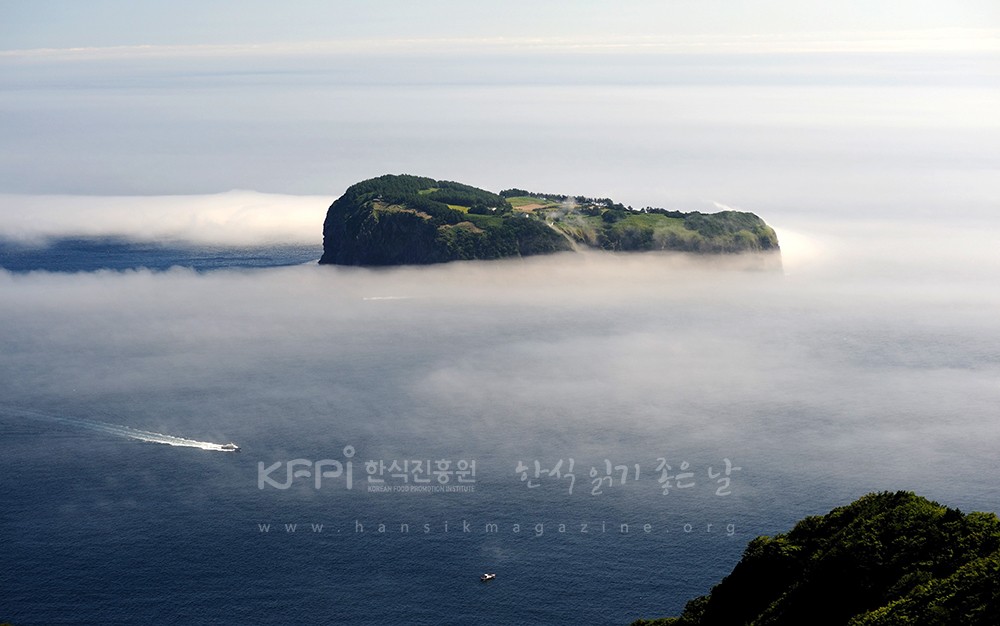
Jukdo ⓒ Ulleng County Office
Relics of food from old tombs
In October 2020, the National Museum of Korea announced that there was a surprising discovery at the Seobongchong Tomb in Gyeongju. Relics that give a glimpse of the Silla royal family's ritual food culture poured out. There were 7,700 animal fluids, including 1,883 shellfish and 5,700 fish, in a large jar in the south of Seobongchong Tomb. These were relics of ritual food prepared by Silla royalty or nobility 1,500 years ago. In addition to fish such as herring, yellow tail, black porgy, dolphin, spotted turtle, sea urchin, puffer, abalone, scallop, oyster, and marsh snail were excavated.
The remains of this food excavated from the tomb are not just ritual food, but are valuable materials that give a glimpse into the food life of Silla royalty or nobility at the time. They enjoyed whale meat, sea urchin eggs, and even puffer, which still belong to high-end cuisine. In particular, the discovery of puffer, which cannot be eaten without the removal of poison, indicates the high level of food culture at the time, but it is unusual that no bones of animals that live on land such as cows, pigs, or chickens were found despite they were ritual food.
At the Seobongchong Tomb, traces of croaker brought by Baekje mourners were also found. This means that people near the southwestern sea enjoyed the croaker dishes from 1,500 years ago, and the croakers were passed all the way to Gyeongju and cooked. These seafood-oriented ritual food artifacts are a valuable discovery that gives an estimate of the origin of the food culture of the coastal area. Gyeongju was inland, but it was a maritime city that interacted with the world through the sea because it was close to the sea. Therefore, Seobongchong's ritual food is also a ritual food of ancient marine cultures. The ritual food on the island in the old days would not have been very different from this food culture. This is because the materials from the ocean are used importantly.
A ritual that began in the primitive ages
The ritual is a style of origin that has been held since the primitive ages, and it is a ritual to offer food to the spirits and the soul of the dead. Before the development of science, primitive ancient people believed that the transcendents were involved in changes in natural phenomena and natural disasters. So, they created a ritual to pray for the transcendent and trust them as the absolute beings as god. They also believed that there was a world after death, and so, served ghosts. It is a ritual ceremony on the belief of the transcendent and the idea of worshiping the soul of the ancestors combined and was settled into a system with a certain formality.
Our people also held the ritual worshiping the sky since ancient times, and after the settlement of agricultural society, a ritual ceremony was created to pray for a good harvest. The ancient state of Buyeo's Yeonggo, Goguryeo's Dongmaeng, and the Ye’s Mucheon are all the ritual worshiping the sky. After the completion of the state form, rituals were held in sajik and Jongmyo, and family rituals were also held in preparation of rules. The rituals we hold until now have been regularized since the Joseon Dynasty when confucianism became a national ideology, and they were made based on the <Garye> of Juja(Juhee).
Depends on <Garye>, ritual shall be held in accordance with the sadaebongsa. It is basic to hold a memorial until the four major ancestors of the chief mourner(father, grandfather, great-grandfather, and great-great-grandfather). After the fourth generation is over, the deceased is buried in the ground and ancestral rituals are no longer held at home. Instead, the ancestors of the five or more ancestors jointly hold a memorial at a sije(ancestor-memorial services performed in each season of the year)l held in the family. The sije is still a collective proposition centered on family. The sije are held in October of the lunar calendar. However, for the ancestors who made great contributions to the country continue to hold ancestral rites at home even after four generations. These ancestral shrines are called Bulcheonwi shrines, which were preserved during the abolition of memorial hall for the great scholars at the end of the Joseon Dynasty. It was considered that much sacred.
In the old days, ordinary households did not have a shrine at their home, but in head family, they had shrines and held ancestral rites. The shrine was dedicated to the four great ancestors below great-great-grandfather, and burned incense on the first and fifteenth days of the month and offered perform ancestral rituals on the anniversary of each ancestor. A memorial was also held when a special issue or food was made in the house. In addition, there were various types of rituals, including sijoje, joje, and ije. The time for the ritual was held from the end of haesi to the beginning of the jasi. That is between 11:30 p.m. and 12 p.m. It was held at the first hour of the anniversary of their ancestors’ passing. But these days, most are held in the evening for convenience.
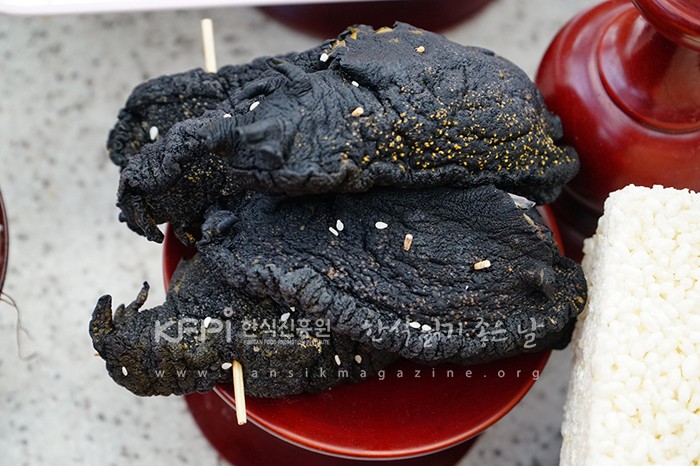
Tongyeong Jukdo’s gunsokkoji ⓒ Kang Jeyun
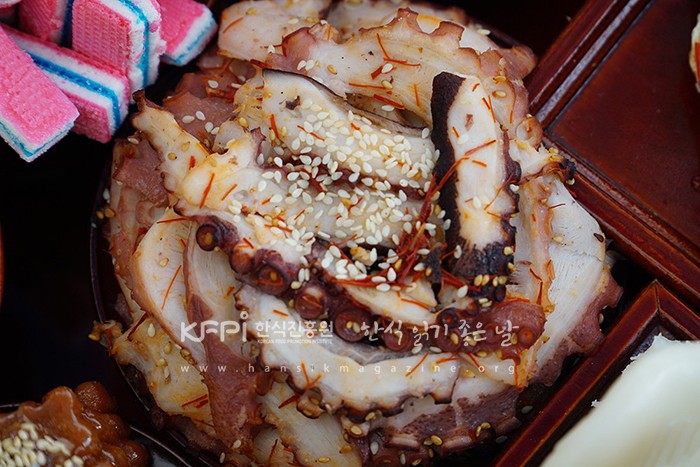
Tongyeong Jukdo’s muneocho ⓒ Kang Jeyun
Ritual Food of an Island
The ritual food is also called jesu, and spices such as red pepper powder, garlic, green onions, chive cannot be used. Even for kimchi, only white kimchi are allowed. Red beans or peaches, which are considered to be chasing ghosts, are also not allowed. The basic setting of the ritual table includes fruits, skewers, namul(greens), fish fillet, rice cake, Korean pancakes, soup, rice and liquor. The amount of seafood used on the land and the island varies significantly. In inland areas, not only skewers use meat such as pork and beef which are sliced into thick pieces, seasoned, and grilled, soups also mainly use meat such as pork and chicken. However, at islands, the main ingredients of skewer and soup are seafood. Fish are served by various fish such as croaker, flatfish, yellow tail, and sea bream. Shellfishes are also cooked and served by soup or skewers. Now it has become common due to farming, but they also put precious abalone on the ritual tables.
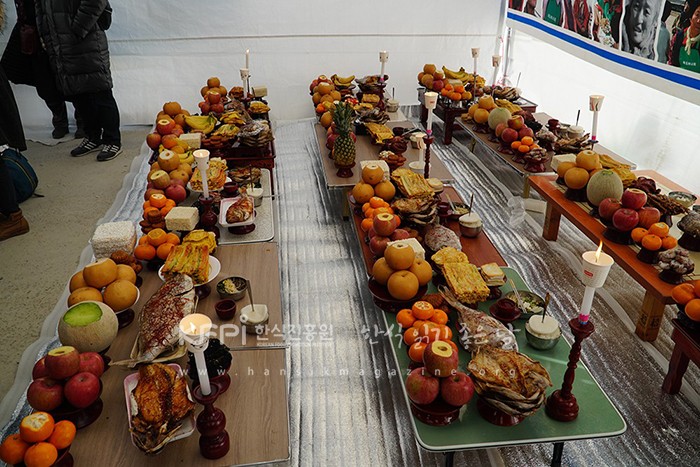
Tongyeong Jukdo Byulshingut ⓒ Kang Jeyun
Ritual food of Ulleungdo
If you look at the examples of Jejudo and Ulleungdo, Korea's representative islands, you can quickly figure out the difference. Ulleungdo and Jejudo also have no significant difference from land these days, but there was a clear difference from the ancestral rites on land in the past. The ritual food of Ulleungdo was mainly seafood and wild greens from the mountains and seas of Ulleungdo. Fruit was precious because they couldn’t harvest much due to the wind. So they couldn't use fruits such as apples and pears for the ritual. Only chestnuts that were buried under the ground for storage, could be used. In poor households, it was difficult for them to even use chestnuts, so there were many cases where there were no fruits on the ritual table. The most common ingredient was fish. Boiled octopus and dried squid were used basically. Various fish were also dried, grilled, and used. They couldn’t use beef or pork to make skewers, so at best, they used chicken instead. So, fish skewers were developed. They used fish that were easily caught to make skewers such as yellow tail, squid, and octopus. There was also ritual food that replaced beef which were not easily accessible. Among the wild greens, gobinamul, which tastes like beef, was put up instead of beef. The soup, which is the basis of the ritual food, they couldn’t put in meat as on land, so they made them by mincing squid without meat.
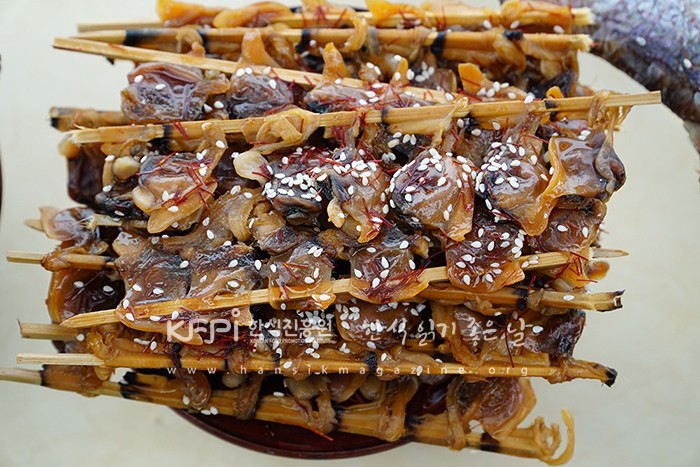
Tongyeong Jukdo's gunsokkoji ⓒ Kang Jeyun
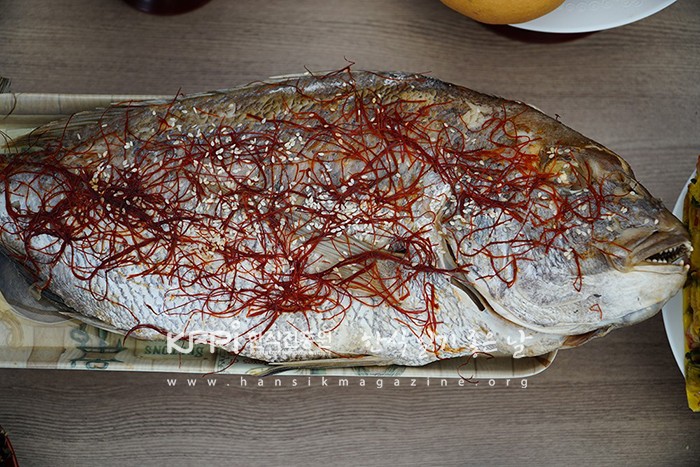
Tongyeong Jukdo's domijjimi ⓒ Kang Jeyun
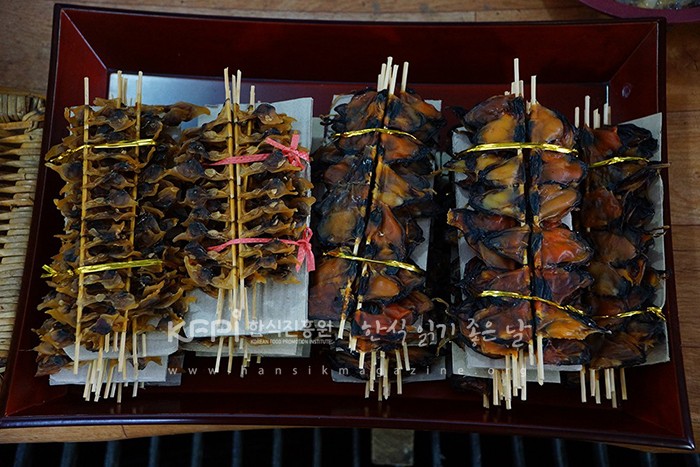
Tongyeong Jukdo's honghapkkoji ⓒ Kang Jeyun
Ritual food of Jejudo
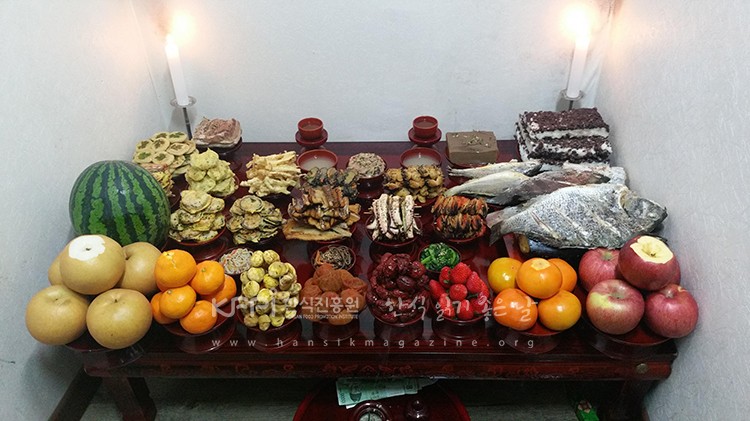
Chujado's ritual table ⓒ Kang Jeyun
Jejudo, due to its characteristics of an island, also had a large difference in ritual food from the land. Like Ulleungdo, there were many seafood especially and fewer fruits. Pork were also used, but there was an overwhelming number of fish. The fish such as tilefish, rockfish, and grouper were served after it is salted, dried and baked. And meat skewers were rarely used, but there were more fish skewers made from seafood like Ullengdo. Shark, squid, octopus were used basically. Sometimes even whale skewers made of whale meat were used. On the coast of Jejudo, fish soups boiled with tilefish or grouper were used, instead of beef soup. The appearance of fish soup on the ritual table is one of the biggest differences between the ritual table on the land. They also used citron because fruits such as apples and pears were not available.
The rice cake of the ritual was also made from ingredients such as hulled milltet, buckwheat, and sweet potatoes, since it was an island where rice was precious. Memilinjeolmi(buckwheat bean-powder-coated rice cake), semitteok(rice cake), and gogumachimtteok(sweet potato rice cake) used to be on ritual tables of Jeju, but now they are gone. Relatives who participated in the memorial provided assistance with such as bingtteok and Sangaetteok(barley rice cake). On the day after the memorial, there was a custom called 'tteokban-dolim' where rice and rice cakes were shared in the neighborhood. The mutual assistance was the island's ritual culture. The culture of sharing ritual food with the neighbors is a beautiful custom that was not only on the island but also on the land, but it has disappeared from the land. However, there is still a custom on the island where people from the neighborhood are invited to serve breakfast the next morning after holding a memorial. The ritual was also a custom to honor the ancestors and to strengthen the solidarity of the community.
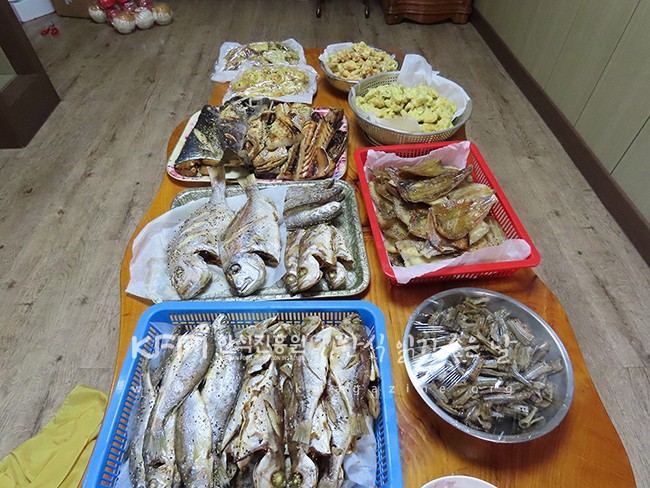
추자도 제사음식 ⓒ 강제윤
Among the islands, the ancestral originality is well preserved in the areas of Chujado, Geomundo, Ando, and Oeyeondo, where fishery products are still abundant.
The unique ritual foods of the islands where dangje(a common ancestral rites in the village) remains are also well preserved. I have been to a south coast byeolsingut(a kind of religious ritual) last winter which happened in Jukdo of Tongyeong. Although Byeolshingut is also good, most of all, it was the ritual food that I paid attention to. The people from the island set up separate memorial food for each house and offered them to Gutcheong. It contained all the food of the island's ancestral rites that had been going on for hundreds of years. Gaebulkkoji, muneocho, bajirakogagaebi, gunsokkoji, etc. They were special foods that were hard to see on land rituals. The island's ritual food contains a prototype of Korean food. The ritual food on the island is nothing less than a prescription to regenerate the unique Korean food culture that is dying out.