

한식에 대한 다채로운 이야기를 전하는 온라인 매거진
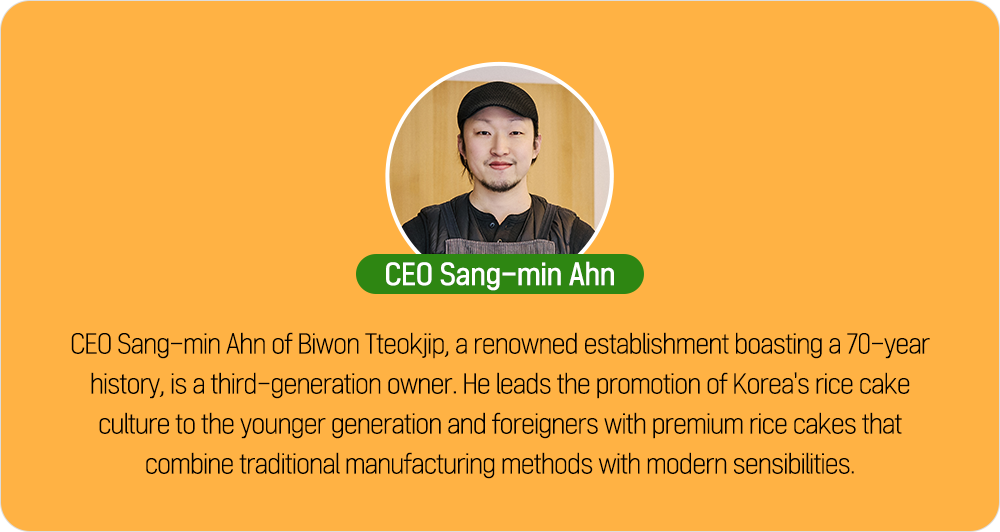
Interview with CEO Sang-min Ahn of Biwon Tteokjip
This Month’s HANSIK Talk
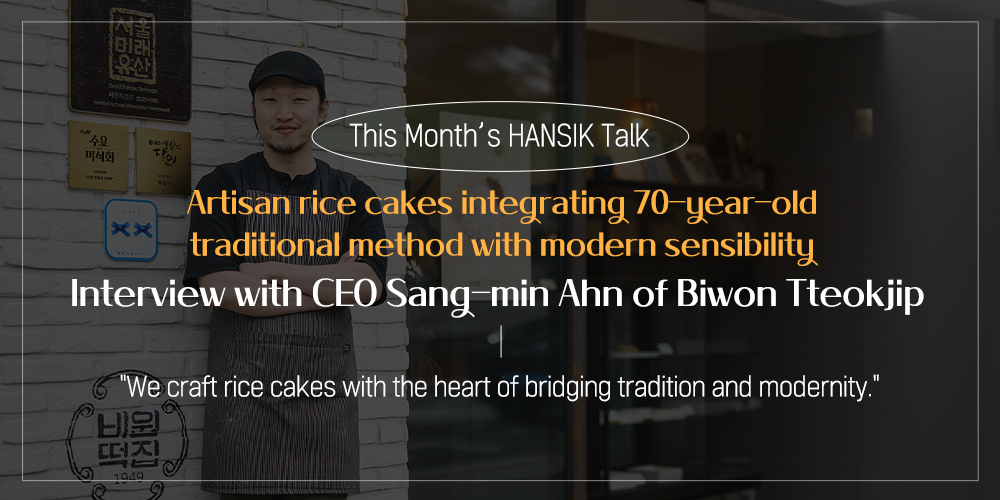
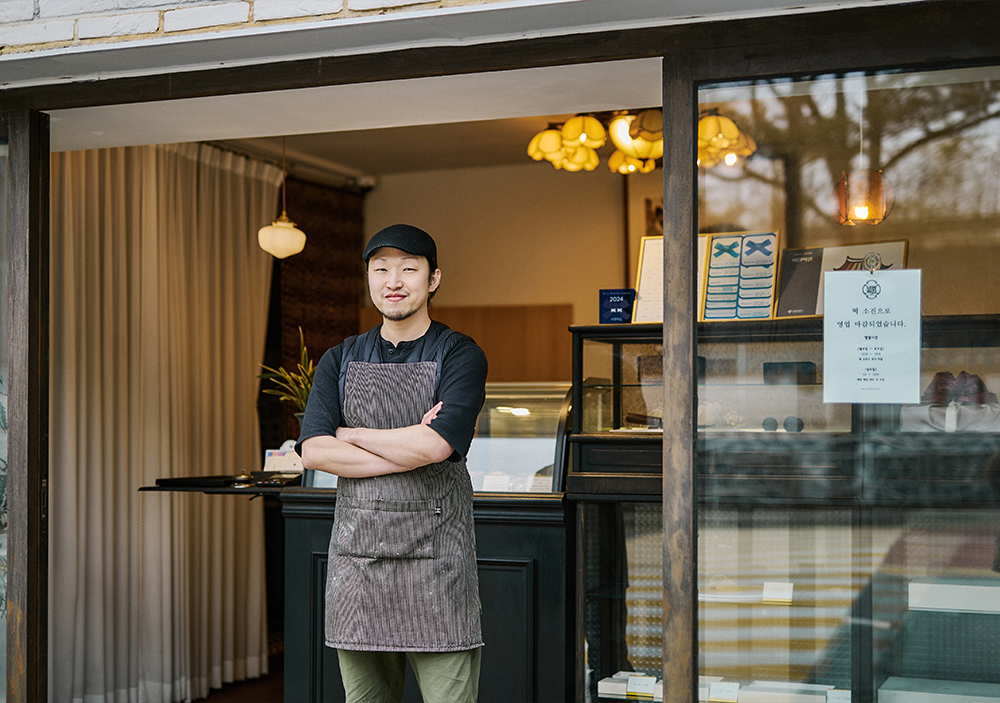
In the heart of Seoul, there is a unique and beautiful neighborhood called Gahoe-dong , where tradition and modernity coexist. Despite the absence of signage, there is a special rice cake shop bustling with customers from early morning. It is none other than "Biwon Tteokjip," which showcases the essence of traditional Korean traditional royal court rice cakes.
Established in 1949, Biwon Tteokjip has gradually become a precious landmark in Seoul, akin to the origin of the name "hidden treasure of Changdeokgung Palace ." After being selected for thirteen consecutive years since 2012 in the "Blue Ribbon Survey", it was also recognized as a cultural heritage of the modern and contemporary era that should be passed down to future generations. It was subsequently registered as "Seoul Future Heritage" designated by the Seoul Metropolitan Government. We had the opportunity to meet Mr. Sangmin Ahn, the CEO of Biwon Tteokjip, which has been faithfully reproducing the traditional manufacturing methods for over 70 years while incorporating a modern touch.
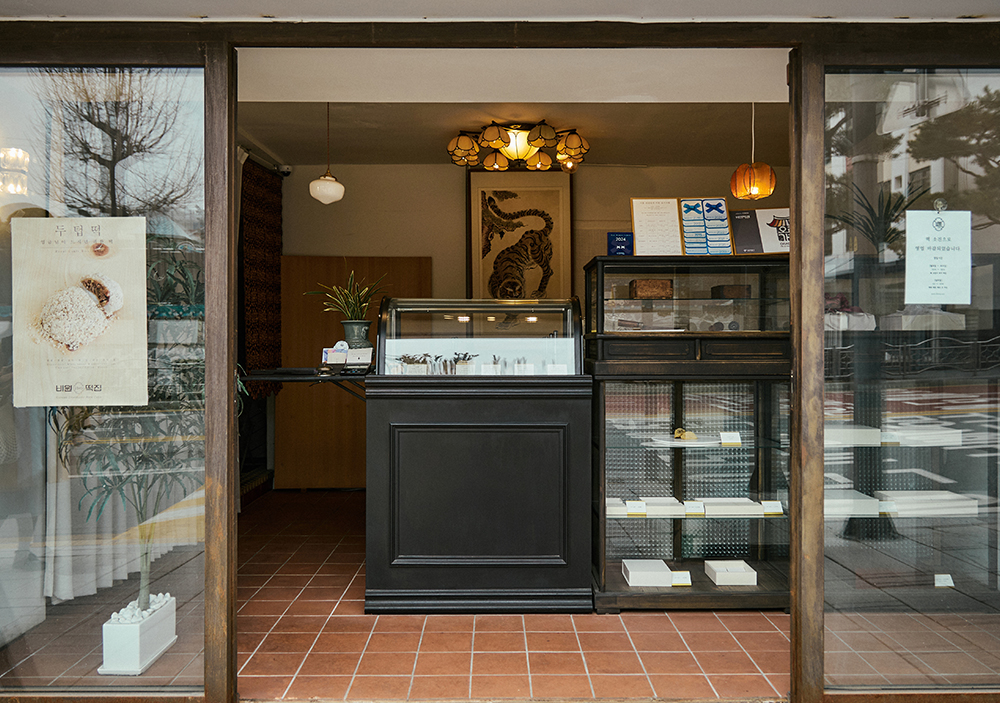

The philosophy embedded in Biwon Tteokjip’s modern packaging method
Established in 1949, Biwon Tteokjip has been passed down through three generations, from Grandma Hong Gannan to current CEO Ahn. It showcases various royal court rice cakes such as duteoptteok (sweet rice cake with filling), danhobakseolgi (sweet green pumpkin rice cake) , and black sesame chapssaltteok (sweet rice cake with red bean filling), while maintaining the precious royal court recipe secretsinherited from the last holder of royal court cuisine from the Joseon Dynasty.
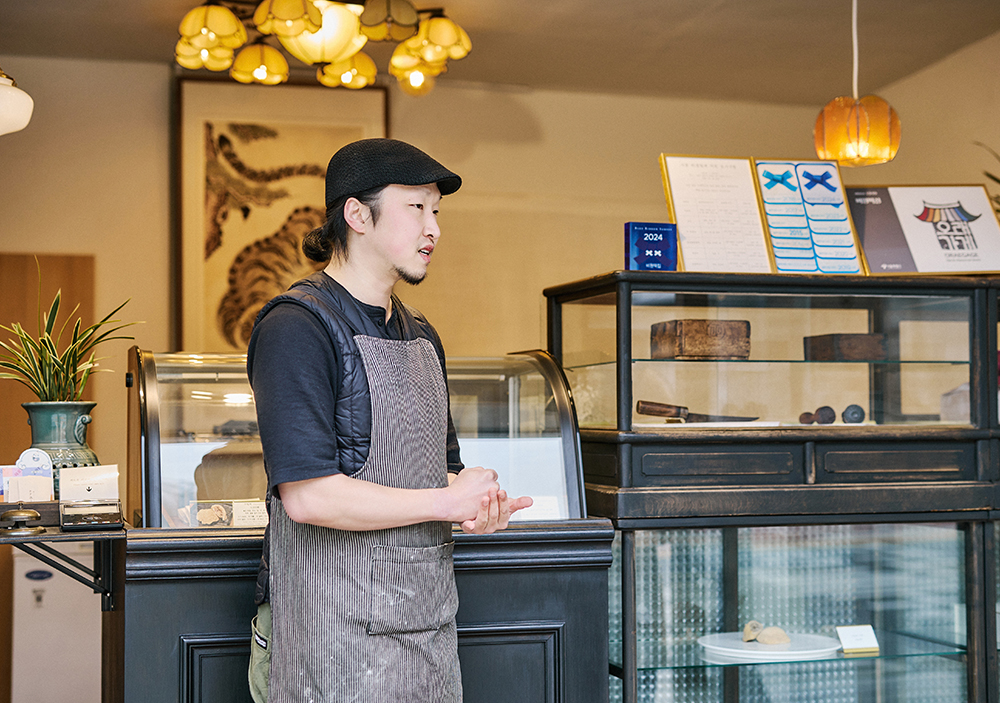
Even during weekdays when the shop is less crowded, foreign visitors can be seen frequenting Biwon Tteokjip. The first thing that catches your eye is the convenient packaging method, as people hold individually wrapped tteok (rice cake) in their hands and savor them. CEO Ahn explained that he wanted to make it easy for everyone to enjoy while preserving the traditional taste, hence the different types of packaging depending on the type of tteok.
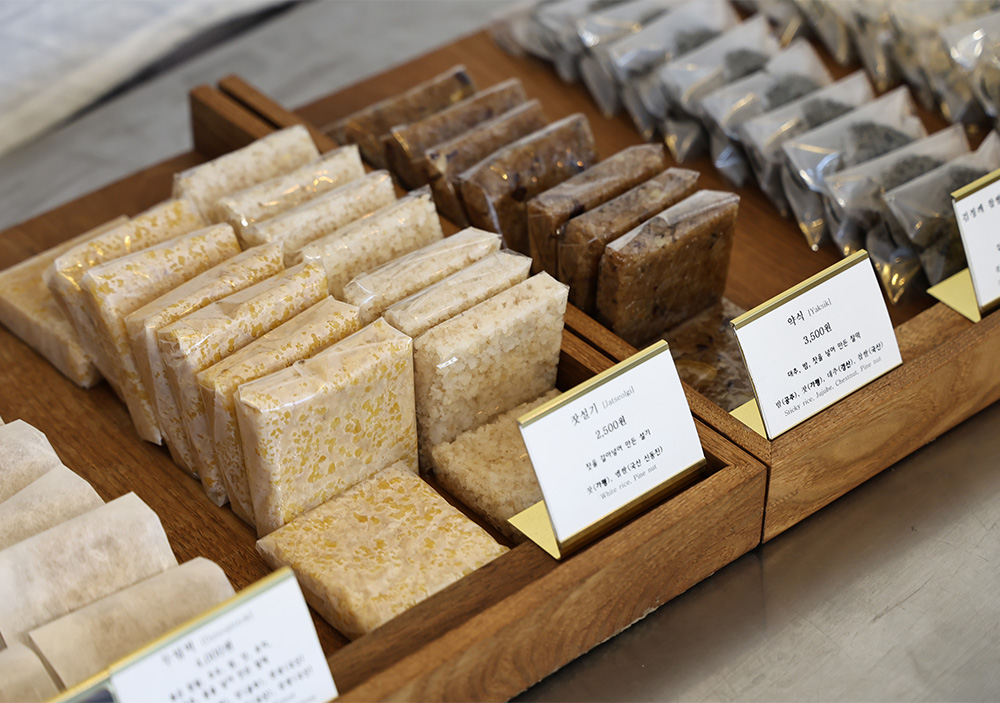
"Some tteok are moist, while others are fluffy. Some have dense fillings that require grabbing them as if wrapping them in your palm, while others need to be packaged flatter for an easier bite,” said Ahn.
Even though it may seem trivial, changing the packaging design has attracted more young people and foreign visitors. The philosophy of Biwon Tteokjip, which is ‘bridging tradition and modernity,’ could be deeply felt from its consideration for convenience and design in packaging.

How Biwon Tteokjip Preserves Tradition: Honest Effort and Premium Ingredients
Biwon Tteokjip shapes each rice cake by hand to give them a natural elegance, using ingredients like mugwort, sweet green pumpkin, omija , jujube , and black rice, all boiled directly for natural pigments. What tradition has Biwon Tteokjip cherished for over 70 years, faithfully preserved through the generations? CEO Ahn says there's nothing grandiose about it.
"We simply make them honestly, using the same methods to maintain the essence of taste. While it requires a lot of effort, it's the secret to preserving the taste that has been passed down through generations. We take pride in our mission and strive to maintain it as much as possible," said Ahn.
By "the same methods," he means sourcing all ingredients, including rice, domestically and to the highest quality, just as they did for the royal court. Every step, from processing to steaming the tteok batter, is done 100% by hand.

Artifacts Preserving History: Biwon Tteopjip’s Wooden Tteok Mold and Knife
On one side of Biwon Tteokjip’s display shelf, there are old artifacts that seem worthy of being in a museum at first glance. Among them, the wooden rice cake mold stands out, with its cute and quaint appearance, and glossy surface, used to imprint patterns on traditional Korean rice cakes. While nowadays, plastic molds made by machines are more common, traditionally, artisans painstakingly carved them out of natural materials like wood or tin. As a result, each traditional rice cake mold has unique patterns, embodying the aesthetic philosophy of its creator.
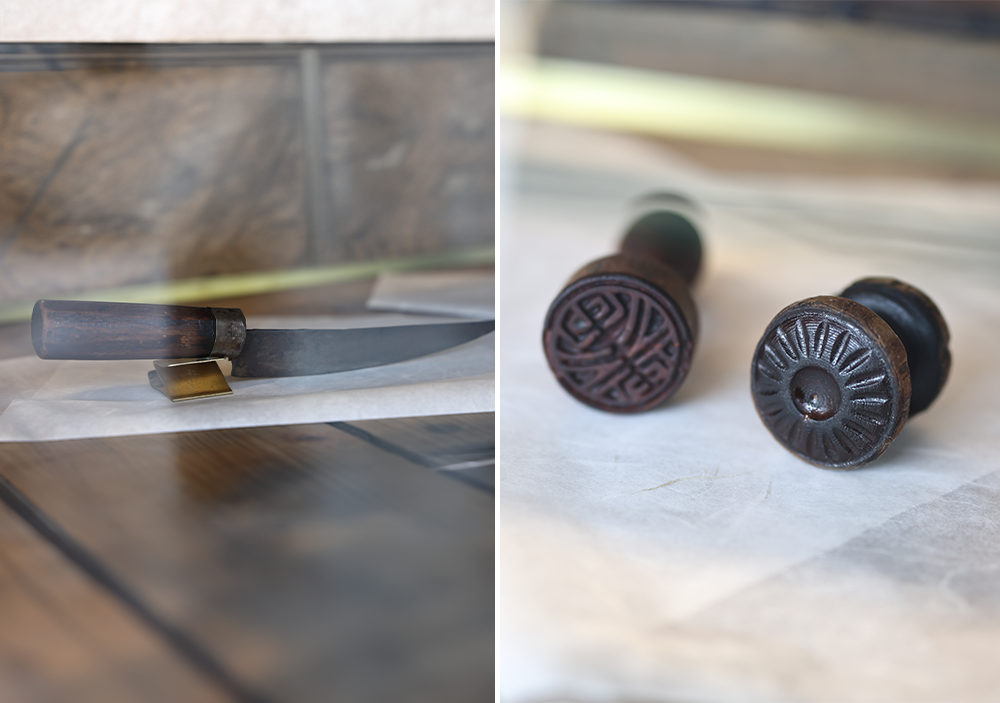
"The tteok knife and mold are items that my father, the second generation owner of Biwon Tteokjip, had used for over 50 years. As they hold significance, we have preserved them and decided to exhibit them, as they might be of interest to our customers,” explained Ahn.
These small artifacts seem to echo Ahn’s hope that through visiting and encountering these pieces of history at Biwon Tteokjip, people would better understand the depth and beauty of traditional Korean rice cakes.

'Duteoptteok,' the Precious Rice Cake Served at the King's Feast
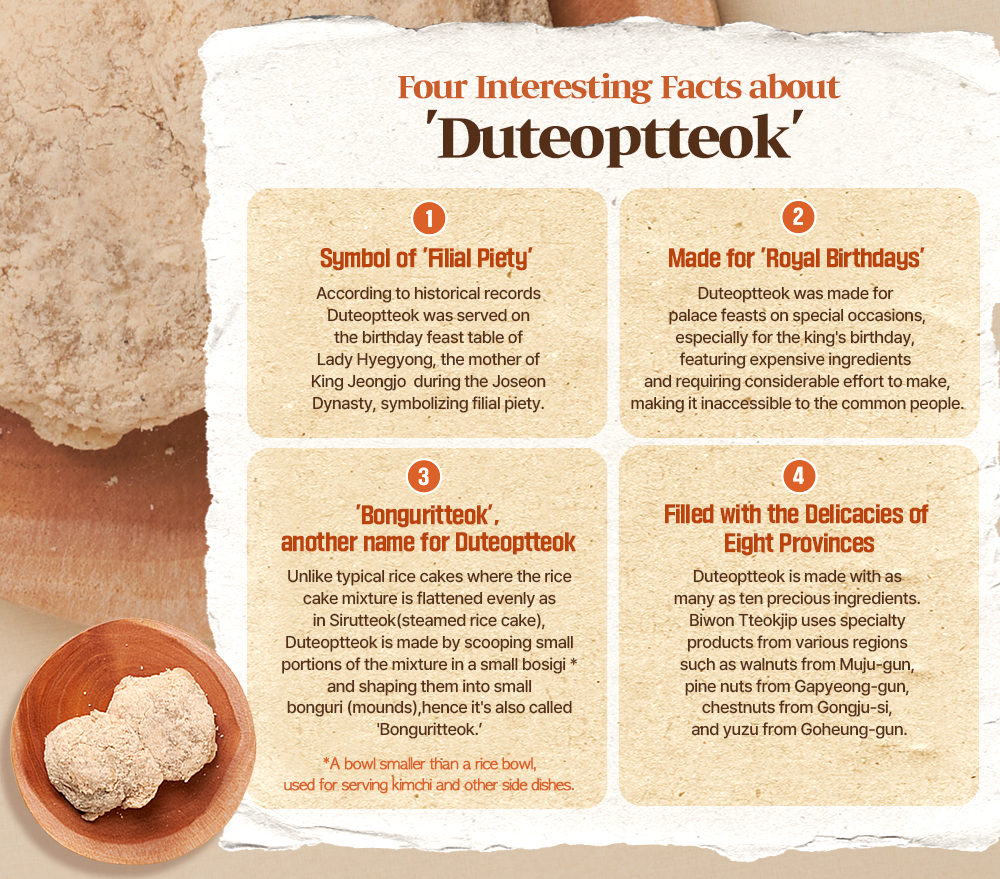
The most beloved tteok at Biwon Tteokjip are the Duteoptteok and Jatseolgi (pine nut rice cake). Ahn introduced Duteoptteok as a particularly precious delicacy, worthy of being served at the king's feast, and expressed his hope that more foreign guests would try it.
True to its name, Duteoptteok has a hearty appearance and a rich flavor. Encased in a velvety red bean paste, the glutinous rice cake is generously coated with a mixture of tangy citrus , savory pine nuts, sweet jujube and chestnuts, creating a delightful explosion of flavors in the mouth. The Duteoptteok at Biwon Tteokjip is renowned for its unique taste, distinct from that of ordinary rice cake shops. There are two reasons for this reputation.
First is the traditional method of production that has been upheld for a long time. Duteoptteok, as a delicacy consumed at the king's birthday feast, is known among palace rice cakes for its extremely meticulous and time-consuming production process. Biwon tteokjip preserves the authentic flavor of traditional Duteoptteok by meticulously pounding, roasting, and mixing rice, red beans, fillings, and toppings every day using the traditional method. The secondsecret lies in the deep and rich flavor derived from premium domestic ingredients. Ahn emphasized that they source top-quality ingredients from various regions across the country such as walnuts from Muju-gun, pine nuts from Gapyeong-gun, yuzu from Goheung-gun, and chestnuts from Gongju-si.

“Danhobakseolgi,” Deeply infused sweetness in chewy glutinous rice
Ahn starts work at 4 a.m. to meticulously prepare ingredients. Despite all processes being done manually, there is no sign of fatigue on Ahn’s face. He proudly displayed each completed rice cake without rushing or compromising. Among the array of rice cakes in various colors and shapes, the one that adorns the end is the “Danhobakseolgi (sweet green pumpkin rice cake).”
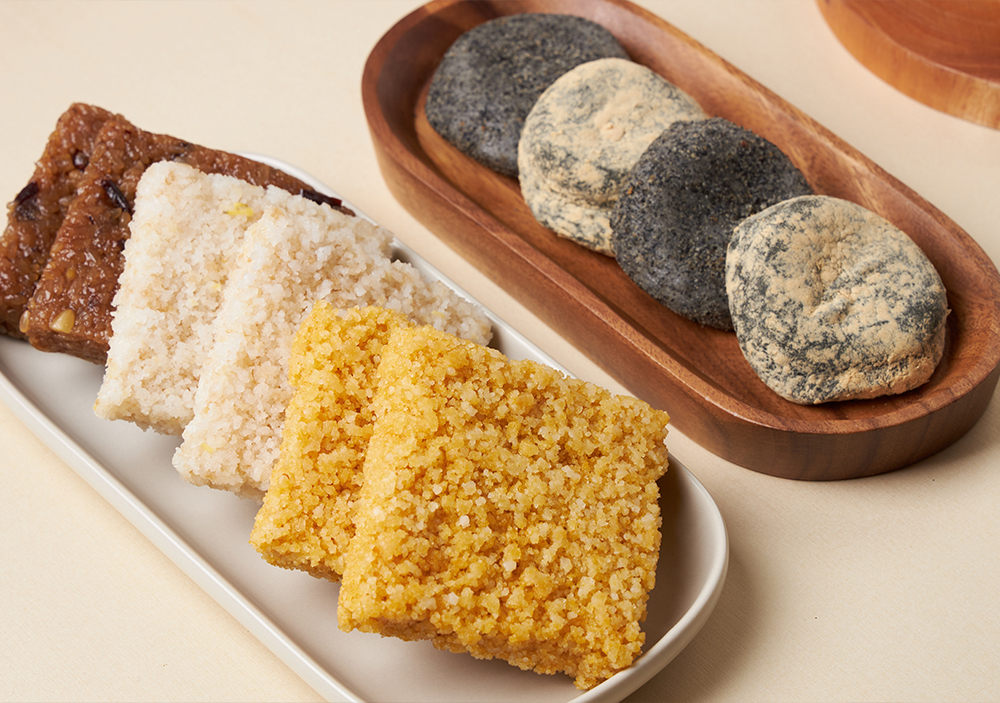
Loved by people of all ages, Danhobakseolgi is made with domestically grown fresh danhobak (sweet green pumpkin) known for their sweet and soft texture, rich in fiber and vitamins. It's a moment where one can glimpse Ahn’s delicate side, as he devotes attention to each and every rice cake.
"To avoid artificial flavors, we use only fresh pumpkins instead of pumpkin rice flour. Also, I pay special attention when steaming the pumpkin to avoid any grassy smell," explained Ahn.
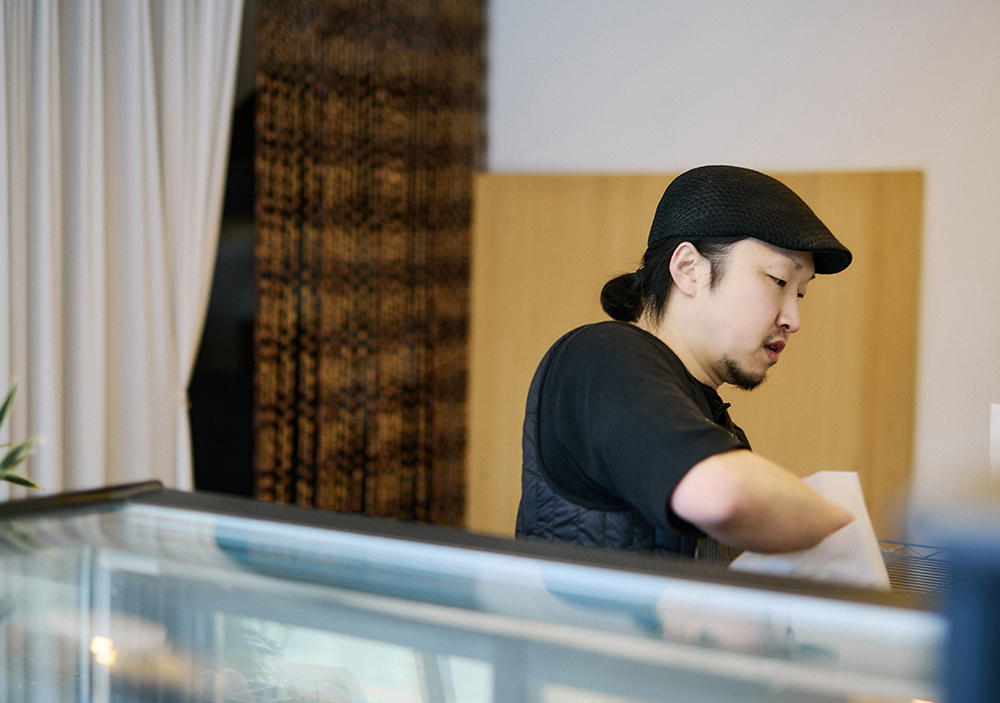
Contributing to the preservation and transmission of Korean culture in its own way, Biwon Tteokjip is steadfast in upholding tradition. When asked about future plans and aspirations, Ahn responded in the same steadfast manner.
"Rather than grand plans, I want to continue doing well consistently, just as we have for over 70 years. Every day, I make rice cakes with care as if they were for my own family, hoping that this care is fully conveyed to our customers."

Beyond just a simple rice cake shop, we hope that Biwon Tteokjip, a precious heritage that continues the tradition of royal court rice cakes, will continue to introduce the taste of Korea to many visitors in the future.