

한식에 대한 다채로운 이야기를 전하는 온라인 매거진
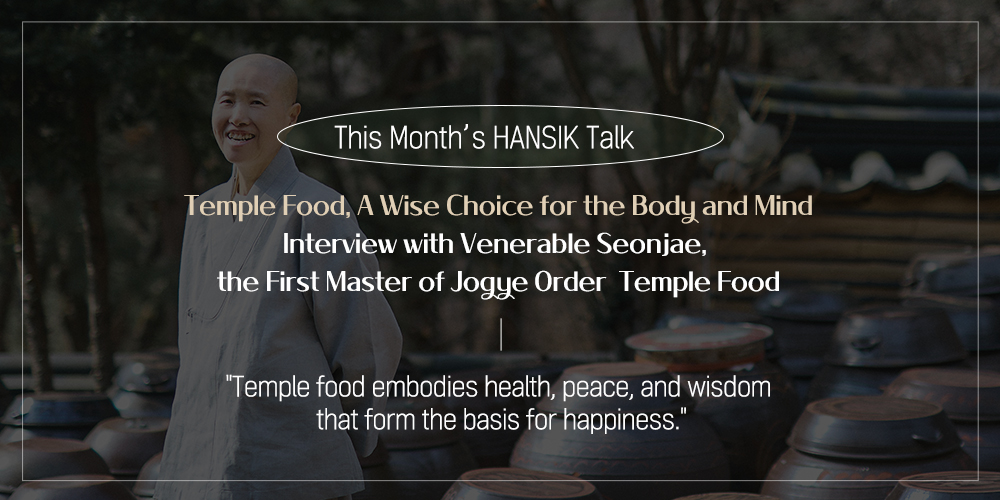
Interview with Venerable Seonjae, the First Master of Jogye Order Temple Food
This Month’s HANSIK Talk
Spring is the season of rejuvenation in nature, but it's also a time when our immune systems may weaken. Our bodies, which are sensitive to changes in weather and seasons, reflect our interconnectedness with nature. Temple food, which utilizes unique seasonal ingredients to offer nourishment tailored to each season, serves as wisdom for the sustainability of all life forms, including humans. Therefore, it's essential for our health and happiness that we pay attention to temple food as a means of promoting sustainability and well-being.
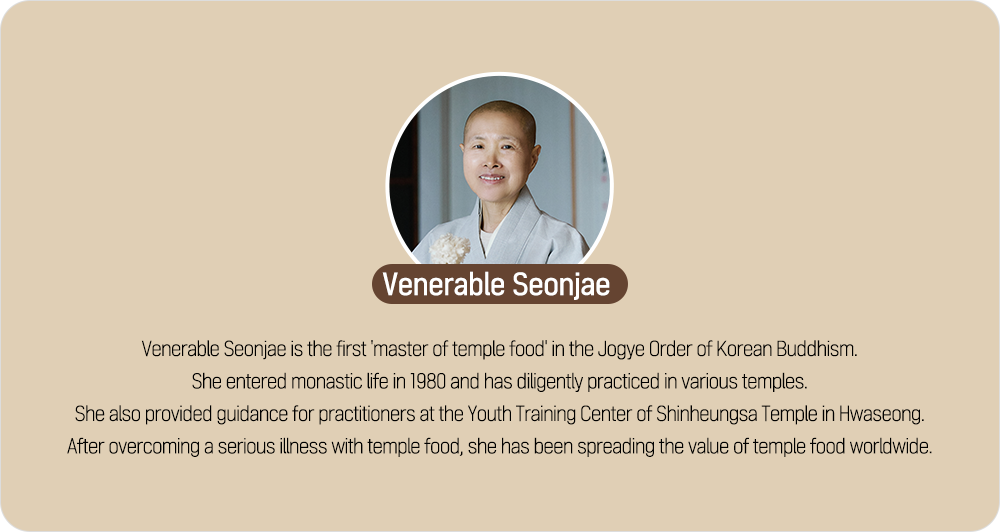
For over 40 years, Venerable Seonjae, the director of the Beomnyongsa Temple Food Culture Research Institute under the Jogye Order of Korean Buddhism, has dedicated herself to the study of temple food. Revered as the first ‘Master of Temple Food,' she regards food not just as a source of nutrition but as a manifestation of life's preciousness, awakening the importance of life within it. Revered as a 'practitioner of food,' she spreads health and happiness through meals. Seeking harmony with nature and promoting the essence of temple food worldwide, we interviewed Ven. Seonjae to uncover the secrets of health and happiness.
The Encounter with Temple Food: "Finding Food that Saves Lives”
Ven. Seonjae considers food as a part of 'practice,' which trains both the body and mind and spreads happiness. To her, eating food is a precious act of accepting other lives, and good ingredients have the power to transform the body, mind, and soul into a state of health and bring happiness to life.”
"Through food, we are connected to all the elements of the universe, such as water, wind, and sunlight. The Buddhist concept of ‘gongyang' (offering) is not merely about sharing food but also about the valuable experience of connecting food, oneself, and nature as one," she said.
Ven. Seonjae has been providing mental training to sick children nationwide and witnessed the remarkable effects of food on their bodies and minds. Many children suffering from atopic dermatitis have seen improvements in their condition through food. However, ironically, while immersed in children's education and academic research, the monk, who had been replacing her regular meals with bread and instant noodles, was diagnosed with hepatocirrhosis with a life expectancy of only a few years. It was at that time that temple food, made with seasonal ingredients, saved her life.
"Through recovering my own health with temple food, I became dedicated to temple food research with the goal of developing 'food that saves everyone.' Realizing how precious food is to my health, soul, and mind, I embarked on the path of a practitioner of food with a deep sense of urgency and conviction," she explained.

The Philosophy of 'Respecting Life' Forms the Roots of Korean Cuisine
Ven. Seonjae laments the common misconception that temple food is merely 'vegetarian' and emphasizes that temple food is more than just a vegetarian diet; it's a 'medicine' that revitalizes the body. Therefore, she stresses the importance of choosing the right food that suits oneself.
"Practitioners should consume foods that aid their practice, children should have nutrient-rich foods necessary for growth, and patients should consume foods that aid recovery. Choosing foods tailored to each individual's characteristics is the wisdom to maintaining both physical and mental health and finding happiness."
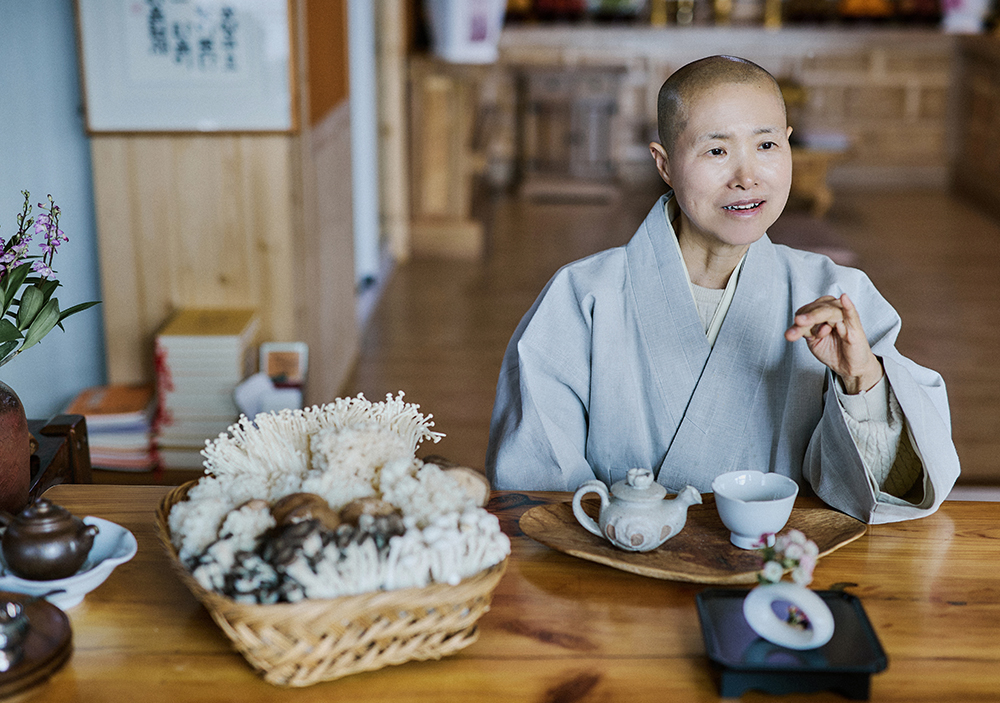
According to Ven. Seonjae, happiness is not limited to human happiness alone. Because the roots of Hansik are deeply embedded in the philosophy of 'respecting life,' it's essential to create and consume foods that respect all forms of life while preserving them.
"When bees gather honey from flowers, they don't harm the flowers. Instead, they aid in the pollination of flowers while collecting honey. Like bees, we should wisely utilize nature. This is the fundamental spirit of temple food."

Mushrooms: Nature's Gift of Medicine
At Ven. Seonjae's residence nestled in the mountains of Yangpyeong, Gyeonggi-do (Gyeonggi Province), dozens of earthenware jars filled with homemade soy sauce, gochujang, and various other healthy 'medicinal' seasonings lovingly line the shelves. In temple cuisine, the concept of 'medicinal seasonings' refers not to conventional seasonings but to substances that detoxify any toxins inherent in the ingredients.
"In temple cuisine, we cook using 'medicinal seasonings' that contain no additives or preservatives. These seasonings not only adjust the flavor of the dish but also serve as healthy 'medicine' for the body. Using medicinal seasonings, in addition to healthy ingredients, is an essential element of temple cuisine."
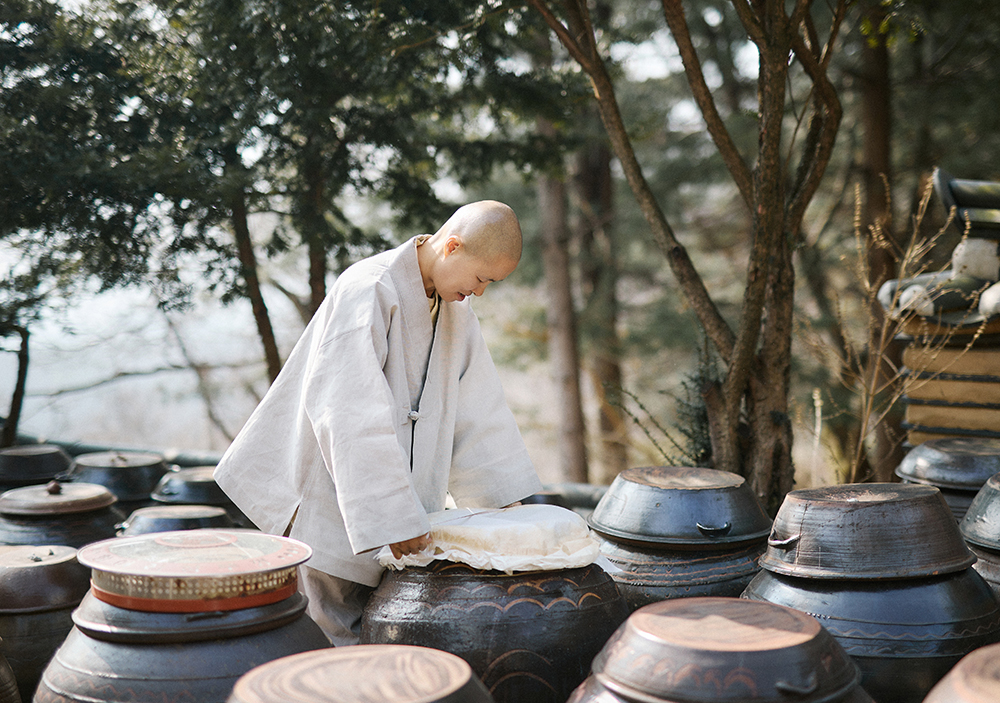
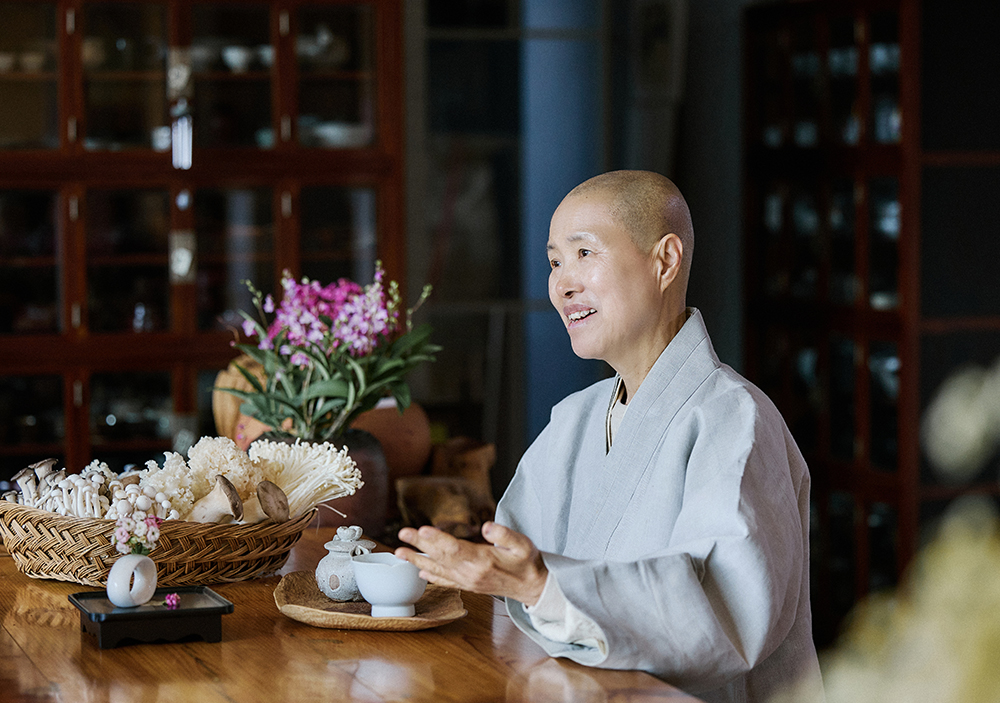
After passing through rows of jars containing medicinal seasonings and upon entering the interior with an impressive large glass window, one's eyes are drawn to the cheonggukjang (rich soybean paste) and pyogobeoseot (golden oak mushrooms) basking in the sunlight on the floor. According to the monk, mushrooms play a role in smoothing out the rough and bitter flavors of other ingredients, rendering them soft and mellow.
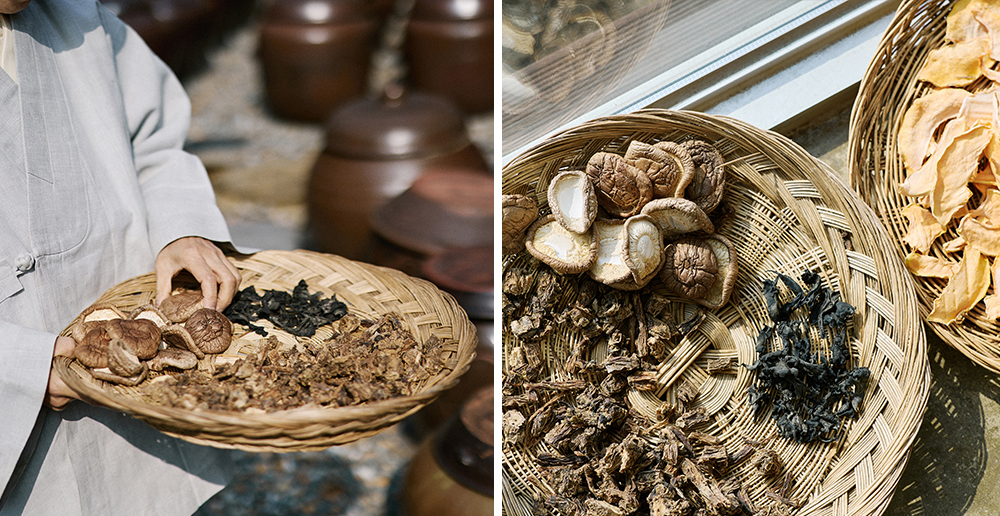
Mushrooms, readily available in the mountains, have been widely used in temple cuisine since ancient times. Ven. Seonjae shares various ways to utilize mushrooms, such as brewing them into tea, drying and grinding them into powder for use as a natural seasoning, lightly cooking them and mixing them with doenjang and perilla oil, or dipping them in chojang (sweet and sour red chilli paste). Especially during this time when the spring breeze is strong, she recommends trying dried mushroom tea.
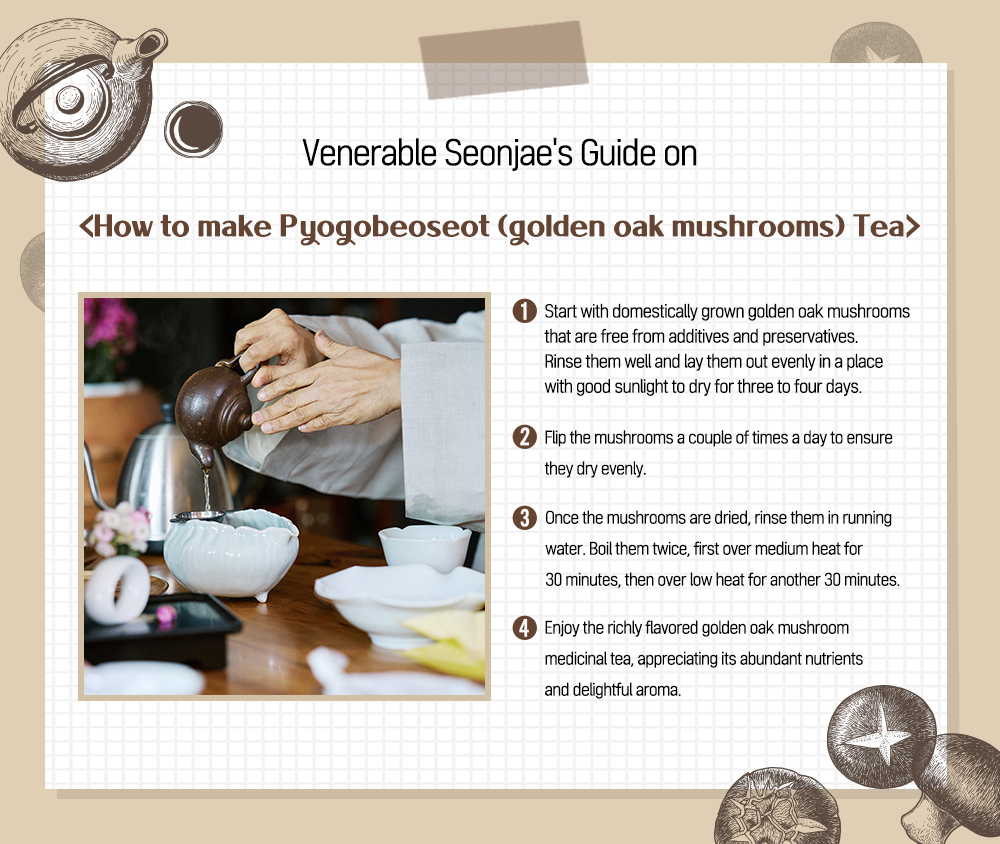 <How to make Pyogobeoseot (golden oak mushrooms) Tea> 1 Start with domestically grown golden oak mushrooms that are free from additives and preservatives. Rinse them well and lay them out evenly in a place with good sunlight to dry for three to four days. 2 Flip the mushrooms a couple of times a day to ensure they dry evenly. 3 Once the mushrooms are dried, rinse them in running water. Boil them twice, first over medium heat for 30 minutes, then over low heat for another 30 minutes. 4 Enjoy the richly flavored golden oak mushroom medicinal tea, appreciating its abundant nutrients and delightful aroma.">

Proud of our 1,700-year History of Detoxifying Foods
Finally, Ven. Seonjae emphasized the importance of respecting temple cuisine beyond religion, recognizing it as part of our cultural and philosophical heritage.
"Temple cuisine is food that encompasses many conditions for happiness that people desire, including health, inner peace, and wisdom. I hope that Korean temple cuisine, with its 1,700-year tradition, will be recognized not only as part of our religious heritage but also as an integral aspect of Korean culture and cuisine. Let us take pride in what is ours and remember that to be healthy and happy, we should enjoy temple cuisine more often,” she said.
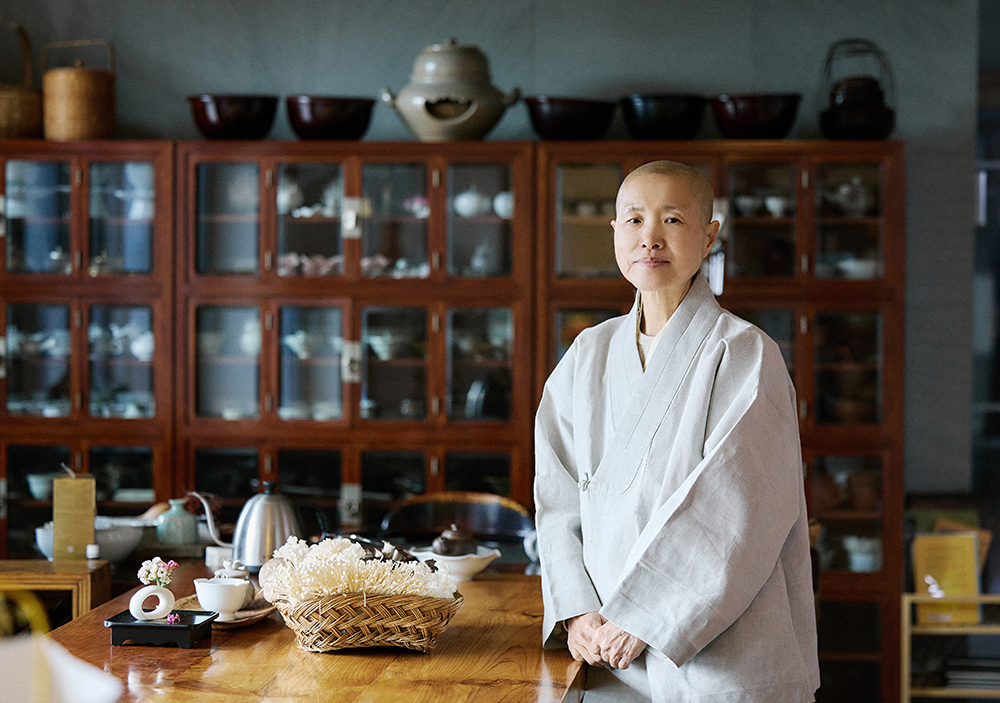
As we finished the interview and stepped outside, the warm spring sunlight, tinged with the scent of mushrooms, poured over our faces. It felt like we were ripening healthily under the sun, much like the rich soybean paste and the various sauces inside the jars. At that very moment, we could feel and understand the meaning of Ven. Seonjae’s teaching that nature, food, and people are one.