


한식에 대한 다채로운 이야기를 전하는 온라인 매거진
Vol 30. Mineo - Jeolla-do
Soybean Paste Called 'Georeunjang'
Hansik Contribution
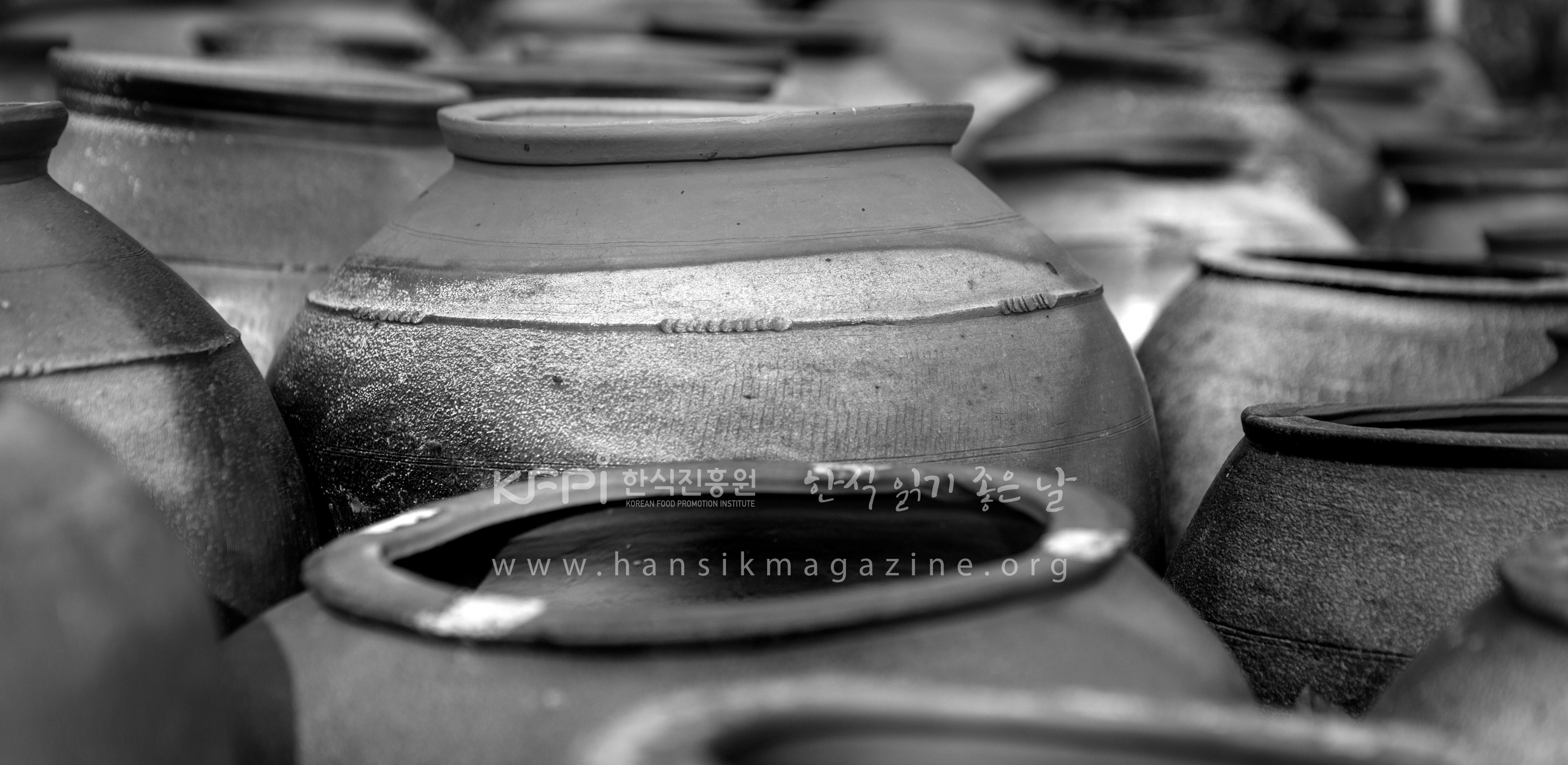
Races eating as much fermented foods as Korean will be rare when the whole world is considered. The fermented foods enjoyed by Koreans include Jangs such as soybean paste, red chili paste, soy sauce, pickles such as Kimchi, Jangajji, and salted seafoods such as salted shrimp, slated anchovy, etc. Such fermented foods may also be referred to as ‘Foods representing Korea’1)
Among them, soybean paste was a native food that has had a long history with Korean race on this land from the ancient times.2) Soybean paste has been a major side dish in the Koreans’ dietary life from the three-state period through Joseon era. As such tradition has continued to now, soybean paste is ranked as an indispensible side dish in Koreans' menu.
In particular, the soybean paste of Andong where relatively much of the life customs of Joseon era is preserved can be largely divided into general Jang, delicacy Jang, and substitute Jang. General Jang is the soybean paste consumed by us at usual times, while delicacy Jang is the same as ‘Deumbukjang(Cheonggukjang).’ Substitute Jang refers to ‘Deunggyeojang’, ‘Jjokjang’, etc. eaten by the families who could not afford to make soybean paste.
A little special bean paste, Georeumjang
In Andong area, there is soybean paste that was prepared for eating in a little special way. It is the soybean paste called ‘Georeumjang’ or ‘Geolgeumjang.’ Although you cannot finds Georeumjang nowadays, it used to be a soybean paste quite familiar to regional residents of over 70’s. Strictly speaking, Georeumjang is a kind of ‘Jeupjang(standard language for Georeumjang).’ It is also called ‘Jipjang.’ Therefore, Georeumjang can be classified as a kind of delicacy jang used throughout Gyeongbuk area around Andong at the center. In that case, why was Jeupjang uniquely called Georeumjang or Geolgeumjang?
That is because of the difference in production method for Georeumjang. As anybody can immediately infer through the word ‘Georeum’, it is the soybean paste requiring Georeum(filtering). Let’s not misunderstand, since it does not mean the use of Georeum(manure) as a food ingredient. Georeumjang is said to have been made by burying the crock with seasonal vegetables and fermented soybean lump mixed in the Georeum stack in front of the house for fermentation or by burying in the bran stack with side fire for aging.
Ferment in the jar with Namul put in and boiled in this way .
Bury the jar in Georeum this way.
Perhaps that’s why it’s called Georeumjang. Maybe so.
Though I didn't see making of Georeumjang, I only had it .
...
Whether or not I did so, Namul was there and served in this way,
I ate it all since I was still childish then.
It was delicious as it was the first time of eating.
Not bland but delicious since Namul were prepared with it .
When we had nothing to eat then, everything was tasty.
Pungsan lady, 79 year-old woman
How to make Georeumjang
In Gyeongsang-do area, people had Gereumjang as the delicacy in winter and spring seasons. In the rural villages of Andong, Georeumjang was made largely by four methods.
#1.
Prepare soybeans beforehand by frying them.
Mix powder of fermented soybean lump and salt with the fried soybeans.
After mixing radish, radish leaves and Chinese cabbage together and put them in a pottery jar.
After completely sealing the pottery, and bury the jar in the Georeum stack.
Then age it for about 5~6 days.
#2.
Fry and grind soybeans into powder, Grind the fermented soybean lump as well.
Mix the fried soybean powder, powder of fermented soybean lump,
Chinese cabbage, radish, and dred pepper together.
And put them in the pottery jar and bury the latter in the husk stack.
Put fire on the husk and ferment it for a day or so.
#3.
Grind the fermented soybean lump into powder.
Put radish, Chinese cabbage,
and dried red pepper in the powder of fermented soybean lump soybean for mixing.
And ferment the mixture in a cauldron using a low fire.
#4.
Fry soybeans, Mix them with rice flour and hang the mixture on a rack like the fermented soybean lump.
Pulverize the completely dried lump into powder.
Put pepper leaves, radish, Chinese cabbage, and dried radish greens in the powder,
and then ferment the mixture in a cauldron using a low fire.
Even grandmothers of Andong area say not to have personally used or seen the method #1. They just remember having heard from grownups in their childhood. Therefore, it can be seen that burying the jar in Georeum stack for fermentation is a very old method.
On the other hand, all grandmothers remember the methods #2 & #3 as Georeumjang made by their mothers in childhood. Since it was made by fermentation for a day using husk or a cauldron rather than fermentation in the method #1, the way of making it was simple. While #4 is not different from #2 or #3 in the way of making, it can be seen to be a different form of Georeumjang in the sense of not using the fermented soybean lump.
Food of delicious Jang as well as elderly respect
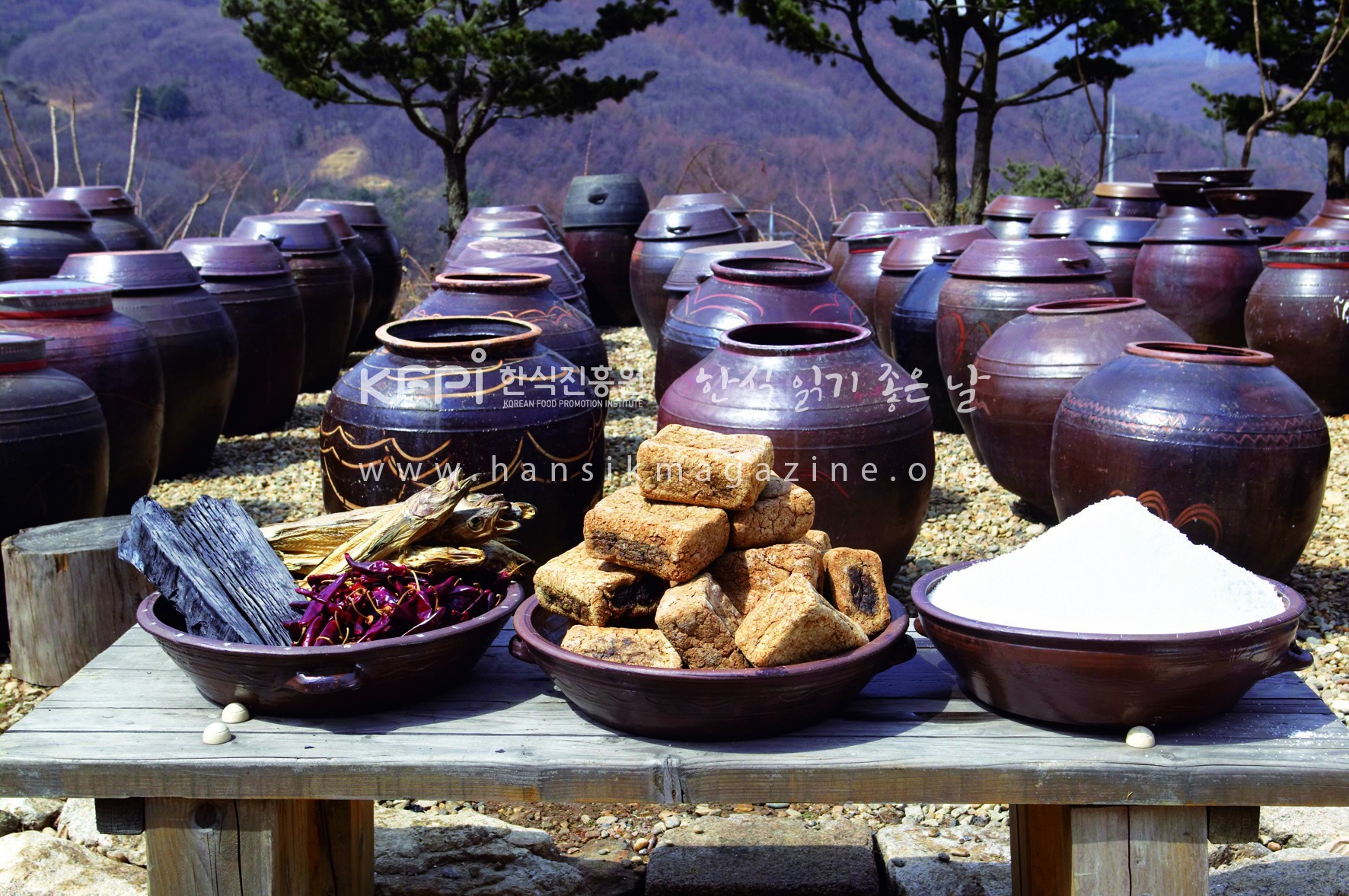
Georeumjang was not used as soup or stew, nor for the use of mixing Namul. That is because ‘Georeumjang’ is the cooked food in itself. Therefore, it was used primarily as a side dish. Most of Andong residents in a high age band count Georeumjang as the most delicious bean paste.
Georeumjang is made by mixing soybeans and powder of fermented soybean lump with vegetables such as red pepper, eggplant, Chinese cabbage, bean leaves, etc. followed by fermentation using a low fire. Since the sweet taste steeped from vegetables and the savory taste unique to the fermented soybean lump were in good harmony unlike general Jang everybody is said to have been fond of Georeumjang from old days. Since it was not salty but soft to the extent that eating as is was acceptable, it was supremely excellent food for the senior people’s ingestion. That is why daughters-in-law frequently made Georeumjang to treat elderly people in the house. Since it was fermented together with seasonal vegetables, it was soft and yet highly nutritional so that it was the best delicacy for the appetite-less and feeble seniors. In this manner, Georeumjang was not a simple side dish to Andong residents but also the food containing a heart of treating senior people as well as the special dish.
Now, Georumjang from the method of making by burial in Georeum stack is no longer visible. Certainly, the food culture ceaselessly repeats generation and disappearance, accompanied by changes. However, according to the author’s opinion, Jangs culture that may be considered as the foundation of our food culture would better continue its thread of life through education programs about how to make bean paste at least even to just maintain the identity of national culture through foods. I understand that institutions including Korean food promotion institute, Cultural heritage administration and Jangs-related civilian groups join together to make many efforts to have ‘Jangs culture’ listed in UNESCO. It is hoped that the bean paste containing traditionality of our foods can continue to be passed on not only in the globalization process but also from the aspect of preserving cultural diversity.
1) See ‘100 key symbols of national culture’ by Ministry of Culture, sports & tourism, 2006
2) See ’Tradition & change of national foods seen through bean paste’ by Bae Yeongdong, 2002
Ahn Ilkuk / Publicity project team of Korean foods promotion institute