


한식에 대한 다채로운 이야기를 전하는 온라인 매거진
Hansik, Time to Look Beyond its Current Popularity
HANSIK Report from Overseas
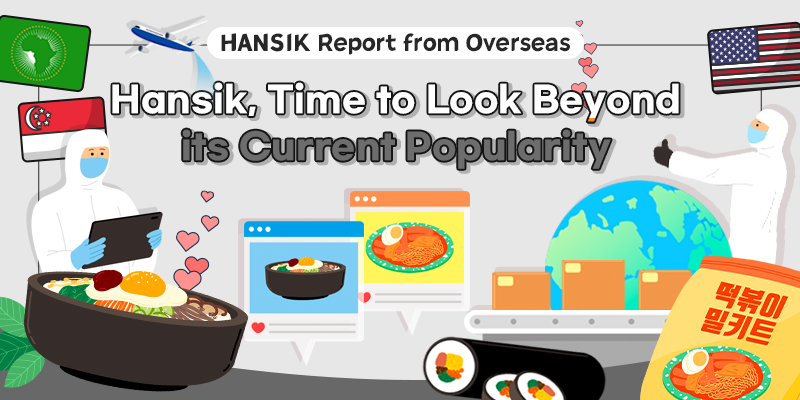
The world is captivated by everything Korean, from food to music and culture, and there is much news on the surging popularity of Hansik, which is not only representative of the country, but serves to spread its culture and technology. To ensure the longevity of the popularity of Hansik, it is helpful to explore ways to offer the variety of charms and experiences that go beyond simple taste.
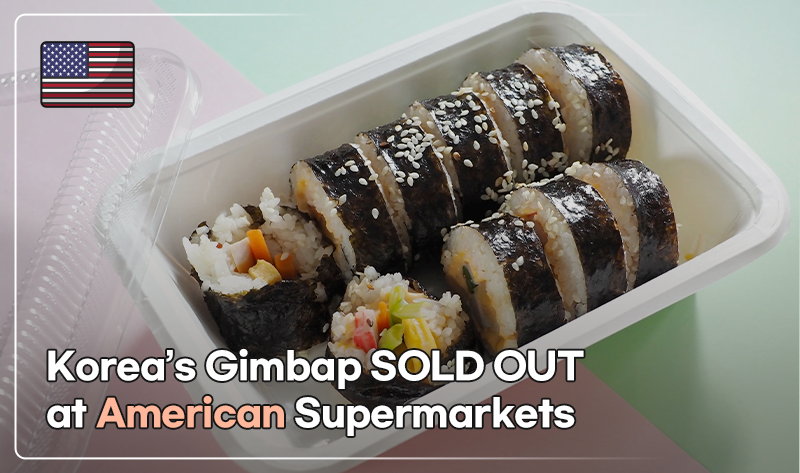
Korea’s Gimbap SOLD OUT at American Supermarkets
The grocery store chain 'Trader Joe's,' which has over 500 stores across the United States, has introduced a new frozen Gimbap that is causing a sensation in the U.S. The frozen Gimbap, introduced in early August, sold out in all stores within two weeks, and the phenomenon even led to instances of hoarding and ‘open running,’ which was featured on NBC News. Trader Joe's used the actual Korean name 'Gimbap' for the product and added the description 'Korean Tofu and Vegetable Seaweed Rice Roll’. Locally, the product has received praises for its vegetable-centric approach and perceived healthiness. Due to restrictions on meat exports to the U.S. market, they substituted tofu for meat, which unexpectedly contributed to its success.
The nationwide sellout of frozen Gimbap was greatly influenced by platforms like TikTok and other social media. Videos of people eating Gimbap, of Gimbap cooking tutorials, of waiting in line to purchase the product all contributed to the word-of-mouth buzz. Trader Joe's not only sells this popular Gimbap but also Tteokbokki (stir-fried rice cake), Scallion Pancakes (Pajeon), Gochujang (red pepper paste), LA Galbi (marinated grilled ribs), and Korean-style Bulgogi as private label products, all of which are also gaining popularity. It's a testament to the potential of K-food proven by Trader Joe's, one of the most beloved supermarkets in the United States. We can look forward to further strengthening presence of Korean cuisine in the American market in the future.

Success of K-Restaurants and Cafes in the Singapore
Singapore, a multicultural nation where global corporations have established a presence, boasts a thriving dining culture. It's a competitive environment where survival can be challenging without a strong foothold. In this environment, Korean restaurants, or K-restaurants, are emerging as vibrant choices in Singapore. Just this year, at least 10 new Korean restaurants have opened, with additional openings scheduled through the end of the year. Success factors include a combination of consistent menu development, originality, and innovation, as well as practices like showing the cooking process directly to customers. Of course, we can't forget the influence of Hallyu, including K-dramas and K-pop.
The popularity of Korean desserts due to Hallyu is also remarkable. According to 'The Asia Food Challenge' report released by Singaporean sovereign wealth fund Temasek in 2021, interest in Korean desserts in Singapore began to rise, starting with Korean Patbingsu (shaved ice with red bean topping) in 2015. Currently, there are over 30 Korean-style cafes in Singapore, and the menu is diversifying. In addition to the typical cafes that sell coffee, Patbingsu, and bakery items, there are also specialized establishments selling popular Korean desserts like "Fatcaron (fat+macaron)" and "Croffle (croissant+waffle)." Locals appreciate the healthiness, design, and plating unique to Hansik. This trend is expected to continue, leading to more diverse Korean restaurant operators and menus in the near future.

Addressing Food Shortages in Africa with K-Agricultural Technology
Despite their geographical distance and cultural differences, there are many similarities between Africa and South Korea. Both regions have received international aid, experienced significant economic growth over the past few decades, and exhibit diversity in language, food, music, and cultural expressions. Now, they might share another commonality of having 'Korean rice’ as their staple food, thanks to the joint efforts of the Ministry of Agriculture, Food and Rural Affairs and the Korea Rural Community Corporation, through the official development assistance (ODA) project called 'K-Rice Belt.'
The K-Rice Belt project, which is a major ODA initiative for both organizations this year, focuses on supporting African countries with advanced seed production technology and supplying local farmers with improved seed varieties. The ultimate goal is to increase income for African farmers and address issues of poverty and food security. As part of this project, South Korea is providing locally customized rice varieties to Africa that boast significantly higher productivity compared to traditional African rice varieties. Currently, the project is being implemented in seven countries, including Gambia, Ghana, Guinea, Senegal, Uganda, Cameroon, and Kenya. Leveraging South Korea's experience in achieving rice self-sufficiency in a short period, this initiative aims to alleviate rice food shortages in Africa and hopes for increased international interest in 'K-agriculture.'
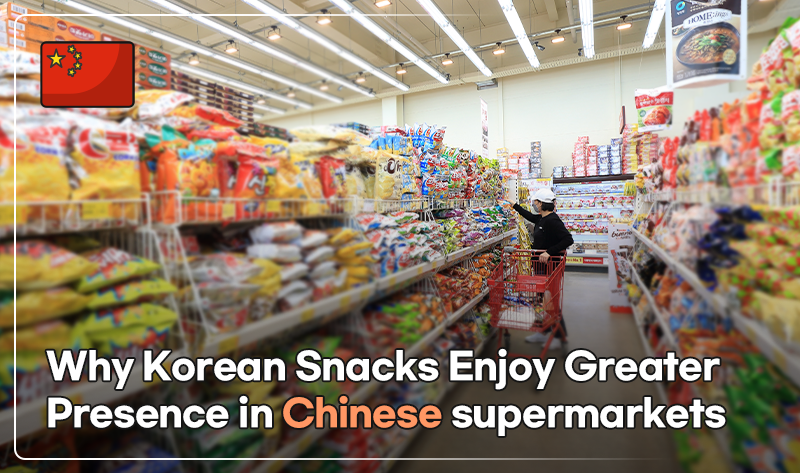
Why Korean Snacks Enjoy Greater Presence in Chinese supermarkets
Recently, in Korea, China's traditional candied fruit snack called Tanghulu has gained significant popularity, while in China, the consumption of Korean snacks is on the rise. Since around 2010, Korean snacks have become more well-known among Chinese consumers, riding the Hallyu trend, resulting in increased sales. According to KOTRA (Korea Trade-Investment Promotion Agency), the variety of Korean snacks available in the Chinese market has significantly expanded in recent years, adding another layer of growth.
The reasons behind the increased consumption of Korean snacks include their competitive pricing compared to other imported snacks and their excellent taste. Additionally, growth in the overall snack market in China has contributed to the increase in the import volume of Korean snacks as well. As of the first half of 2023, China's imports of snack products exceeded $280 million, with imports from Korea accounting for $44 million, or 15% of the total import value. China's demand for discovering new Korean snack products that have not yet been imported into China remains high. If the current trend continues, we can expect to see a more diverse range of new Korean snack products entering the Chinese market in the future.
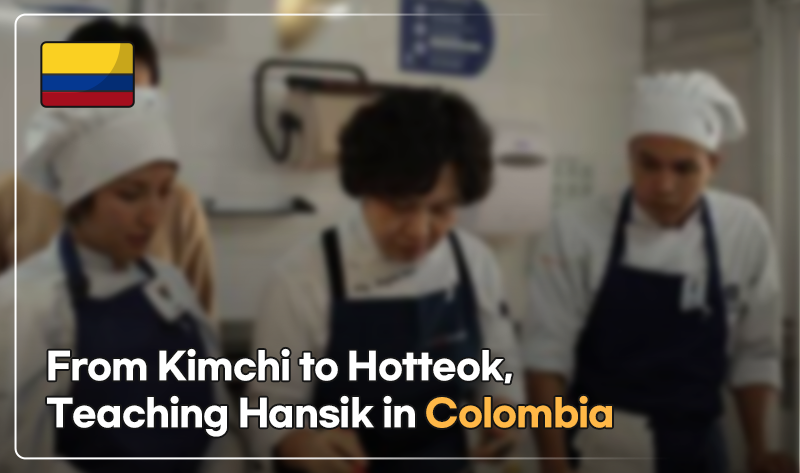
From Kimchi to Hotteok, Teaching Hansik in Colombia
In Colombia, a country known for its geographical, cultural, and natural diversity, many Korean cuisine education programs are being conducted in collaboration with Hansik experts. In July, 12 students from the undergraduate Gastronomy program at Universidad de La Sabana in Colombia had the opportunity to learn from Jong-ran Baek, a Korean cuisine expert dispatched from Korea, during a two-week program. The education covered a wide range of practical and theoretical lessons, including theory classes and hands-on cooking lessons on dishes like Gimbap, Tteokbokki, Hotteok (syrup-filled pancake), Dakgangjeong (deep fried and braised chicken), and Kimchi-making. In August, they showcased 24 different Korean dishes to over 50 participants, including students and school officials, receiving high praise.
The "Hansik Instructor Overseas Dispatch Program" operated by the Ministry of Agriculture, Food and Rural Affairs and the Korean Food Promotion Institute not only provides education on Hansik but also offers cultural experiences to local chefs and future culinary professionals in countries with a keen interest in Korean culture. As similar Hansik education programs are planned for major countries in Central and South America, including Brazil, we look forward to seeing the love for Korean food grow even stronger in this land of passion.
International Food Festival Promoting the Branding of Hansik
On October 26th, at Samcheonggak Ilhwadang, discussions and exchanges about Korean cuisine are scheduled to take place. The "Hansik Conference 2023," with the theme "Adventurous Table: Exploring the Depth of Taste," aims to promote the value of Hansik, seek branding through upscale approaches, and bring together global F&B experts, celebrity chefs, media professionals, and more. This event is designed to facilitate the dissemination of Korean Hansik, strengthen global networking, enhance the status of Hansik following its inclusion in the Michelin Guide, and create an environment to lead global food trends.
While Korean cuisine currently enjoys immense popularity at its height, refinement in its branding and industrialization strategies is essential. As efforts continue domestically to elevate Korean cuisine into a sophisticated brand that can enhance the nation's prestige, we can expect the taste and style of Hansik to continue to deepen and fascinate the world.
References
The Korean Food Promotion Institute Press Release, KOTRA Overseas Market News
AsiaToday <Spreading 'K-farming' to developing countries..."Raising farm incomes to banish poverty">
Newsis <"Solving Africa's rice food shortage"...government launches K-Rice Belt TF>
Hankyoreh <America opens its eyes to the taste of Gimbap..."Nationwide out of stock, not available until November">
The Korea Times <K-Restaurant swallows Singapore [Jonghyun Park's ASEAN Corner]>