


한식에 대한 다채로운 이야기를 전하는 온라인 매거진
Black Grain, A Nutrient-Rich Black Food
Editor's Letter
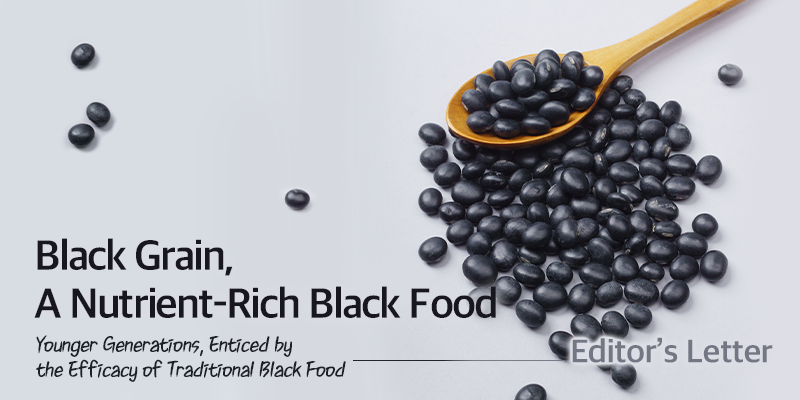
Black food is gaining popularity in the Newtro (New + Retro) craze, where traditional things are interpreted as fresh.
The New Retro trend, which interprets what's 'old' as being 'fresh,' and the recent Halmenial (Grandma+Millenial) craze, in which the younger generations enjoy the tastes and flavors that grandmothers' tend to prefer, are stirring up the retail industry. Not only did these trends lead the efforts to reinterpret traditional foods to suit modern sensibilities, but the food products associated with the trend became a bridge that is connecting generations. At the heart of this trend are black foods, especially dark grains.
It's a misconception to think that something healthy lacks in flavor. Black foods, not overwhelmingly sweet but rich in a hearty and nutty flavor, have captured the palates of people of all ages. From meal replacements to beverages, ice creams, and baked goods, let's explore the appeal of these black grains that are driving a healthy retro trend for everyone.
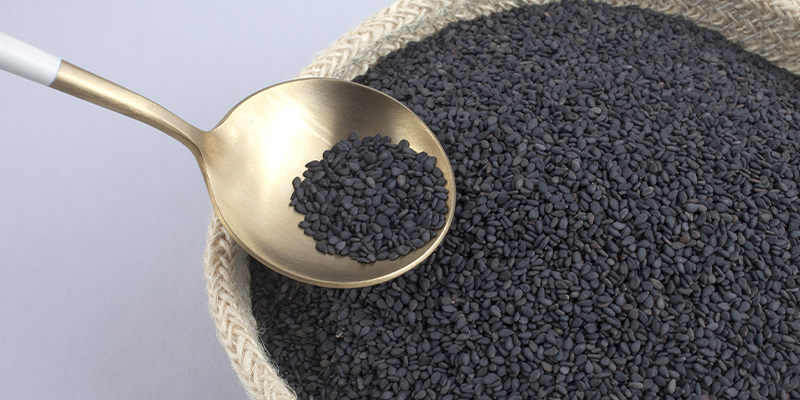
Prestigious Black: A color of Style and Taste
In the past, black colored foods were not preferred as they were thought to not stimulate the appetite as much as colorful and vivid colored foods. However, this perception towards black foods changed with the discovery of anthocyanin and its effects.
Black food, or foods that naturally display a black hue such as black beans, black sesame seeds, and black rice, contains a soluble pigment called anthocyanin. Anthocyanins are known for their excellent antioxidant properties, promoting anti-aging effects, and effectively neutralizing reactive oxygen that can cause diseases. Knowing that these hearty black grains provide a satisfying fullness and contribute to overall health is truly reassuring.
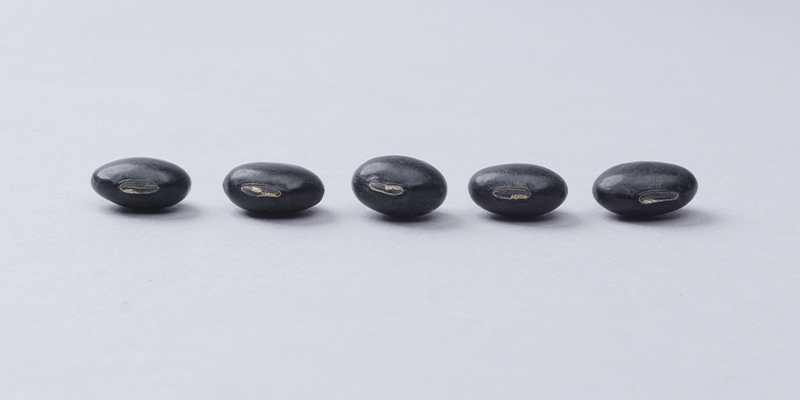
The Keeper's Secret Recipe: Black beans, the Leader of Black Grains
When it comes to black food, there are many options, but black beans can be considered the leading player. One of the reasons why black beans are so popular today is their effectiveness in preventing hair loss. The black skin of black beans contains anthocyanins in amounts that are four times more abundant than regular beans and are one of its three major nutrients, along with protein. This component is the secret to reducing the production of free radicals that cause hair loss and aging. Additionally, black beans are rich in essential nutrients for the scalp and hair, such as iron, zinc, and biotin.
There are different types of black beans: Heuktae, Soritae, and Seomoktae. Heuktae are the largest and thickest among black soybeans and are mainly added rice or for making Kongjanban (seasoned beans). Seoritae, named for being harvested after the first frost in October, have a black exterior but a blue interior, which is why they are also called "Sokcheong (inside blue)." Seomoktae is smaller and shinier than Heuktae or Seoritae, resembling the eyes of a mouse due to its small size. It is used as a medicinal herb in traditional Korean medicine so it is also called "yakkong", or medicine bean.
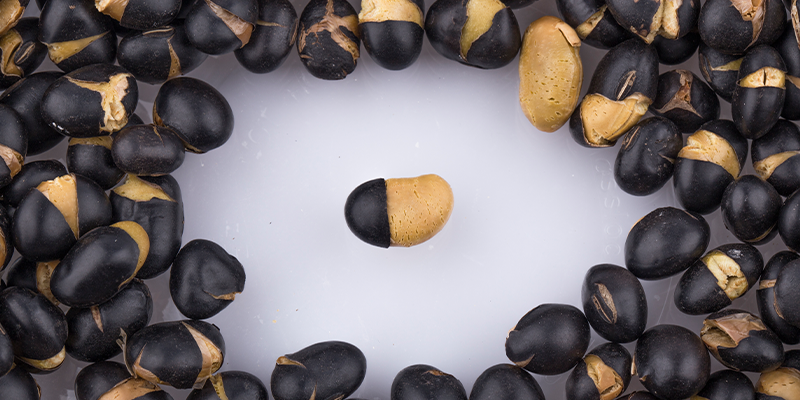
Black beans are also a staple food for those looking to lose abdominal fat. This is because anthocyanins, when interacting with vitamins and fiber, prevent the accumulation of abdominal fat. According to data released by the Korean Food Research Institute, adult women who consume a lot of black foods have a 26% lower risk of abdominal obesity compared to those who don't, and the risk of abdominal obesity decreases by 29% for adult women who consume a lot of black beans specifically. With its rich nutrients, black beans are indeed a secret weapon for those managing their health.
Useful Information about Black Grains
When it comes to black foods, the trio: black beans, black sesame, which is also called Heugimja, and Heukmi (black rice), are frequently mentioned. In particular, black rice is a hidden powerhouse in the superfood realm, containing four times more anthocyanins than black beans. The enduring popularity of these nutritious black grains can be attributed to the health benefits that increase with each bite you take.
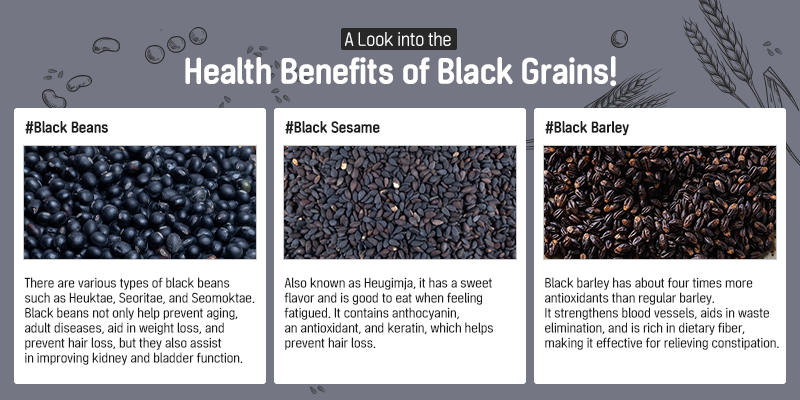
Heugimja, which has gained popularity among young generations, especially on dessert menus, is characterized by its abundant amounts of keratin and lecithin. Keratin promotes hair growth and regeneration, while lecithin adds shine to the hair and is good for keeping hair healthy. Dongui Bogam, a comprehensive Korean medical book that synthesizes Eastern medicine, describes heugimja as an ingredient that "prolongs life and makes one look young." As heugimja captures both taste and health, nothing can stop individuals from following and enjoying this fantastic black food.
Another emerging powerhouse in the black food trend is black barley. Black barley contains four times more anthocyanin than regular barley, making it excellent for strengthening blood vessels and promoting waste elimination. It contains a substantial amount of beta-glucan, often referred to as the "cleaner of blood vessels," which helps lower cholesterol levels and prevent and alleviate cardiovascular diseases.

Heugimja Captivates Younger Generations with its Nostalgic Charm
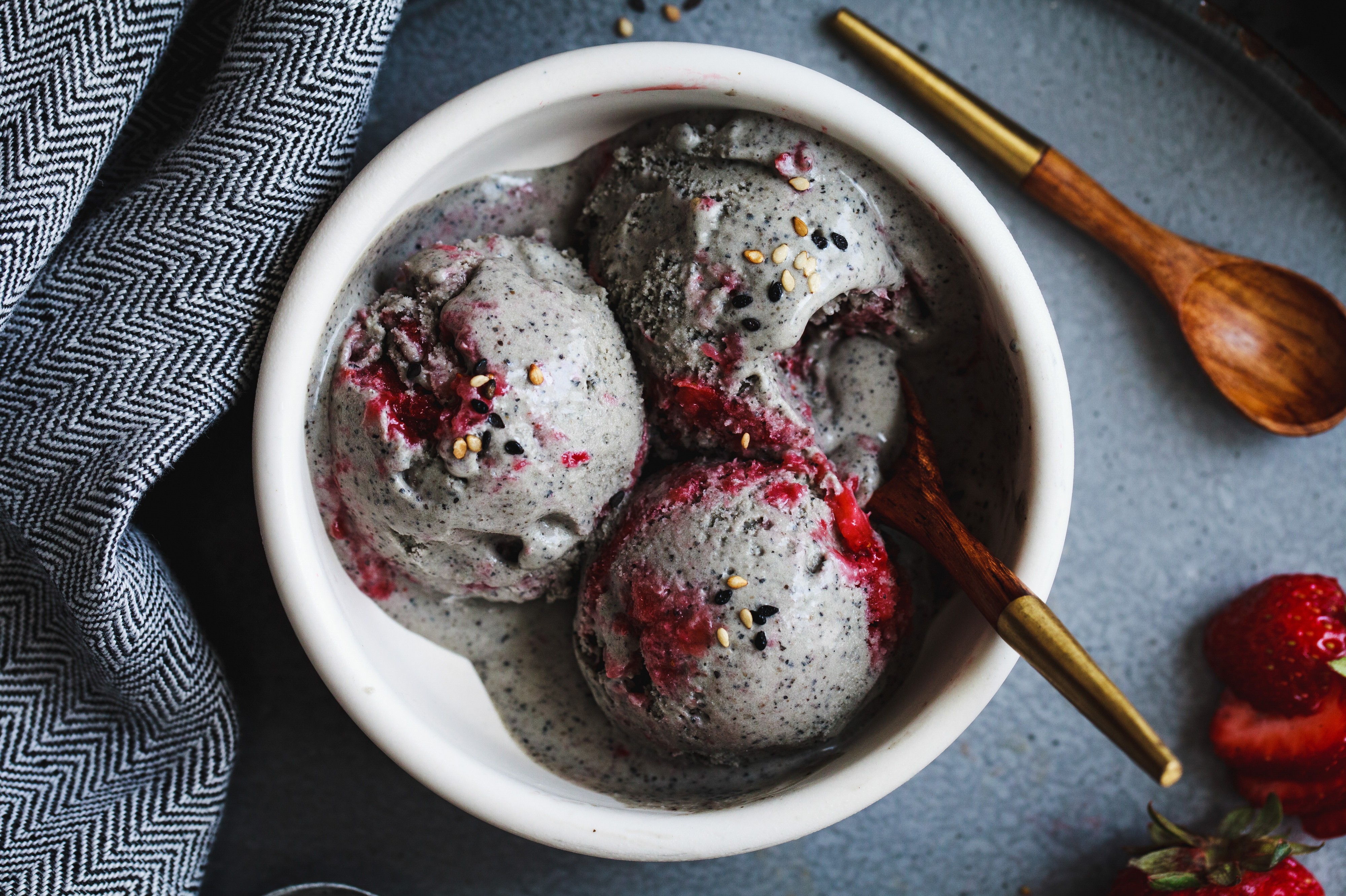
With the rise of young consumers who appreciate the flavors favored by the older, so-called 'grandma' generation, the popularity of black sesame, also known as 'heugimja' cannot go unnoticed. Originally used mainly as an ingredient in traditional Korean rice cakes and porridge, heugimja has made its way into snacks such as cookies, beverages, ice creams, and cakes, capturing the snack market.
From the "Chamgireum Affogato," where heugimja powder and sesame oil meet with vanilla ice cream, to haegimja bingsoo (shaved ice), dakgangjeong (deep-fried and braised chicken) coated with heugimja powder, madeleine with rich heugimja ganache, heugimja makgeolli (Korean rice wine), and heugimja gelato, the unique combinations of desserts enhanced with heugimja are boundless. Of course, heugimja's transformation is not limited to desserts. Heugimja-infused Samgyetang (ginseng chicken soup) is also a special and nourishing dish.

While the chilly wind and fluctuating temperature are typical characteristics of the transitional season, they are also signals telling us that that we need to take extra care of our health. This fall, make sure to take delight in the nostalgia of traditional black grains that will bring you good health and tasty pleasure. (Sources: Naver Knowledge Encyclopedia, Korea Policy Briefing, Health Chosun, MK Health, and other media reports)"
References Naver Knowledge Encyclopedia, Korea Policy Briefing, Health Chosun, MK Health, and other media reports