


한식에 대한 다채로운 이야기를 전하는 온라인 매거진
Like a Fruit, Like a Vegetable
Editor's Letter
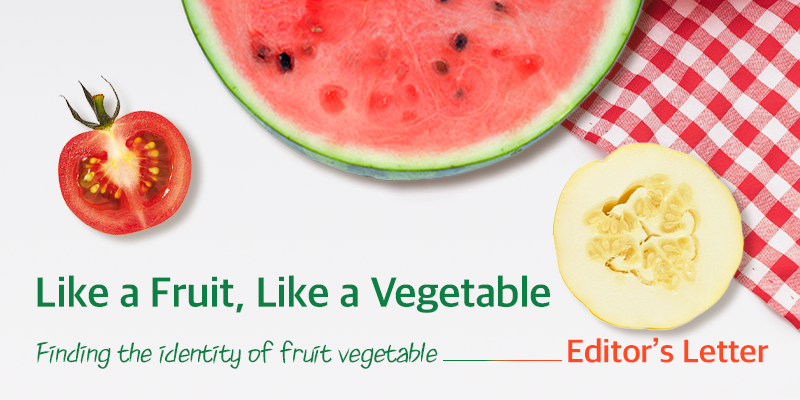
A mother calls out, "kids, let's have some fruit." Kids rush to the table to find a bowl of bright red tomatoes and white Oriental melons. Everyone enjoys them without asking any questions. However, if there had been a bowl of cucumbers or eggplant on the table instead of tomatoes and Oriental melons, the kids would have been confused and asked where the fruits were, even though all of these are called 'fruit vegetables'.
In general, a fruit is something that grows on trees and a vegetable in the fields. However, we seem to have agreed to call anything sweet a fruit. Fruit vegetables have the characteristics of both fruits and vegies and offer rich stories as well.
In 1893, tomatoes went to court
The question of whether tomatoes are fruits or vegetables was a hot topic even 130 years ago. The issue was brought to a court in the U.S. in 1893. Tariffs on imported vegetables were imposed and an importer disputed the tax on the grounds that tomatoes were not vegetables but fruits. What was the court's ruling? It decided that they were vegetables because they were usually consumed as a main course, not as a dessert.

If the same rationale were to apply, tomatoes would be classified as fruits in Korea, because we often eat them as a dessert. If a menu of fresh fruit juices has 'tomato juice' on it, no one would find it odd. Whatever the classification, the fact remains that it is one of the 10 super foods widely recognized for perfect nutrition.
Fruit vegetables become Kimchi
Tomatoes are originally native to Latin America, and it is unclear when they were first introduced to Korea. But they are presumed to have come to Korea during the Seonjo or Gwanghaegun period of Joseon dynasty, considering that they first appear in a Korean encyclopedia titled <Jibong Yuseol> published in 1614.
The most common ways to enjoy tomatoes do not require any seasoning or cooking: simply wash them and eat them as they are, or add a spoonful of sugar on slices of tomatoes, put them in a fridge and enjoy them cold. Last year, a TV show called <Backpacker> featured tomatoes as a main ingredient for Kimchi, and this recipe gained quite broad popularity. Koreans are often said to make Kimchi with almost any food ingredients and tomato Kimchi was no exception. For some time, it was in fashion for blogs to post recipes for tomato Geotjeori, or fresh Kimchi. This trend shows how Kimchi is unique to Korean culture and specifically, a foundation to Korean food culture.
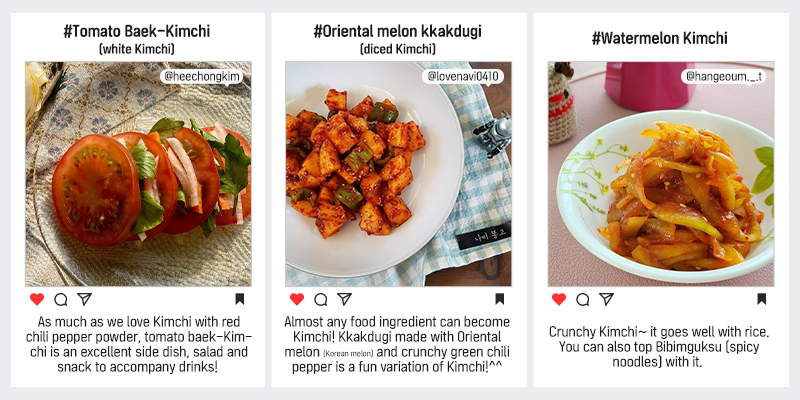
Summer is an especially good season to enjoy fruit Kimchi. As summer approaches, social media platforms abound with recipes for Kimchi using various fruits. Tomato kimchi is made in a similar way to cucumber Kimchi: cut an X into a tomato and put chives and onions into it. Or it can also be made by mixing tomatoes with Kimchi fillings for kids who cannot eat spicy food. While tomato Kimchi is not yet a common kind of Kimchi, tomatoes as an ingredient of Kimchi are closer to a vegetable than fruit, as Kimchi's main ingredients are vegetables. Other fruit vegetables such as Korean melon or watermelon can be also used to make Kimchi or pickled vegetables.
Watermelon and Oriental melons in Korean history
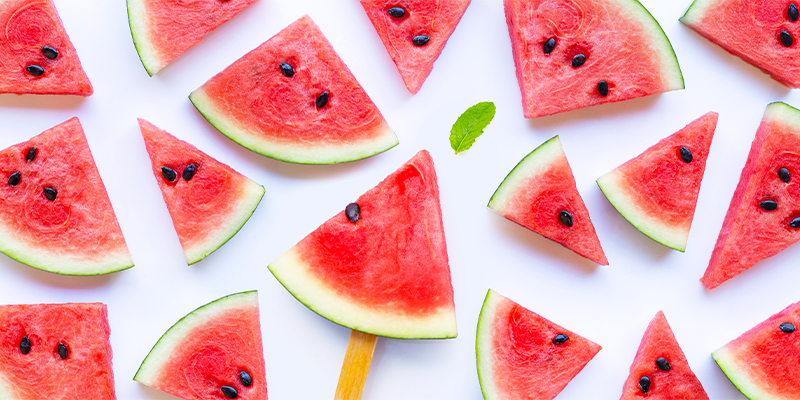
Originally from South Africa, watermelon was first introduced to Korea via China during the Koryo Dynasty. Initially, it was a rare and expensive fruit, but it is said to have become popular after the Japanese colonial era. In the mid-19th century, Kyu-kyoung Lee, a scholar of the Realist School of Confucianism, wrote in his book, <Oju Yunmun Jangjeon Sango> that watermelon rind Kimchi makes a great side dish, like radish Kimchi. It shows how our ancestors were wise to use watermelon rinds as ingredients for a side dish. Since seedless watermelons were created, different varieties of watermelons have been developed, such as yellow watermelon, apple watermelon and mini-watermelon (or Bok Watermelon).
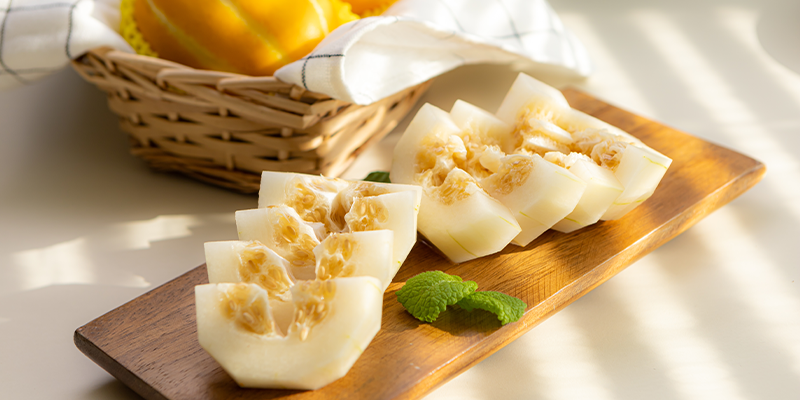
Oriental melons are also one of the most representative fruit vegetables in summer along with watermelons. Originally native to India, oriental melons first arrived in Korea from the northern part of China during the Three Kingdoms Era. They are called 'Cham-oe' in Korean – 'Cham' means true or best, 'Oe' cucumbers. <Donguibogam>(Principles and Practices of Eastern Medicine) describes it as effective in helping relieve coughs, sputum, pneumonia and jaundice and increase the flow of urine.
Both watermelon and Oriental melon are more than 90% water and perfect to reduce fatigue and quench thirst. This summer, try punch, pickles and Kimchi made with them to beat the heat instead of beverages or ice cream.
One food representing the characteristics of both fruits and vegies
Fruit vegetables are versatile, cleansing your palate after a meal like a fruit and serving as a side dish mixed with chili powder and garlic such as Kimchi or pickles like a vegetable, hence the name, fruit vegetables.
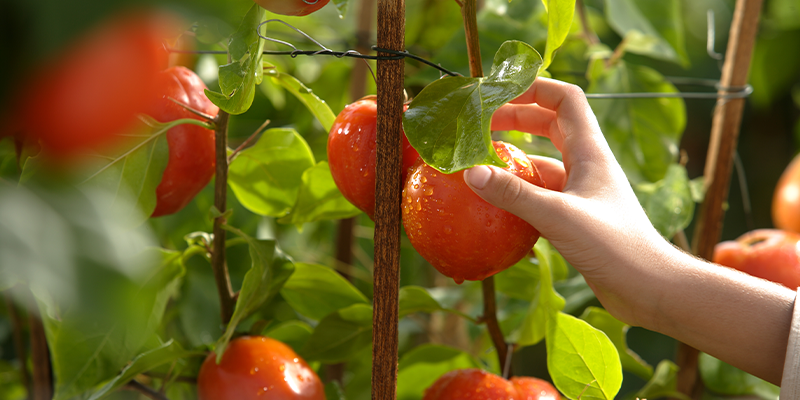
They grow well in hot weather and many of them are in season during the summer. Enjoy this summer with the fresh and healthy fruit vegetables Korean farmers grow in our land.
Reference "Farming Skill Guide List" by the Rural Development Administration, Encyclopedia of Korean Folk Culture, Encyclopedia of Korean Culture