


한식에 대한 다채로운 이야기를 전하는 온라인 매거진
Vol 62. YANGNYEOM
Three Jangajjis Boasting of Colorful Flavors
The Tasteful Table
Jangajji (pickled dish), which was also called “janggwa” from the ancient times, was a thankful side dish that the common people could store and eat for a long time when food storage methods were not as developed as today. Jangajji is still a regular side dish on our table albeit being not as much as before. This article will explore three types of jangajji dishes that boast of colorful flavors.
Article Cha Yeji (The Editorial Team)
Wonderful Crunchiness
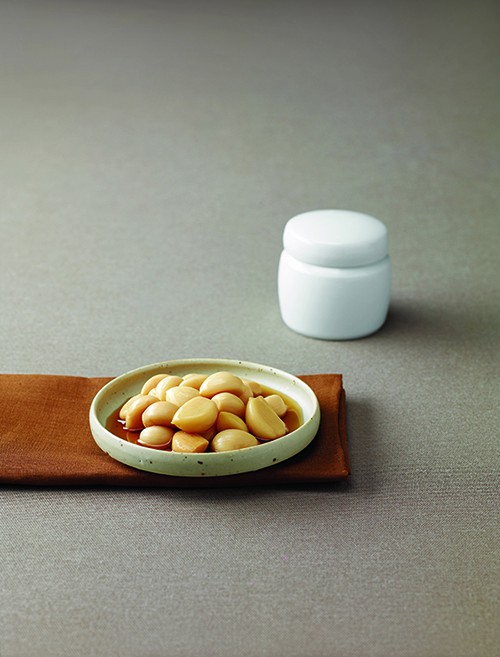
Maneuljangajji (Pickled Garlic)
Garlic, a vegetable that Koreans especially like, is cultivated abundantly in Korea, China, and Japan. Garlic is known as a health food because of its excellent efficacy. The most widely known efficacy among them is its anti-cancer effect. Among the various sulfur compounds in garlic, methylcysteine has an excellent effect on suppressing liver cancer and colon cancer. It is also known to have excellent antioxidant activity. Alliinase in garlic is made into allicin as it flows out when garlic is crushed, and this allicin is the ingredient that gives garlic its unique spicy flavor. Allicin has an excellent sterilization effect, and can remove food poisoning bacteria. Moreover, it has strong germicidal power, so mold does not grow well. The reason why minced garlic can be stored for a long time is also due to allicin.
Garlic, which is good for the body and tastes good, is widely used in Korean cuisine to the extent that it is used in most Korean dishes. However, it can irritate the stomach due to its spicy and savory flavors, but when it is pickled, it is good as it reduces the astringent taste. It is common to add soy sauce, vinegar, and sugar to pickled garlic. These ingredients take away the garlic’s spiciness and add salty, savory, and tart flavors.
Pickled garlic is great as a side dish with rice, and the pickled garlic juice can be used as a marinade for dipping meat or jeon (Korean pancake). The garlic-flavored pickle juice removes the oiliness, and enhances food flavors.
Taking in the Aroma Fully
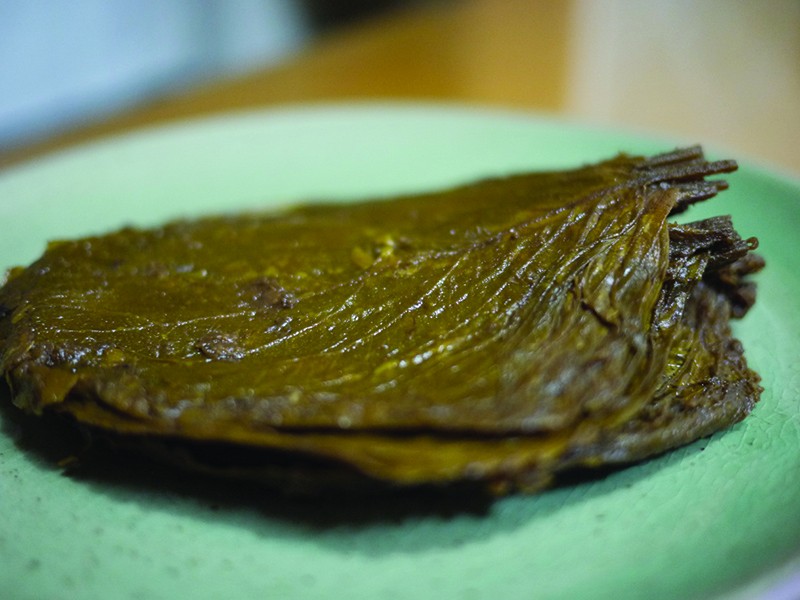
Kkaennipjangajji (Pickled Perilla Leaves)
The presence of nutritious and fragrant perilla leaves stands out in various Korean dishes. It is made in various side dishes, and eaten raw as ssam (wrap), steamed, or fried. Perilla leaves are grown in Korea, China, and India, but it is consumed exclusively in Korea. It is also characterized as being available at any season as it is easy to grow all year round. Thus, foreigners show great interest in them as they are unfamiliar with the unique scent of perilla leaves.
Perilla leaves are divided into sesame leaves and perilla leaves, and what we often eat is perilla leaves. Sesame leaves are thick and rough, so they are not eaten well and are used as medicinal herbs in oriental medicine. Perilla leaves are very high in iron. It contains more than twice as much iron as spinach, which is generally known to be high in iron, so it prevents anemia and is good for the development of growing children. It also contains luteolin, which is known to relieve inflammation in the body, and have anti-allergic effects.
When perilla leaves and soy sauce meet, you can make ganjang kkaennip jangajji (perilla leaves pickled in soy sauce). Coat the soy sauce and various seasonings between leaves, and ferment it to make salty and fragrant jangajji. You can also use doenjang (soy bean paste). Doenjang kkaennip jangajji was a dish that was mainly consumed in Chungbuk, Jeonnam, and Jeju. One is putting perilla leaves and soybean paste alternatively layer by layer in a crock for fermentation, and another one is aging the perilla leaves fermented in a brine in soybean paste. In the Chungbuk region, the perilla leaves aged in soybean paste is taken out from the container, the soybean paste is removed, the seasoning is applied between the leaves, and the leaves are steamed.
A Festival of Flavors Great with Hoe
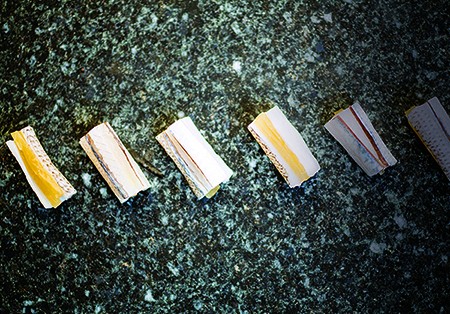
Chamoejangajji (Pickled Korean Melon)
Chamoe (Korean melon), a fruit commonly consumed in the summer, is known to have been cultivated in Korea since the Three Kingdoms period. Korean melon is eaten as a fruit itself, but also made as a side dish, such as pickles.
There are Euncheon chamoe with yellow color and lines, Hwangjinjudan chamoe that are smooth without lines, and Seonghwan chamoe that is native to Seonghwan-eup, Chungcheongnam-do. Seonghwan chamoe with green color is also called frog chamoe because it has spots like the pattern of a frog. In terms of production, Seongju chamoe from Seongju-gun, Gyeongsangbuk-do accounts for 70 to 80% of the national production. In Seongju, there is plenty of moist land due to the Nakdonggang River, and this environment is favorable for chamoe cultivation. The weather being warm in the winter and less damage from rain in the summer also contributes to its cultivation. Watermelon was one of the representative fruits grown in Seongju along with chamoes, but now only chamoes are produced.
Korean melon is high in vitamin C and potassium. It also has a diuretic effect, and helps maintain health. Dried chamoe stalks are also used as an emetic drug. An emetic drug refers to a medicine that induces vomiting when there is poison or harmful substances in the stomach, and causes it to be expelled.
Pickled Korean melon, which is made by soaking chamoe, a representative summer fruit, in brine, and then in a marinated and boiled soy sauce offers a festival of flavors, as the sweet chamoe flesh is saturated with soy sauce. Chamoejangajji is one of the representative jangajji dishes of the Chungcheong region. In Gochang, Jeollabuk-do, a unique jangajji is made by adding gochujang to chamoe. When you pair fresh and tender hakkkongchihoe (sliced raw Japanese halfbeak) with chamoejangajji, you will have a delicacy.