


한식에 대한 다채로운 이야기를 전하는 온라인 매거진
Vol 62. YANGNYEOM
Not a Lead, but an Essential Supporting Character
Facts about HANSIK
No matter how excellent the ingredients are, if there is not enough yangnyeom (seasoning), the end-result will not be sufficient. The same goes for the utensils and bowls that make the yangnyeom. Even if they are not fancy bowls or special cooking utensils, they are indispensable supporting characters in the kitchen. This article will delve into old cooking utensils and bowls that our mothers used to make and put yangnyeom.
Article Lee Hyunjoo (The Editorial Team)
Sources Joseon Local Encyclopedia, The Encyclopedia of Korean Culture
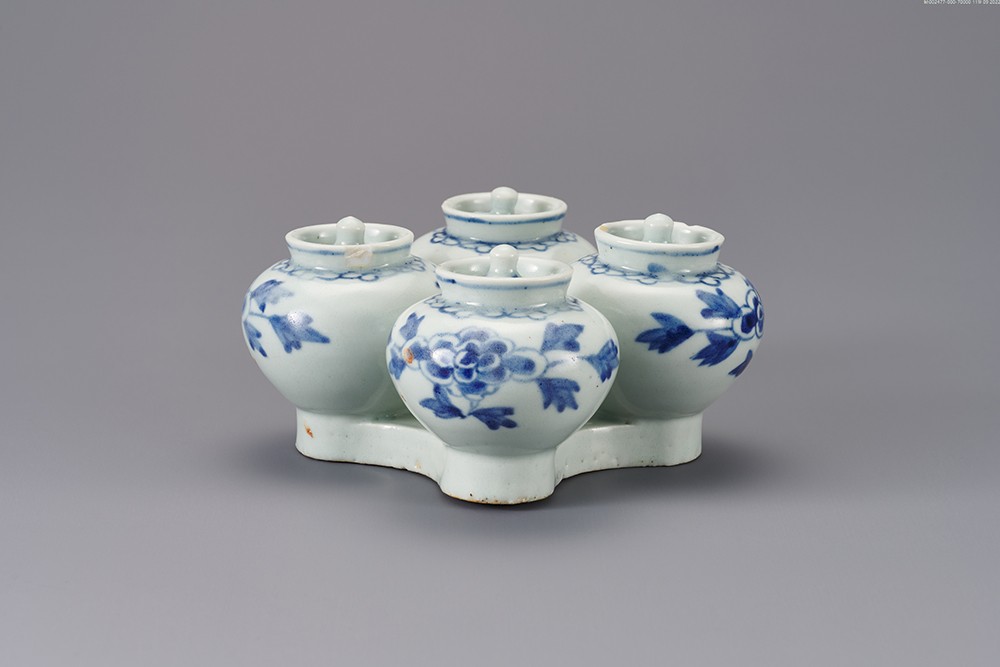
Blue and White Porcelain Peony Design Seasoning Jar Used during the Joseon Dynasty (C) The National Museum of Korea
Q: What tools were used to make the seasoning?
When we say mortar, we think of a big one, but when pounding salt, green onion, garlic, and chili pepper, a small mortar, called a seasoning mortar, was used. A hard birch tree was mainly used to make a mortar and a pestle. There was also a tool called “yeon.” It was originally a tool for grinding medicinal herbs, but the yeon used in cooking was used to grind seasonings such as pepper. In the Jeolla-do region, there was a pottery tool called “hwak,” which was paired with “hwakdok.” The hwakdok is a wide bowl, with concave and convex bumps and grooves on the inside, so it was useful for grinding or crushing seasoning ingredients, such as chili peppers or garlic. It’s similar to the blender that is used in the kitchen nowadays.
Q: Where were seasoning stored in the old days?
There are exceptionally many seasonings that go into our food. Where did our ancestors put so much seasonings? Traditionally, we have used earthenware, pottery, and brassware as tableware. Among them, earthenware was widely used to store seasoning. As it is economical and known as a “breathing” pottery, it was perfect for preserving the food inside for a long time without spoiling it. The paste seasonings, such as doenjang (soybean paste) and gochujang (red chili paste), were stored in earthenware jars, and liquid seasonings, such as vinegar and oil, were stored in earthenware bottles. An oil or vinegar bottle, which had a jar-shaped body with a spout, was used by hanging it on one side of the kitchen by tying it with a string made of hemp or thread around the neck of the bottle. Moreover, powdered seasoning was put in an earthenware jar. The spice jar was shaped like a small jar with a convex belly and a short neck and shoulders. There are also many containers attached together. It had a handle so that it could be held at once, and each had a lid, so it was suitable for use even today. In the case of seasoning jars, they were also made of white porcelain or blue and white porcelain, and they were decorated with small flower patterns or the letters “soo” and “bok (fortune)” engraved on them to look stylish. If you visit a museum, you can see seasoning jars, oil bottles, and jongji (small dish) made of brass and pottery.
Q: What kind of bowls were used to serve the seasonings on the table?
As we use it to put salt, soy sauce, and vinegar soy sauce today, “jongji (small dish)” was used in the past. Jongji is made of brass, porcelain, or wood, depending on the type of tableware used on the table. They can usually contain 20 to 30 mL, and are made in the shape of a soup bowl and a small bowl, and sometimes they have lids. The number of jongji served varied, depending on the size of the table. On the 3-cheop (with 3 side dishes) table, there was one bowl of soy sauce, on the 5-cheop (with 5 side dishes) table, two bowls of soy sauce and vinegar, and on the 7-cheop (with 7 side dishes) table, three bowls of soy sauce, vinegar, and gochujang.