


한식에 대한 다채로운 이야기를 전하는 온라인 매거진
Vol 60. The Joy of Grilling
Tteokgalbi, a Universal Favorite Made with Dedication
Captivated by HANSIK
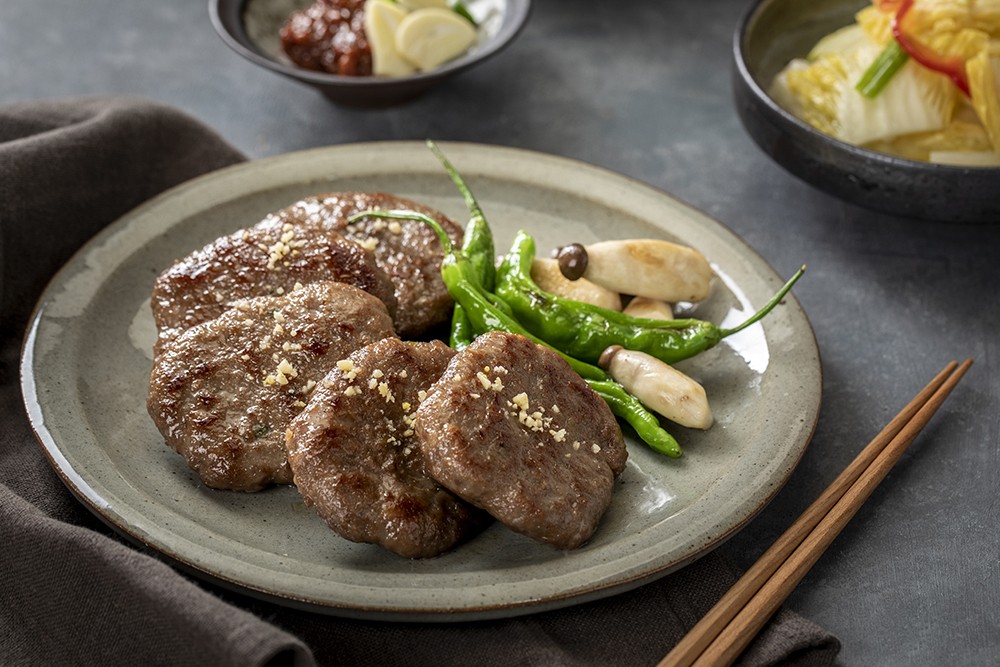
Tteokgalbi (grilled short rib patties), which is best known for its chewiness, varies slightly per region in terms of ingredients and/or style. Now a favorite of all ages wherever you go in Korea, it used to be, in late Joseon, something that only the king could eat. When was this versatile dish invented? Why does its name include both “tteok” and “galbi”?
Article Noh Yunyoung (Editorial Team) Source Encyclopedia of Korean Culture of Basic Necessities (National Folk Museum of Korea)
From royal dish to local food
According to the National Institute of Korean Language’s Standard Korean Language Dictionary, tteokgalbi is a “dish made by mincing rib meat, seasoning it, and grilling it on top of rib bones.” The first and second parts of this definition will sound familiar, but “grilling on top of rib bones” will most likely not. As strange as it sounds today, tteokgalbi did have bones in the past. To understand this, we first need to take a look at the dish’s origin and history.
Tteokgalbi, which requires the meat to be shaped like a rice cake, is a food that is native to three counties of Jeollanam-do: Damyang-gun, Haenam-gun, and Gangjin-gun. Because galbi, by nature, has to be eaten by tearing meat from bones, those who have poor dental health often find it a challenge. Tteokgalbi, on the other hand, is minced very finely, which makes it easy for even small children and seniors to eat. Indeed, it was given the name “tteokgalbi” in the late 1960s due to the fact that the meat’s texture is like that of a rice cake. In the Joseon dynasty, it was called “filial piety galbi (hyogalbi)” or “elderly galbi (nogalbi)” because it was easy for elderly persons to eat.
Some say that tteokgalbi’s predecessor is maekjeok, a seasoned and grilled pork dish that was enjoyed in the Goguryeo kingdom. There are, however, several differences in their recipes. There are several other theories about the origin of tteokgalbi, with the most prominent being that it is derived from the royal cuisine of Joseon. According to this theory, beef was minced, seasoned, and grilled to make it easy for members of the royal household to digest. In Joseon, everyone was categorized by social class. Unlike commoners, who engaged in taxing manual labor, the king and his family rarely walked anywhere. Because their lifestyle was extremely sedentary, it would have been difficult to digest tough meat, leading to the invention of tteokgalbi.
It was in the final years of the Joseon dynasty that tteokgalbi became famous among the masses. Ahn Sunhwan, a royal cook, opened a restaurant in 1909 called “Myeongwolgwan.” In 1911, palace ladies were forced out of the palace (after the Japanese Empire annexed Korea), some of whom began their own restaurants specializing in royal Korean cuisine. In other words, the end of Joseon signaled the beginning of tteokgalbi’s national popularity.
The many attractions of local tteokgalbi
Having spread among the masses, tteokgalbi is today concentrated in three areas of Korea: Gyeonggi-do, Damyang-gun (Jeollanam-do), and Songjeong-dong (Gwangju). Gyeonggi-do tteokgalbi became famous, as previously mentioned, due to the restaurants opened by former palace ladies to make a living. The most popular tteokgalbi is based in Uijeongbu. It is unique for being made with pork instead of beef and shaped like a flat, rectangular piece of rice cake.
Damyang tteokgalbi is said to have taken root in the Joseon dynasty through upper-class officials who were sent there in exile: namely, Song Heegyeong, who was exiled to Damyang-gun in 1404. Like royal tteokgalbi, it is made with only beef, which is diced and shaped into thick, round patties. It can be said to be the most “traditional” version, as it is similar to the dictionary definition (made by attaching meat to the rib bones). Recently, however, boneless Damyang tteokgalbi has become common. The thick patties, which are today shaped in squares or circles, are unique in that, because only rib meat is used, they are very chewy and easy to swallow. Its use of only Korean beef and the meat being processed completely manually means that it is sold at higher prices than the tteokgalbi of other regions. To remedy this pricing issue, pork-based tteokgalbi has been permitted since the late 2000s.
Songjeong tteokgalbi is the most familiar to modern consumers. It is made with equal parts pork and beef, which makes it cost-competitive. It does not use any bones and offers a uniquely chewy texture that blends the fragrances of the pork and beef, seasoning, and charcoal used to grill it. Regarded as one of the “five culinary jewels” of Gwangju, Songjeong tteokgalbi is believed to have been born in the 1950s when it was sold at Songjeong Market by an elderly woman whose name has been lost to us. Songjeong Market has both a beef market and slaughterhouse, which makes it easy to get meat there. The key is to add approximately 20 ingredients (e.g. Korean pear, kelp, honey) to the meat and mix everything together by hand for a long time so that the flavors seep naturally into the meat. Even the grilling is done slowly over a charcoal fire while constantly applying a special sauce.
The ingredients and shape may change over time, but there is one unalterable truth about tteokgalbi: it can be enjoyed regardless of gender, age, or dental health. It is this ability to accommodate a broad range of consumers that makes its flavors and fragrances even more worthwhile.