

한식에 대한 다채로운 이야기를 전하는 온라인 매거진
Vol 58. Fermentation and Jeotgal
Harmony of Grains and Seafood: The Savory, Sweet, and Sour Goodness of Fermentation
HANSIK Master
My first experience with gajamisikhae was incredible. I could not stop being amazed by the sweet, tangy, spicy, and savory flavor, a texture that was somehow both chewy and crunchy, and, of course, the coolness. The indescribably arresting flavor hovered somewhere between jeotgal and fermented kimchi. I traveled to the city of Sokcho in Gangwon-do to learn what I could about the secrets of this fascinating dish.
Article Seo Dongchul (Editorial Team) Photos Kim Seongjae (SSAUNA Studio)
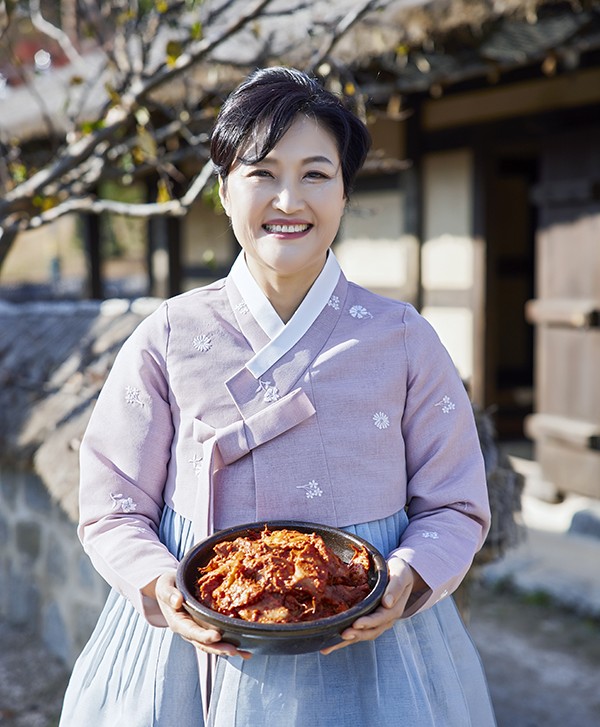
Korea Seafood Grand Master No. 8: Lee Geumseon (Gajamisikhae)
Q. I understand that you learned how to make gajamisikhae from your mother-in-law, who came to South Korea during the Korean War, upon moving to Sokcho after getting married. Were you interested in cooking—jeotgal, sikhae, and the like—before marriage?
My mother, who was also from North Korea, settled in Yangyang-gun after the war. I was born in a seaside village in Ganghyeon-myeon: growing up, I saw many types of seafood and how they were used to make diverse foods. Pollack is caught in only small quantities today, but it was a very common and plentiful fish when I was a girl. Every winter, my mother went to the port to help trim the pollack brought in by the fishing boats. She would bring home pollack intestines and gills as payment, which she turned into jeotgal. If she was given some flesh, she mixed it into kimchi to make something like a semi-sikhae. We also ate a lot of ojingeojeot (salted squid).
I still remember very clearly my mother seated, with her back to me, trimming fish at the pier to provide for her children. Now, my children watch me trim fish. I like to believe that she felt the same satisfaction I feel now.
Q. Your mother-in-law must have told you a great deal about food from her hometown. Do you remember the first time you tasted her gajamisikhae?
My mother-in-law was an infant during the Korean War. She said that she came to Sokcho from a coastal town in Jeongpyeong-gun, Hamgyeongnam-do, tied to her mother’s back in a blanket. Therefore, she didn’t have memories of her home village but often said that she missed it very much and wished to return. She made jeotgal and gajamisikhae, a dish that is native to the Hamgyeong provinces, whenever she missed where she was born. I think sikhae was both a vehicle of and cure for her nostalgia. I am the third generation to make this brand of gajamisikhae, after my mother-in-law and her mother.
I didn’t know much about gajamisikhae, despite having grown up on myeongtae (pollack) sikhae and lots of jeotgal. I’d only tried it a few times. I remember the first time I ate my mother-in-law’s gajamisikhae. I couldn’t believe how tangy and cool it was. I still try every day to recreate that flavor, which was similar to that of fermented kimchi.
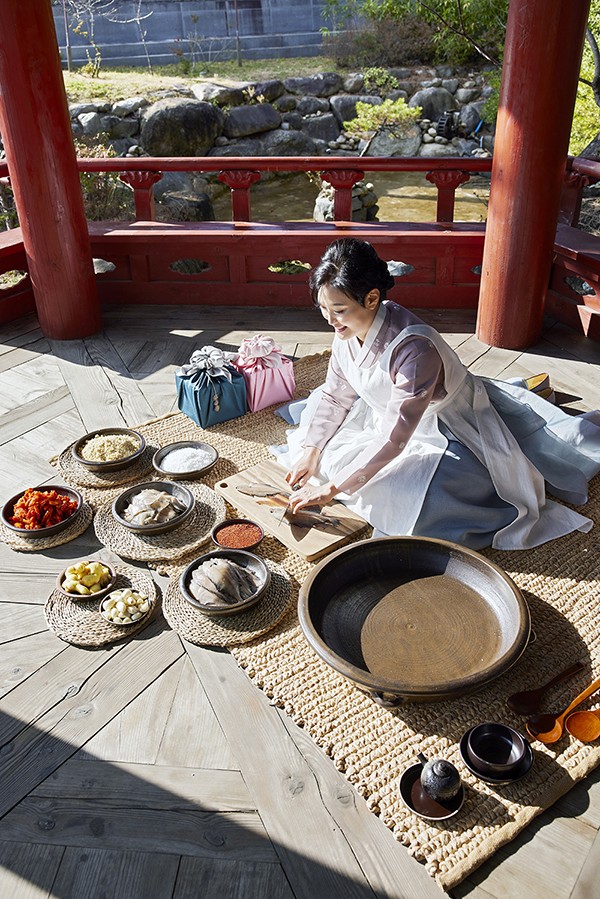
Q. Is there anything memorable from when you learned how to make gajamisikhae from your mother-in-law? What did she emphasize about the cooking process?
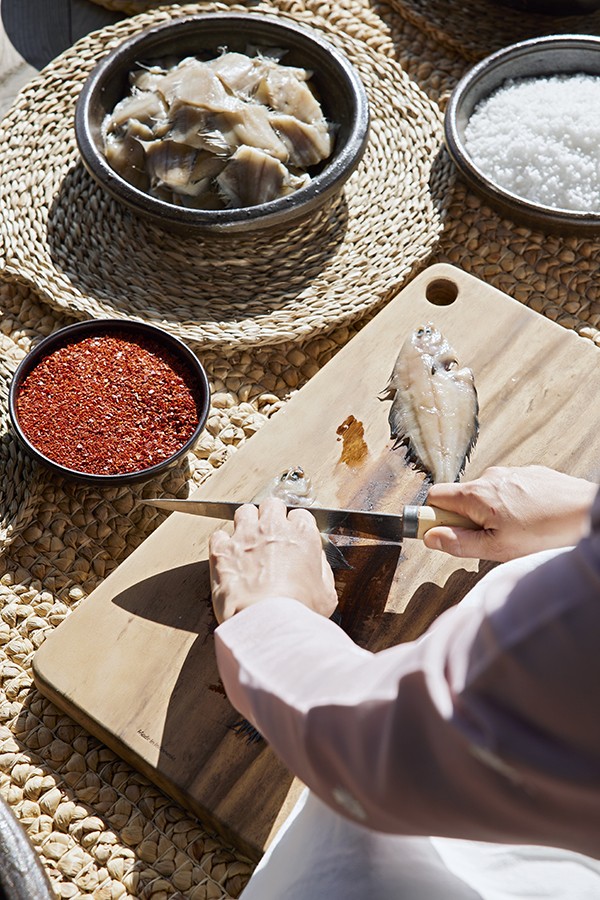
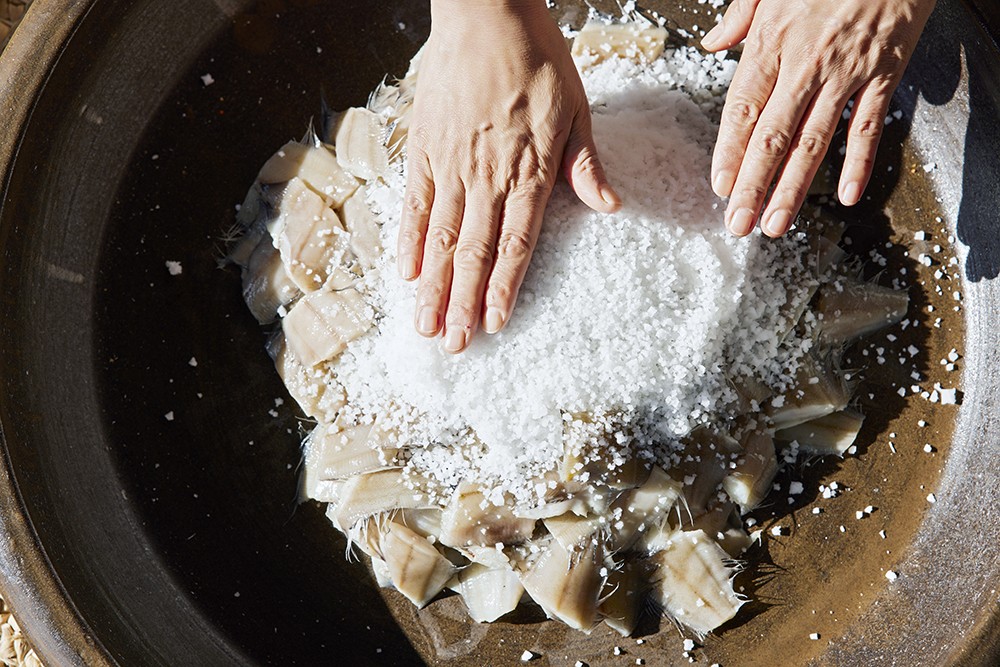
I helped my mother make jeotgal only a few times. I think it’s because she didn’t want to burden us with manual labor. I struggled quite a bit at first due to my inexperience. Trimming was my first obstacle. Freshly-caught gajami (plaice) is covered in mucus. It was so slippery that I could barely hold the fish, let alone cut it with a knife. I realized later that you are supposed to trim after an initial salting. Did you know that the mucus disappears, like magic, after sprinkling salt over the fish? After trimming, you have to re-salt and then remove the salt from it. To check whether the salinity is just right, you have to put a piece of raw plaice in your mouth. That, too, was not easy.
My mother-in-law made gajamisikhae by hand at home, which she shared with her neighbors or sold at the local market. She would make 400 to 500 kilograms of it at a time. At first, I was very motivated. When the arduous, difficult work began catching up with me, I started to slack off. To this day, I don't know how my mother-in-law found out. But each time she caught me slacking off, she made it clear that it was unacceptable. There were also times that I worked hard, but failed to obtain the desired flavor. There were many days I wished I could simply run away somewhere. Looking back now, I realize that it is because of the experience that I accumulated over those years that I was given the title “Korean Grand Master.”
Q. What made you decide to make gajamisikhae as a career? What was it that drove/empowered you to found Sunho Food and be designated as a Korean Grand Master?
My mother-in-law’s cooking was famous in her village. Word of her gajamisikhae spread, and she started to make more and more. That's how she ended up opening a small business, which she passed down to me after stepping down due to old age. I had a strong sense of mission. I wanted to bring about change whenever I saw young people confusing sikhae with the beverage of the same name, people regarding jeotgal as an “old person's food,” or the notion that gajamisikhae smells too fishy.
I believe gajamisikhae is a memory or symbol of flavors that our ancestors enjoyed for generations. The recipe has been passed down, relatively intact, in places such as northern Gangwon-do, to which people from North Korea escaped and where they settled down after the Korean War. I am concerned by the gradual disappearance or modernization of traditional methods and that traditional culinary culture is increasingly losing its place. I believe it is my mission to continue the tradition of gajamisikhae. The flavors of traditional foods that remind people of their home contain a lot of cultural value.
Q. I heard your method for making gajamisikhae is very similar to that mentioned in two well-known cookbooks from the Joseon dynasty: Sangayorok and Jubangmun.
Sangayorok is the first Korean cookbook. It was written by Jeon Sunui, a royal physician, in early Joseon, and describes how plaice should be sliced into thin pieces, sprinkled with salt, and left alone, after which the salt should be removed and a heavy object placed on top of it. Until that last step, my method is the same as the Sangayorok recipe. Jubangmun, which was written in late Joseon, includes a description of how to season with millet rice, which is salted and left standing for one day. Ultimately, Sunho Food’s gajamisikhae is made in the same way as it was during the Joseon dynasty, with the exception of salting. I believe the difference has cultural and practical reasons. Today, people are very aware of the need to reduce their salt consumption to stay healthy. In the Joseon dynasty, salt was used more liberally to store foods for as long as possible. For example, the salinity of most jeotgal was over 10. Today, it is usually 4 or 5. The salinity of gajamisikhae is 3 or 4 because it is made with unseasoned millet rice.
Q. Do you have criteria for ingredients that you never compromise on?
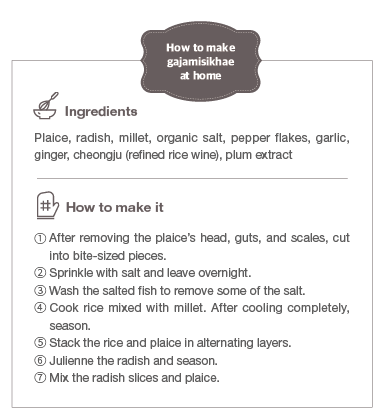
Plaice, radish, millet rice, organic salt, pepper flakes, garlic, ginger, cheongju (refined rice wine), maesil (plum extract)—there is no ingredient that is not important. The most important task is, of course, choosing high-quality plaice. In Korea, it is illegal to catch plaice in May, a measure put into place to protect the fish population. Plaice that is caught after spawning season does not taste very good, however, because they are low in fat. Therefore, we purchase gireum gajami (literally, “oily plaice”) caught between October and April—this is when it fattens—that is at least three years old, or between 13 and 17 centimeters long. We use gireum gajami because its flesh is soft and mild-tasting.
Salt is another key ingredient. You must use organic salt for sikhae. If you use regular (refined) salt, which has been stripped of all impurities and contains only sodium, it is much more difficult to achieve the right salinity as well as sikhae’s characteristic depth of flavor. Organic salt is rich in calcium, magnesium, and other minerals. This facilitates osmotic pressure, which is very effective in removing the plaice’s fishy odor and impurities. It also makes it easy to achieve the right salinity.
Q. I understand that the processes of salting, de-salting, and adding ingredients depending on the time of year are very important in making gajamisikhae.
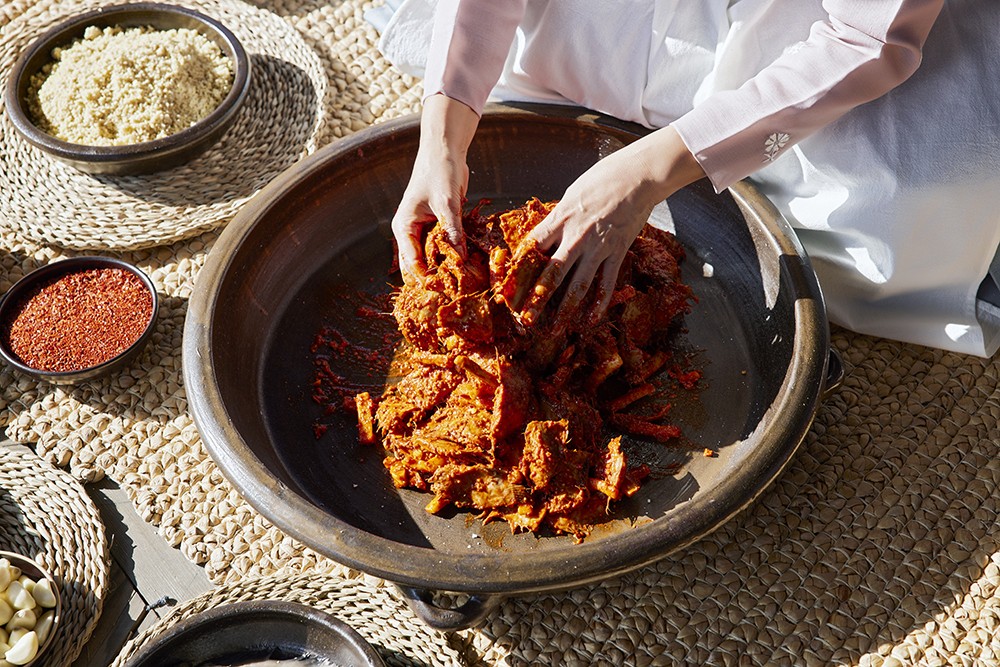
Applying salt directly to the fish regulates the moisture levels within the fish, via osmotic pressure. This allows the food to be stored for longer periods of time as well as suppressing the activity of microorganisms. Salted plaice is then washed with water. If too much salt is rinsed off at this stage, the fish will spoil and/or not ferment properly. Therefore, knowing the extent to which rinsing should be done is crucial to making gajamisikhae. Ingredient combinations vary depending on the speed at which the respective vegetables and seafood ferment. In summer, radish ferments quickly, but not plaice. This is why we ferment the radish and plaice separately before mixing them together—a method that does not need to be used in the winter.
Q. Low-temperature fermentation is all the rage now for jeotgal. However, you stick to the traditional room-temperature fermentation method for your gajamisikhae.
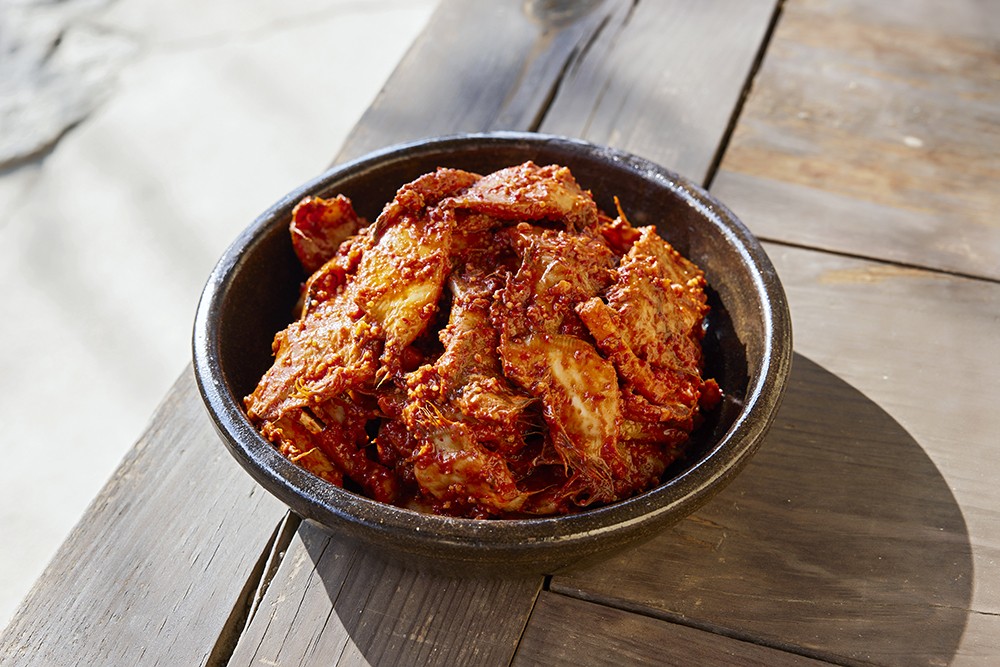
Low-temperature fermentation is tailored to the type of jeotgal that is popular today: in other words, using a refrigerator to achieve low salinity. The kimchi equivalent would be fresh, or not yet fermented, kimchi. Sunho Food’s jeotgal are mostly fermented at under five degrees Celsius. Gajamisikhae is, however, as you mentioned, fermented at the traditional room temperature (20 to 24 degrees Celsius) because this is the only way for a mixture of fish, vegetables, and grain to ferment to just the right degree. Simply put, lactic acid fermentation improves flavor and lengthens the amount of time the sikhae can be stored. We usually leave our products to ferment for 7 to 10 days at room temperature. This allows the seasoning to be absorbed sufficiently by the radish and plaice before fermenting, resulting in a deep, rich taste that is like fully-fermented kimchi.
Q. You preserve the traditional manufacturing methods while also engaging in R&D. I understand your “lactobacillus gajamisikhae” was recently patented. What are your plans for the future?
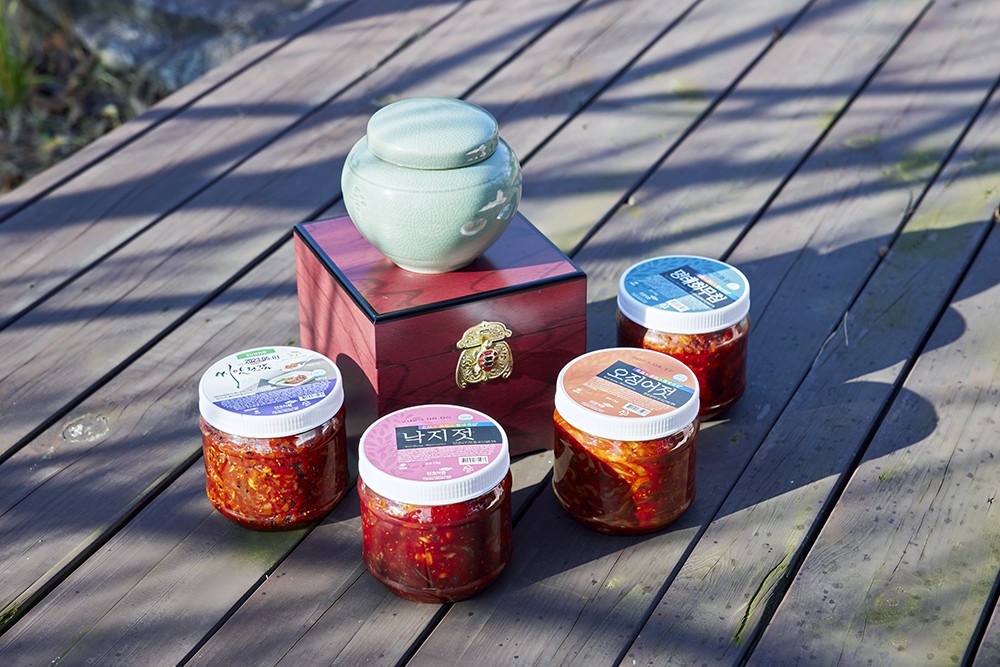
While thinking about how to make gajamisikhae that includes lactic acid bacteria, I realized one day that sikhae and kimchi have a lot in common. We achieved the flavor we wanted by making gajamisikhae with lactobacillus extracted from kimchi. The flavor came from a significant increase in what is known as “lactiplantibacillus plantarum,” which is important because it activates GABA substances, a type of amino acid that is found in gajamisikhae. GABA is an inhibitory neurotransmitter that helps calm an over-stimulated brain and can also alleviate feelings of anxiety or stomach pain. I would like to develop more products that include lactic acid bacteria. We are currently also planning a product line that utilizes agricultural produce of Gangwon-do.