


한식에 대한 다채로운 이야기를 전하는 온라인 매거진
Vol 56. Hansik Ripens Under the Rays of the Sun
Fruit in Korean Literature
HANSIK in Media Content
Delicious food fills the stomach, while a good book fills the heart. Works of literature often use a fruit’s color, taste, or even “mood” as a metaphorical device. How do writers incorporate these sour, sweet, bitter, red, yellow, and green pieces of fruit in their work? This month, we explore fruit as it appears in Korean literature.
Article Cha Yeji (Editorial Team) Sources Taste of Tangerine (Cho Namjoo, Munhak Dongne, 2020), Munjang (1939), Highway with Green Apples (Bae Suah, Munhak Dongne, 2021 (revised edition; Korean))
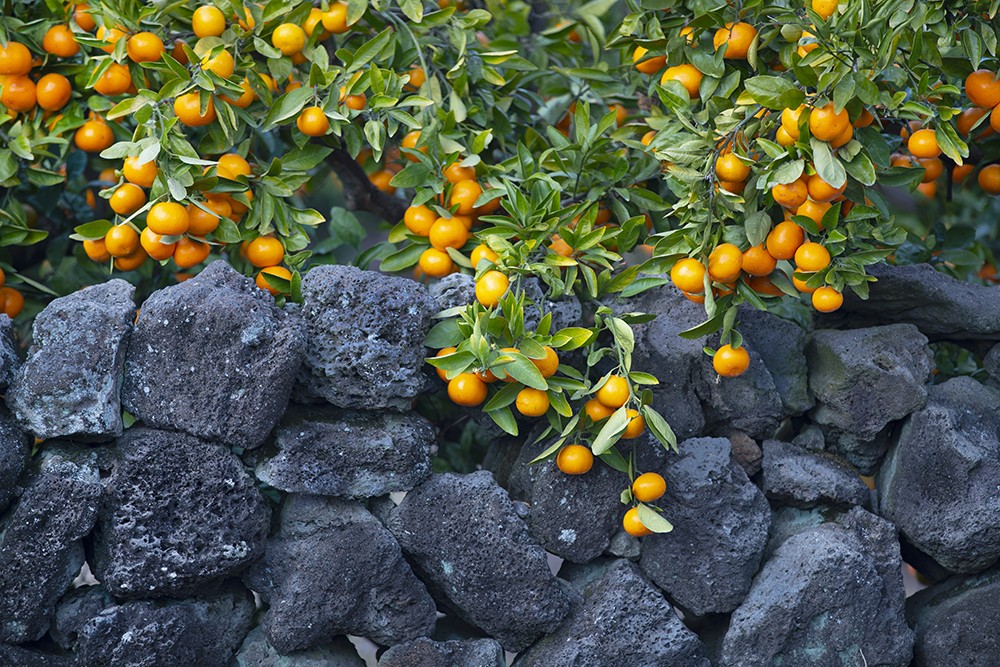
The time it takes for green to turn orange: <Taste of Tangerine>
The journey required to produce one piece of fruit is, whether we realize it or not, quite extensive: first, there has to be a tree, from which flowers bloom and then fade, and then a fruit replaces the blossoms and ripens into something that is sweet and edible. Taste of Tangerine is a novel that uses this prolonged process as a metaphor for the teen years. The protagonists (Soran, Dayoon, Haein, and Eunji) each grew up in a different environment, and the novel shows how they become friends after meeting at their school’s film club. The process by which the girls, who each have secrets and emotional wounds, grow up into adults by relying on and helping one another is, indeed, very similar to the way a tangerine changes color from green to orange.
It is then that Soran peeled the tangerine and put it in her mouth whole. Her eyes widened. Dayoon laughed. She said to Soran, “It tastes good, doesn’t it?” Soran nodded vigorously, during which she thought of something else to say.
“Is this different from the tangerines we get from the supermarket?”
“It’s probably the same.”
“But why does it taste so much better?”
It was Haein who answered.
“Because you’re not eating it at home.”
Dayoon added, with a solemn expression,
“Because you didn’t expect it. Didn’t think it. Didn’t plan it.”
At the time of this exchange, the four friends had set out on a trip to Jeju Island, where they stop at a tangerine farm. One of them is surprised by the taste of a freshly-picked tangerine. After overhearing the other three’s discussion, Eunji proposes that tangerines purchased from a supermarket are picked when they are green (and, therefore, ripen after being severed from the tree), while the tangerine picked from the tree tastes sweeter because it was able to absorb the tree’s nutrients until it ripened. The protagonists, all of whom were scarred or rejected by family and friends at an early age, are like tangerines that were cut off from their tree—a connection that is not at all unique to the characters of the novel. Adults will all remember the period in their lives when they changed from green to orange.
Fruit that bear too many scars or scratch marks are given a low product grade: the wounds inflicted in the process by which a child turns into an adult, however, can make that individual’s life richer. As declared by Dayoon, life is full of things that were not expected, thought through in advance, or planned. It is within such uncertainty, nevertheless, that we can grasp the opportunity to eat a sweet, ripe tangerine.
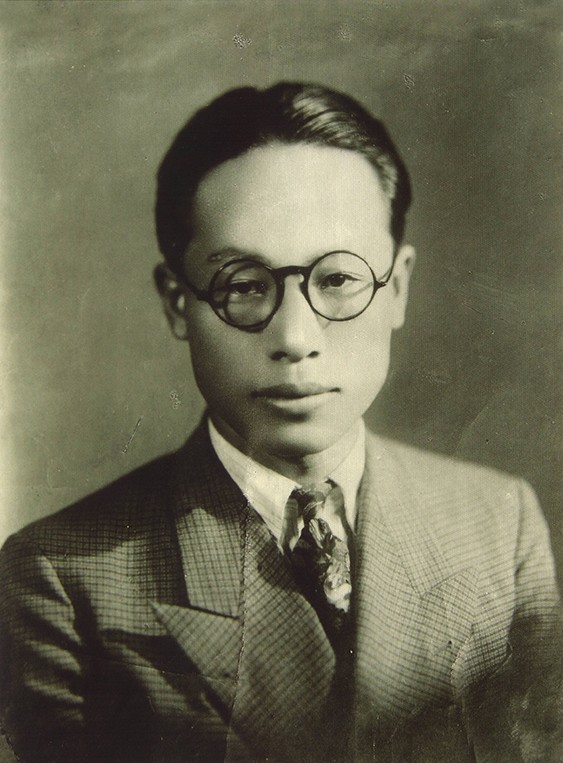
The Yi Yook-sa Memorial Hall
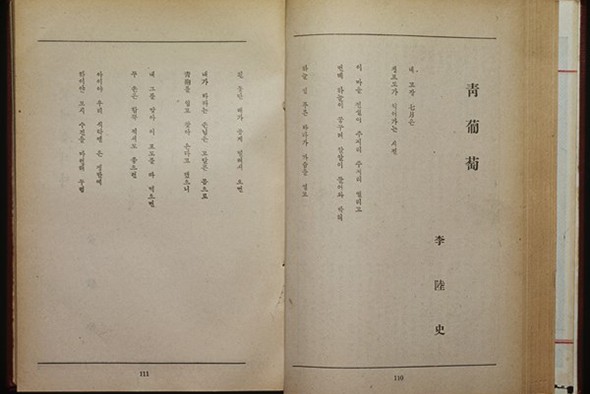
The Academy of Korean Studies
A day that will come: <Green Grapes>
Yi Yooksa’s poem, “Green Grapes,” expresses the speaker’s hope for the end of colonial rule in his home country through a metaphor about his thoughts on green grapes. For the poet, green grapes, which are in season in July and August, would have brought to mind summer in Korea.
Yi missed his home country as much as a tree whose branches are lined with ripe green grapes. When Koreans think of green grapes, the first thing that usually comes to mind is the many berries that comprise each bunch and their round, appetizing shape. Similarly, Yi would have been reminded of the simplicity and plentiful harvests of his home village.
Yi Yooksa was a “resistance poet” who was active in the independence movement during the Japanese colonial period. Yi wrote “Green Grapes” after he was released from Seodaemun Prison. After his death, his hometown (Andong, Gyeongsangbuk-do) installed a memorial stone inscribed with the poem in the poet’s memory. Just like green grapes, which ripen under the scorching summer sun, Yi’s spirit of resistance bore fruit that will be remembered by generations to come.
July's the month when green grapes ripen
Back in my village at home.
The village legend ripens in clusters
The dreaming sky settles on each grape.
A white-sailed boat will come drifting by
As the sea bares its bosom to the sky
And the longed-for guest will at last arrive
His weary limbs wrapped all in green.
With a feast of grapes I'll welcome him
Happy with dripping hands.
Quickly, prepare the dishes, lad,
White napkin on a silver tray.
(Line arrangement is based on the version of the poem published in Munjang (literary magazine) in 1939)
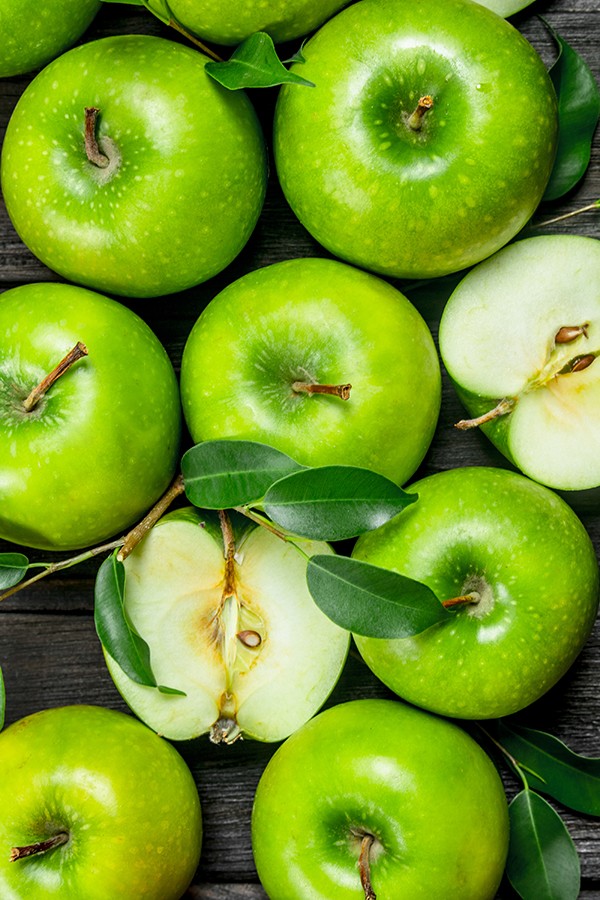
Taking a mysterious, green-tinged road: <Highway with Green Apples>
The word “green” takes on many meanings depending on its context. In Korean, it can represent clearness, purity, or integrity or be used to express coldness or mysteriousness. In Bae Suah’s Highway with Green Apples, the green apple is both a fruit that does not blend in with its surroundings and a device that amplifies the protagonist’s loneliness.
The view from the car’s window is full of tall leaves of grass that are lying almost flat because of the wind. There are no people: only road and more road. Late autumn is such a beautiful time. I will never forget.
“Do you want an apple?”
I say nothing, at which he points to the paper bag of green apples that we bought from a dusty roadside stand in a small city we passed through a little while ago. Ah yes, the apples. Green apples.
The beautiful yet arid fall landscape that dominates the first half of the novel becomes even more solitary when paired with green apples. In the novel, the green apple is something that clashes with the “placeness” of the highway, thereby creating an even more unnatural mood.
I took a bite of a leftover green apple that was rolling around in the backseat. The sour, bitter flavor envelops me like fog. Even if we part ways, I refuse to be forgotten. This is what I thought about while looking at his profile.
“I have a girlfriend.”
He said later, on the phone.
The green apple is characterized by its firm flesh and refreshingly tart flavor. It also has a “fresh” scent that is different from that of red apples. At the moment she breaks up with her boyfriend, the protagonist thinks of a green apple that tasted sour—a flavor that represents not the apple, but the state of mind of an individual who is parting ways with her lover.
A single green apple can, as such, paint a picture of an unfamiliar fall landscape or feelings of sorrow and loneliness. The fact that fruit can depart from the image with which it is conventionally associated to tell such a diverse array of stories testifies to the power of literature. In Korea, autumn is called “the season for reading.” How about taking some time to try one of the many fruits that appear in Korean literature?