


한식에 대한 다채로운 이야기를 전하는 온라인 매거진
Vol 55. Flavors of HANSIK Enriched by the Wind
A Universally-popular Food: Korean Laver
Captivated by HANSIK
Most people believe that Korea’s top seafood export is tuna. In 2021, this changed to laver, or gim in Korean. This easily-accessible food has, over the past five years, brought in over KRW 2 billion through exports. When did laver become so popular? Let’s learn more about the fascinating world of Korean laver, which is lightweight, thin, and packed with nutrients.
Article Noh Yunyoung (Editorial Team) Sources “Country where Korean laver is most popular” (JoongAng Ilbo); Laver Exports of Korea: From USD 690 million to 1 billion (MOF, Korea Policy Brief)
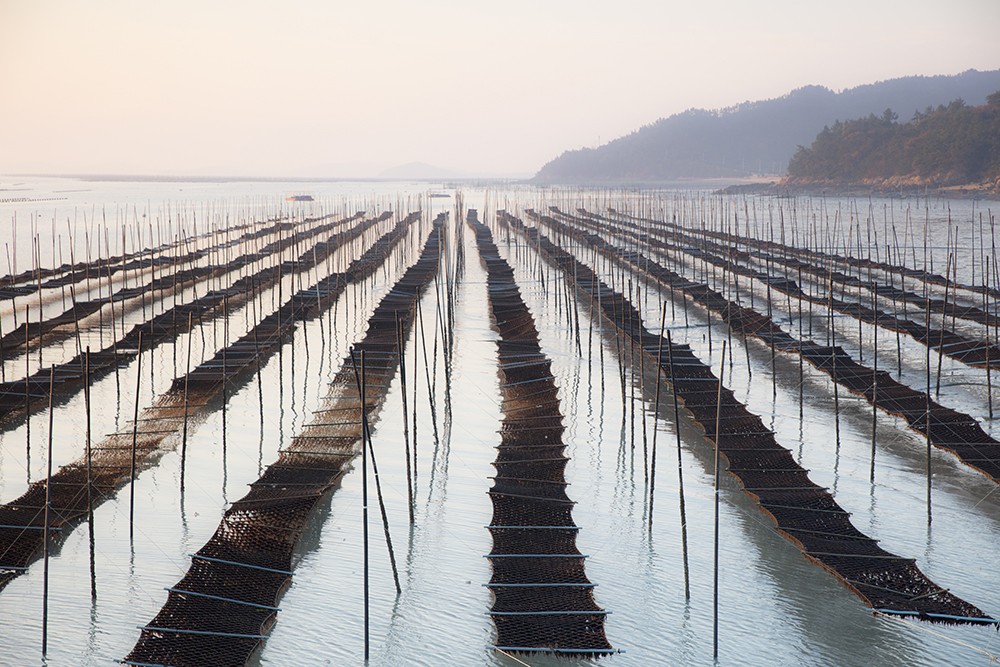
Laver, a Korean superfood
What is laver? According to Article 2-1 of the Act on the Cultivation and Support of the Laver Industry (enacted in December 2021), laver is “a multicellular marine life form capable of photosynthesis and spore-propagated, collectively referring to the seaweed that is a member of the genus Porphyra or Pyropia, family Enteromorpha, order Bangiales.” To make laver, Porphyra or Pyropia seaweed is spread out and dried on a wide, flat surface, after which it is cut into rectangular pieces before eating. There are approximately 80 species of it worldwide, with Korea being home to 10, including Porphyra yezoensis ueda and Porphyra suborbiculata.
Laver is rich in protein and vitamins. The amount of protein in five sheets of dry laver is close to that in one egg, while the amount of Vitamin A is similar to that in two eggs. It includes a substance that promotes the removal of cholesterol from the body, thereby helping prevent arteriosclerosis and high blood pressure. It is also effective in preventing aging and strengthening the immune system, and—being a seaweed—is rich in fiber and minerals.
As important as these functions are, the most noteworthy is the improvement of intestinal function. Oriental medicine has long recognized laver as effective in preventing and treating hemorrhoids. Donguibogam (Treasure Paragon of Korean Medicine) and Bencao Gangmu, two authoritative medical encyclopedias of East Asia, describe laver saying: “It is sweet while salty. It has a cold temperament; alleviates vomiting, diarrhea, and a heaviness of chest or stomach; improves hemorrhoids; and removes parasites.” The secret behind these impressive powers is its high fiber content, which is known in Western medicine as helping alleviate constipation. Laver is also regarded as effective for brain development, specifically for the prevention of dementia and general forgetfulness. This is because vitamins B1 and B2, which laver has in large quantities, are closely related to the functioning of the cranial nerves. Vitamin B2 keeps skin, fingernails and toenails, and hair healthy and cures abscesses on the tongue, inside the mouth, and on the lips.
It is for the above reasons that the Wall Street Journal recently referred to Korea’s seaweed soup and laver as “superfoods.” Laver is highly-recommended for those who are dieting because, even though it is coated in oil and seasoned with salt, it has much lower caloric and sodium content than other foods.
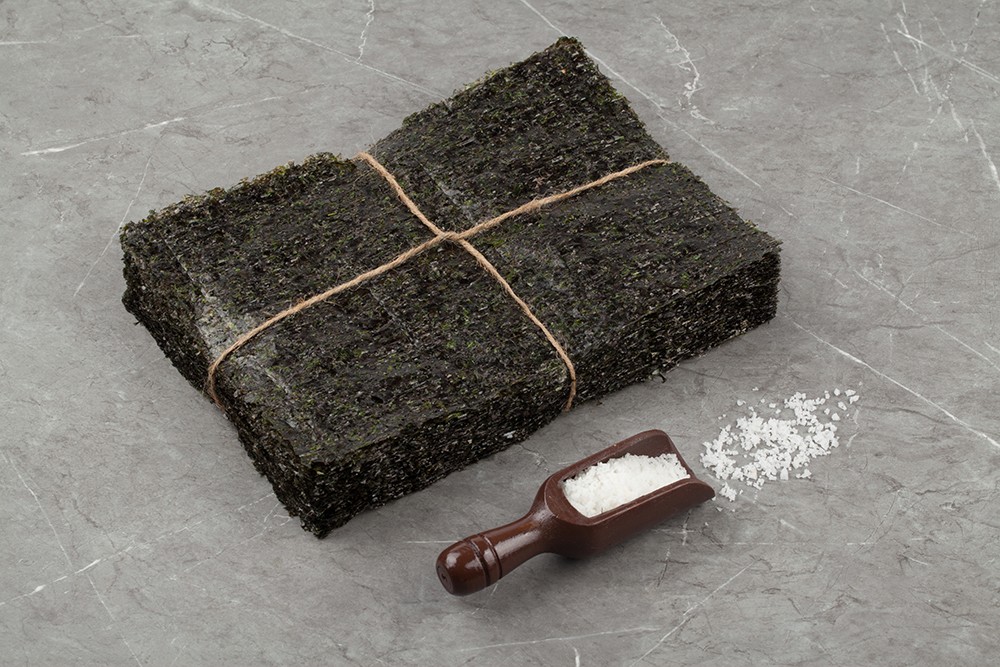
Why is laver called “the semiconductor of the sea?”
The first mention of laver in an official document is found in Samguk Yusa (Memorabilia of the Three Kingdoms), a historical record compiled by Il Yeon, a Buddhist monk, during the reign of King Chungryeol of the Goryeo dynasty, based on which it is believed to have been consumed since the Silla dynasty. Geographical Description of Gyeongsang-do, written in 1424, is the first book that describes how laver was cultivated and offers insight into the origin of such methods. According to an old story told in Hadong-gun, about 260 years ago, an elderly woman who had been collecting shellfish at the mouth of the Seomjingang River found a block of wood covered with laver that had floated downriver. She tried a small piece of the laver and was impressed by the taste, after which people started setting up bamboo props in the sea to cultivate it. Another story attributes the first cultivation to a man named Kim Yeoik, who lived during the rule of King Injo of Joseon on an island in the jurisdiction of what is today Gwangyang, after finding a drifting oak branch that had laver stuck to it. This leads to the conservative estimate that the cultivation of laver in Korea mostly likely started in mid-Joseon.
The countries that produce the largest amount of commercial laver products are, generally, China, Korea, and Japan, in descending order. Taiwan and the DPRK also produce laver products, but in much smaller quantities. The most prolific laver exporters, however, are Korea, China, and Thailand, in descending order. Thailand does not actually produce laver: after importing laver from Korea, it processes it into a truly wide range of snacks (fried, smoked, with durian, in tom yum, etc.) that are then exported worldwide.
Korean laver is enjoying unprecedented popularity around the world. In the West, laver was known only partly in jest as a “weed of the sea.” This view has changed drastically in recent years, with exports to Western countries increasing based on laver’s new-found popularity as a health food. Over the past 12 years, laver exports have been increasing by 20 percent annually. Accordingly, the Korean government has begun fortifying support for this industry through the aforementioned Act on the Cultivation and Support of the Laver Industry (content: plans for supporting laver cultivation industry, operational plans (e.g. improvement of laver processing facilities, training of personnel, designation of research facilities)).
According to an announcement made by the Ministry of Oceans and Fisheries this May, laver exports in 2021 totaled a record-breaking USD 690 million (approx. KRW 881.4 billion). The total export volume has increased drastically to 30,000 tons to 114 countries, nearly double the number of countries (64) recorded in 2010. The biggest importer of Korean laver is the United States: in 2021, it purchased USD 156 million worth of laver. China, Japan, and Russia are also important importers of Korean laver. In response to such international demand, many Korean food companies are targeting foreign markets with laver snacks: in the US and EU, which do not have rice-based diets and therefore do not consume laver as a side dish (as in Korea), laver is included in potato chips and nachos. Other countries have their own methods of laver consumption. In Vietnam, laver is already well-known as a health food. It is also a popular snack for toddlers in China as well as in the Halal market.
Until the 1970s, Korea’s laver industry was powered by manual labor, resulting in high prices relative to income. The invention of an automatic/electric laver drier in 1977 made it possible to mass-produce laver at low cost, which soon led to product diversification. Until 2000, laver was mostly sold in dry format: after 2000, this changed to salted laver (jomi gim) and various products based on it. It was the transformation of laver into a popular health food that made it both cost-effective and uniquely Korean. In 2017, the Codex Alimentarius (“food code”; CODEX) designated laver (South Korean Edible Seaweed Products) as Asia’s standard for quality. It is due to such global visibility of Korean laver—paired with its impressive export figures and signature rectangular shape—that it is beginning to be called “the semiconductor of the sea” (drawing a comparison with the important position of the semiconductor industry in the Korean economy).
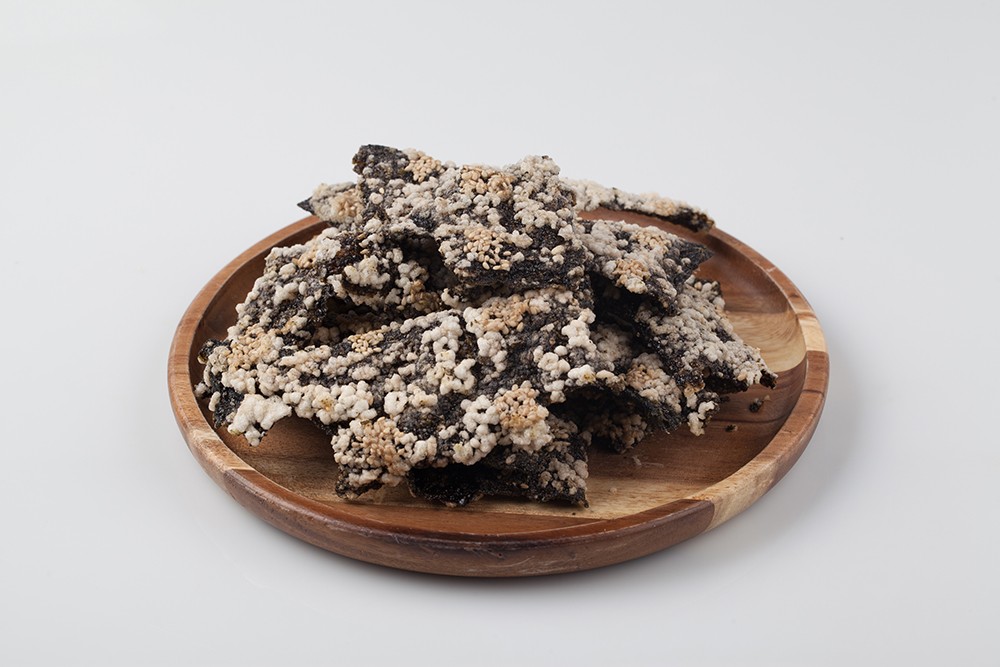
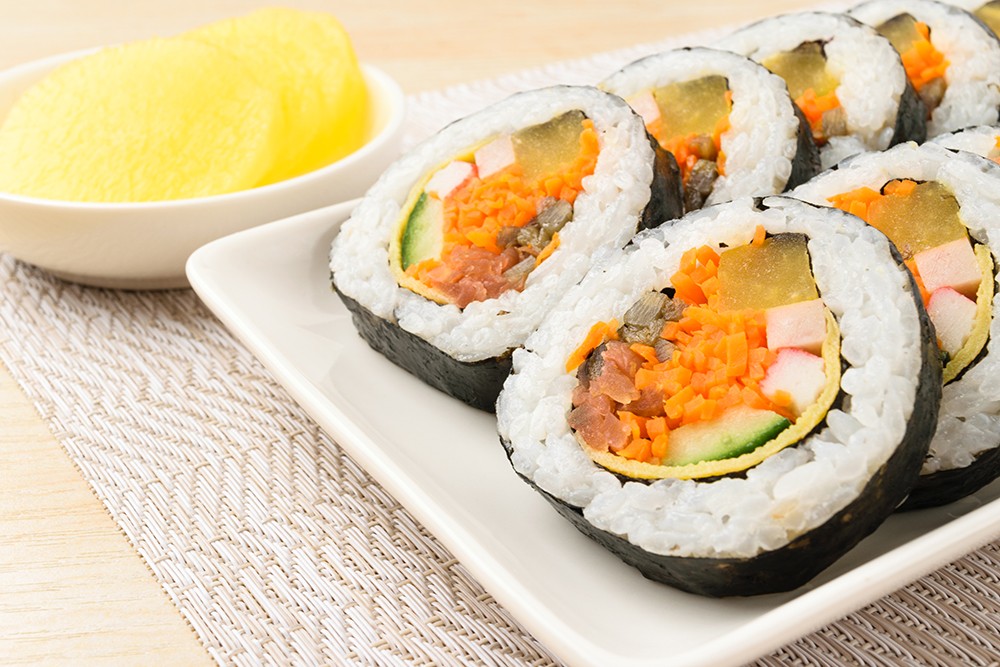
Delicious, diverse, and easily accessible
There are two aspects of laver that we must be careful of: oil and sodium. Generally, “side dish” laver is coated with perilla or sesame oil, sprinkled with salt, and grilled. No matter how fresh the oil is when applied, if preserved for too long, it oxidizes when exposed to air or sunlight. This produces a harmful substance (peroxide lipids): perilla oil, in particular, is prone to oxidation because it does not contain sesamolin, a natural antioxidant present in sesame oil. Salted laver, as its name suggests, increases sodium consumption, which can increase systolic pressure and, consequently, raise blood pressure.
Above all, laver is easy to eat. It is the perfect accompaniment as an extra side dish or snack and is also easy to store because of its flatness. One thing to be careful of is to avoid refrigeration (as this makes the laver soft and bland). It is best to keep laver at room temperature in a cool, dry place away from direct sunlight.
In conclusion, laver’s biggest merits are its diversity, delicious flavors, and easy accessibility. It can be eaten raw or grilled over a fire, and it can be used to make gimbap or, if soft, mixed with seasonings and vegetables or coated in a special sauce to make gimjaban (fried laver). Gimbugak (laver chips) is a healthy and satisfying snack, while jumeokbap (rice balls) is often used as a children’s snack.