

한식에 대한 다채로운 이야기를 전하는 온라인 매거진
Vol 54. Ice, the Crown Jewel of Summer
The Fragrance of Ginseng and Sweetness of Honey
HANSIK Masters
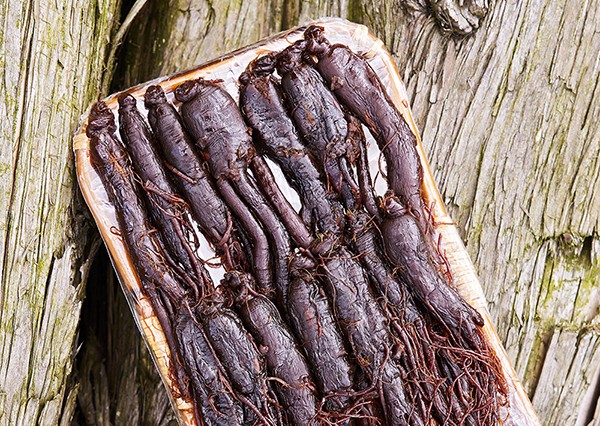
A bite of reddish-black ginseng jeonggwa (braised ginseng in sweet sauce) first offered the fun of chewing, which was soon followed by a pleasant sweetness. The sharp fragrance that is unique to ginseng seemed to permeate my mouth: it was immediately tempered, however, by a burst of sweetness. The balance of bitterness and sweetness made the jeonggwa easy to swallow. I went to Geumsan-gun, Chungcheongnam-do, the home of Korean ginseng, to learn more about the red, jellied ginseng that was inspired by a grandmother’s concern for her grandson’s health.
Article Seo Dongchul (Editorial Team) Photos Kim Seongjae (SSSAUNA Studio)
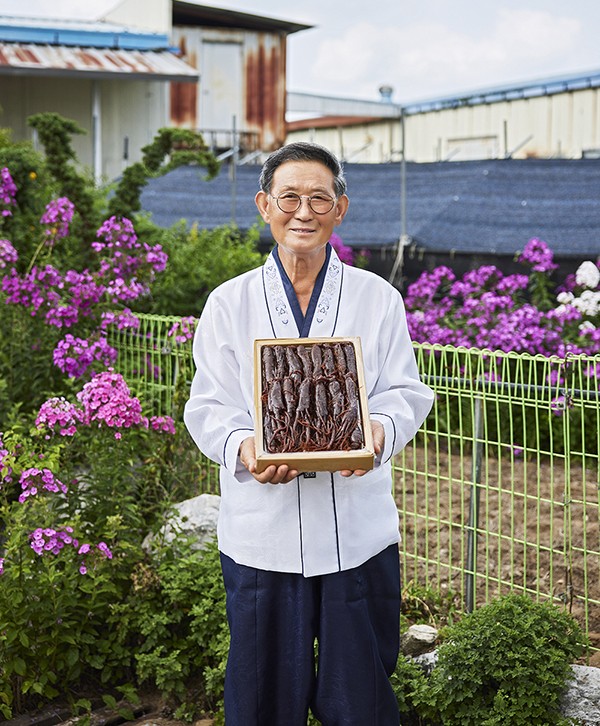
Q. Geumsan-gun is known for having cultivated ginseng for 1,500 years. How is it that this region became a major ginseng producer?
The “guardian mountain” of Geumsan-gun, Jinaksan Mountain (737 meters), has a cave called “Gwaneumgul.” It is this cave that is the setting of a legend that explains the origin of ginseng in Korea. About 1,500 years ago, there lived a scholar-literati named Kang who prayed day and night at Gwaneumgul for his mother to recover from illness. One night, a mountain sage appeared in Kang’s dream, showing him the location of a medicinal herb with three red fruits hanging from it. The “herb” turned out to be ginseng: Kang boiled it down for his mother, who recovered immediately after eating it. Kang planted the ginseng’s seeds east of Jinaksan Mountain and started cultivating them. This was the first time that ginseng was grown by human hands in Korea.
Geumsan-gun is equipped with all of the conditions necessary for growing ginseng. We do not have much rain, and we get a lot of sunlight. There is also a big temperature difference between night and day because Geumsan-gun is a semi-highland area. These conditions are not very good for farming rice or vegetables, but perfect for ginseng. Ginseng grown here is widely known for its firmness, rich fragrance, and high levels of saponin, which makes it just as beneficial for the body as it is delicious.
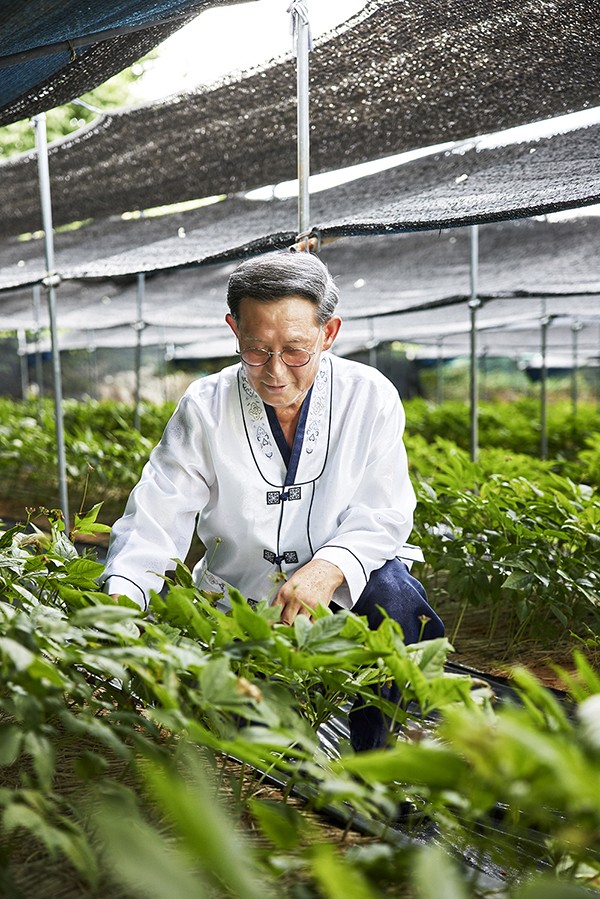
Q. I understand that you are very meticulous when selecting ginseng—which, obviously, is the most important ingredient of ginseng jeonggwa. How do you identify “good” ginseng? How do you use honey to jelly it?
Good ginseng has no spots, is large, and has many fine roots attached to it. The fine roots are important because they are how the soil’s nutrients are absorbed by the ginseng, which raises the saponin levels. When making ginseng jeonggwa, I use ginseng from two regions: half from Geumsan-gun, and the other half from somewhere else. My family has farmed ginseng for generations in Geumsan-gun: I also grow ginseng, albeit in small quantities. If you use only honey, its nutrients are destroyed when the temperature rises. Because of this, we submerge the ginseng in a mixture that is 50 percent honey and 50 percent fructose.
Q. You were taught the Hadong Jeong clan’s recipe for ginseng jeonggwa by your paternal grandmother, Song Jageun (1910-1994). What are your childhood memories of this unique food?
I was the oldest son in my generation in my family. I was also an only child. My father was killed in action during the Korean War, so I had to rely on my mother and grandmother growing up. At the time, everyone—and I mean everyone—was so poor that people were always worried about their next meal. My mother and grandmother tried their best to feed me, the only son, well. The two women grew ginseng at home. At harvest time, they would take a young chicken and make samgyetang (ginseng chicken soup) for me. I, of course, didn’t really like it because of the ginseng’s bitter flavor. After thinking a lot about how to get me to eat ginseng, my grandmother gave me pieces of ginseng jeonggwa. When I was a boy, food—let alone snacks—was not very plentiful. I think this made the honey-jellied ginseng taste even better. As soon as I came home from school, my first order of business was to find the ginseng jeonggwa that my grandmother had hidden. It was these early memories of watching my grandmother make ginseng jeonggwa and waiting eagerly to eat it that led me to my current “occupation.”
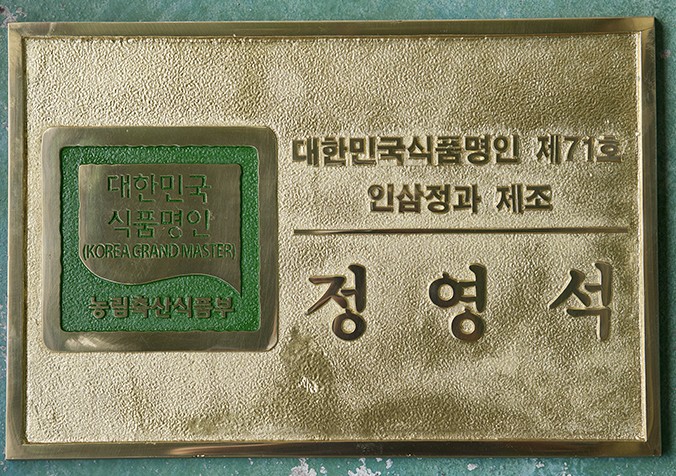
Q. What prompted you to make ginseng jeonggwa? How did you become a Korean Food Master?
We lived in a village in the mountains and cultivated and dried medicinal herbs that we sold at the market. One day, an import/export company saw our goods. They said that they liked how neatly we packaged the herbs and asked if we could purchase medicinal herbs from other farms and process/package them for sale in other cities. That’s how we started traveling across Korea to find medicinal herbs to supply to the company. We made quite a lot of money at the time. Confident about my abilities, I decided to help a friend launch his business—something that I shouldn’t have done. My friend’s business failed and, because I had contributed a lot to it, I suffered financially as well.
While thinking about how to get back on my feet, I remembered the ginseng jeonggwa my mother and grandmother had made for me as a child. I started to develop a manufacturing process based purely on vague memories of what my grandmother did. I started making ginseng jeonggwa in 1996: however, because I was relying on hazy memories, I ended up making a lot of mistakes. It was only after much trial and error that I began to produce ginseng jeonggwa in 1998 according to the Hadong Jeong clan’s recipe.
Q. I was informed that the traditional method for making ginseng jeonggwa specified in classical writings—most notably, Collection of Coarse Writings by Oju, an encyclopedia compiled by Lee Gyukyung (a silhak scholar of late Joseon) by referring to many books published in Joseon and Qing China—and the method you use today are almost identical. Could you briefly introduce to our readers how you make ginseng jeonggwa?
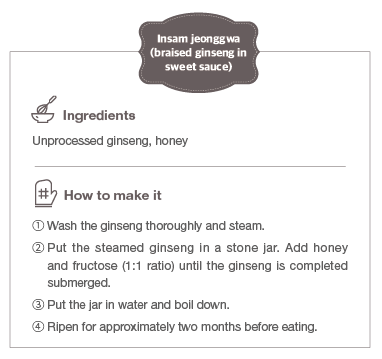
After cleaning all of the dirt off the ginseng and trimming it with a knife, we steam it for three hours. The steamed ginseng is placed in an earthenware jar, which is then filled with honey. The honey then needs to be boiled down. There are two methods through which this can be done: heating (in a container) in boiling water or heating by fire. The former requires the jar to be placed in boiling water, while the latter heats the jar directly with fire. Applying fire directly has the advantage of being much faster, but the downside is that, if your attention wavers for even a moment, the contents of the jar can burn. Although heating ginseng in a container placed in boiling water (a process called jungtang in Korean) takes a long time, there is no danger of burning or overflowing. This is the method that my mother and grandmother used and that I have chosen to use as well. Another advantage is that steaming fresh ginseng (called susam in Korean) with vapor results in a uniformity of color and a deep, rich flavor. After the heating is finished, the ginseng needs to be ripened for two or three months. To ensure that the sugars are absorbed by the ginseng, most people “prick” the ginseng manually. I choose to ripen it. Eating ginseng that has just been steamed and ginseng that has been ripened are two very different experiences. Ripened ginseng has a deeper reddish color, tastes better, and is easier to digest.
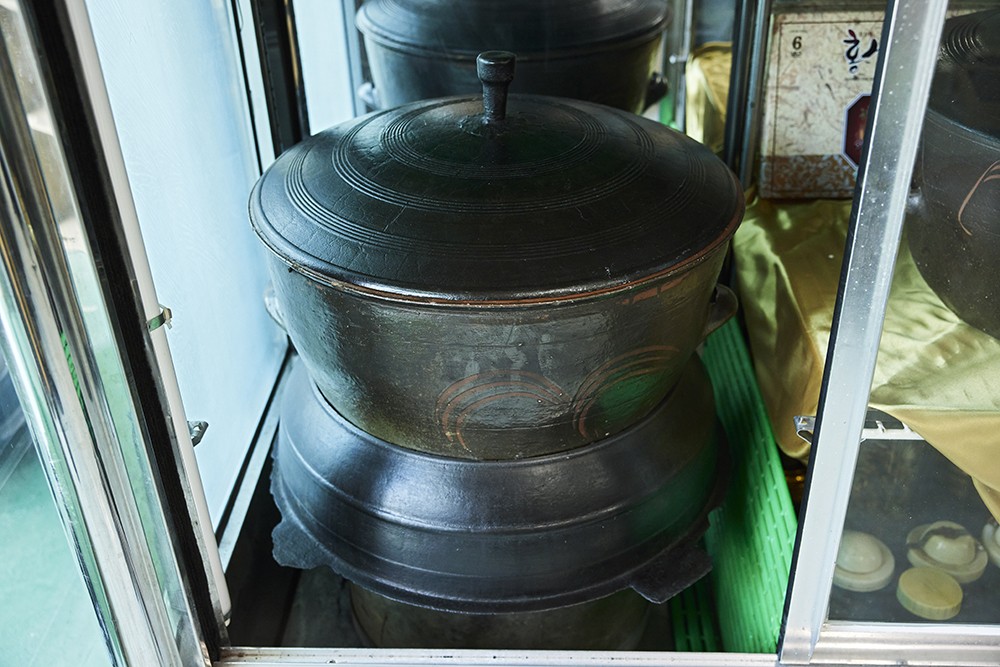
A steamer and cast-iron pot given to Jeong by his paternal grandmother
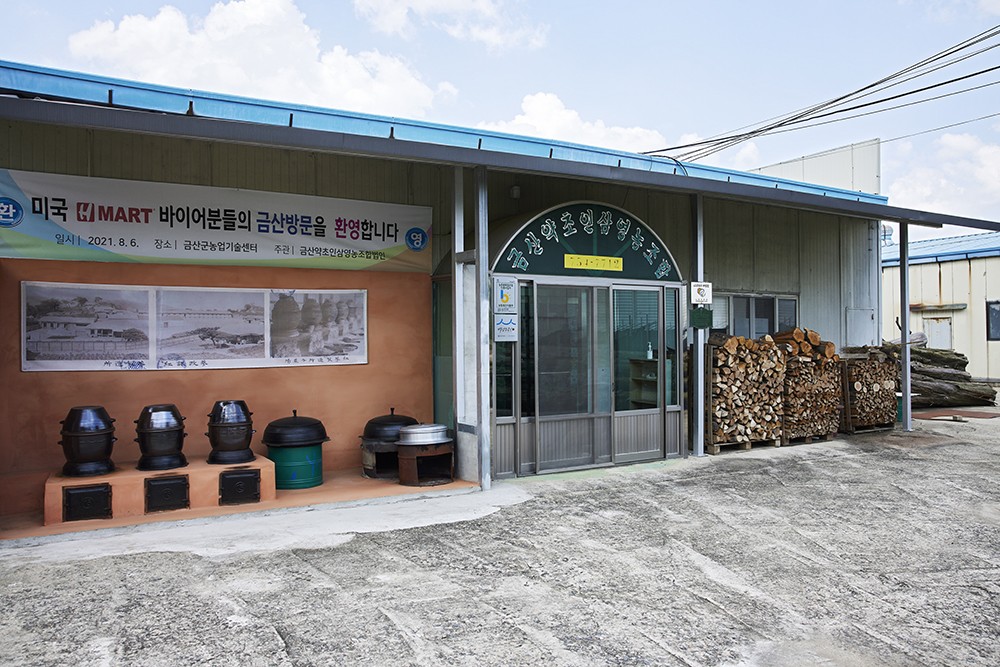
The Geumsan Medicinal Ginseng Farmers’ Cooperative, which is operated by Jeong
Q. Do you have tips on how to eat your signature product: Honeyed Korean Red Ginseng?
Ginseng jeonggwa has been popular since the pre-modern age, used for occasions such as Chuseok and Lunar New Year and traditional weddings as a gift sent to the bride or groom’s family. It was a symbol of the giver’s wish for the recipient’s good health. I recommend having one root per day as a nutritious snack. It goes especially well with ginseng or jujube tea and can instantly make a dish, including salad, more elegant. Another good way to eat ginseng jeonggwa is to julienne it and then mix it with powdered rice to make rice cakes. Young consumers may even use it as a topping for Western snacks such as cupcakes or cookies.
Q. What are your plans for the future?
My grandson is now attending university. After he graduates, he will learn how to make ginseng jeonggwa and modify it for a younger consumer base. I developed a machine that mimics the effects of jungtang to maintain the traditional methods as much as possible while also enabling mass-production. I’m confident that, if I’m joined by my grandson, we will be able to make ginseng jeonggwa even more effectively to give more people a chance to appreciate its flavors and health benefits. We also hope to export our Korean ginseng and ginseng jeonggwa to reach consumers in other countries.