

한식에 대한 다채로운 이야기를 전하는 온라인 매거진
Vol 54. Ice, the Crown Jewel of Summer
Cold Breeze in the Depths of Summer: Jecheon Eoreumgol Valley
Foodie Travels
Summer in Korea, as usual, is pummeling us with heat waves. The asphalt of roads is hot all day and night, and even evenings and nights are unpleasantly muggy. One may be tempted to sit next to an air conditioner—a gift of modern civilization that is equal parts effective and selfish—until fall. This, however, would entail missing out on a fascinating natural phenomenon. If you are still looking for a vacation destination when you can hide from the heat, try visiting Jecheon, famously known as a place where naturally-frozen ice can be seen all summer long.
Article and photos Kim Jeongheum (travel writer)
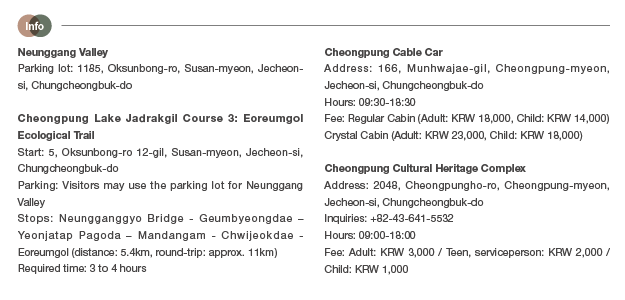
Cold enough for water to freeze at the height of summer
There are several locations in Korea that are called eoreumgol (literally, “ice valley”). The most famous is the one tucked deep inside a mountain range in Miryang (known as the “Alps of southeastern Korea”), with the others in Uiseong-gun (Gyeongsangbuk-do) and Jinangun (Jeollabuk-do). Eoreumgol are characterized by the presence of ice and a frigid breeze during the summer—a phenomenon that, regardless of location, is based on the same conditions. The first is a high elevation of the surrounding land, which blocks sunlight, and a space that traps cold air. The best embodiment of this is the neodeol, or a slope made up of layers of stones.
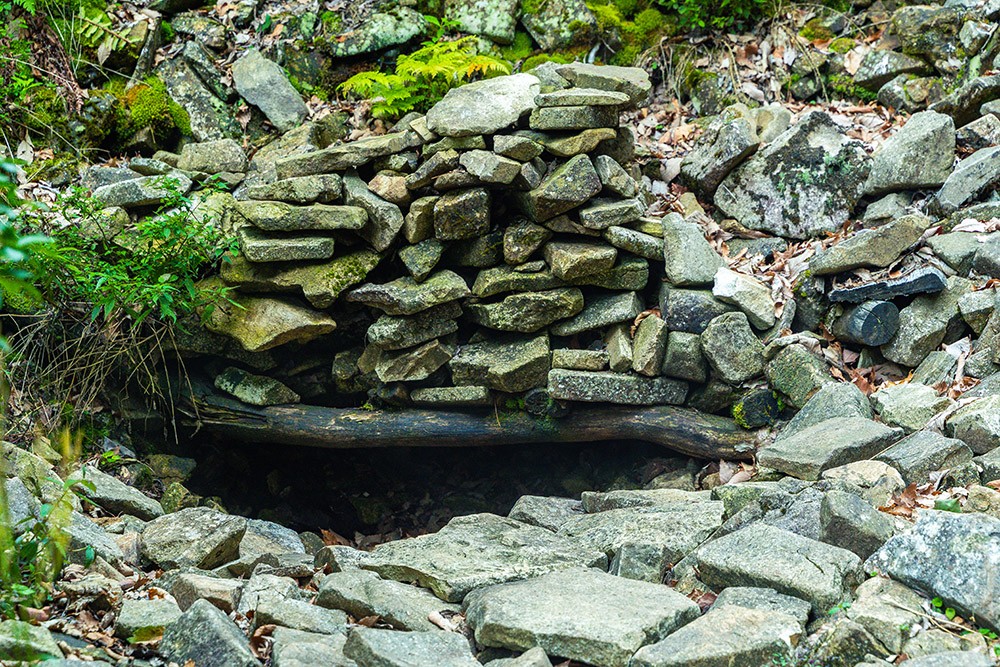
The cold air that accumulates between the slope’s stones over the winter remains until summer—as does a considerable amount of ice. In summer, a convection current is formed via exposure to hot air, which makes the trapped cold air leak out, forming a natural air conditioner.
The ice valley of Jecheon also features a neodeol (located deep inside Geumsusan Mountain) at the source of Neunggang Valley, a popular summertime destination for its beautiful scenery. Most of all, the area immediately surrounding Neunggang Valley is made up of a valley that is blocked at its northern and southern ends by the peaks of Geumsusan Mountain—creating the perfect conditions for the ice valley that is Jecheon’s most popular attraction among those who are knowledgeable about its topography.
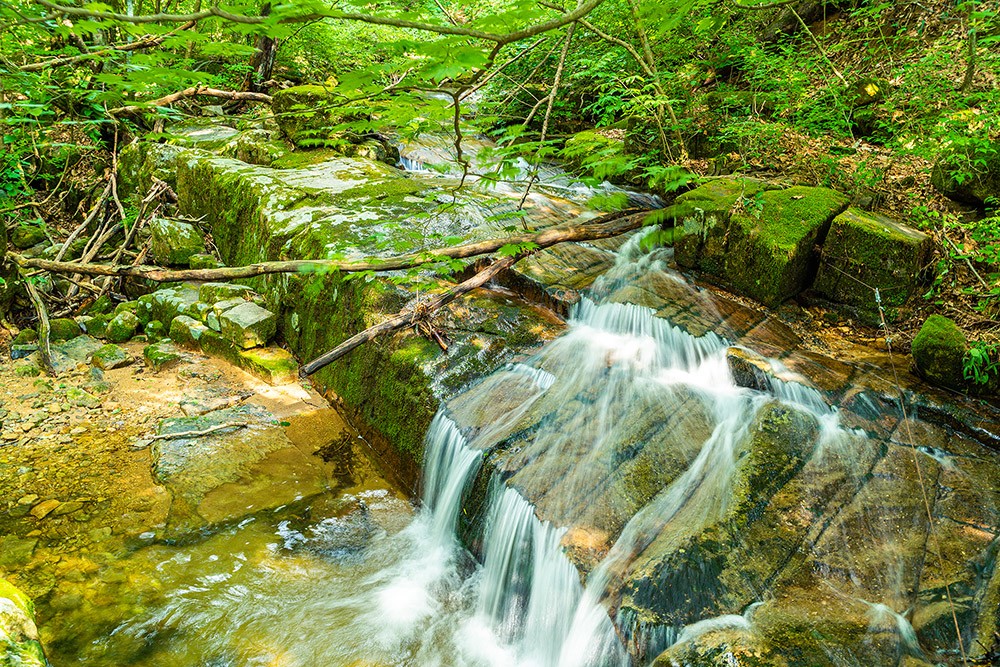
Jecheon Eoreumgol Valley of Geumsusan Mountain is widely known as a “natural air conditioner.”
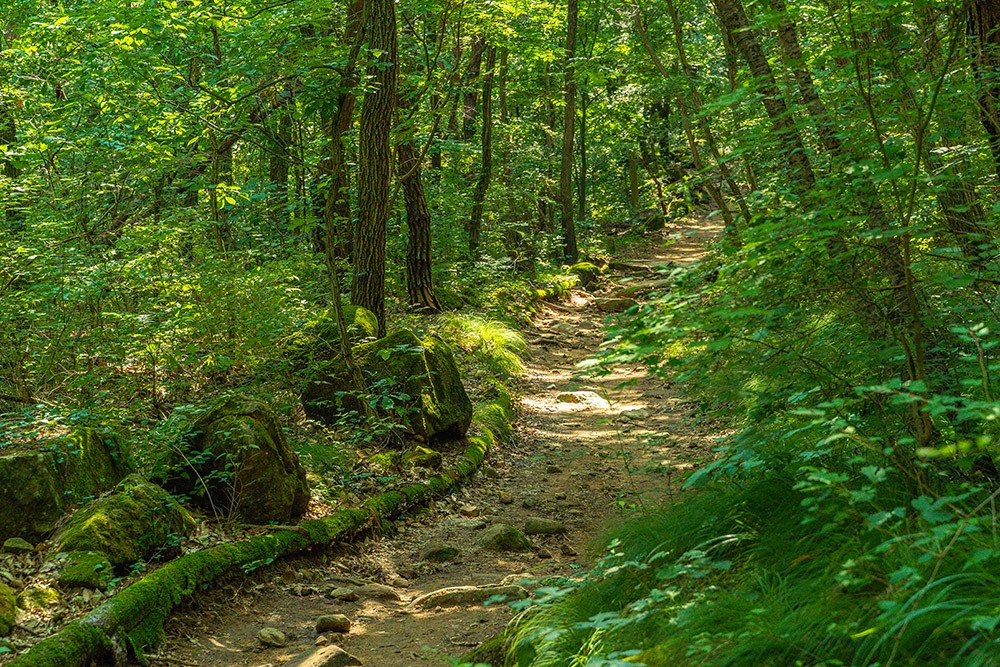
Cheongpung Lake Jadrakgil Course 3: Eoreumgol Ecological Trail
Course 3 of Cheongpung Lake Jadrakgil (set of walking trails similar to Jeju-do’s Ollegil), called “Eoreumgol Ecological Trail,” passes through the Neunggang Valley area for those who wish to experience the ice valley and is also known for the fresh air supplied by the stream. Unfortunately, the storied beauty of the stream’s surrounding area (also called “Neunggang Gugok” for having nine picturesque landscapes (with gu meaning “nine” in Korean)) is long gone due to the submerging of Cheongpung-myeon after the construction of Chungju Dam. The only surviving landscape is the upper part of the stream.
The trail takes visitors through Landscape 6 (Geumbyeongdae), Landscape 7 (Yeonjatap), Landscape 8 (Mandangam), and Landscape 9 (Chwijeokdae). Another advantage of the trail is that the majority of it is flat or only slightly inclined, making it easy to walk for people of all ages.
Visitors will find that they are “slowed down” by the stream’s refreshingly cold waters. The coldness of the water flowing past the stony slope paired with the cool breeze that comes down from the valley will make any trekker hard-pressed not to stop for a break. Indeed, visitors will most likely see people lying flat on the rocks to escape the heat. For those who are inspired to stop and enjoy what remains of the traditional nine beautiful landscapes, it is actually in their best interest—in this case!—to do just that.
The closer you get to the end of Course 3, the more you will be enveloped from head to toe by cold air. Even when the outdoor temperature exceeds a scorching 30 degrees Celsius, the ice valley remains rather chilly. It is only after you pass the final uphill section that you will arrive at the ice valley. Once there, visitors will be shocked by the frigid air that literally bursts forth from between the rocks of various sizes. There are also logs placed next to the ice valley’s air/ventilation holes: no doubt, a suggestion to all who pass by to sit for a while and enjoy the cold air.
Unfortunately, contrary to its name, the ice valley has no ice. The reason for this absence is unclear—it could be because the ice was taken by those who believed the rumor that it was a panacea or perhaps due to the effects of global warming. The only thing that matters is the fact that the cold air, which we know from history is capable of making ice, is a more than adequate reward for those who walk Course 3.
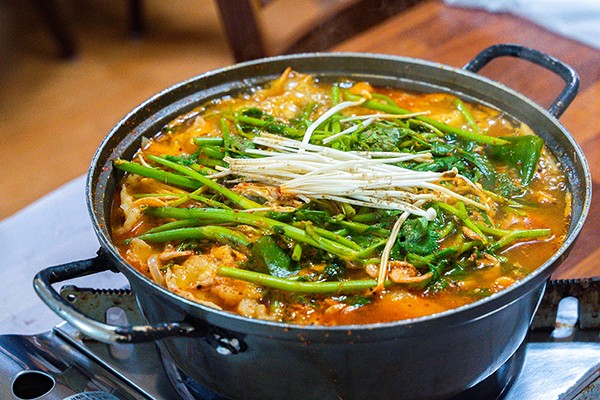
Maeuntang (spicy stew) made with freshwater fish
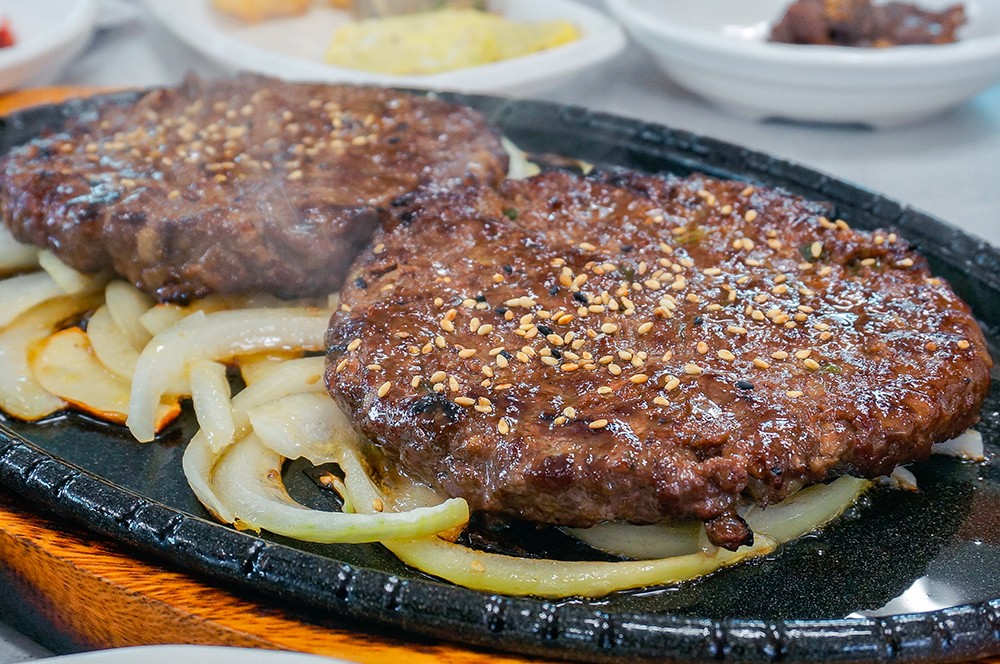
Tteokgalbi (grilled short rib patties) made with Jecheon beef
Food of Jecheon and Chungju Dam
Jecheon, an inland county located in the center of the Korean Peninsula, is a required destination for any foodie trip. The reason is the area’s long-time fame for its diverse ingredients and the beauty of its natural surroundings, made up of mountains, plains, rivers, and lakes. Jecheon truly is a treasure trove of a vast range of foods.
Jecheon’s best-known dish is, by far, its freshwater fish maeuntang (spicy fish stew). Maeuntang made by boiling mandarin fish, ppagasari (Korean bullhead), and catfish caught from Chungjuho Lake tastes noticeably different from that made with saltwater fish. Combined with the fragrance of locally-grown vegetables, a pot of maeuntang is a microcosm of Jecheon’s mountains and lakes.
One lesser-known fact is that Jecheon is also a producer of Korean beef, just like its famous counterparts in nearby Hoengseong and Yeongwol. The beef that comes out of Jecheon’s mountain villages is used for galbitang (short rib soup), suyuk (boiled beef slices), and tteokgalbi (grilled short rib patties). It is the reason for the heavy presence of galbitang and tteokgalbi restaurants near Chungjuho Lake.
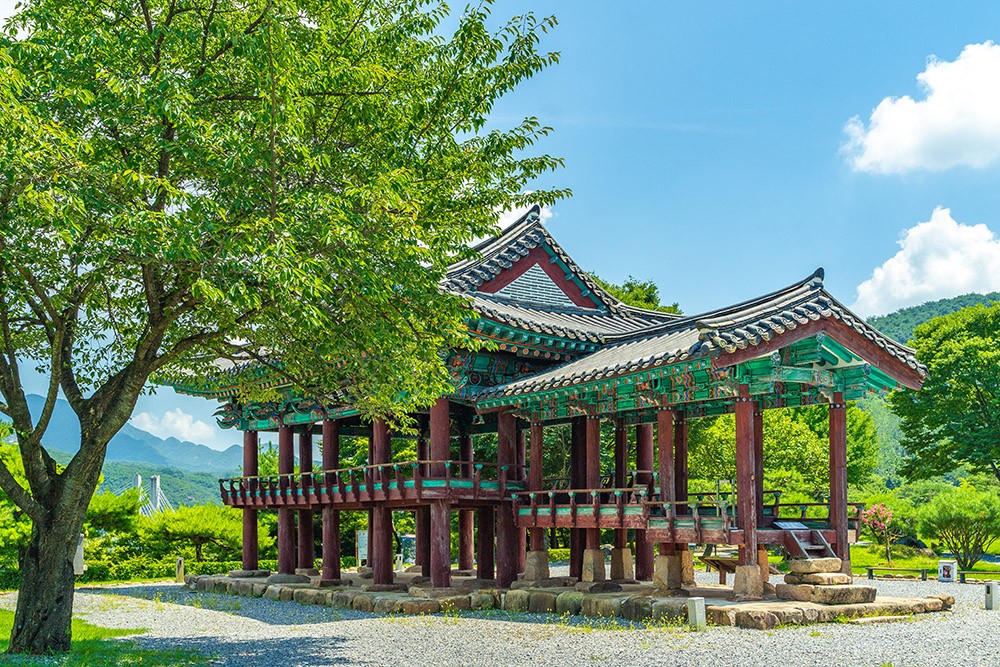
Hanbyeongnu at Cheongpung Cultural Heritage Complex
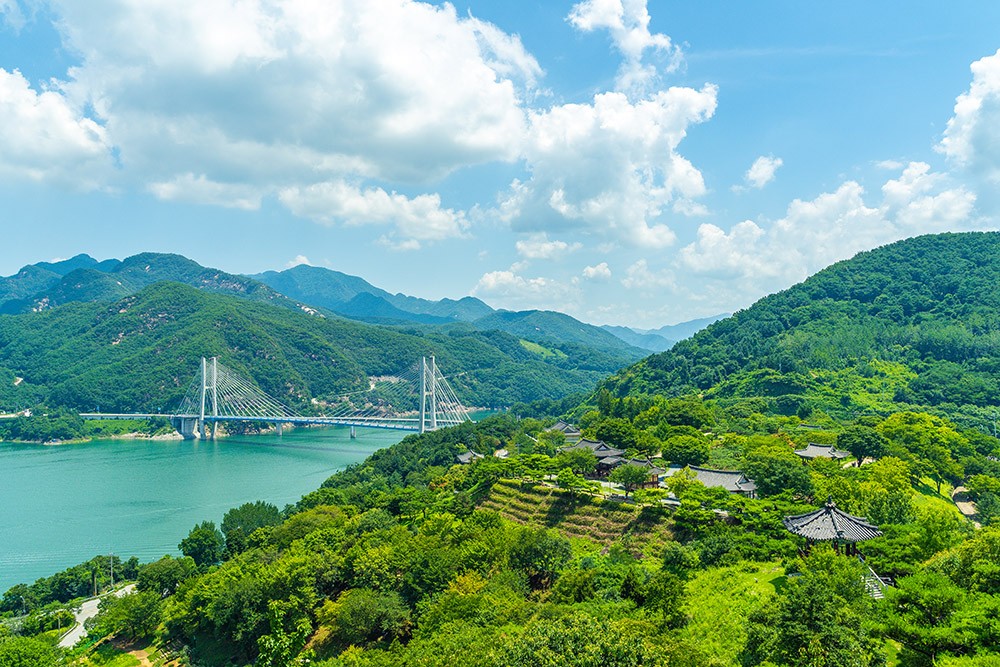
View of Chungjuho Lake
Jecheon—in particular, the area around the ice valley—is also full of beautiful scenery created by Chungju Dam. The first place to go is the summit of Bibongsan Mountain, which stands in the center of Chungjuho Lake. Thankfully, one does not need to hike: the trip from the base (Multaeri Station) to the summit via Cheongpung Cable Car takes no longer than 10 minutes. From the summit, visitors can see why Jecheon was nicknamed “the home of fresh breezes and a bright moon.”
The vicinity of Cheongpung-myeon, which is largely underwater today because of Chungju Dam, was famous since antiquity for its beauty. Modern-day visitors can see for themselves why the region was frequently the subject of poems and paintings in the Joseon dynasty at the Cheongpung Cultural Heritage Complex, which houses many relics that would otherwise have been submerged. There are several historic buildings that have been designated as treasures, such as Hanbyeongnu Pavilion, as well as hyanggyo (private Confucian academies), provincial offices, and private homes that are witnesses of Cheongpung-myeon’s former prominence.