


한식에 대한 다채로운 이야기를 전하는 온라인 매거진
Vol 27. Juksun - Jeolla-do
Gourmet travel for regional food ingredients
Hansik glossary
Juksun - Bamboo Shoot
Namul - Wild greens, Salad
Gift from earth, Juksun of May
Edited by Park Chunrae - Published by Korean Food Promotion Institute
Juksun growing up after rain in the early summer
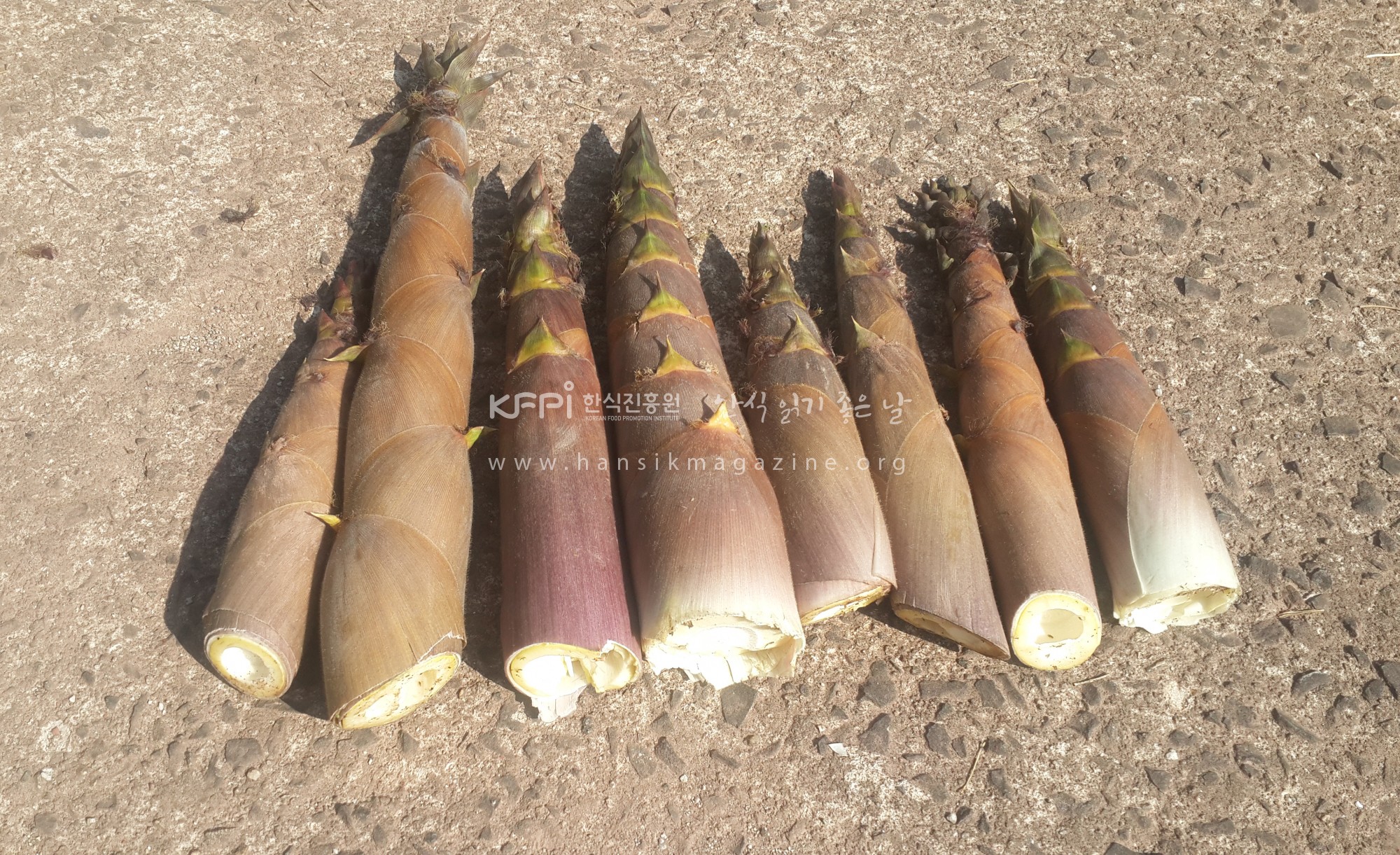
In the country village where I was born and spent my childhood had many bamboo trees. Bamboos lined up along the edge of a hill in rear side of the village, in a shape of wrapping around the whole village. At the spot where this bamboo forest ended, my house was also surrounded by bamboo trees. It is natural that I have so many memories about this tree after being grown up with the bamboo forest as a playground. Building of a moon house, making a shield kite, breaking of Juksun(bamboo shoot), etc. on the full moon festival day of January can be experienced only at the place with bamboo trees. Memories on these vividly remain in me up to now after lapse of a few tens of years.
As May called the queen of seasons has come, bamboo trees of the hometown are becoming more lively. When this glamorous season comes, there are routines to be kept without fail, one of which is the work of collecting Juksun. In the bamboo forest at the backside of the country house, there are sprouting Juksun every year. Due to the frequent rain and warm weather, this plant has been sprouted this year more than in other years.
As new sprouts called Juksun are coming up from the ground mostly around May, the bamboo trees begin to grow. Juksun is the sprouted from the bamboo root, and bamboos multiply through such buds from their roots. Much Juksun is sprouted particularly after rain in the early summer, an old saying due to which is ‘Spring up everywhere like Juksun 雨後竹筍’ This is used as a figurative word referring to the multiple production of something at a given time.
Unchanging plain and crispy taste of Juksun
In old days, bamboo was used as a material for various household goods such as screen, basket, colander, fan, etc. being treated dearly. Since bamboos were sold at an expensive price, the house with bamboo field was recognized as being rich. Thus, using Juksun for food was not even dreamed of. Sometimes only the Juksun damaging crops by growing up at fields around bamboo forests was collected to be used as a food ingredient essentially like mountain ginseng. However, demands for bamboo began to decline, falling finally to the rank of despised beggar after new materials such as plastic became available. As the unnecessary bamboo trees are not cut out, bamboo forests became densely populated to the extent of leaving no space for people’s passage. Because of diversified and rich food ingredients, the interest in Juksun also continued to decline. There is nothing that is not changed in the universe.
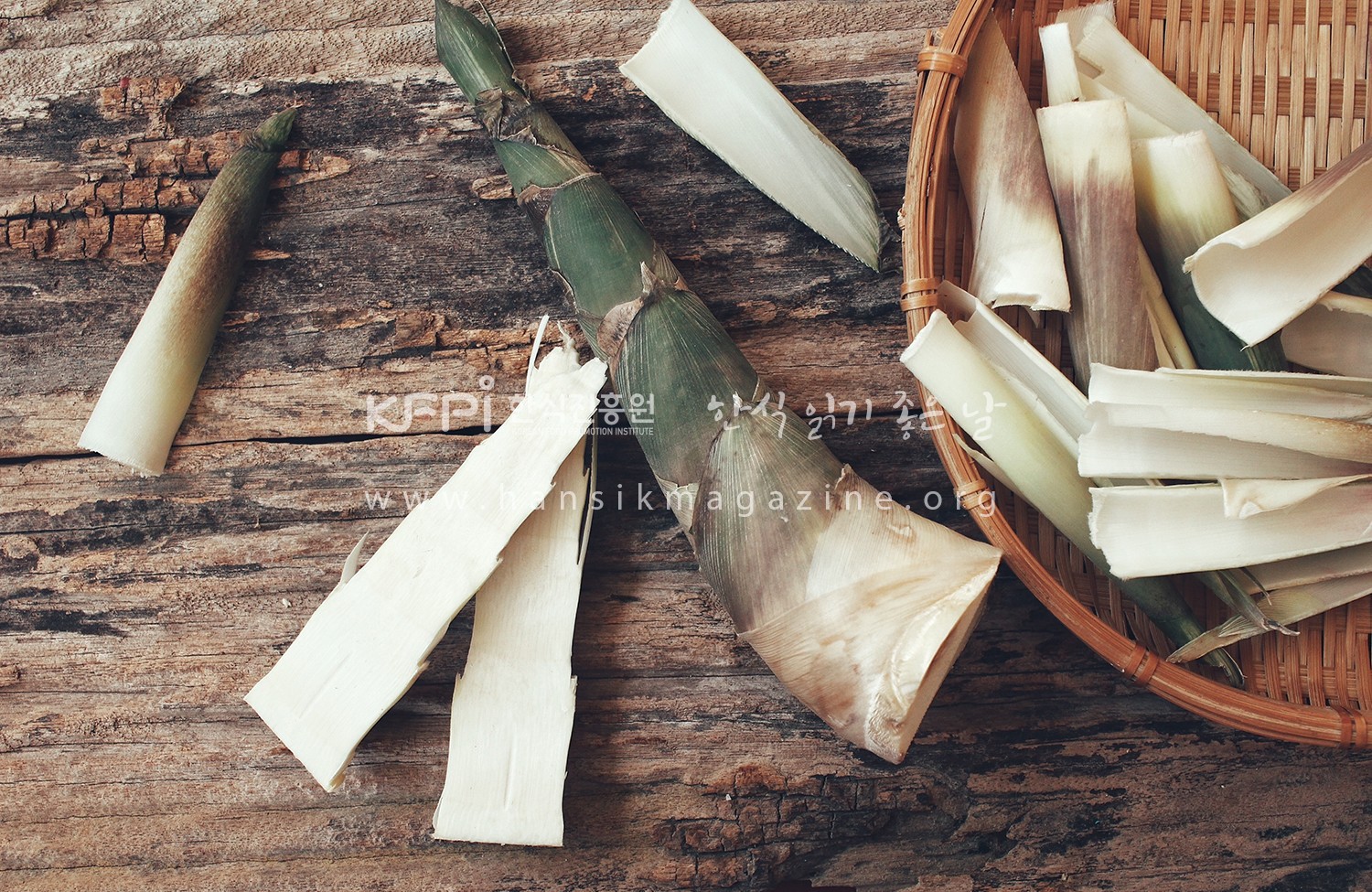
From the old times, Juksun has been frequently used as a food ingredient. The reason that I drop everything else to pick Juksun around this time every year is self-evident. It is because I cannot escape from the temptation of the plain and crispy taste unique to Juksun. Unique taste and sense of texture as a food ingredient attracts me to the bamboo forest.
Even kicking out of the rambles winding my legs to enter the bamboo forest is not easy. It feels like making the way through a jungle. Bamboo stems that fell and are spread everywhere tackle down my legs like a ghost in the dark forest. Finding the just sprouting Juksun while fumbling around the densely populated bamboo forest is not an ordinary task. Compared to this, the work of breaking Juksun is not that difficult. That is because this young bamboo tree is weak so that it is easily broken by slight push with a foot. After wandering around the bamboo forest for about half an hour, the burlap bag containing Jusun became heavy. The work was completed by carrying the heavy bag and barely escaping from the jungle.
Pure natural food growing up by itself in nature
Whereas Juksun has a high water content, it is a low-calorie food of only 13kcal per 100g, along with rich dietary fiber helpful for diet. Compared with grains and meats, it has high contents of protein and fibers. It also contains rich mineral compositions of potassium, calcium, magnesium, etc. Since a considerable number of these minerals are water-soluble, occasional drinking of the water saved after use in boiling of Juksun can be helpful for health. This is why the saying goes “Throw Juksun away rather than throwing away the water with Juksun boiled in”
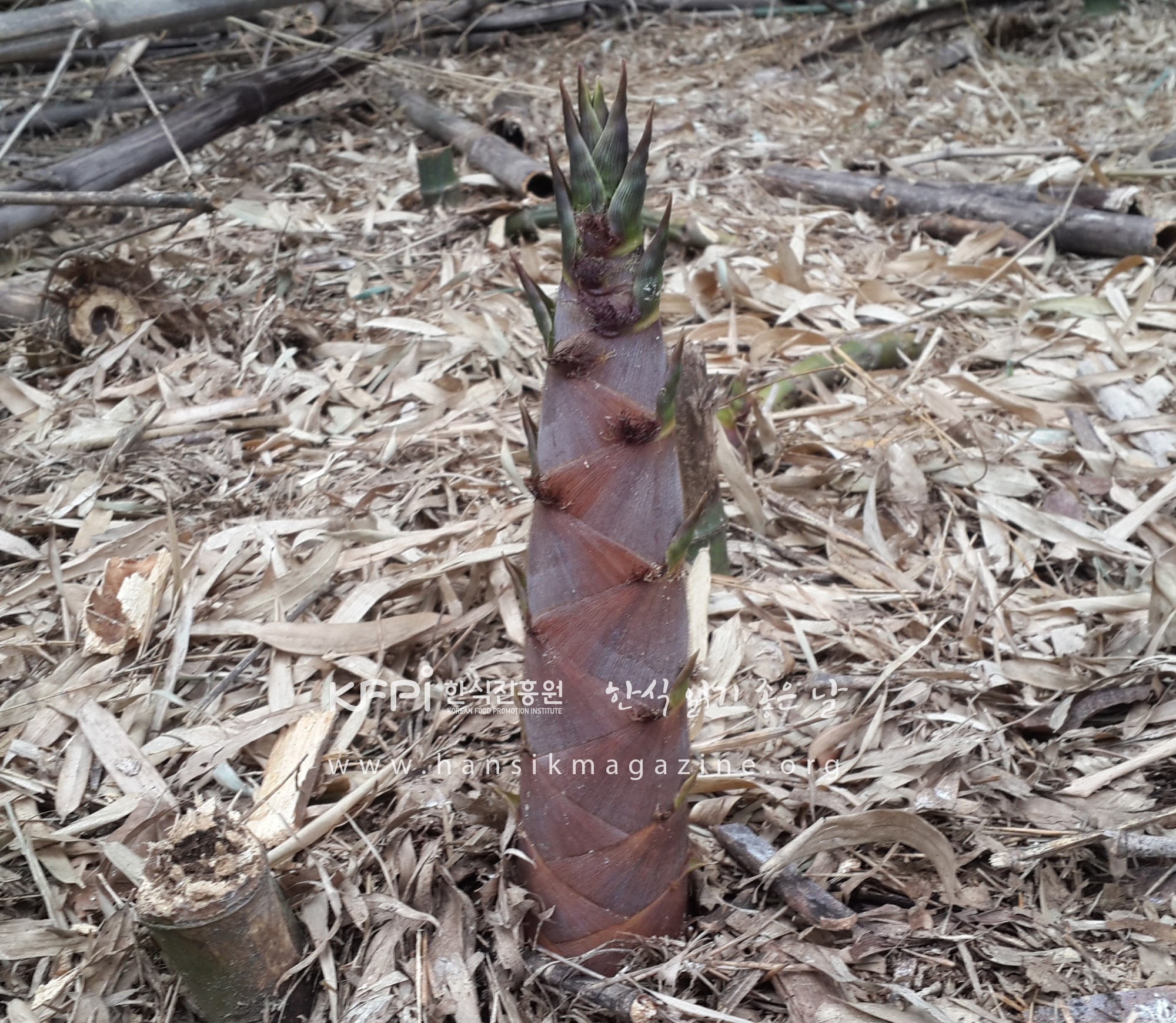
Juksun is also a pure natural food which grew up by itself in nature without any artificial help. Because of such features and efficacy, it is highlighted as a health food for the contemporary people with red light turned on due to obesity and deficient exercise. The once forsaken Juksun is thus re-emerging a subject of interest.
As if this were reflected, the places holding festivals related to bamboo or Juksun recently are being generated. For example, there are Damyang bamboo festival and Geoje Maengjong bamboo festival. Particularly, in the Maengjong Bamboo Festival, Juksun sampling meeting that allows Juksun tasting is also held. Unfortunately, however, all of these festivals have been cancelled this year due to COVID-19.
Deulkkaejuk containing blanched Juksun
What cannot be left out in the foods using Juksun as the food ingredient is Deulkkaejuk(Perilla seeds porridge). Deulkkaejuk containing blanched Juksun gives the fragrance unique to Juksun and crispy sense of texture. On a hot and humid summer day, one bowl of Deulkkaejuk boiled with Juksun added was a meal that cannot be blamed in the aspect of taste or nutrition. Particularly in the rice-transplanting season, Deulkkaejuk boiled with Juksun, coltsfoot, potato and seaweed was a blameless food. When women plant the seedling while bending their back and singing the farmer’s song, as men were tired and hungry from the hard work of carrying rice seedling, this food brought by the owner was a glad gift. Once in a while, there are times to compare the magnitude of so-called utility for the glamorous and fatty menu with the old traditional foods while having a meal in an atmospheric and expensive restaurant in downtown. Sometimes, that of the latter is felt larger, which is probably not just because of the nostalgia for the old foods being forgotten.
Juksunnamul, harmony between Juksun and Chive
Since Juksun has the cold nature, it will be like adding flowers to embroidery to mix it with Chive of the warm nature's namul(Salad) for eating. New buds sprouting in spring or summer mostly have some toxicity, which is their own defense mechanism for race multiplication. Chive play the role of neutralizing such toxicity of Juksun. In this aspect, Juksun and Chive are food ingredients with mutual harmony.
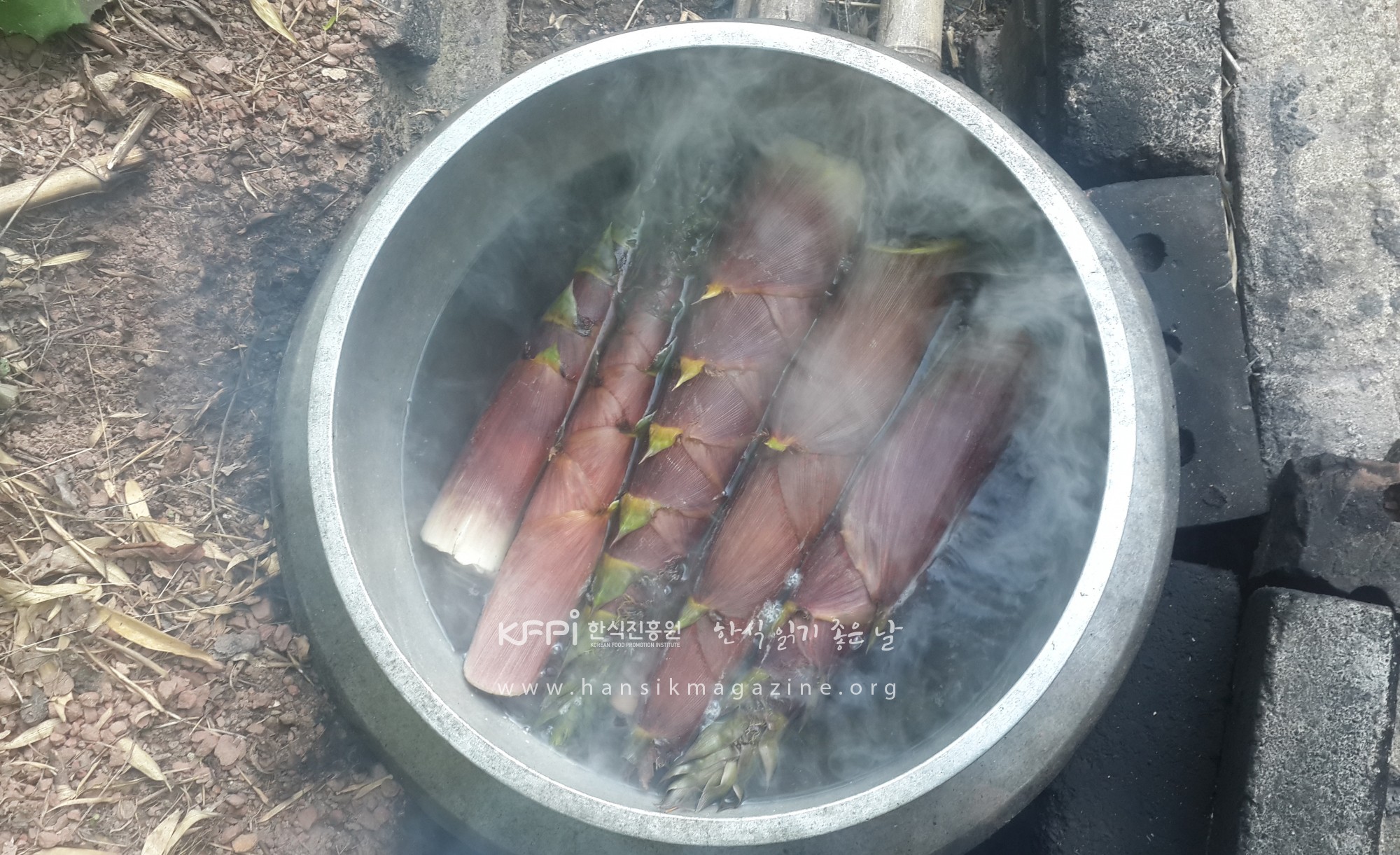
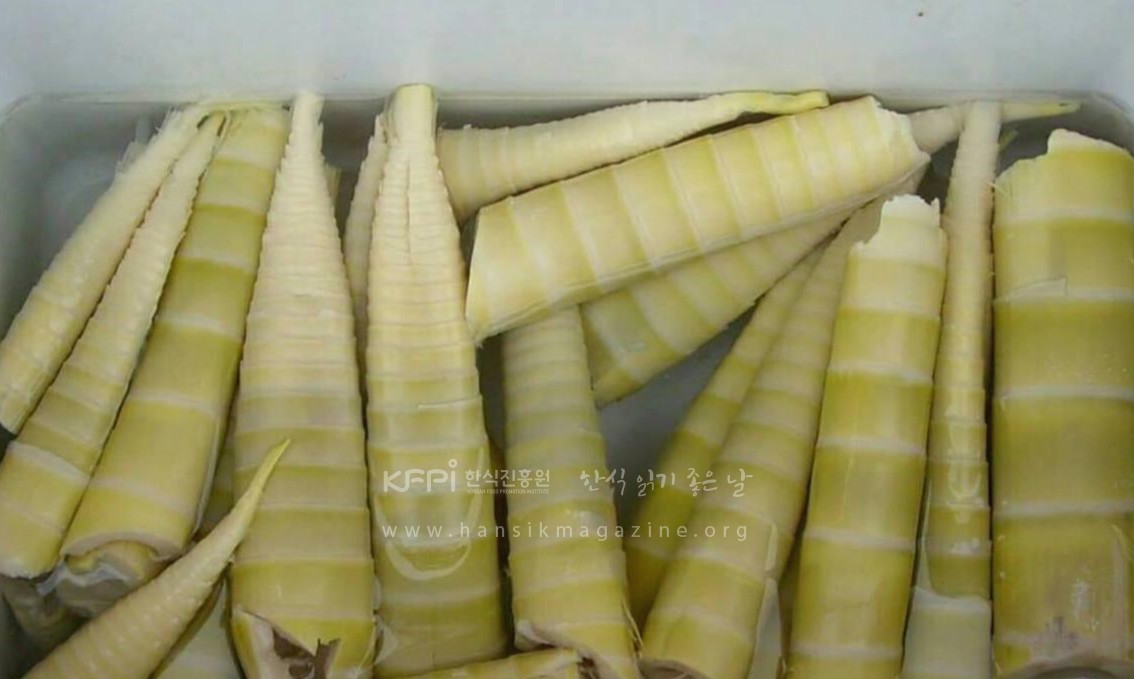
It was decided to prepare the Juksunnamul of memory using the hardly-collected Juksun. After installation of white caldron in the front yard, Juksun was put in unpeeled and a spoonful of water poured into the caldron. To reduce the sore taste peculiar to Juksun, it should be boiled without peeling the skin. When the boiled Juksun is immersed in cold water for a day or so, sore taste is mostly removed.
After mincing the Juksun immersed in water using a kitchen knife, water was removed. Chive grown long in the field in front of the house was cut and slightly blanched in boiling water. By mixing the prepared Juksun and Chive with Sweet and Sour Red Chili Paste, Juksunnamul was prepared. The plain taste and crisp sense of texture of Jusun felt after a long time was the same as the old taste remaining dimly in my memory. The tongue tamed by sharp tastes showed an immediate reaction of disappointment toward this dull food. For the menu in this memory that shows the more savory and refreshing taste, the more it is chewed, the central nerve in charge of palate positive signal this time.
Juksunjangajji for summer days
Tastes of food are not determined merely by ingredients or recipes of the food alone. Its taste is also dependent on the place or atmosphere of eating, members of the meal meeting, etc. It’s because the food is a complex function closely related to not only nutritional elements but also individuals’ subjective feelings or emotions. The novelist Hwang Seokyeong said that the food is a relationship among people more than anything else, and a catalyst of memories tied with memories. In that sense, he defines the gourmet pursuing only the plate at the tip of tongue as a ‘person having lost tastes’
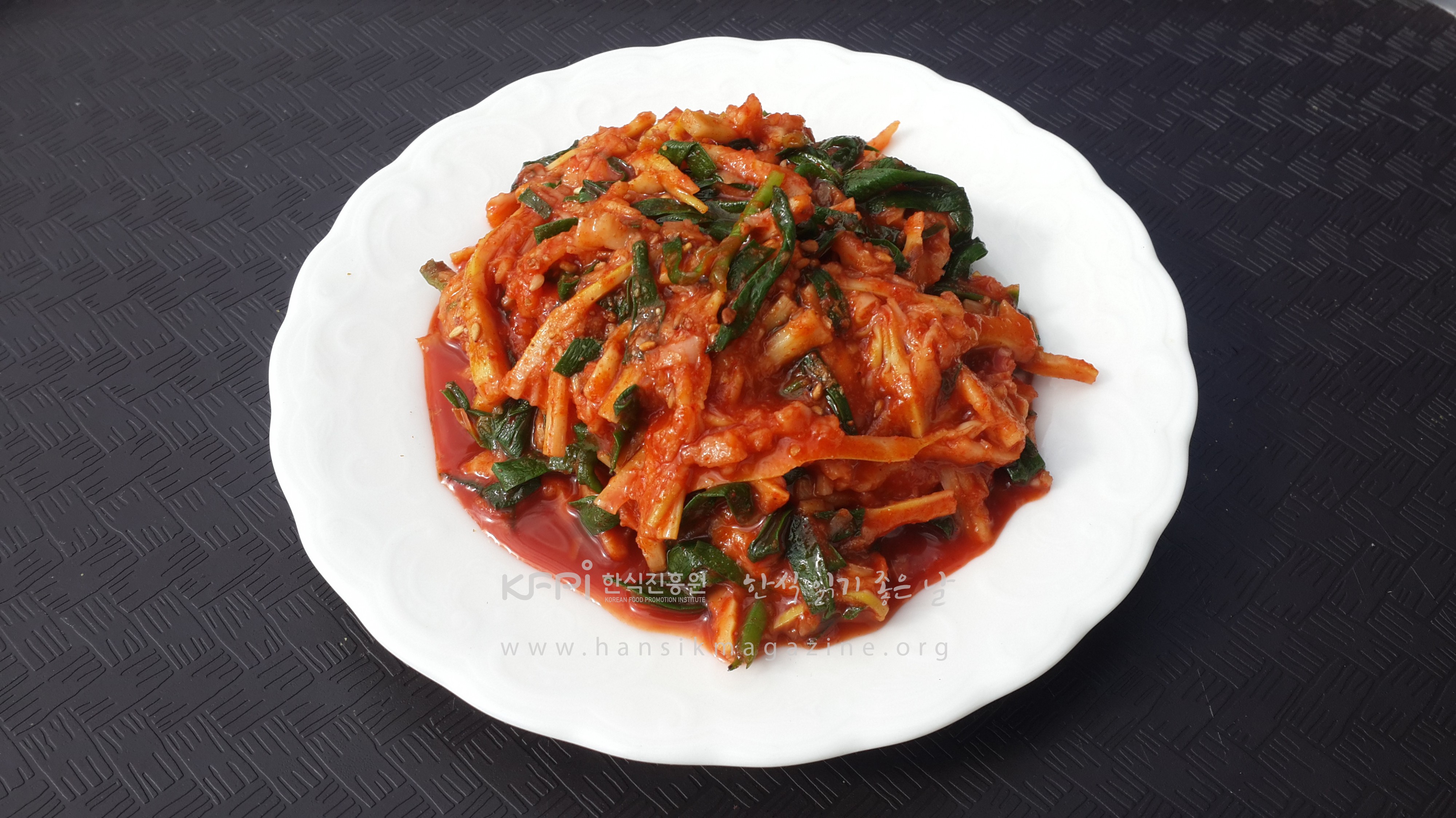
This Juksunnamul tasted after a long time leads me into the world of memory about my childhood. This food also reminds me of the taste of Juksunnamul that used to be prepared by my mother, and becomes a catalyst that renews meditation on the parents’ love as well as brotherly love among family members.
To enable enjoyment of Juksun tastes for a long period, it was decided to make Jangajji(Pickle) from the leftover Juksun. After putting soy sauce, garlic, ginger, sugar, etc. in the plain water and boiling it hard, the fire was reduced for another boiling for 30 more minute. Inside of the house was filled with the smell of soy sauce and garlic. Although it was not a favored smell, it was decided to be endured for the thought of being able to taste Juksun throughout the summer. After placing Juksun in a jar, cooled soy sauce was poured and a bowl was used to press so that Juksun would not float. Since the soy sauce is diluted by the water escaping Juksun, the process should be repeated for 3~4 times where soy sauce was poured out 3~4 days later to be boiled and poured again. Thus marinated Juksunjangajji (Pickled Bamboo Shoot) can be ingested after about 1~2 month elapsed. Looking at Juksun filling a large container, I get to have a good heart. It seems that I would be able to occasionally taste Juksun this summer to meditate on the memories of past.
True taste is only plain
After finishing the work, I sat down on a living room sofa to cool down the sweat. On the mountain top seen outside of the window, white clouds are hung, with the cool wind going over the ridge approaches me. In the bamboo forest behind the house, all kinds of birds are gathered starting to play the light orchestra. In a timely manner, magpies nesting on the sawleaf zelkova on the opposite side are engaged in chorus together. I feel as if I entered the fairyland after leaving the secular world.
Fellowship among noble men based on plain and unchanging friendship and refinement like clear water is called fellowship of fresh water 淡水之交. Juksun having plain and pure tastes instead of glamorous and sharp tastes is no different from the noble men’s fellowship. According to Chaegeundam 菜根譚, ‘Thick liquor and fatty meat, being spicy or sweet is not a true taste. True taste is said to be merely plain 膿肥辛甘 非眞味 眞味 只是淡’, pronouncing the true taste of food. Confucius said ‘Among those speaking adroitly and decorating the face to be beautiful, few are virtuous 巧言令色 鮮矣仁.’ These days where hiding original appearance hidden inside of self with glamorous cosmetics, even plastic surgeries has become routine, I learn the way to be kept as a noble man from Juksun as the symbol of purity and cleanness.
Park Chunrae is publishing serially on wisdom, etc. while cultivating the life in hometown, crops. Writings include the essay collection 『In search of lost memories』(Publisher Siseon, 2018)
Information on Bamboo Festivals
Based on being held in 2019
Juksun(竹旬)
Eating of which is said to be impossible without a hurry
Since the young sprout comes out to grow into a bamboo tree within 10 days(sun, 旬)
For the Juksun referring to young stems of bamboo, there are several types. Bamboos with cultivation recommended in South Korea include 3 types such as Wangjuk, Bunjuk, Maengjongjuk. Particularly, Bunjuk of softness and good crispiness can be encountered at <Damyang bamboo festival> held in Damyang, Jeollanam-do as the representative bamboo production place of South Korea, while Maengjongjuk of thick flesh quality can be seen at <Geoje Maengjong bamboo festival> held in Geoje, Gyeongsangnam-do.
Damyang Bamboo Festival
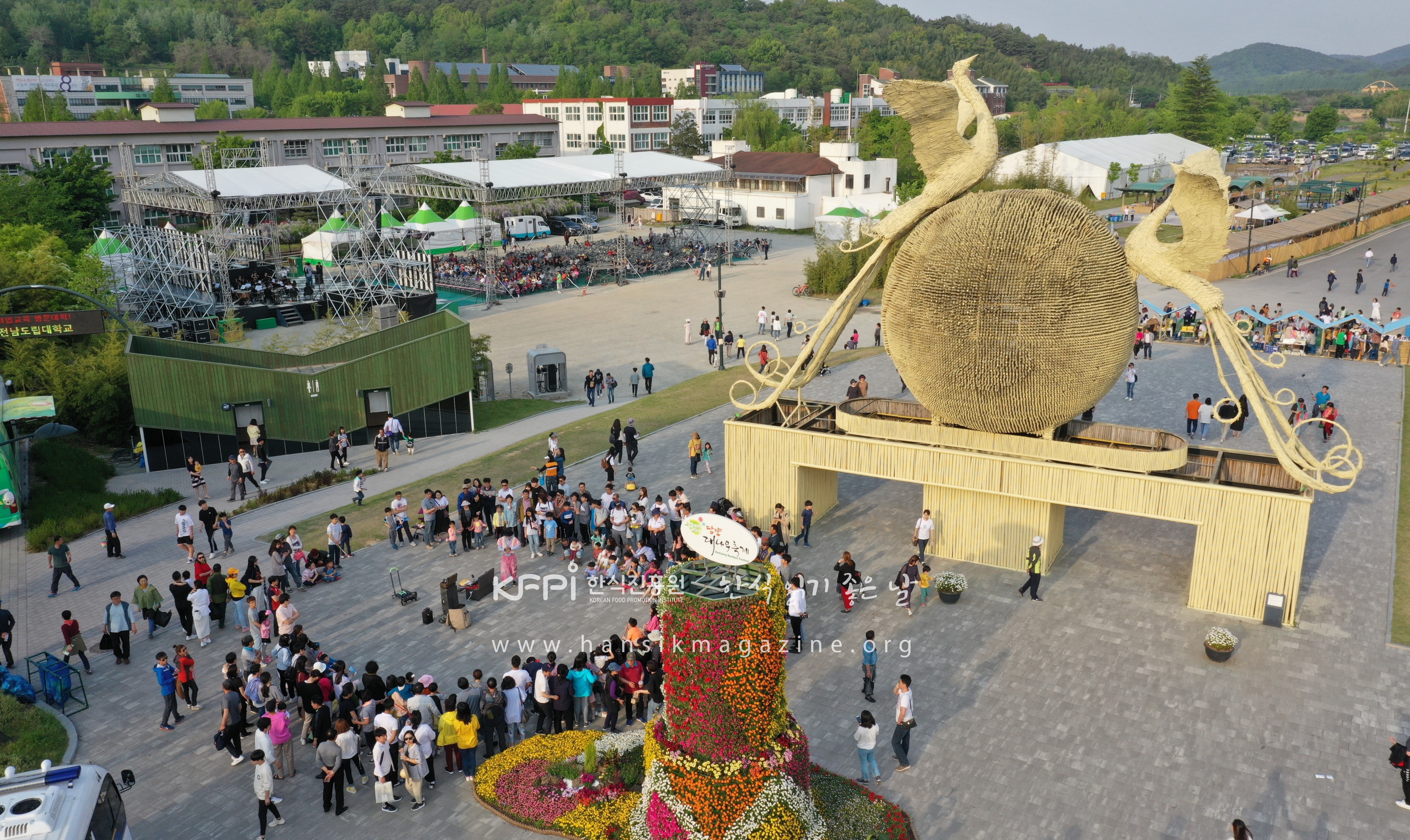
- Time held: Early May
- Place held: Juknokwon / Around Gwanbangjerim
- Hosted/Supervised by:
Damyang bamboo festival committee corporation - Webpage: http://www.bamboofestival.co.kr/index.do#
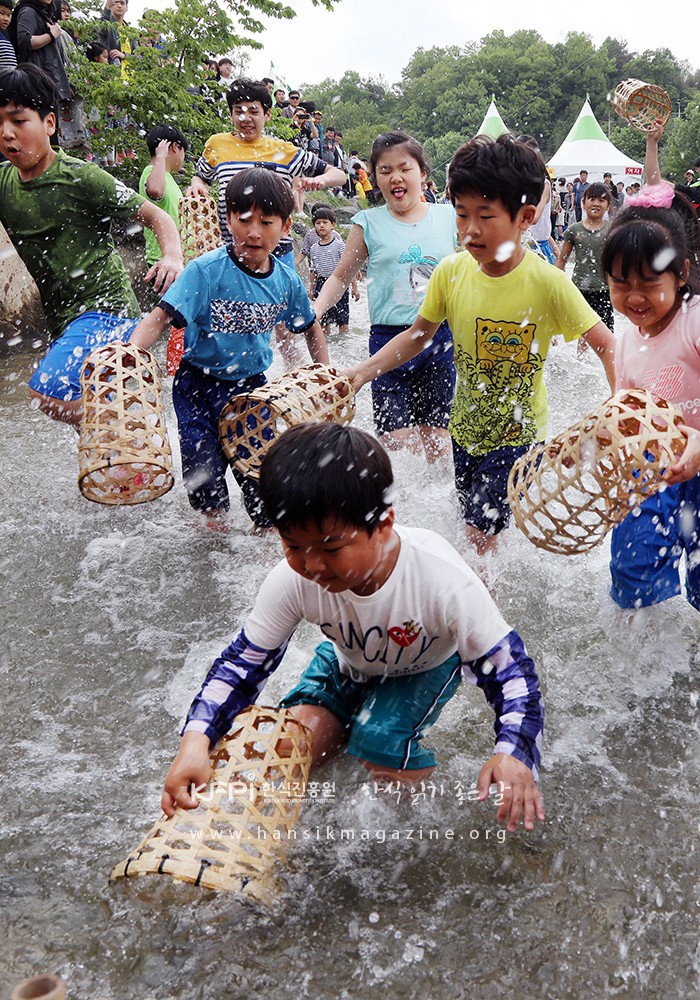
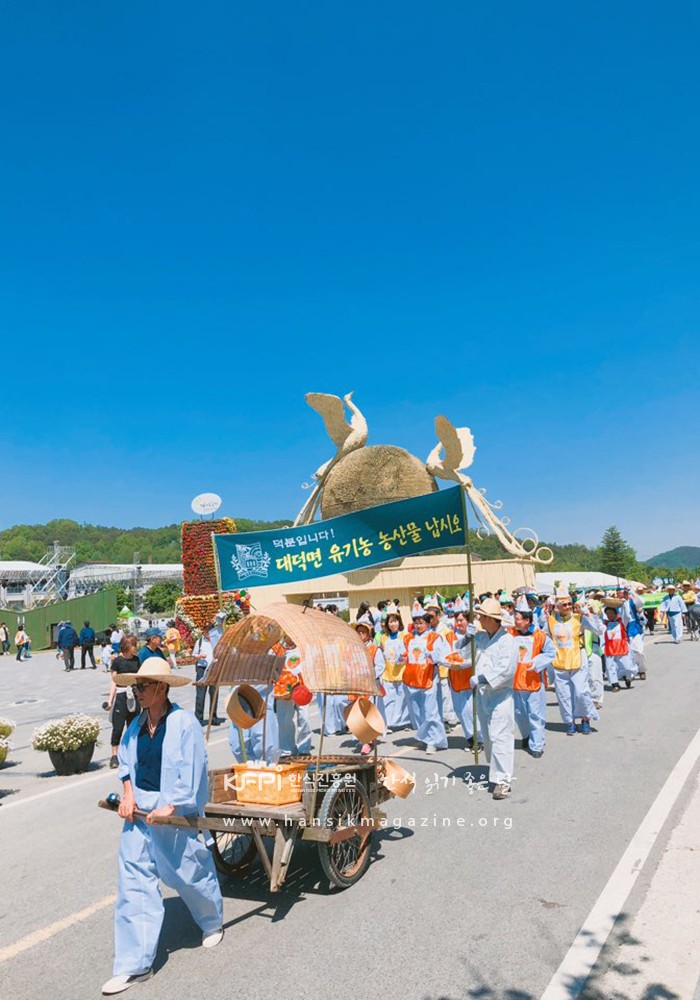
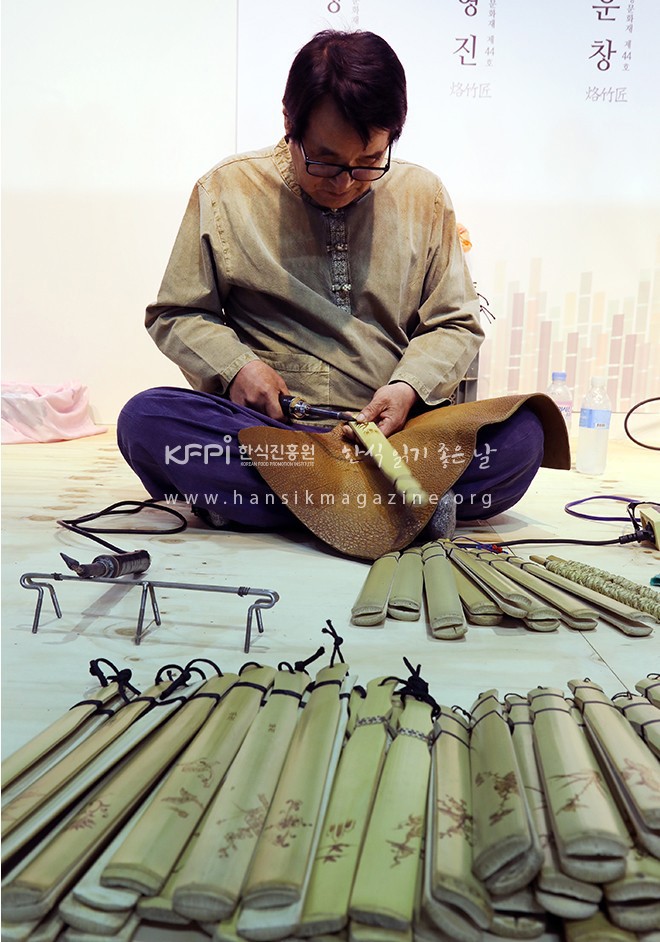
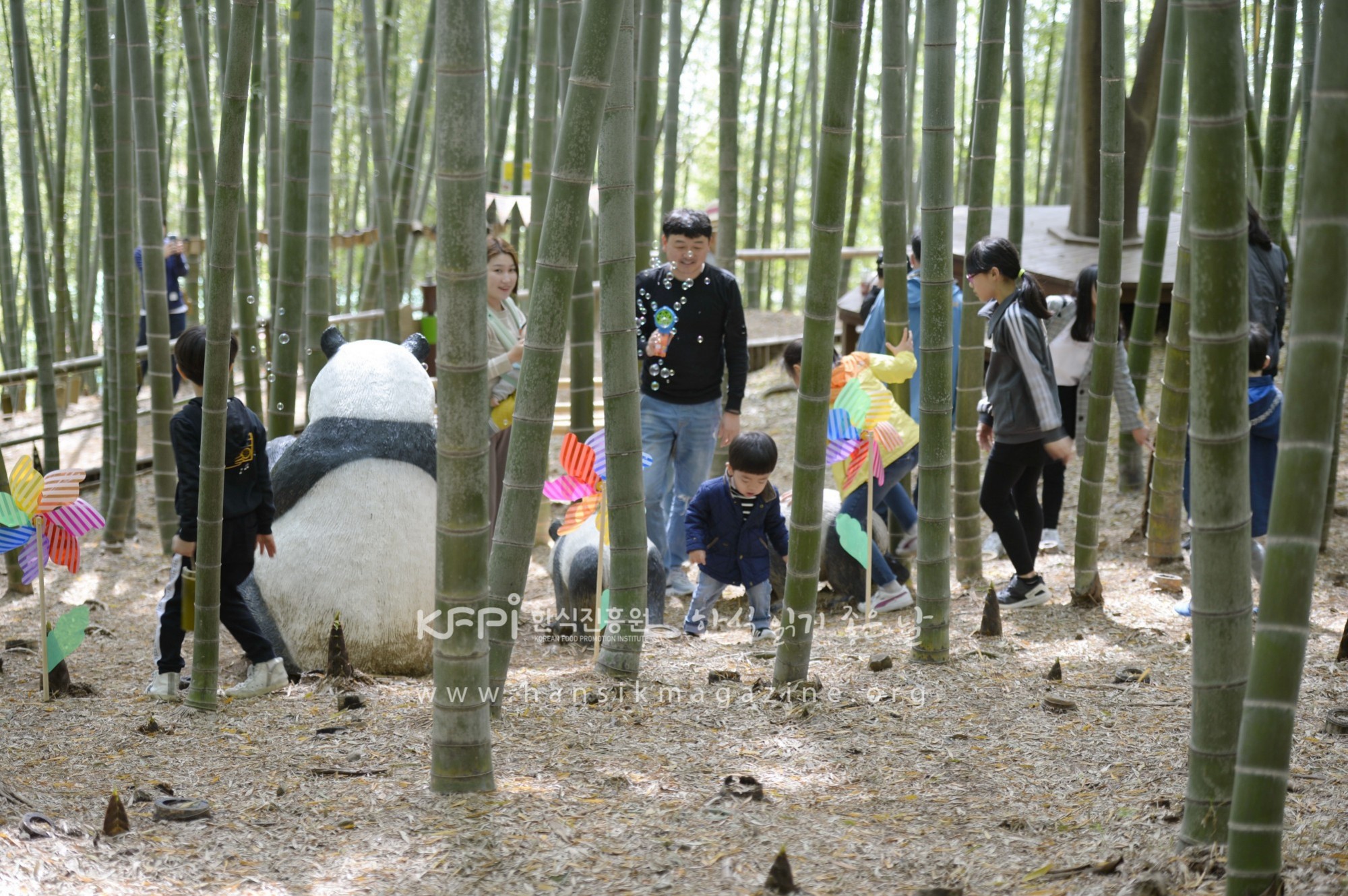
<Damyang bamboo festival> started from the culture where friendship was promoted among residents after bamboos were planted in the village and mountain as May 13 in lunar calendar in Koryo era. Although the festival was cancelled this year due to COVID-19, characteristic contents enjoyable for tourists by the family unit including children under the theme of “Festival of thinking, playing, and earning with bamboo” have been launched in 2019.
Geoje Maengjong Bamboo Festival
Held in Geoje where more than 80% of Maengjong bamboo is produced domestically
- Time held: End of April
- Place held: Geoje Maengjong bamboo theme park
- Hosted/Supervised by:
Geoje Maengjong bamboo farming cooperative - Webpage: http://www.maengjongjuk.co.kr/xe/
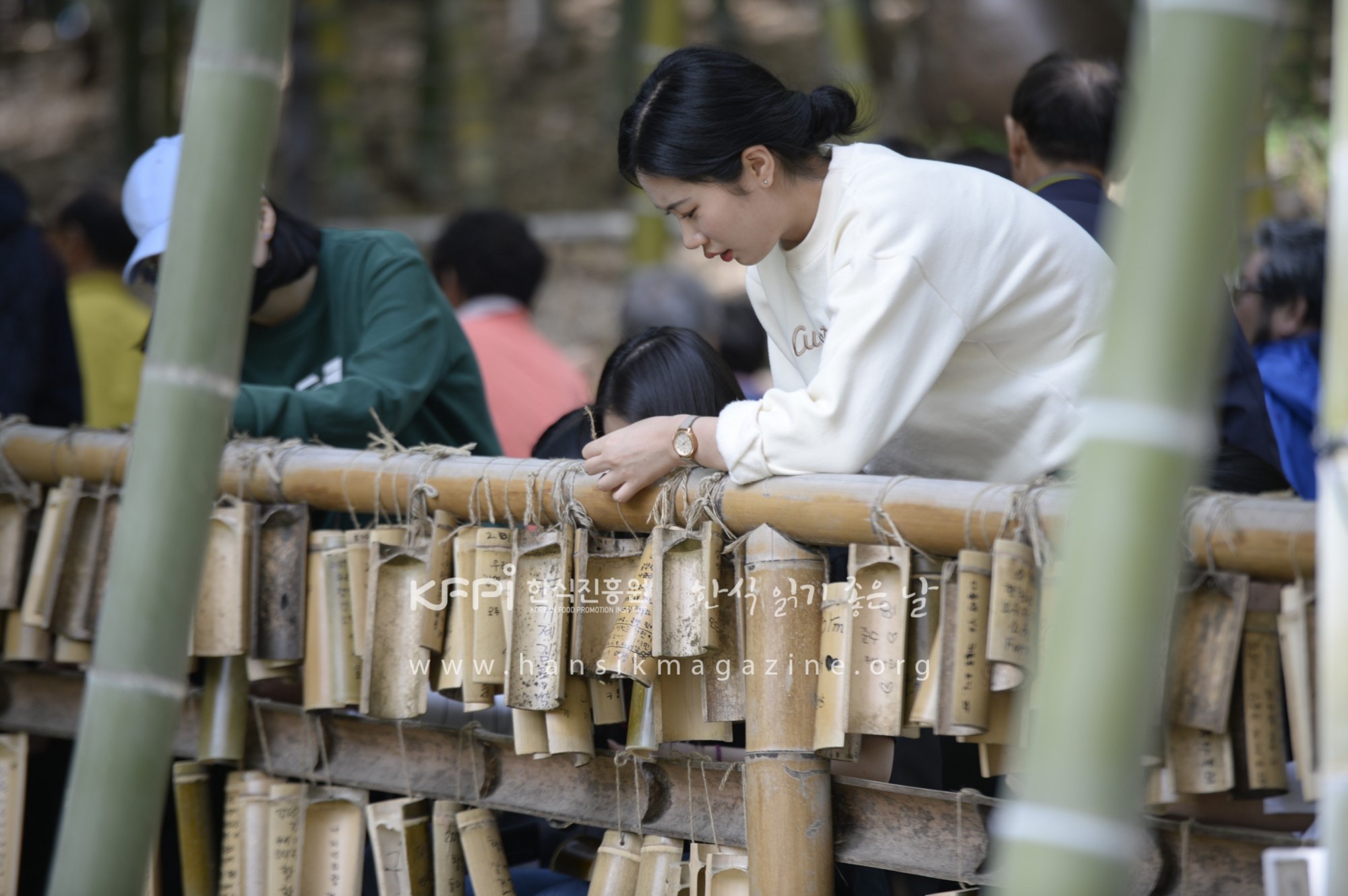
Although this year’s festival was cancelled like other festivals, it is known to provide infrequent experience opportunities allowing Juksun springing up from ground to be excavated with hoe and the skin peeled along with food tasting of Juksun, sale of Maengjong bamboo handicraft, etc.
Editorial Dept.