

한식에 대한 다채로운 이야기를 전하는 온라인 매거진
Vol 52. Soil, the Foundation of HANSIK
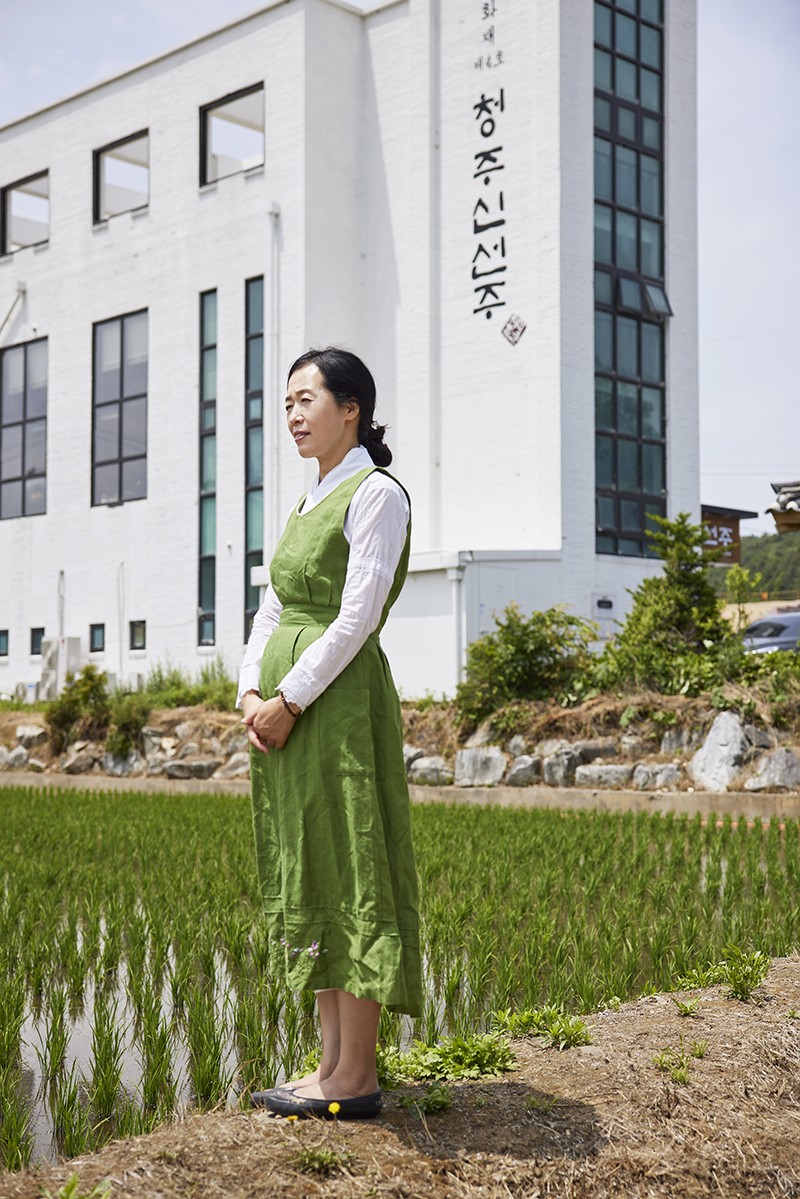
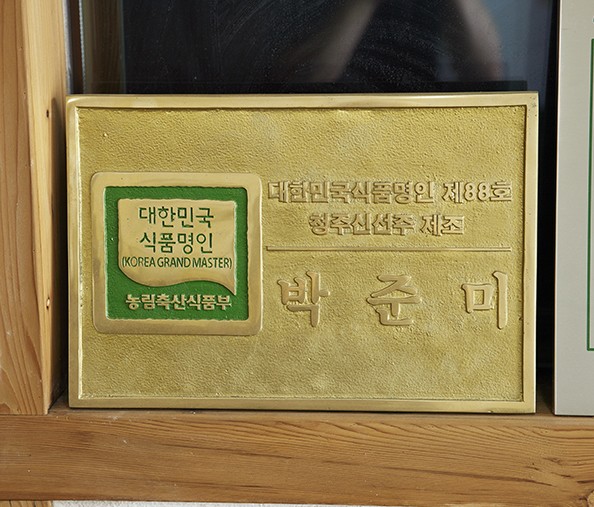
Korea Grand Master No. 88: Park Jun-mi (Cheongju Sinseonju)
HANSIK Masters
The origin of Cheongju Sinseonju goes back approximately 1,000 years to the late Unified Silla period. As the story goes, philosopher-poet Choi Chi-won built a pavilion on Sinseonbong Peak, located in Miwon-myeon, Cheongju—a city known for its beautiful natural surroundings—where he enjoyed composing poems and drinking sinseonju with other members of the seonbi (scholar-literati) class. It is this liquor that was passed down for 570 years in the Hamyang Park clan, reaching Korea Grand Master Park Jun-mi in the 21st century. The stories associated with sinseonju are as captivating as the liquor itself.
Article Seo Dongchul (Editorial Team) Photos Kim Seongjae (SSSAUNA Studio)
Q. We understand that your recipe for Cheongju Sinseonju dates back to your ancestor, Park Sung-tang, who was a magistrate of Chungcheong Province.
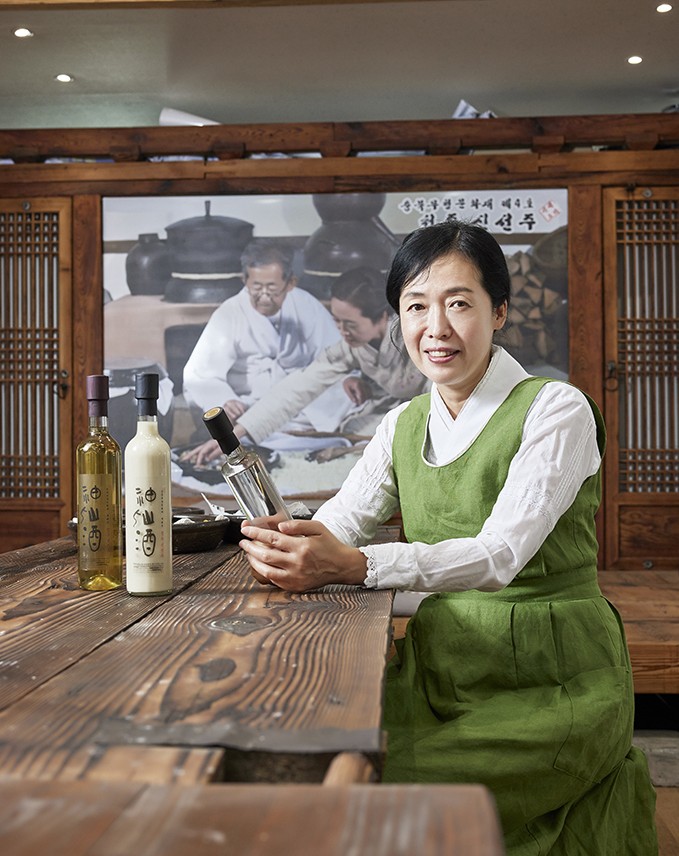
Cheongju Sinseonju was a favorite of the seonbi of Chungcheong Province (was unified during the Joseon dynasty, unlike the divided province it is today). Park Sung-tang retired to Gyewon-li, Miwon-myeon, where the recipe for the liquor began to spread. I once studied my family tree to estimate when sinseonju began being made in its present form and came up with 1449, making Cheongju Sinseonju 573 years old as of 2022. I am continuing the tradition that was passed down to my father, Park Nam-hee, who was the 19th generation to receive the recipe and Chungcheongbuk-do Intangible Cultural Heritage No. 4. Now, my son is learning the details of how to brew sinseonju. I am confident that the tradition of sinseonju will continue in living form rather than being lost to the annals of history.
Q. What is it, in your opinion, that has kept Cheongju Sinseonju alive for well over five centuries?
My family was the jonggajip (head household) of the Hamyang Park clan. As with most head families, our home was visited each Chuseok, Lunar New Year, and other major Korean holidays by an endless stream of visitors—all of whom had to be fed. There was also the year-round cycle of ancestral rites. When I was a little girl, it seemed as if we spent our holidays bowing to our elders. Such high traffic of guests and frequent family occasions meant that we had to brew liquor as regularly as most people make doenjang (soybean paste) to make sure there was enough to serve. The adults treated sinseonju with great care and always said that it is one of our family’s greatest assets.
Q. There are as many traditional home-brewed liquors as there are regions in Korea. What is it that sets Cheongju Sinseonju apart?
In Poems and Essays of Hyeonam, my great-great-grandfather, Park Rae-sun, wrote, “Sinseonju has the power to turn white hair black and give an old man the virility of a young man.” This is based on the fact that we brew our liquor with water in which 10 Oriental medicinal ingredients (Angelica root, goji berry, chrysanthemum, ginseng, etc.) have been boiled. There are very, very few liquor producers in Korea that brew their liquor with Korean-grown medicinal herbs and vegetables that they collect themselves.
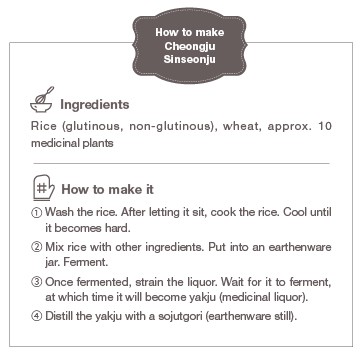
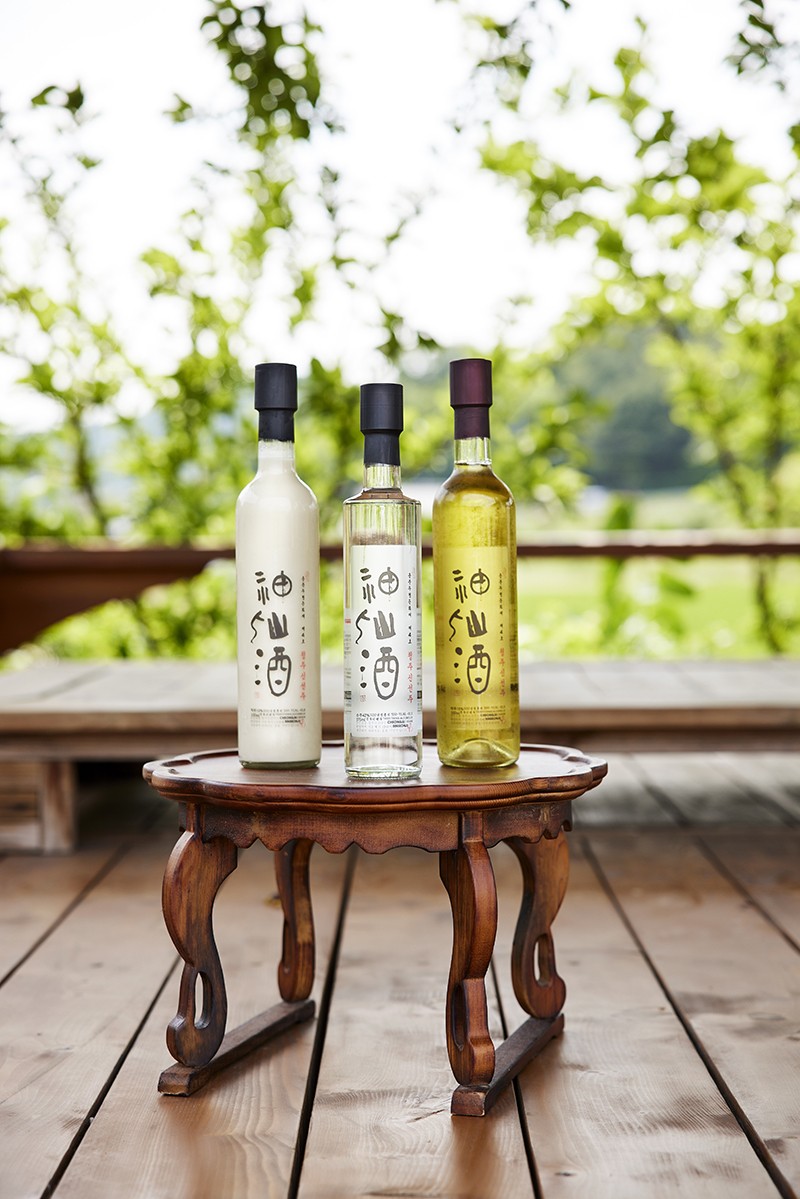
We also do not use any artificial flavorings. To make our liquor, we use locally-grown rice and malt fermented with a special strain of Korean rice (anjeunbaenggimil; Triticum astivum) and traditional natural fermentation techniques. In this sense, Cheongju Sinseonju is closer to a medicine than a liquor. I remember the adults taking a cup of sinseonju before a meal because it stimulated the appetite and helped with digestion. Sinseonju is distilled, meaning that it is passed through a sojutgori, one clear drop at a time. Despite its high alcohol content (42%), the blend of fire, grain, and medicinal herb scents makes it go down easy. Cheongju Sinseonju is also famous among traditional liquor enthusiasts for not causing a hangover.
Q. Can you recommend Korean food that goes well with Cheongju Sinseonju?
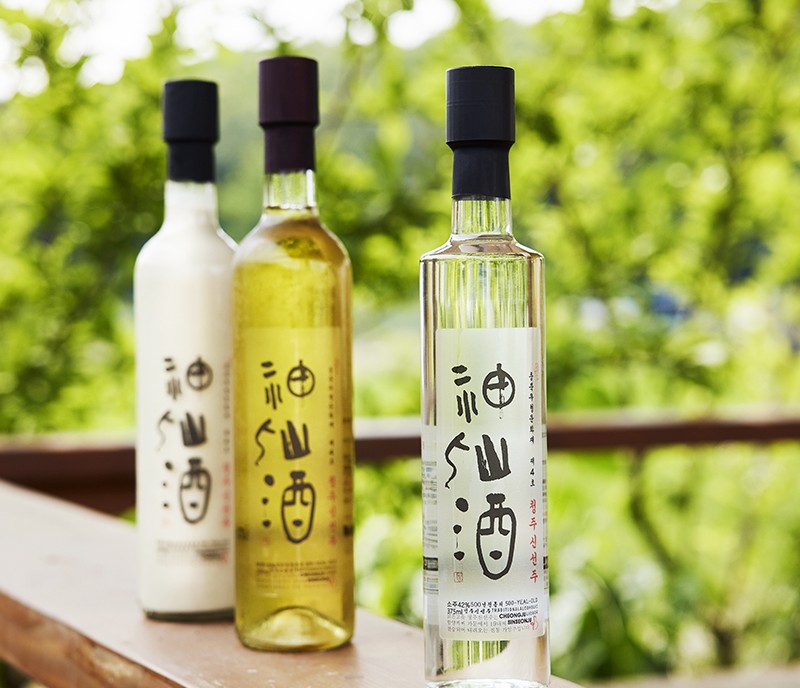
Cheongju Sinseonju is often used for ancestral rites or festive occasions and goes well with dishes such as sanjeok (meat skewers), maekjeok (grilled pork), and grilled seasoned bugeo (pollack). It is also served with a few simple side dishes for honored guests. I recommend snacks like beef jerky, yakgwa (honey cookies), or jellied fruits that are mild in fragrance so that they do not overpower the scent of the sinseonju.
Q. You have been around Cheongju Sinseonju your entire life. Do you have any fun memories and/or anecdotes related to it?
When brewing sinseonju, my grandmother, who had traditional notions about gender, never allowed her granddaughters to come near her workspace. Her one exception was me: I was permitted to trail behind. I remember stoking the fire of the agunggi (traditional kitchen fireplace) when making godubap (sticky steamed rice), with tears flowing from my eyes! I also remember being curious about the earthenware jar my grandmother kept indoors for fermentation: being small, I flipped an apple box upside down, climbed on top of it, and almost fell into the jar! I was given the spanking of my life that day. The sound of the jar’s contents bubbling during fermentation helped me fall asleep each night. That’s how I learned how to make Cheongju Sinseonju—while looking over my grandma’s shoulder. She taught me not only how to brew liquor but to cook the many dishes needed for ancestral rites.
After becoming an adult, I learned the details of the brewing process from my parents. In particular, I learned a lot from my father about how to handle the medicinal ingredients that go into our sinseonju. For example, I steam and dry the roots of the jihwang (Rehmannia glutinosa). I also know how to make gyeongokgo and gongjindan, which are both a paste-like mixture of medicinal herbs. I, like my father, firmly believe that Cheongju sinseonju should be made entirely with Korean-grown ingredients and by the hands of my family members, as opposed to consigning the manufacturing to someone else.
Q. We understand that, before becoming an Intangible Cultural Heritage of Chungcheongbuk-do, you used to be the head of an architectural design firm. It must not have been easy to change career paths so drastically.
After being designated as a Chungcheongbuk-do Intangible Cultural Heritage in 1994, my father expanded his brewery too quickly, spending a lot of money on equipment. Unfortunately, however, because the public was not very knowledgeable about high-end traditional liquor, he didn’t earn as much as he had hoped. Eventually, our 890-pyeong lot—which included a house where three generations lived together, my father’s brewery, and space for our ancestors’ graves—was auctioned off. I went to the brewery secretly, after it had been sold off, to collect a few hangari (earthenware jars). Afterward, my father lost much of his confidence and scaled back the work he did for the brewery. Because he is an Intangible Cultural Heritage, he was required to conduct an open taste-testing session once a year. This became impossible for my father because most of the medicinal ingredients that go into Cheongju Sinseonju are expensive. Seeing him so dejected cemented my resolve to take the baton from my father’s hand and brew sinseonju myself.
That was when I began learning how to make sinseonju from my parents, the first step of which was to clean out a room in my apartment and fill it with brewing equipment. When liquor boils, it produces an unpleasant odor—which my neighbors did not appreciate! Eventually, I rented a small hanok (traditional Korean house) to use as my “lab” to focus on learning. The plan was to be of help to my father, as you lose the title of Intangible Cultural Heritage upon death. I had no intention of entering the family trade. It was after my father was hospitalized due to a long-standing illness that I changed my mind. I realized that, after my father dies, the art of Cheongju sinseonju would die with him. When I informed my family of my intention to continue the tradition, everyone objected very strongly—except for my father, who was ecstatic.
Q. You founded and now operate Ieum 1449, a multipurpose cultural space, near Sangdangsanseong Fortress Rotary in Cheongju. Can you introduce it to our readers?
I teach courses for the hotel cooking and culinary engineering departments of several universities, which made me want to offer a good educational program for the local community in relation to traditional Korean liquor. The result is Ieum 1449, which offers classes on how to brew not only Cheongju Sinseonju but also other seasonal liquors, including lotus leaf liquor (summer), chrysanthemum liquor (autumn), and dosuju, a spiced drink enjoyed on Lunar New Year (winter). For local farmers, we provide consultations on entrepreneurship in relation to recipes that utilize Cheongju-grown produce. In cooperation with KORAIL, we also offer Sinseongil, an interactive program that spotlights Cheongju’s traditional liquors and local foods. I believe it is just as important for us to grow in partnership with the community as it is to advance the craft of sinseonju.
Q. What are your plans for the future?
To make distilled liquor in the traditional way, you need to invest at least one year. It takes 100 days for the takju (raw rice wine) to become clear. After this is distilled, it has to be fermented for one year to obtain the mild fragrance for which sinseonju is known. As you can see, the production quantity is limited, which also means that we cannot sell our products to a larger consumer base. We get a lot of inquiries from those who want us to supply to them, but, in most cases, we have to refuse. To address this issue, this year, we will be creating two product lines. For the first, we will keep making Cheongju Sinseonju in the traditional way, as we have always done. For the second, however, we will be using automated equipment and reducing the fermentation time to produce a commercial, more affordable brand of sinseonju that we hope will be enjoyed by everyone.