


한식에 대한 다채로운 이야기를 전하는 온라인 매거진
Vol 51. Korean Food that comes from trees
A Praise for a Tree; The Giving Tree for Korean Cuisine
Trees and HANSIK
The Korean word for the meme-famous line “Worship me” from the drama My Liberation Notes is chuang, a formal term that roughly translates to “look up to” or “honor or uphold.” People uphold things or people that are important to them: for some, it is their parents. For others, it is everyday pleasures or even oneself. The tree is a being that we rarely think to uphold but must devote much more attention to in the coming years for the benefits it gives to all of Earth’s inhabitants and the consistent, barely noticeable way in which it does so. This article will explore the trees that so selflessly nurture our favorite Korean foods.
Article Noh Yunyoung (Editorial Team) Source Wohlleben, Peter (trans. Jang Hyekyung). The Hidden Life of Trees (original title: Das geheime Leben der Baume) (Seoul: Yima, 2016)

The trees in a forest care for each other, sometimes even going so far as to nourish the stump of a felled tree for centuries after it was cut down by feeding it sugars and other nutrients, and so keeping it alive. Only some stumps are thus nourished. Perhaps they are the parents of the trees that make up the forest of today.
- Excerpt from The Hidden Life of Trees (2016)
The value of the life of a tree
The term “tree” collectively refers to perennial plants that have a trunk and/or branches. Also known as the Earth’s largest living organism, the tree has always been of consummate importance to humans. As a resource that satisfies two conditions—easy to obtain and easy to shape/process—trees have been used since antiquity not only to build homes but also as fuel, everyday tools, and medicinal ingredients. In many countries, the tree figured in indigenous religions as a village’s guardian spirit. For animals, trees are places to live and gather food. It is also trees that absorb carbon dioxide and release oxygen. According to a 40-year survey conducted by the National Institute of Forest Sciences of all 3,000 forests in Korea, each unit area of forest absorbs an average of 10.4 tons of carbon dioxide per year. The tree, which benefits all life forms, has—like many of other life forms—its own language (scent signaling, etc.) that binds it to humans and a truly diverse palette of other life forms. Trees are linked not only to one another but also internally as a large, intricate web of parts.
The parts of the tree—leaves, blossoms, trunk, shoots, branches, and roots—are all closely interconnected with one another. The same applies to the mushrooms and plants, such as moss, that live parasitically on the tree. As such, the tree is, in a sense, not a single entity but a system of well-oiled parts that alternately depend on and extend a helping hand to one another. It is thanks to such strong bonds that trees have existed on Earth for so much longer than we have—and may very well survive long after we are gone.
The tree as a reliable source of food
This article was inspired by The Giving Tree, a children’s book by American writer Shel Silverstein that was published in 1964. As the title suggests, virtually every part of a tree can be used as food—making it a gift that literally keeps on giving. Korea has an age-old tradition of using substances from tree leaves, roots, trunks, bark, and fruit for food and medicines.
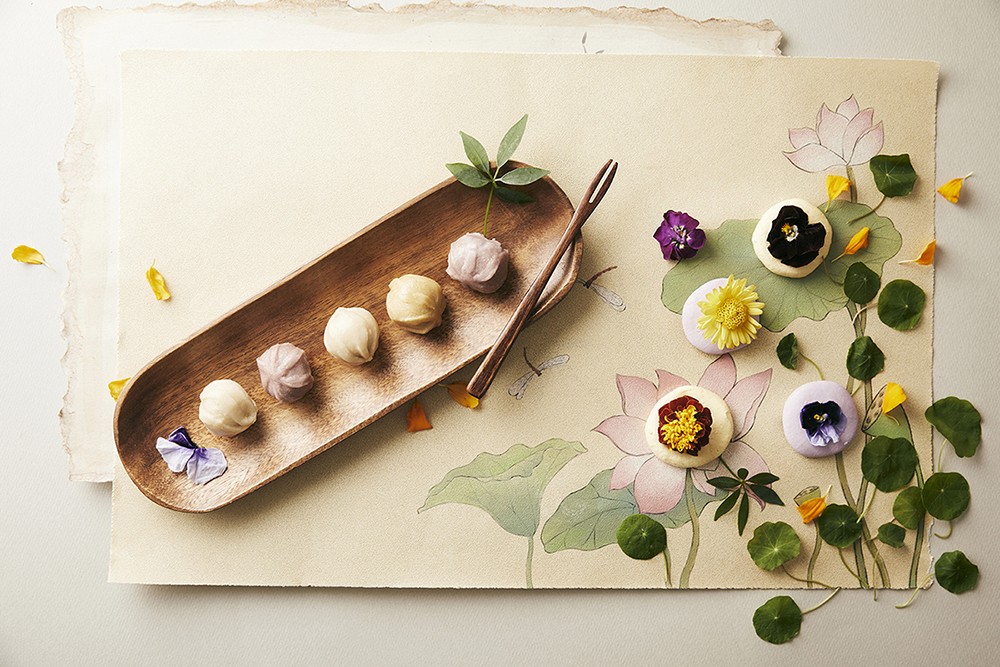
Some trees have edible flowers. The most common examples, including azalea, acacia, lotus, and canola flowers, are used primarily to enhance the colors, fragrance, or taste of particular dishes. Edible flowers are just as functional as they are attractive: rich in vitamins, amino acids, and minerals, they are used for bibimbap, salads, ssambap, and various desserts. The key is to serve edible flowers as close to their natural state as possible (rather than stir-frying or steaming them). Acacia blossoms are especially effective for alleviating bronchitis and inflammation and are one of the few types of edible flowers that can be fried or pickled. Holding an acacia blossom in your mouth for a few moments before swallowing will allow you to appreciate its flavor in combination with its entrancing scent. Adding spring flowers to bibimbap is a good way to have a multi-sensory experience of Korea’s spring.
Tree leaves are just as versatile as flowers. In addition to the familiar leaves for green tea and black tea, the leaves of the dureup tree offer a tart, bitter reminder that spring has come. Young mulberry leaves are used for namul and pickled dishes. The leaves of the chopi tree (Korean pepper tree) add depth of flavor when fried or pickled, while those of the gajuk tree (tree of heaven) can be included in jeon or various seasonings. The leaves of the burning bush, chestnut, and shrubby bushclover trees are also used for food. Shoots from the chamjuk namu (red toon), and dureup, eomnamu (castor aralia), and lacquer trees are especially popular as ingredients that stimulate the appetite and are commonly used in heavy wintertime dishes.
There is perhaps little or no need to expound on the values of tree fruits. Apples, pears, maesil (green plums), peaches, persimmons, and strawberries are highly sought-after in their respective seasons. Regardless of the variety, tree fruits are generally not only high in moisture content but also rich in sugars and organic acids and are alkaline foods that have high levels of vitamins and minerals. In addition to being a quick ready-to-eat snack or an ingredient for a salad or dessert, some fruits are routinely used in Korean cooking for various purposes. Tree fruits are often used in jangajji (pickled vegetables) or, in the case of apples, pears, and tangerines, in the seasoning for kimchi.
The sap from mono maple, maple, fir, and iron birch trees is rich in minerals, which are necessary for healthy bones and blood and hormone production. Sap, which flows from a plant’s root to the leaves through the trunk, flows out of a tree when the temperature difference between day and night exceeds 15 degrees Celsius due to the pressure differences in the tree’s veins. In early spring, trees absorb water and minerals from the soil (which is still laden with winter snow) and use them to “pull” sap upward. Sap is always popular because it can be extracted without having to cut a tree down.
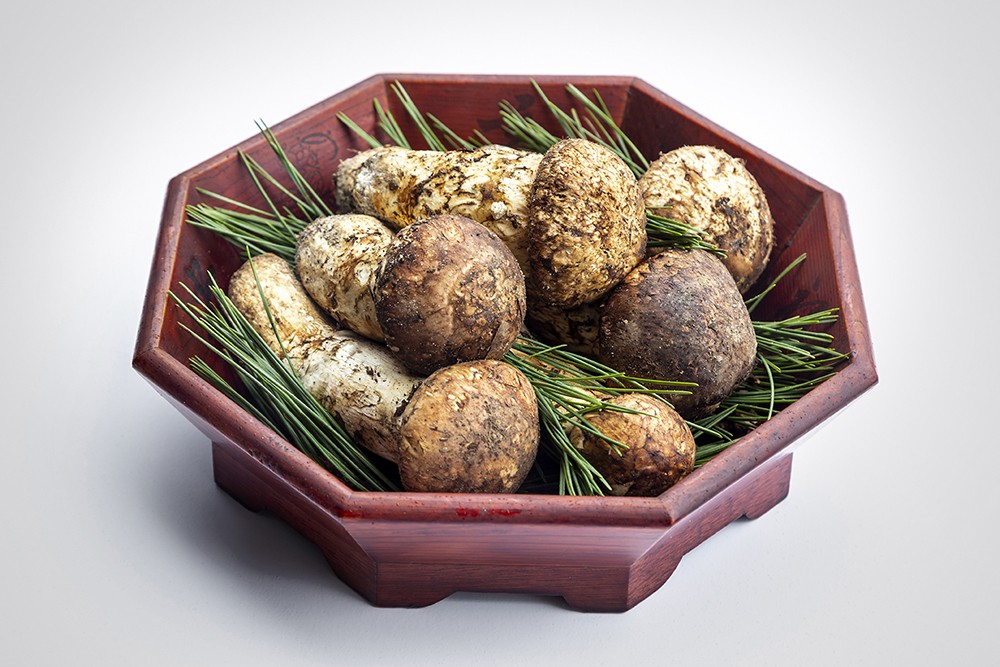
In Korea, tree bark is used more for medicinal purposes than for food. The skin of elm tree roots and paulownia bark, both of which alleviate dermatological disorders and enhance the stomach’s digestive function, are boiled to make medicinal teas. Tree roots are used in many Oriental medicines due to their many medicinal properties, compared to all other parts of the tree. Key examples are Korean Berchmia, Chinese hawthorn, and Korean blackberry. Mushrooms that grow from the remains of living organisms (e.g. bark, fallen leaves, base of a chopped tree, animal carcass) can be used for food after making sure that they are not poisonous.
For the sustainable future of trees
Whenever we eat food made with one or more parts of the tree, it is easy to recognize how indebted humans are to trees. It is just as easy to know, by simple calculation, that in order to protect the forests that surround us, the pace at which we use trees must not overtake the rate at which trees naturally regenerate. If we truly want trees to continue existing in large quantities for many generations to come, we must acknowledge the enormity of their value. Now is the time for us to honor the tree.