


한식에 대한 다채로운 이야기를 전하는 온라인 매거진
Vol 51. Korean Food that comes from trees
A living treasure with two millennia of history: Lacquerware
The wisdom of HANSIK
Koreans have long understood the value of ottchil (lacquer). The sap of the lacquer tree was used to coat weapons and tools to prevent rusting and used on plates and other everyday items to make them more durable and beautiful. The art of Korean lacquerware, which has been around for over 2,000 years, still has many secrets that we are just beginning to uncover.
Sources Korean Traditional Lacquer, Encyclopedia of Korean Culture
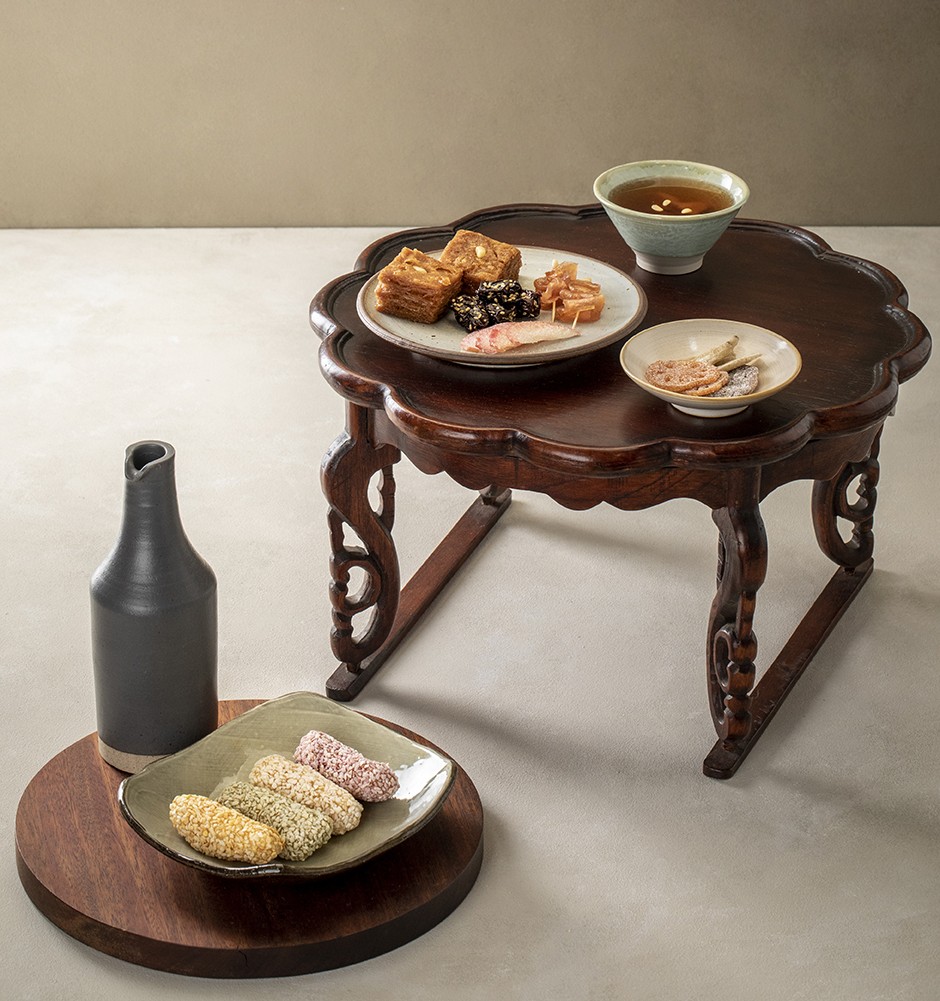
If you want something to be sturdy, the pine tree is best. If you want something to be flawless, ottchil is the best option.
- Excerpt from Cho Hoik, Notes on Rituals by Qiu Jun (Vol. 6, 1646)
The use of ottchil for perfection
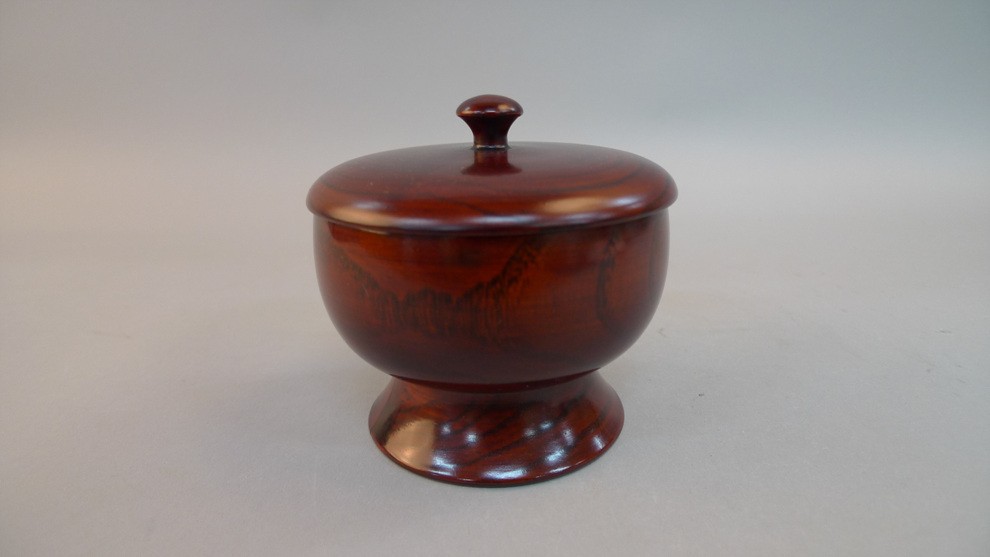
Amid the sea of “smart” appliances that are inundating the 21st-century kitchen, you would be hard-pressed to find one that does not have plates or bowls that are clearly made out of wood but have an unusually dark color and high gloss. They are called chilgi in Korean, or objects that are coated in naturally-occurring lacquer. Families that conduct Confucian ancestral rites are familiar with lacquered bowls and plates. Today, lacquerware is moving beyond the world of kitchen utensils to furniture and crafts.
The lacquer tree is a deciduous tree that originated in the Tibetan highlands. If you make an incision in the bark of a lacquer tree, a grayish-white sap, called ott in Korean, will flow out. The sap is a harmless substance that, when used as a coating, prevents erosion caused by acids and alkaline substances. Ott is also highly salt-tolerant, resistant to heat, waterproof, insect-proof, decay-proof, and insulating. After discovering the redeeming qualities of ott, Koreans used it for centuries to coat many kinds of everyday items, musical instruments, and weapons of war.
The history of lacquerware in Korea is longer than most people think. The earliest traces are found in records from the first to third centuries BC, and large quantities of lacquered goods have been discovered in kofun from the Three Kingdoms period. According to the Samguk Sagi (Memorabilia of the Three Kingdoms), there was a government office in the Silla dynasty (57 BC to 935 AD) that was dedicated to lacquered items. This suggests that the demand for lacquerware was so high that it required an entire branch of government devoted to managing supply and demand and cultivating lacquer trees. During the Goryeo dynasty (918-1392), there was a “master of lacquer” assigned to the office responsible for producing royal ritual objects and the office tasked with overseeing the production of weapons. The Tripitaka Koreana, the massive collection of Buddhist canons famously carved onto approximately 80,000 woodblocks, was preserved by coating each woodblock with lacquer. According to National Code (Gyeongguk Daejeon), in the Joseon dynasty, lacquered objects were supplied to both government and military offices. A survey was also conducted every three years of the number of lacquer trees in each district/province. Lacquer trees thrive throughout Korea, with the exception of certain areas of Hamgyeongbuk-do Province (part of what is today North Korea), and comprise an important part of the country’s forest resources.
Ⓒ Anyang Museum
Treasures made with ottchil
In Korea, Buddhist monks use bowls that are collectively referred to as baru. After a meal is over, each baru is washed with a piece of kimchi and a small amount of water and then stored after being wiped with a dry cloth. Even though they are not washed with soap, baru bowls never get moldy. Food that is kept in a lacquered bowl retains its freshness for longer than if it were kept in a non-lacquered one. All of this is made possible by the qualities of Korean lacquer, which, interestingly, dries in the presence of humidity (as opposed to heat). After it dries, a lacquered bowl/plate retains moisture and self-regulates the humidity of the space inside it. Furthermore, lacquered plateware is highly resistant to heat and acidity, absorbs electromagnetic waves, and was recently revealed to be self-sanitizing and effective in fighting cancer. All of these functions aside, the most redeeming aspect of Korean lacquerware is its beauty. Its signature color and gloss are qualities that artificial materials have been, and will continue to be, hard-pressed to imitate.
Lacquerware has so many beneficial qualities that it would be impossible to mention them all in this article. It does, however, have some shortcomings. The process of extracting sap from the lacquer tree and converting it into a varnish is extremely complicated. Given the amount of time and level of expertise required to extract the sap, the amount that is harvested is quite small. Another obstacle is the fact that extraction is season-sensitive, which subsequently drives up prices. The emergence of synthetic resin varnishes, which are affordable and easy to manufacture, resulted in the disappearance of most ottchil manufacturers and suppliers in the late 20th century.
Fortunately, recent interest in environmental issues has made ottchil noted once again for its value as an eco-friendly varnish. People are beginning to recognize that ottchil has qualities that synthetic resins lack as well as the fact that it can be used in many areas other than kitchen appliances and traditional crafts. The day will soon come when ottchil will be used for industrial purposes, including submarine cables, ships, and airplanes. Recent news reports announced that the quality standards for ottchil have been analyzed based on the principles of modern science and that, based on the findings, plans are underway for ottchil to be used in diverse industrial sectors.
While it cannot be touched with human hands due to the possibility of lacquer poisoning, the sap provided by the lacquer tree turns everything it coats into a treasure. Perhaps this is why ottchil masters called it “a gift from the gods.”